








Top 5 Videos on Indian Economy on the Eve of Independence for Class 12 Economics by PW

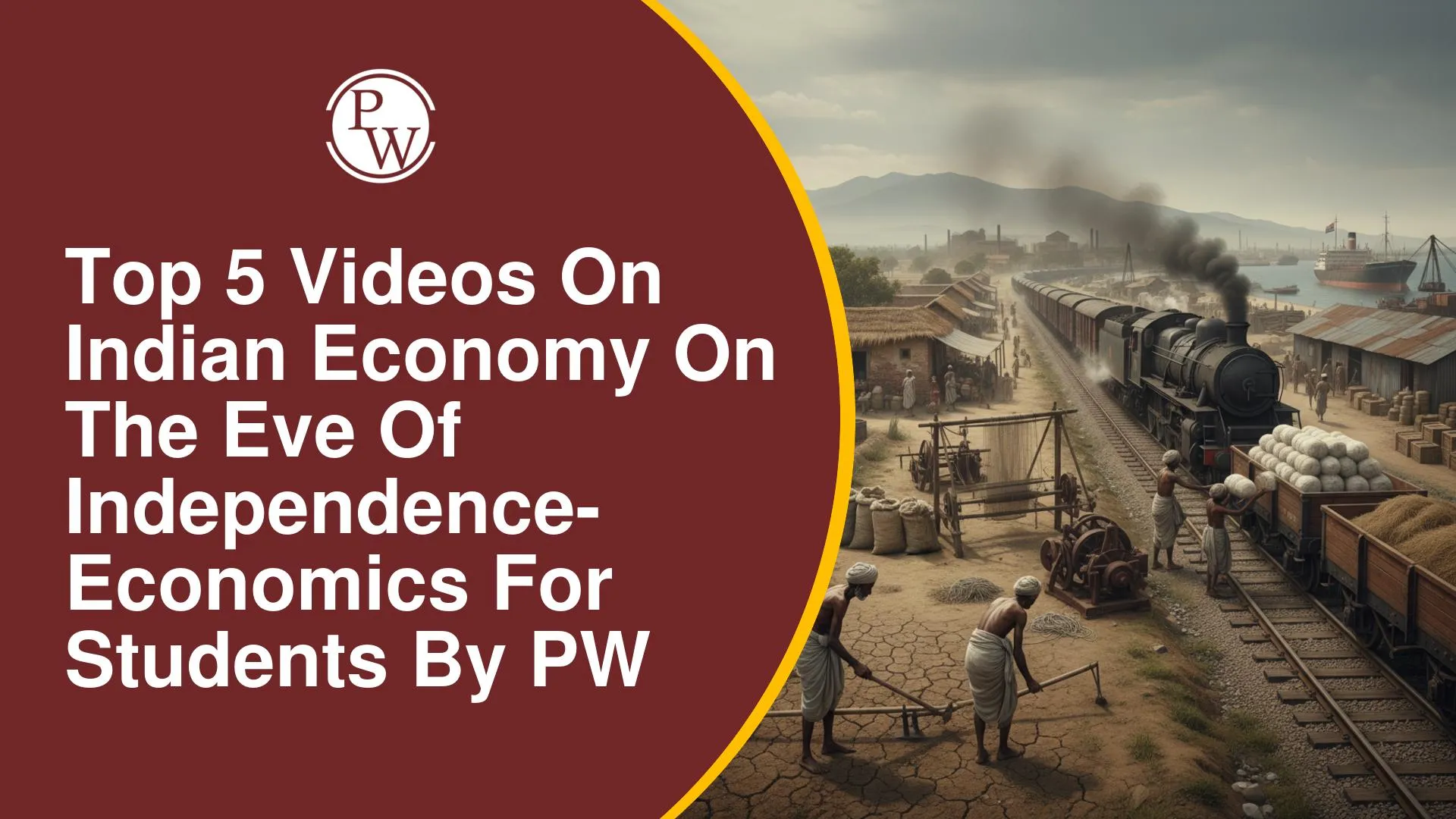
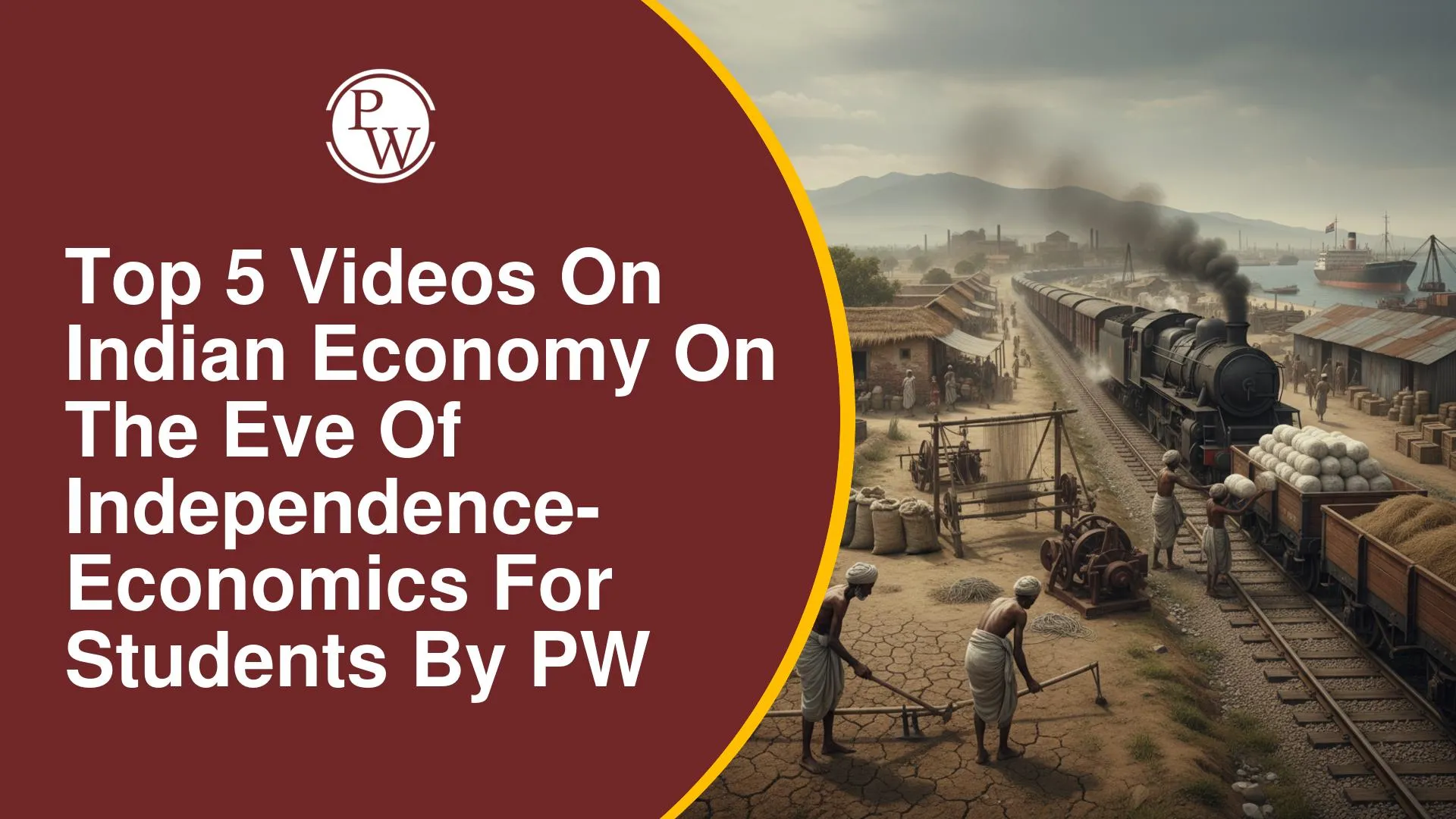
Indian Economy on the Eve of Independence can be challenging because several concepts are closely connected, including colonial policies, land settlements, de-industrialisation, foreign trade, demographic conditions, and infrastructure. You also need to remember national income estimates, changes in occupational structure, and the effects of British rule.
PW’s Class 12 YouTube videos explain these concepts through full-chapter lessons, introductory classes, sector-wise discussions, and revision marathons. You can use them to understand the economic conditions before independence, practise MCQs and case-based questions, and revisit important NCERT concepts.
Video 1: Prepare the Chapter in One Shot With Concepts and Exam Questions
This YouTube video covers the Indian Economy on the Eve of Independence as a complete chapter revision. It explains British rule, India’s earlier economy, Bengal’s textile industry, agriculture and land settlements, industrialisation, de-industrialisation, modern industries, foreign trade, and the drain of wealth. The lesson also discusses demographic conditions, the 1921 census divide, occupational structure, infrastructure, national income estimates, positive contributions, and the state of the economy at independence. NCERT solutions, previous-year questions, case-based questions, and key exam concepts provide additional practice.
Use this lesson for complete revision before school tests, board examinations, or CUET preparation. It is particularly useful if you have already studied the chapter and need to connect its different topics while revisiting important concepts and practising questions.
Video 2: Build Strong Basics Through Colonial History and Economic Conditions
This introductory class explains the meaning and scope of Indian Economy on the Eve of Independence. It introduces agriculture, industry, foreign trade, demographic conditions, occupational structure, and infrastructure. The lesson discusses the Battle of Plassey, the transition from East India Company rule to Crown rule, British economic objectives, and the use of Indian cotton, silk, jute, wool, and indigo. It also compares India’s earlier economy with the economic changes under colonial rule and highlights important MCQ topics.
Start with this class to clarify its historical background. The explanations, examples, and focus on important dates can help you understand how colonial policies affected different sectors of the Indian economy.
Video 3: Revise Agriculture, Partition, and National Income With Practice
This class introduces Indian Economic Development and explains the Indian economy on the eve of independence through topics such as British rule, the Battle of Plassey, the Suez Canal, Partition, and pre-British economic conditions. Key areas include agricultural stagnation, the Zamindari system, commercialisation of agriculture, and national income estimates by different economists. MCQs, practice questions, chapter summaries, and online study guidance support concept revision and answer preparation.
This YouTube video will help you focus on agriculture and national income. Revisiting these topics can help you understand cause-and-effect relationships, recall important terms, and practise applying concepts to Economics questions.
Video 4: Understand the Economy Through Sector-Wise Learning
The YouTube video begins with an introduction to the Economics textbook, syllabus, and chapter structure before explaining British rule, the Battle of Plassey, colonialism, and India’s shift towards becoming a feeder economy. It also discusses Britain, Great Britain, and the UK, the Suez Canal, and India before British rule. Agriculture, industry, foreign trade, demographic conditions, land settlements, the Zamindari system, and commercialisation are covered, followed by a summary of the chapter’s key ideas.
Use this YouTube video to understand the links between colonial policies and economic conditions, then practise organising the information into clear, well-supported written answers.
Video 5: Full-Syllabus Marathon for Faster Board Revision
The Full Indian Economic Development Marathon covers Chapter 1, Indian Economy on the Eve of Independence, along with other textbook chapters on economic planning, reforms, human capital, rural development, employment, the environment, and comparative development. For Chapter 1, the lesson revisits major concepts, colonial conditions, sector-wise issues, case studies, and exam-focused questions. Its wider coverage makes it suitable for reviewing multiple parts of the Class 12 Economics syllabus in one session.
Watch this YouTube video during final revision after completing the individual chapters. It will help you revisit key concepts across the syllabus, practise recalling information, and identify topics that require another look before the board examination.
These five PW YouTube videos cover Indian Economy on the Eve of Independence through introductory explanations, full-chapter teaching, sector-wise learning, question practice, and faster revision. PW Commerce Class 12 online coaching further supports your preparation with live classes, PDF notes, assignments, quizzes, assessments, and doubt-solving support for board exams and CUET. Combine these resources with NCERT revision and written practice to strengthen your understanding of colonial economic policies and prepare clearer, more accurate answers.


Have questions about your prep?
Our experts can answer all your questions