








CUET PG History Notes Unit 4: Growth of Vaishnava and Shaiva Religions

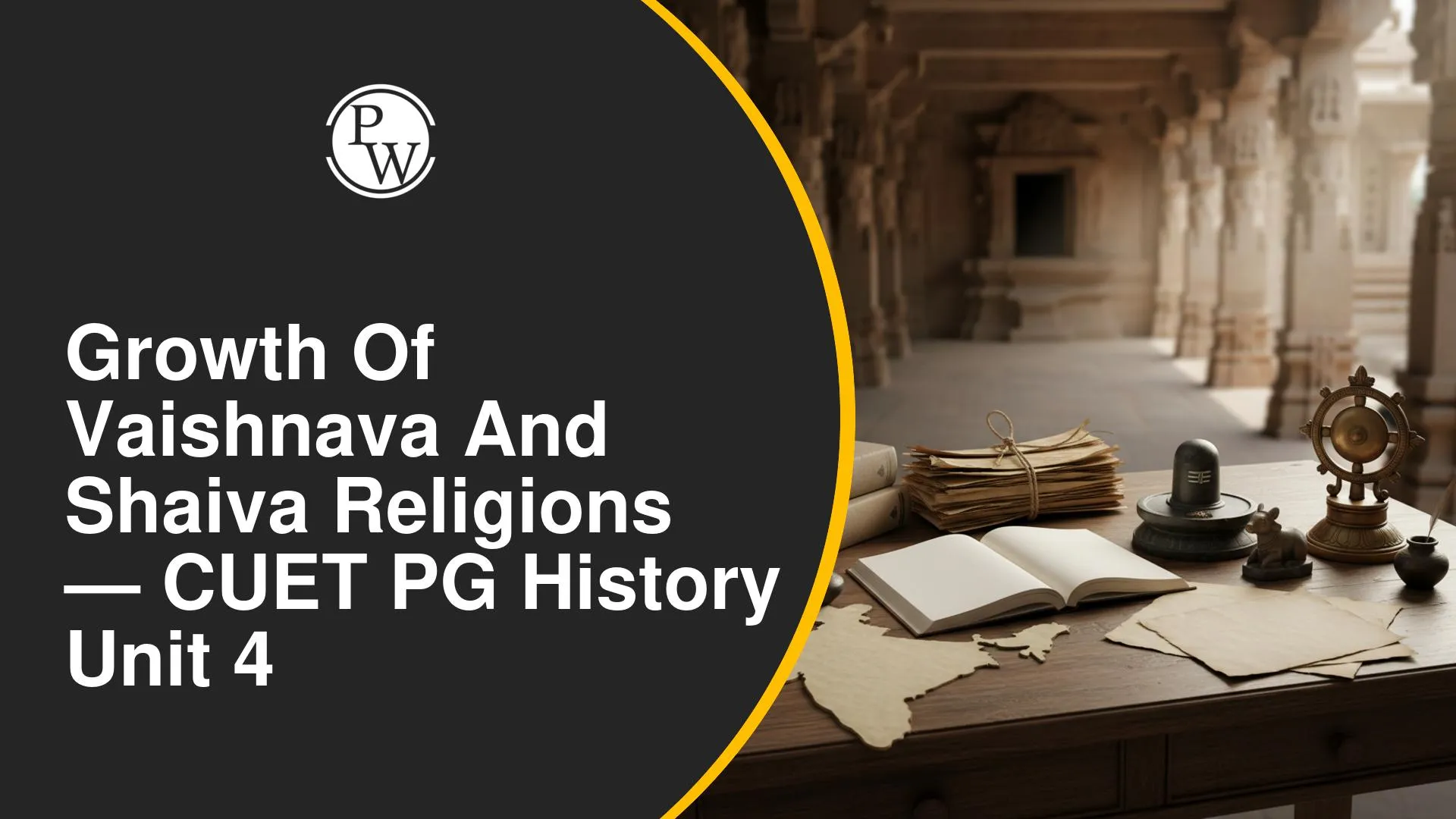
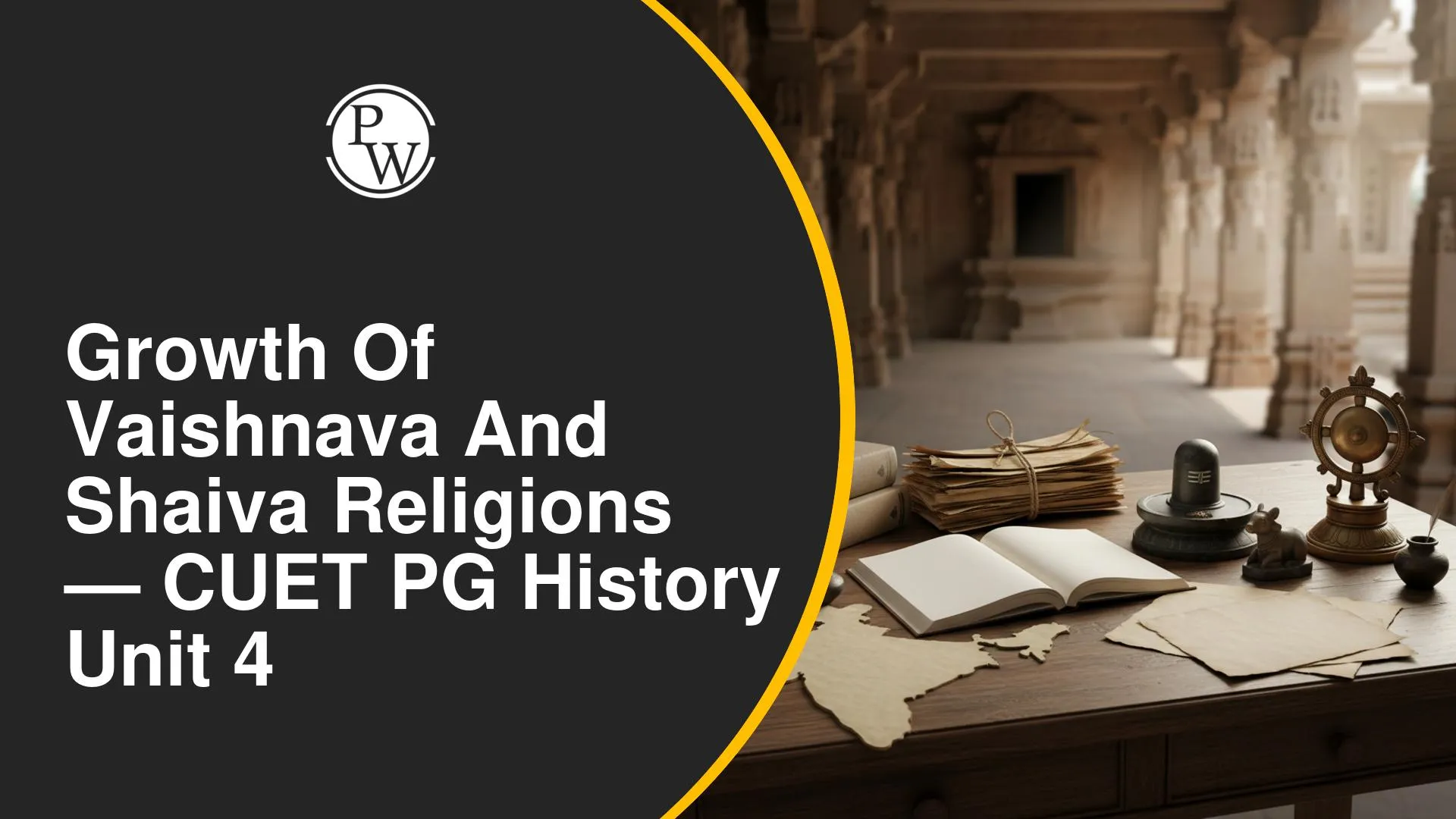
Vaishnavism and Shaivism are two major theistic traditions centred on Vishnu and Shiva. Their growth took place through different historical phases and included the development of devotional traditions, philosophical schools, important texts and regional forms.
These topics are important for CUET PG History preparation because questions can focus on doctrines, texts, saints, sects and comparisons. Students can also use the CUET PG resources to revise related topics and strengthen their preparation.
Vaishnavism: Growth and Development
Vaishnavism centres on Vishnu as the supreme deity and protector of the universe. Vishnu is believed to take avatars when adharma rises. Important avatars include Rama, Krishna, Narasimha, Vamana, Buddha and Kalki.
Its roots can be traced to the Vedic depiction of Vishnu's three strides. The tradition later developed around Narayana, Vasudeva and Krishna. It also developed independently in North and South India.
Key Texts of Vaishnavism
Important Vaishnava texts include the Bhagavata Purana, Bhagavad Gita, Narayaniya, Pancharatra Agama and Vaikhanasa Agama. Vaishnavism is also known as the Bhagavata tradition.
-
Five Forms of Vishnu
The five forms of Vishnu, often important for examination questions, are:
|
Form |
Meaning |
|
Para |
Supreme transcendental form |
|
Vyuha |
Vasudeva, Sankarshana, Pradyumna and Aniruddha |
|
Vibhava |
Incarnations or avatars |
|
Antaryamin |
God dwelling within all beings |
|
Archā |
Idol form worshipped in temples |
2. Vaishnavism Philosophical Schools
Several philosophers developed different views on the relationship between the soul and God.
|
Philosopher |
School |
|
Ramanuja |
Vishishtadvaita |
|
Madhvacharya |
Dvaita |
|
Nimbarka |
Dvaitadvaita |
|
Vallabhacharya |
Shuddhadvaita/Pushtimarg |
|
Chaitanya Mahaprabhu |
Achintya Bhedabheda/Gaudiya Vaishnavism |
3. Alvars and Vaishnavism in Tamil Nadu
The Alvars were Vaishnava poet-saints who helped popularise Vishnu worship in Tamil Nadu. They composed devotional hymns and challenged caste distinctions. Andal was the only female Alvar and composed the Tiruppavai and Nachiyar Tirumozhi.
The Nalayira Divya Prabandham contains 4,000 Tamil hymns composed by the Alvars and is considered equivalent to the Vedas within the Vaishnava tradition.
Shaivism: Origin and Development
Shaivism centres on Shiva as the supreme deity. Shiva is associated with creation, protection and destruction, with special emphasis on the destruction of negativity and ignorance. Major forms include Nataraja, Mahayogin and Shiva Linga.
Shaivism has possible pre-Vedic and Dravidian roots. However, the direct identification of the Indus Valley “Proto-Shiva” seal with Shaivism is not accepted by historians. In Vedic texts, Shiva appears as Rudra, while the Yajurveda refers to him as Pashupati and Neelagriva.
-
Nayanars and Shaivism in South India
The Nayanars were Shaiva poet-saints who helped spread Shiva worship in Tamil Nadu. They also opposed caste-based discrimination. The Pallava period saw the growth of Shaiva cults and temple construction.
Important Shaiva texts include Tiruvachagam, composed by Manikkavachakar, and Periya Puranam, a 12th-century work describing the lives of the 63 Nayanar saints.
Major Shaiva Sects and Philosophies
Shaivism developed into different sects and philosophical traditions, each with its own practices and ideas about Shiva. The major traditions include Pashupata, Kapalik, Kashmir Shaivism, and Lingayatism.
-
Pashupata and Kapalik
The Pashupata sect is associated with Lakulisha and focused on asceticism, meditation and union with Shiva. The Kapalik sect was known for extreme renunciation and cremation-ground rituals.
-
Kashmir Shaivism and Trika Philosophy
Kashmir Shaivism, also called Trika Shaivism, was founded by Vasugupta in the 9th century. Abhinavagupta later systematised its philosophical ideas.
It teaches that the universe is a real manifestation of divine energy. Its philosophy is non-dualistic, with ultimate reality understood as pure consciousness identified with Shiva. Shiva represents the static aspect, while Shakti represents the dynamic aspect.
The concept of Pratyabhijna, or recognition, refers to recognising one's inherent divine nature. The tradition also includes tantric practices, meditation and yoga.
-
Shaiva Siddhanta Philosophy
Shaiva Siddhanta is a major South Indian philosophical school based on the Vedas, Shaiva Agamas and Tamil devotional texts. It considers Shiva, jiva and prakriti as eternal realities.
The material world is considered real. Liberation is achieved through Shiva's grace, which guides the soul towards enlightenment and unity with God.
-
Veerashaivism/Lingayatism
Veerashaivism or Lingayatism was founded by Basavanna in 12th-century Karnataka. It rejected caste distinctions and Brahmanical ritualism and supported greater equality for women. Followers wear a small personal linga called the Ishtalinga and practise burial rather than cremation.
Vaishnavism and Shaivism: Quick Comparison
Vaishnavism and Shaivism have distinct deities, concepts, symbols, saints, texts and philosophical traditions. The following table provides a quick comparison of their major features for CUET PG History revision.
|
Aspect |
Vaishnavism |
Shaivism |
|
Supreme Deity |
Vishnu |
Shiva |
|
Major Concept |
Avatars |
Nataraja, Mahayogin, Linga |
|
Symbol |
Sudarshan Chakra |
Trishul |
|
Tamil Saints |
Alvars |
Nayanars |
|
Important Texts |
Nalayira Divya Prabandham |
Periya Puranam, Tiruvachagam |
|
Major Schools |
Vishishtadvaita, Dvaita, Dvaitadvaita, Shuddhadvaita, Achintya Bhedabheda |
Pashupata, Kapalik, Kashmir Shaivism, Shaiva Siddhanta, Lingayatism |
|
Important Reform Tradition |
Gaudiya Vaishnavism |
Veerashaivism/Lingayatism |
Regional Spread and Assimilation
The growth of both traditions occurred across two broad phases: around 300 BCE–100 CE and again from around 300/400 CE to 700–800 CE. Vaishnavism is broadly associated with North India and Shaivism with South India, but both traditions existed across the subcontinent.
Local and tribal deities were also incorporated into these wider traditions. Jagannath of Odisha, for example, was originally a tribal deity and was later identified with Vishnu. This process contributed to religious integration but could also reduce the independent identity of local traditions.
Get Preparation Support from PW for CUET PG History
Students preparing for CUET PG History can use organised study and practice resources for revision. PW provides courses, study material and practice resources that can support preparation for different stages.
|
Feature |
Details |
|
Courses |
|
|
Mode |
Live + Recorded Classes |
|
Study Material |
Notes, PDFs and Practice Questions |
|
Practice |
The growth of Vaishnavism and Shaivism can be revised through their major texts, saints, philosophical schools and regional developments. Comparing these features can help students revise important themes from CUET PG Ancient History Unit 4.
Related Resources
FAQs
What is the difference between Vaishnavism and Shaivism?
Which is older, Shaivism or Vaishnavism?
What are the five forms of Vishnu?
Who founded Kashmir Shaivism?
What is the difference between Alvars and Nayanars?
What is Shaiva Siddhanta philosophy?
Who founded Veerashaivism or Lingayatism?
What are the key texts of Vaishnavism?
What is Ramanuja's philosophy?


Have questions about your prep?
Our experts can answer all your questions




 Online Classes for CUET PG Exams.Learn from PW's Educators through Live Lectures.Live & Recorded Classes are available at ease.Lectures are available in Hinglish (Hindi and English mix).Get access to Study Materials, Notes & Mock Tests.


