






Climate of Madhya Pradesh, Weather of Madhya Pradesh, Climate Change
 Bhavya Upadhyay26 Jun, 2024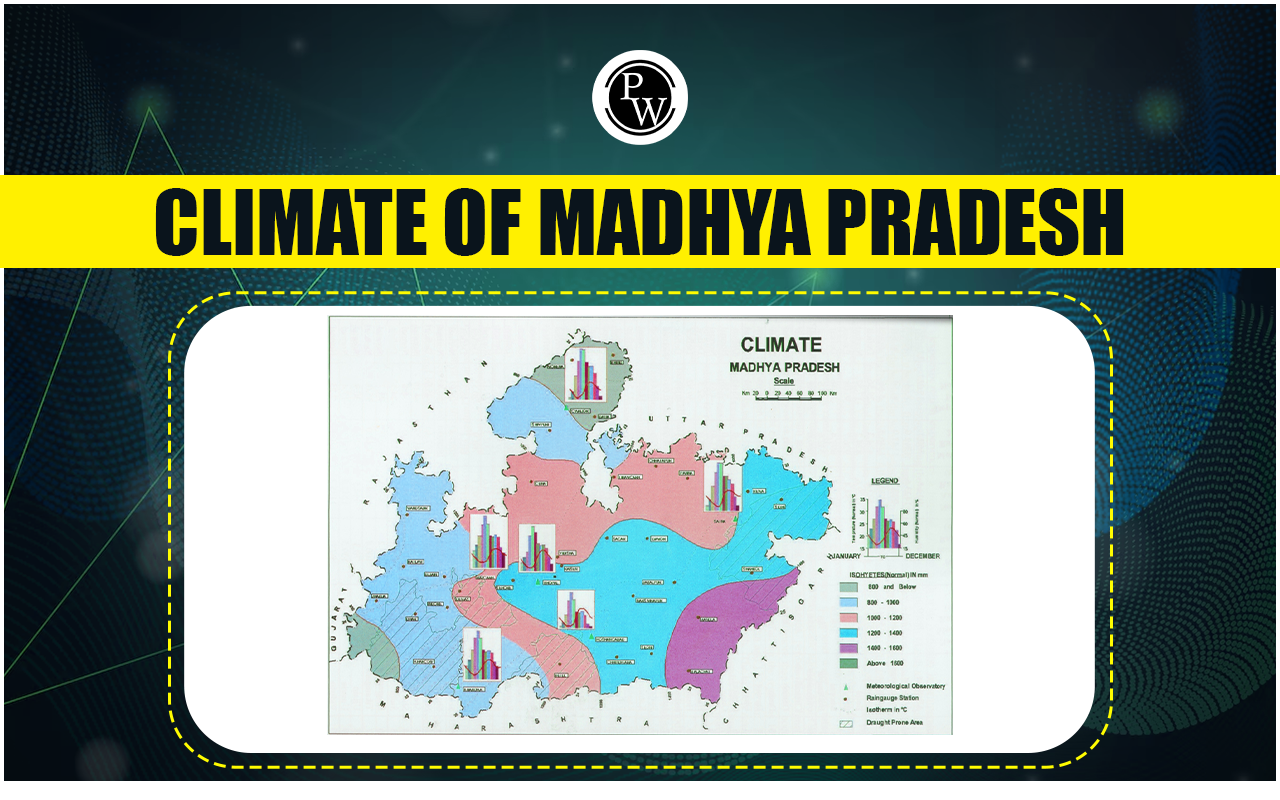
Climate of Madhya Pradesh: Madhya Pradesh, often referred to as the "Heart of India" due to its central location, is a state with diverse topography and a rich cultural heritage. This diversity extends to its climate as well, which is influenced by a combination of geographical features and seasonal variations. This blog aims to provide a detailed understanding of the climate in Madhya Pradesh, exploring its seasons, regional variations, and the impact of climate change.
Climate of Madhya Pradesh Overview
Madhya Pradesh primarily experiences a subtropical climate, characterized by hot summers, a monsoon season, and mild winters. The climate varies significantly across the state due to its diverse topography, which includes plateaus, river valleys, hills, and forests. The Narmada and Tapti rivers flow through the state, contributing to its agricultural fertility.
| Climate of Madhya Pradesh Overview | |
| Climate Feature | Description |
| Temperature | Hot summers, mild winters |
| Rainfall | Substantial during monsoon, varies by region |
| Seasonal Variation | Four distinct seasons: summer, monsoon, post-monsoon, winter |
| Regional Diversity | Varied climate across northern, central, and southern regions |
| Influencing Factors | Geography, monsoon winds, proximity to water bodies |
Features of the Climate of Madhya Pradesh
- Hot Summers: Temperatures often exceed 40°C (104°F), especially in the northern and western regions.
- Monsoon Rains: The state receives substantial rainfall from the southwest monsoon, essential for its agriculture.
- Mild Winters: Winters are generally mild with significant temperature drops at night, particularly in the central and northern regions.
- Regional Diversity: Varying climate patterns across different regions due to diverse geographical features.
Factors Affecting the Climate of Madhya Pradesh
- Latitude and Longitude: Being centrally located, the state's climate is influenced by both tropical and subtropical air masses.
- Topography: The presence of plateaus, hills, and river valleys contributes to regional climatic variations.
- Monsoon Winds: The southwest monsoon plays a crucial role in determining the rainfall patterns.
- Proximity to Water Bodies: Rivers like Narmada and Tapti influence the microclimate of their surrounding areas.
Geographical Context to Climate of Madhya Pradesh
Madhya Pradesh is bordered by Uttar Pradesh to the northeast, Chhattisgarh to the southeast, Maharashtra to the south, Gujarat to the west, and Rajasthan to the northwest. The state features a varied landscape that includes plateaus, river valleys, hills, and forests. The Narmada and Tapti rivers flow through the state, contributing to its agricultural fertility.
Classification of Climate of Madhya Pradesh
Madhya Pradesh primarily experiences a subtropical climate, characterized by hot summers, a monsoon season, and mild winters. The Köppen climate classification identifies the climate of Madhya Pradesh as mainly tropical wet and dry (Aw), with some regions classified as humid subtropical (Cwa). This classification reflects the state's hot summers, distinct monsoon season, and mild winters.
Climate Zones of Madhya Pradesh
| Climate Zones of Madhya Pradesh | |
| Climatic Zones | Features |
| Malwa Plateau |
|
| Northern Plain |
|
| Vindhya and Satpura mountain range |
|
| Narmada valley Region |
|
| Baghelkhand Plateau |
|
Northern Madhya Pradesh
- Climate: More extreme temperatures with hotter summers and colder winters.
- Rainfall: Relatively lower compared to other regions.
- Key Areas: Gwalior, Chambal.
Central Madhya Pradesh
- Climate: Moderate climate with balanced temperatures and rainfall.
- Rainfall: Higher rainfall during the monsoon.
- Key Areas: Bhopal, Indore.
Southern Madhya Pradesh
- Climate: Warmer and more humid compared to the northern parts.
- Rainfall: Receives substantial monsoon rainfall.
- Key Areas: Jabalpur, Mandla.
Seasons in Climate of Madhya Pradesh
Summer (March to June)
The summer season is typically hot and dry. Temperatures peak in May and June, often soaring above 40°C (104°F) in many parts of the state, particularly in the northern and western regions.
Key Characteristics
- High temperatures, often exceeding 40°C (104°F).
- Dry and arid conditions, especially in the northern and western areas.
- Occasional dust storms due to the hot winds known as 'loo'.
Monsoon (July to September)
The southwest monsoon arrives in July, bringing heavy rainfall that replenishes rivers and reservoirs. Average rainfall ranges from 800 mm to 1,200 mm, with western and central regions receiving more rain than the northern regions.
Key Characteristics
- Average rainfall ranges from 800 mm to 1,200 mm.
- Western and central regions receive more rainfall compared to the northern regions.
- Humidity levels increase significantly.
- Occasional flooding in low-lying areas due to heavy rains.
Post-Monsoon (October to November)
The post-monsoon season sees a transition from wet conditions to drier, cooler months, marked by a gradual decrease in temperature and humidity.
Key Characteristics
- Pleasant weather with moderate temperatures.
- Decreased humidity and occasional light showers.
- Ideal for agricultural activities such as sowing of Rabi crops.
Winter (December to February)
Winters are mild compared to northern India but can be quite chilly, especially in the central and northern regions. Daytime temperatures range between 10°C (50°F) and 27°C (81°F), with nighttime temperatures dropping to around 5°C (41°F) or lower.
Key Characteristics
- Daytime temperatures range between 10°C (50°F) and 27°C (81°F).
- Nighttime temperatures can drop to around 5°C (41°F) or lower in some areas.
- Clear skies and low humidity.
Regional Based Variations to Climate of Madhya Pradesh
Northern Madhya Pradesh
- Climate: More extreme temperatures with hotter summers and colder winters.
- Rainfall: Relatively lower compared to other regions.
- Key Areas: Gwalior, Chambal.
Central Madhya Pradesh
- Climate: Moderate climate with balanced temperatures and rainfall.
- Rainfall: Higher rainfall during the monsoon.
- Key Areas: Bhopal, Indore.
Southern Madhya Pradesh
- Climate: Warmer and more humid compared to the northern parts.
- Rainfall: Receives substantial monsoon rainfall.
- Key Areas: Jabalpur, Mandla.
Impact of Climate Change to Climate of Madhya Pradesh
Climate change poses significant challenges to Madhya Pradesh, as evidenced by changes in temperature patterns, rainfall distribution, and increased frequency of extreme weather events. Key impacts include:
- Rising Temperatures: Increasing temperatures, particularly in summer, can exacerbate water scarcity and heat-related illnesses.
- Erratic Rainfall: Unpredictable rainfall patterns can affect agricultural productivity, leading to crop failures and food insecurity.
- Water Resources: Changes in precipitation and higher evaporation rates impact the availability of water for irrigation, drinking, and other uses.
- Biodiversity: Shifts in climate zones threaten the unique flora and fauna of the region, including the forests and wildlife.
Adaptation and Mitigation Strategies to Climate of Madhya Pradesh
To combat the adverse effects of climate change, Madhya Pradesh has implemented various adaptation and mitigation strategies, including:
- Water Conservation: Initiatives to improve water management, such as rainwater harvesting, construction of check dams, and efficient irrigation practices.
- Afforestation: Planting trees and restoring forests to enhance carbon sequestration and improve biodiversity.
- Sustainable Agriculture: Promoting crop diversification, drought-resistant crops, and organic farming practices.
- Renewable Energy: Increasing the adoption of solar and wind energy to reduce dependency on fossil fuels.
Rainfall Distribution in Climate of Madhya Pradesh
Rainfall distribution in Madhya Pradesh varies significantly across the state:
- Western and Central Regions: Receive higher rainfall, particularly during the monsoon season, averaging between 1,000 mm to 1,200 mm.
- Northern Regions: Receive relatively lower rainfall, ranging from 800 mm to 1,000 mm.
- Southern Regions: Experience substantial monsoon rainfall, contributing significantly to the state's water resources and agricultural activities.
Conclusion to Climate of Madhya Pradesh
Madhya Pradesh's climate is a blend of extremes and moderations, shaped by its geographical diversity and seasonal variations. Understanding these patterns is crucial for planning and development, especially in the face of climate change. Through sustainable practices and proactive measures, Madhya Pradesh can continue to thrive while mitigating the impacts of a changing climate.
Climate of Madhya Pradesh <span style=
Q.1 What is the average weather in Madhya Pradesh?
Q.2 What type of monsoon is MP?
Q.3 What is the climate of MP?
Q.4 What is the season in MP?











 Live & recorded classes available at easeDashboard for progress trackingMillions of practice questions at your fingertips

