






Folk Dances of West Bengal, Various Traditional Dance Forms
Folk Dances of West Bengal has been discussed here which is crucial part of the Indian culture. Get details of Folk Dances of West Bengal and their importance.
 Priyanka Gupta18 Jul, 2024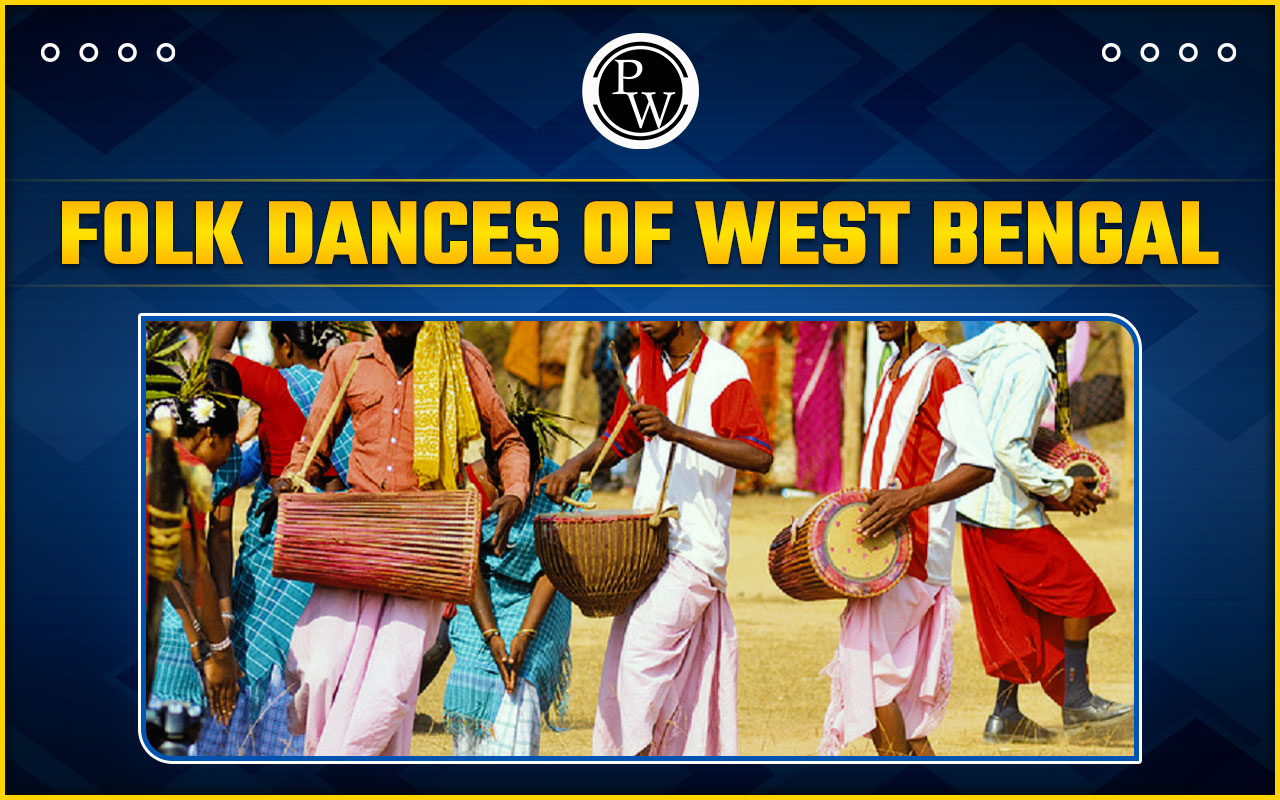
Folk Dances of West Bengal: West Bengal, situated in Eastern India, is celebrated for its vibrant cultural heritage, prominently expressed through a diverse array of art forms that resonate deeply with its tradition and history. Among these, folk dances stand out as captivating expressions that vividly portray the state's sociocultural landscape. Dances like Chhau, Jatra, Bhawaiya, Raibenshe, and Gambhira are not mere performances but intricate narratives conveyed through rhythmic movements and melodious tunes.
Emerging from the heart of local communities, these Folk Dances of West Bengal encapsulate beliefs, customs, and stories, creating a mesmerizing tapestry of music, rhythm, and vivid colors. Exploring West Bengal's folk dances offers aspiring government exam candidates a unique window into the region's cultural richness and dynamic local traditions.Folk Dances of West Bengal
Rooted in simplicity, spontaneity, and communal involvement, the Folk Dances of West Bengal embody the seamless integration of diverse social and religious customs within the state. Chhau, Jatra, Bhawaiya, Raibenshe, and Gambhira represent quintessential expressions of Bengal's rich cultural heritage, each providing profound glimpses into its multifaceted traditions. West Bengal's folk dances, such as Chhau, Jatra, Bhawaiya, Raibenshe, and Gambhira, resonate with the state's cultural tapestry. These dances, grounded in community spirit and simplicity, reflect the harmonious blend of diverse social and religious practices. Chhau combines martial arts with vibrant costumes and masks, while Jatra narrates mythological tales through melodious songs and lively performances. Bhawaiya expresses love and longing through graceful movements, and Raibenshe showcases tribal valor with energetic choreography. Gambhira, known for its satire and social commentary, adds depth to Bengal's folk dance repertoire, offering a captivating glimpse into its dynamic cultural traditions.List of Folk Dances of West Bengal
The List of Folk Dances of West Bengal along with their importance and details has been mentioned in the table given below. The famous folk dances that emerged in West Bengal are Chhau, Jatra, Bhawaiya, Raibenshe, and Gambhira| List of Folk Dances of West Bengal | |
| Dance Form | Description |
| Brita Dance | Integral to rural Bengali culture, observed during festive occasions like Bengali New Year. Features intricate footwork, synchronized hand movements, traditional attire with white sarees and purple borders, bangles, and necklaces. |
| Tusu Dance | Traditional Santhal dance performed in December and January, especially in Pausa month, is renowned in the Birbhum district for its cultural significance. |
| Lathi Dance | Traditional dance of West Bengal during Muharram, emphasizing physical prowess with bamboo sticks and diverse sounds, segmented into unique choreographic segments. |
| Chhau Dance | Tribal dance from Purulia, combining martial arts, acrobatics, and thematic storytelling from Indian epics and folklore. Accompanied by Dhamsa, Dhol, Shehnai, and Murli music. |
| Jatra Dance | Folk theatre integrating dance, music, and dialogue, based on mythological stories and social issues, performed in open areas during religious festivals. |
| Baul Dance | Renowned for its distinct style and passion-driven performances, deeply rooted in Bengal's cultural traditions and cherished by its residents. |
| Rabindrasangeet | Popular dance form beyond Bengal embraced for its connection to Rabindranath Tagore's legacy, is performed with enthusiasm and cultural pride. |
| Bhawaiya Dance | North Bengal's folk music tradition, expresses emotions of longing and love through unique singing styles and serene movements, reflecting rural communal lifestyles. |
| Raibenshe Dance | Martial dance from Purulia's Baghmundi area, symbolizes warrior spirit and agricultural practices, portraying historical pride and cultural essence. |
| Gambhira Dance | Originating from the Malda district, combines song, dance, and satire to critique religious, philosophical, and socio-political issues, adorned with masks and costumes invoking Indian mythology. |
Important Folk Dances of West Bengal
The important Folk Dances of West Bengal are mentioned below. These folk dances have been a part of the culture for several years and will be passed on to generations. Brita Dance: Brita dance is a pivotal facet of rural Bengali culture, often celebrated during festive occasions, especially Bengali New Year. It is distinguished by intricate footwork and synchronized hand movements harmonizing with music. Dancers attire themselves in traditional white sarees with purple borders, adorned with bangles and necklaces. Beyond mere entertainment, Brita dance serves as a custodian of West Bengal's rich cultural heritage and historical legacy, passing down customs and traditions to younger generations, thus ensuring their continuity. Brita dance stands as a testament to West Bengal's diverse cultural panorama, shaping its identity and enriching India's cultural heritage. Tusu Dance: Tusu dance, a traditional folk dance of West Bengal, offers a unique glimpse into Santhal culture. It exudes distinct beauty and embodies local traditions, typically performed in December and January, notably during the month of Pausa. Particularly renowned in Birbhum district, Tusu dance captivates with its cultural significance and vibrant performances. Lathi Dance: Lathi dance, a famous folk dance of West Bengal, unfolds as a poignant expression during Muharram, particularly in its initial ten days. Characterized by bamboo sticks wielded skillfully with varied sounds, Lathi dance enthralls with its segmented performances, each showcasing unique characteristics. Chhau Dance: Originating from Purulia district, Chhau dance blends martial arts, acrobatics, and thematic storytelling. Adorned in elaborate costumes and masks, performers weave tales from Indian epics and folklore to rhythmic beats of Dhamsa, Dhol, Shehnai, and Murli. Recognized by UNESCO, Chhau transcends its role as a dance form, embodying bravery and valor integral to West Bengal's tribal heritage.Highest Mountain Peak in West Bengal
Jatra Dance: Jatra, a cherished form of folk theatre in Bengal, integrates dance, music, and dialogue, often based on mythological tales and social issues. Its communal performances during religious festivals foster cultural values, traditions, and social messages, nurturing community identity and cohesion. Baul Dance: Embedded in Bengal's cultural tapestry, Baul dance resonates with its distinctive style and passion-driven performances, captivating audiences with its spiritual essence and cultural legacy. Rabindra Sangeet Dance: Widely embraced beyond Bengal, Rabindra Sangeet dance illuminates Rabindranath Tagore's legacy, leaving an indelible mark on cultural enthusiasts worldwide. Bhawaiya Dance: Hailing from North Bengal's Cooch Behar district, Bhawaiya dance intertwines melody and communal stories, offering insights into the region's cultural geography and shared heritage. Raibenshe Dance: Rooted in Purulia's Baghmundi area, Raibenshe dance celebrates Bengal's agrarian heritage and warrior spirit, showcasing vigorous movements and historical pride. Gambhira Dance: Originating from Malda, Gambhira dance blends song, dance, and satire, reflecting on religious, philosophical, and socio-political issues, and encouraging critical societal dialogue.Folk Dances of West Bengal FAQs
1. What is the folk dance of West Bengal Kathi?
Ans. The dance is popular during Durga Puja and is displayed in various parts of West Bengal. The sticks resemble the weapons used in the battle and the person at the center is presumed to be the victim.
2. What is the folk music of West Bengal?
Ans. The music of West Bengal includes multiple indigenous musical genres such as Baul, Ramprasadi, Bishnupuri Classical, Kirtan, Shyama Sangeet, Rabindra Sangeet, etc.
3. What is Chhau dance and where did it originate from?
Ans. Chhau is a vibrant folk dance form originating from the Purulia district of West Bengal. Distinguished for its unique blend of martial arts, acrobatics, and dance, Chhau encapsulates storytelling through awe-inspiring performances, typically showcasing epic tales and mythological themes.
4. How does Gambhira dance form address social issues?
Ans. Gambhira, a folk dance form native to Malda, is unique in its role as a social commentary. Addressing various religious and societal issues, Gambhira uses satire and humor wrapped in engaging performances to spark dialogue and reflection on prevalent social topics.
🔥 Trending Blogs


Talk to a counsellorHave doubts? Our support team will be happy to assist you!


Check out these Related Articles








Join 15 Million students on the app today!
 Live & recorded classes available at easeDashboard for progress trackingMillions of practice questions at your fingertips


Free Learning Resources
PW Books
Notes (Class 10-12)
PW Study Materials
Notes (Class 6-9)
Ncert Solutions
Govt Exams
Our Other Websites
Class 6th to 12th Online Courses
Govt Job Exams Courses
UPSC Coaching
Defence Exam Coaching
Gate Exam Coaching
Other Exams
Know about Physics Wallah
Physics Wallah is an Indian edtech platform that provides accessible & comprehensive learning experiences to students from Class 6th to postgraduate level. We also provide extensive NCERT solutions, sample paper, NEET, JEE Mains, BITSAT previous year papers & more such resources to students. Physics Wallah also caters to over 3.5 million registered students and over 78 lakh+ Youtube subscribers with 4.8 rating on its app.
We Stand Out because
We provide students with intensive courses with India’s qualified & experienced faculties & mentors. PW strives to make the learning experience comprehensive and accessible for students of all sections of society. We believe in empowering every single student who couldn't dream of a good career in engineering and medical field earlier.
Our Key Focus Areas
Physics Wallah's main focus is to make the learning experience as economical as possible for all students. With our affordable courses like Lakshya, Udaan and Arjuna and many others, we have been able to provide a platform for lakhs of aspirants. From providing Chemistry, Maths, Physics formula to giving e-books of eminent authors like RD Sharma, RS Aggarwal and Lakhmir Singh, PW focuses on every single student's need for preparation.
What Makes Us Different
Physics Wallah strives to develop a comprehensive pedagogical structure for students, where they get a state-of-the-art learning experience with study material and resources. Apart from catering students preparing for JEE Mains and NEET, PW also provides study material for each state board like Uttar Pradesh, Bihar, and others
Copyright © 2026 Physicswallah Limited All rights reserved.