History of Madhya Pradesh, Ancient History, Modern History
 Bhavya Upadhyay3 Jul, 2024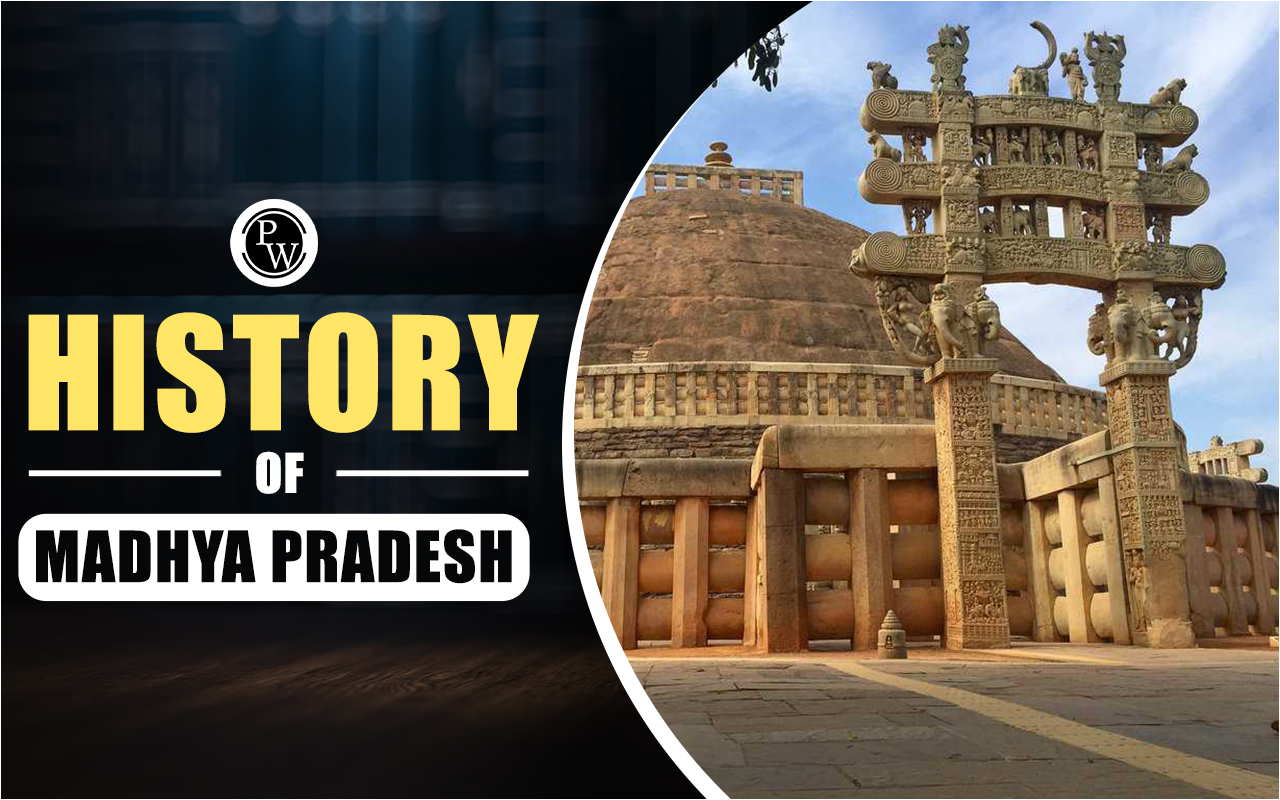
History of Madhya Pradesh: Madhya Pradesh, often called the "Heart of India," is a state with a history as diverse and vibrant as its landscape. From prehistoric cave paintings to the grandeur of ancient empires, from the splendor of medieval kingdoms to the transformative impacts of colonial rule, the history of Madhya Pradesh is a captivating journey through time. This blog delves into the rich past of this central Indian state, exploring the various eras that have shaped its unique cultural and historical identity.
History of Madhya Pradesh
Madhya Pradesh, often referred to as the "Heart of India" due to its central location, boasts a rich and diverse history that stretches back to prehistoric times. This vast state, with its varied geography and cultural heritage, has been a significant player in the subcontinent's history. From ancient civilizations and empires to colonial rule and modern times, the history of Madhya Pradesh is a fascinating tapestry of events and influences.
Overview of the History of Madhya Pradesh
Madhya Pradesh, located in central India, has a rich history that dates back to ancient times. It was home to the Maurya and Gupta Empires and later became a significant region during the rule of the Rajputs and the Delhi Sultanate. During the Mughal era, it saw a mix of cultural influences. In the 18th century, the Marathas gained control before it eventually became part of British India and then independent India in 1947.
| History of Madhya Pradesh Overview | |
| Period | Key Events and Rulers |
| Ancient Period | Maurya Empire (4th-2nd century BCE), Gupta Empire (4th-6th century CE) |
| Medieval Period | Rajput's (10th-12th century), Delhi Sultanate (13th-16th century) |
| Mughal Period | Mughal Empire influence (16th-18th century) |
| Maratha and British Period | Maratha rule (18th century), British India (19th-20th century) |
| Post-Independence | Formation of Madhya Pradesh state (1956) |
Prehistoric and Ancient Period of the History of Madhya Pradesh
Prehistoric Era
The history of Madhya Pradesh begins in the prehistoric era. Archaeological evidence, including cave paintings at Bhimbetka, indicates human settlement in this region around 100,000 years ago. Bhimbetka, a UNESCO World Heritage Site, showcases some of the earliest traces of human life in India, with rock shelters that feature paintings depicting the life of prehistoric man.
Ancient Civilizations
By the 2nd millennium BCE, the region saw the rise of several significant ancient civilizations. The Malwa region in western Madhya Pradesh was part of the Chalcolithic culture. This period marked the transition from the Stone Age to the use of metals, particularly copper.
The early historical period saw the region being part of the Mahajanapadas, the great kingdoms mentioned in ancient Indian texts. Avanti, with its capital at Ujjain, was one of the sixteen Mahajanapadas and played a crucial role in the spread of Jainism and Buddhism.
Classical Period of the History of Madhya Pradesh
Maurya and Gupta Empires
The influence of the Maurya Empire, founded by Chandragupta Maurya in the 4th century BCE, extended to Madhya Pradesh. The region flourished under Ashoka, one of the greatest Mauryan emperors, who promoted Buddhism and established stupas, including the famous Sanchi Stupa.
The Gupta Empire, often regarded as the "Golden Age of India," also left a lasting impact on Madhya Pradesh. From the 4th to the 6th century CE, the Gupta dynasty fostered a period of prosperity and cultural renaissance. This era saw the construction of numerous temples and the promotion of art, science, and literature.
Medieval Period of the History of Madhya Pradesh
Rajput Kingdoms
Following the decline of the Gupta Empire, the region witnessed the rise of several Rajput kingdoms. The Paramaras, based in Malwa with their capital at Dhar, and the Chandellas, known for their stunning temples at Khajuraho, were prominent during this period.
Khajuraho, another UNESCO World Heritage Site, is renowned for its exquisite temples adorned with intricate sculptures. These temples, built between the 9th and 11th centuries, are a testament to the architectural and artistic achievements of the Chandella dynasty.
Islamic Rule
The medieval period also saw the advent of Islamic rule in Madhya Pradesh. The region came under the control of the Delhi Sultanate in the early 13th century. The invasion of the Malwa Sultanate followed, with Mandu serving as its capital. Mandu, with its palaces, mosques, and tombs, remains a significant example of Indo-Islamic architecture.
Early Modern Period of the History of Madhya Pradesh
Mughal Empire
The Mughal Empire, under rulers like Akbar, further consolidated control over Madhya Pradesh in the 16th century. Akbar's policy of integration and tolerance allowed the region to flourish. The Mughal period also saw the construction of several forts and palaces, adding to the architectural heritage of the state.
Maratha Confederacy
In the 18th century, the decline of Mughal power led to the rise of the Maratha Confederacy. The Scindias of Gwalior, the Holkars of Indore, and the Bhonsles of Nagpur were among the prominent Maratha rulers who established their dominions in Madhya Pradesh. This era was marked by frequent conflicts and shifting alliances but also by significant contributions to the region's development.
Colonial Period of the History of Madhya Pradesh
British Rule
The 19th century saw the advent of British rule in Madhya Pradesh. Following the defeat of the Marathas in the Third Anglo-Maratha War (1817-1818), the British East India Company annexed large parts of the region. The British administration reorganized the territories, forming the Central Provinces and Berar.
During the colonial period, Madhya Pradesh saw several socio-economic changes, including the introduction of modern education, infrastructure development, and new administrative practices. However, the region also experienced resistance and uprisings against British rule, with leaders like Tantia Tope and Rani Lakshmibai playing crucial roles in the 1857 revolt.
Post-Independence Era of the History of Madhya Pradesh
Formation of Madhya Pradesh
Post-independence, the reorganization of states in 1956 led to the formation of the present-day Madhya Pradesh. The state was carved out from the Central Provinces and Berar, Madhya Bharat, Vindhya Pradesh, and Bhopal. In 2000, the southeastern part of the state was separated to form the new state of Chhattisgarh.
Modern Madhya Pradesh
Today, Madhya Pradesh is known for its rich cultural heritage, diverse population, and significant economic potential. The state is a blend of tradition and modernity, with major cities like Bhopal, Indore, and Jabalpur serving as hubs of education, industry, and culture.
Cultural Heritage
The state is home to numerous historical sites, including the forts of Gwalior, the temples of Khajuraho, the Buddhist stupas of Sanchi, and the ancient caves of Bhimbetka. These landmarks not only attract tourists from around the world but also serve as a reminder of the region's glorious past.
Economic Development
Madhya Pradesh's economy is diverse, with agriculture, industry, and services contributing significantly to its GDP. The state is a major producer of wheat, soybeans, and pulses. Industrial development has also picked up pace, with sectors like textiles, cement, and pharmaceuticals playing a crucial role.
History of Madhya Pradesh <span style=
Q.1 What are the old names of Madhya Pradesh?
Q.2 What is the history of Madhya Pradesh?
Q.3 Who was the first king of Madhya Pradesh?
Q.4 What is Madhya Pradesh famous for?
Q.5 Why is MP called Heart of India?


 Live & recorded classes available at easeDashboard for progress trackingMillions of practice questions at your fingertips