History of Uttar Pradesh, Modern History, Ancient History
 Bhavya Upadhyay3 Jul, 2024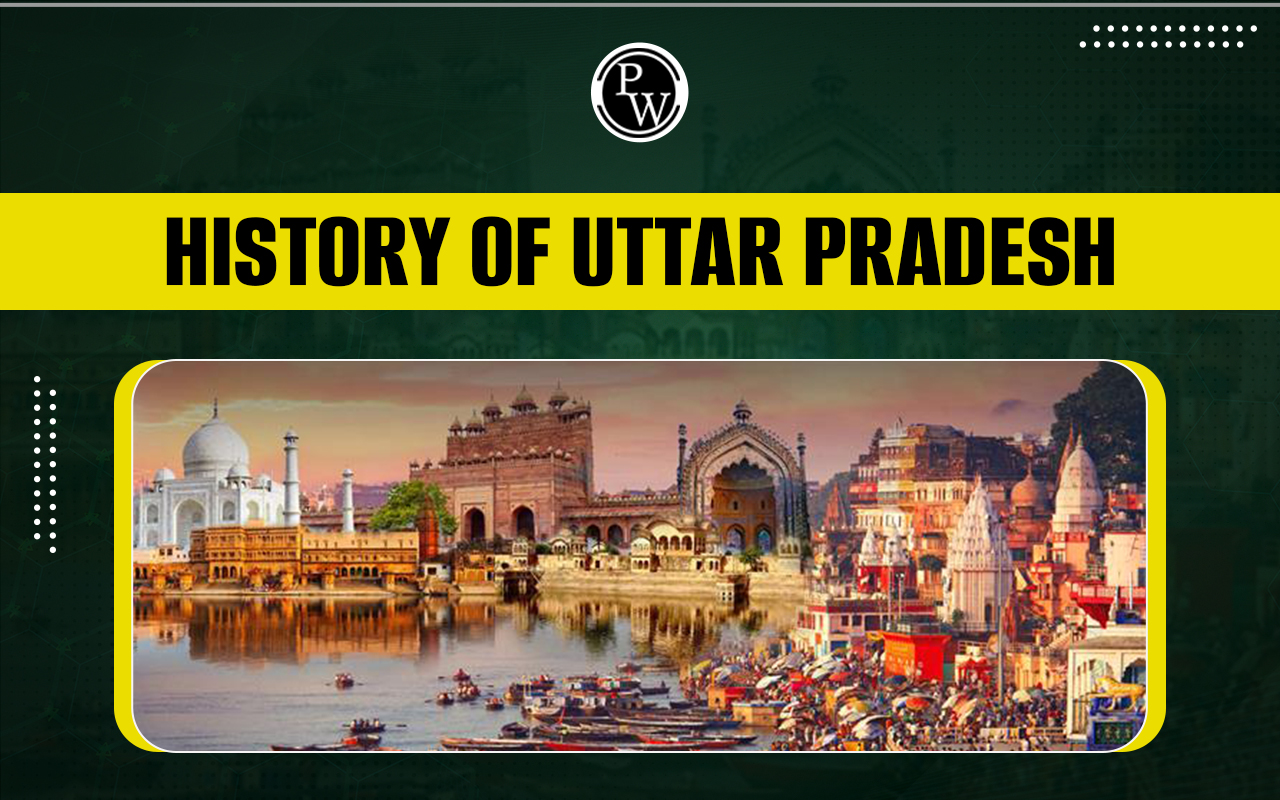
History of Uttar Pradesh: Uttar Pradesh, often abbreviated as UP, is not just the most populous state in India but also one of its most historically rich regions. From ancient civilizations to the grand Mughal Empire, and from the pivotal role in the Indian independence movement to its current political significance, the history of Uttar Pradesh is a fascinating journey through time. This blog delves into the multifaceted history of Uttar Pradesh, exploring its ancient roots, medieval grandeur, colonial struggles, and contemporary relevance.
History of Uttar Pradesh
Uttar Pradesh, often referred to as UP, is not just the most populous state in India, but also one of the most historically and culturally rich regions of the country. Its history is a tapestry of ancient civilizations, great empires, and significant cultural and religious developments. This blog delves deep into the historical journey of Uttar Pradesh, from its ancient roots to its contemporary significance.
History of Uttar Pradesh Overview
Uttar Pradesh, a historically significant state in India, has seen the rise and fall of numerous empires and civilizations, from the Vedic period to the Mughal Empire. It played a pivotal role in India's independence movement and continues to be influential in contemporary Indian politics and culture. The state is renowned for its rich cultural heritage, including historical monuments, religious sites, and classical arts.
| History of Uttar Pradesh Overview | |
| Period | Key Events and Significance |
| Vedic Period | Formation of early civilizations and composition of the Vedas |
| Maurya and Gupta Empires | Flourishing of culture and religion, major political centers |
| Medieval Period | Rise of regional kingdoms, Delhi Sultanate, and Mughal Empire |
| Colonial Period | British rule, Revolt of 1857, infrastructural development |
| Post-Independence | Formation of Uttar Pradesh, socio-economic and political growth |
Ancient Period of the History of Uttar Pradesh
Prehistoric and Vedic Era
The history of Uttar Pradesh dates back to prehistoric times, with evidence of human habitation as far back as the Paleolithic period. The discovery of tools and other artifacts in the Belan and Son river valleys suggests the presence of early human settlements.
During the Vedic period (1500-600 BCE), Uttar Pradesh formed a part of the Indo-Aryan civilization. The region saw the rise of several important Janapadas (tribal republics), such as Kosala and Kashi. The composition of the Vedas, the earliest texts of Hinduism, is closely associated with this region.
Maurya and Gupta Empires
In the 4th century BCE, Uttar Pradesh became a significant part of the Maurya Empire under Chandragupta Maurya. Ashoka, one of the most famous Mauryan emperors, spread Buddhism throughout the region.
The Gupta Empire (4th-6th centuries CE), often referred to as the Golden Age of India, saw a great flourishing of culture, science, and political power in Uttar Pradesh. The city of Prayagraj (then known as Prayag) was a major center of learning and religion.
Medieval Period of the History of Uttar Pradesh
Early Medieval Kingdoms
After the decline of the Gupta Empire, Uttar Pradesh witnessed the rise of several regional kingdoms. The Kannauj dynasty, under Harshavardhana in the 7th century, made Kannauj a prominent political and cultural center.
Muslim Invasions and Delhi Sultanate
The 12th century marked the beginning of Muslim rule in Uttar Pradesh with the invasions by Muhammad Ghori. The establishment of the Delhi Sultanate brought significant changes to the region's political and cultural landscape. Cities like Agra and Jaunpur became important centers of administration and culture.
Mughal Empire
The Mughal period (16th-18th centuries) was one of the most significant eras in the history of Uttar Pradesh. Babur's victory in the First Battle of Panipat in 1526 laid the foundation of Mughal rule in India, with Uttar Pradesh at its heart. The city of Agra became the capital of the Mughal Empire under Akbar, who built the magnificent Agra Fort and Fatehpur Sikri. The Taj Mahal, built by Shah Jahan in memory of his wife Mumtaz Mahal, remains an iconic symbol of this period.
Colonial Period of the History of Uttar Pradesh
British East India Company
The 18th century saw the decline of the Mughal Empire and the rise of British power in India. The Battle of Buxar in 1764 marked a significant British victory, leading to the establishment of their control over the region.
Revolt of 1857
Uttar Pradesh was the epicenter of the Revolt of 1857, also known as the First War of Indian Independence. The cities of Meerut, Kanpur, and Lucknow were crucial battlegrounds where Indian soldiers and civilians fought valiantly against British rule. Although the revolt was suppressed, it marked a significant step towards India's struggle for independence.
British Raj
Following the suppression of the revolt, the British Crown took direct control of India, and the region was named the United Provinces of Agra and Oudh. The administrative and infrastructural developments during this period laid the foundation for modern Uttar Pradesh. However, the oppressive policies of the British also fueled the freedom movement.
Post-Independence Era of the History of Uttar Pradesh
Formation of Uttar Pradesh
On January 26, 1950, with the adoption of the Indian Constitution, the United Provinces were renamed Uttar Pradesh. Lucknow was chosen as the capital. The state played a crucial role in shaping the political landscape of independent India, producing several Prime Ministers, including Jawaharlal Nehru and Atal Bihari Vajpayee.
Socio-Economic Development
Post-independence, Uttar Pradesh faced significant challenges in terms of poverty, literacy, and infrastructure. The Green Revolution in the 1960s improved agricultural productivity, making the state a key player in India's agrarian economy. The state also saw substantial industrial growth in cities like Kanpur, Ghaziabad, and Noida.
Cultural Renaissance
Uttar Pradesh is a cradle of Indian culture and heritage. It is the birthplace of Hinduism, Buddhism, and Jainism, and is home to numerous important religious sites, including Varanasi, Ayodhya, and Mathura. The state is also famous for its rich traditions in music, dance, and literature. The Awadhi and Braj regions have contributed immensely to classical music and dance forms like Kathak.
Contemporary Phase in the History of Uttar Pradesh
Political Landscape
In recent years, Uttar Pradesh has been a significant player in Indian politics. The state has seen the rise of various political movements and parties, reflecting its diverse social fabric. It continues to be a critical battleground in national elections due to its large electorate.
Economic Progress
While Uttar Pradesh continues to grapple with challenges such as poverty and education, it has also made significant strides in economic development. The growth of the IT sector in cities like Noida and the establishment of various industrial corridors are transforming the state's economic landscape.
Cultural and Religious Tourism
Tourism remains a vital part of Uttar Pradesh's economy, with millions visiting its historical and religious sites. The Kumbh Mela in Prayagraj, attracting millions of pilgrims, is a testament to the state's enduring cultural and spiritual significance.
History of Uttar Pradesh <span style=
Q.1 What was the old name of Uttar Pradesh?
Q.2 Why is Uttar Pradesh famous?
Q.3 What is the famous story of Uttar Pradesh?
Q.4 Who is the biggest king of UP?
Q.5 Who is No 1 king in history?


 Live & recorded classes available at easeDashboard for progress trackingMillions of practice questions at your fingertips