






History of West Bengal, History Timeline, Ancient History
 Bhavya Upadhyay4 Jul, 2024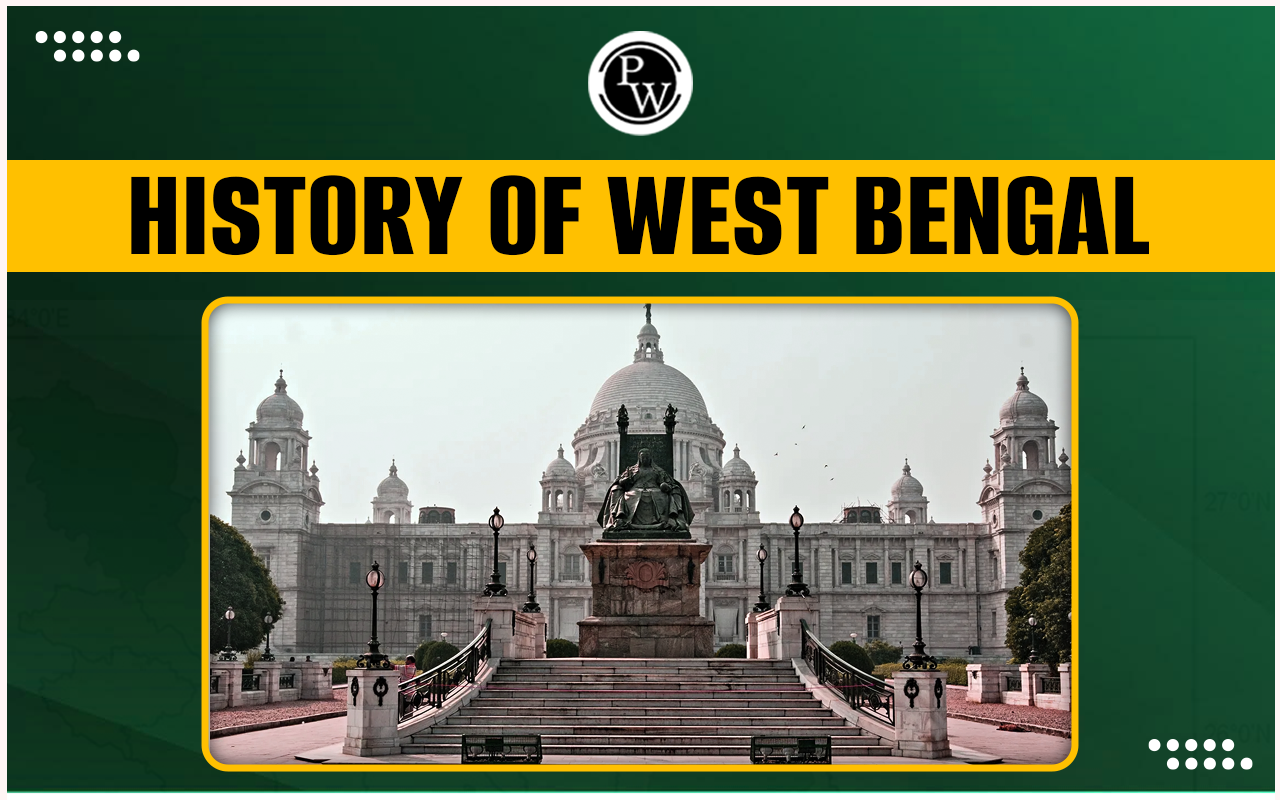
History of West Bengal: West Bengal, an eastern gem of India, is a land steeped in history and culture. Its journey from ancient civilizations to contemporary times reflects a rich tapestry of historical events and cultural evolutions. This blog delves into the captivating history of West Bengal, exploring its ancient roots, medieval splendors, colonial struggles, and modern-day advancements that have shaped its unique identity.
History of West Bengal
West Bengal, located in the eastern part of India, boasts a rich and diverse history that has shaped its unique cultural identity. From ancient civilizations to colonial rule and the struggle for independence, West Bengal's past is a tapestry of remarkable events and influential figures. This blog delves into the historical milestones that have defined the region, highlighting its cultural, political, and social evolution.
History of West Bengal Overview
West Bengal's history is a vibrant chronicle of cultural, political, and social transformations. From ancient Vedic times and the grandeur of the Mauryan and Gupta empires to the flourishing Pala and Sena dynasties, followed by Islamic and Mughal rule, the region has seen significant historical developments. The colonial period under the British brought about economic and social changes, leading to the Bengal Renaissance and playing a crucial role in India's independence movement. Post-independence, West Bengal has continued to evolve, maintaining its cultural heritage while embracing modernization.
| History of West Bengal Overview | |
| Period | Key Events and Features |
| Ancient Period | Vedic mentions, Mauryan and Gupta rule, flourishing of Buddhism and Hinduism. |
| Medieval Period | Pala and Sena dynasties' cultural and educational advancements, Islamic rule with the Bengal Sultanate, Mughal influence on trade and architecture. |
| Colonial Period | British East India Company's dominance, socio-cultural renaissance, pivotal role in India's independence movement. |
| Modern Era | Impact of partition in 1947, post-independence challenges and progress, continued cultural and intellectual contributions. |
Ancient and Medieval Periods in the History of West Bengal
The Vedic and Mauryan Era
West Bengal's history can be traced back to the Vedic period when it was known as the kingdom of Vanga. The region finds mention in ancient Indian texts, including the Mahabharata and the Ramayana. During the 3rd century BCE, West Bengal became part of the Mauryan Empire under the rule of Emperor Ashoka. The Mauryan influence brought Buddhism to the region, with Ashoka's missionaries spreading the teachings of Buddha.
Gupta Dynasty
The Gupta Dynasty, often referred to as the Golden Age of India, saw significant advancements in arts, science, and literature. During the 4th and 5th centuries CE, Bengal was a part of the Gupta Empire. This period witnessed the flourishing of Sanskrit literature and the construction of grand temples.
Pala and Sena Dynasties
The Pala Dynasty (8th to 12th centuries) marked a golden era for Bengal, with significant contributions to Buddhist art and education. The Palas established renowned institutions like Nalanda and Vikramashila universities. The subsequent Sena Dynasty (12th century) was marked by the promotion of Hinduism and the construction of notable temples, such as the Dhakeshwari Temple in Dhaka.
The Medieval Period in the History of West Bengal
Islamic Rule and the Bengal Sultanate
The 13th century saw the advent of Islamic rule in Bengal with the establishment of the Bengal Sultanate. The sultans of Bengal were known for their patronage of arts and architecture. The period saw the blending of Islamic and Bengali cultures, resulting in unique architectural styles exemplified by structures like the Adina Mosque in Pandua.
Mughal Era
In the 16th century, Bengal became part of the expansive Mughal Empire. The Mughal period was marked by economic prosperity and the flourishing of trade and commerce. The region became a significant hub for the production of fine textiles, particularly muslin. The Mughals also contributed to the cultural and architectural landscape, as seen in the construction of notable edifices like the Qadam Rasul Mosque in Gaur.
Colonial Period in the History of West Bengal
British East India Company
The 18th century marked the beginning of British colonial rule in Bengal. The Battle of Plassey in 1757, where British forces led by Robert Clive defeated Nawab Siraj-ud-Daulah, established the British East India Company's dominance in Bengal. Kolkata (then Calcutta) became the capital of British India and an important administrative and commercial center.
Socio-Cultural Renaissance
The 19th century witnessed a socio-cultural renaissance in Bengal, known as the Bengal Renaissance. Pioneers like Raja Ram Mohan Roy, Ishwar Chandra Vidyasagar, and Swami Vivekananda spearheaded social reforms, advocating for women's education, the abolition of sati, and the promotion of scientific thinking. This period also saw a resurgence in Bengali literature, art, and theatre, with luminaries like Rabindranath Tagore making significant contributions.
Struggle for Independence in the History of West Bengal
Partition of Bengal (1905)
The early 20th century saw rising nationalist sentiments in Bengal. The partition of Bengal in 1905 by the British, ostensibly for administrative reasons, was met with vehement opposition. The anti-partition movement saw widespread protests, boycotts of British goods, and the rise of revolutionary activities. The partition was eventually annulled in 1911, but it left a lasting impact on Bengal's political landscape.
Role in the Freedom Movement
Bengal played a crucial role in India's struggle for independence. The region was a hotbed of revolutionary activities, with figures like Subhas Chandra Bose emerging as prominent leaders. The Indian National Congress and other nationalist organizations had a strong presence in Bengal, leading numerous protests and movements against British rule.
Post-Independence Era in the History of West Bengal
Partition of India (1947)
The partition of India in 1947 led to the creation of the state of West Bengal as part of the newly formed Republic of India, while East Bengal became East Pakistan (later Bangladesh). The partition caused massive population displacement and communal violence, significantly affecting the region's social fabric.
Modern Era
In the decades following independence, West Bengal faced numerous challenges, including economic stagnation and political instability. However, the state has made significant strides in education, culture, and industry. Kolkata remains a vibrant cultural and intellectual hub, continuing to contribute to India's arts, literature, and politics.
Conclusion to the History of West Bengal
The history of West Bengal is a testament to its resilience and adaptability. From ancient kingdoms and colonial struggles to modern-day advancements, West Bengal's journey is a reflection of India's broader historical narrative. The state's rich cultural heritage, shaped by diverse influences, continues to thrive, making it a unique and integral part of the Indian subcontinent.
History of West Bengal <span style=
Q.1 What is the history of state West Bengal?
Q.2 What is West Bengal's old name?
Q.3 Who is the founder of West Bengal?
Q.4 Who ruled Bengal first?








 Live & recorded classes available at easeDashboard for progress trackingMillions of practice questions at your fingertips

