






Irrigation in Bihar, BPSC, Irrigation System and Projects
 Bhavya Upadhyay2 Aug, 2024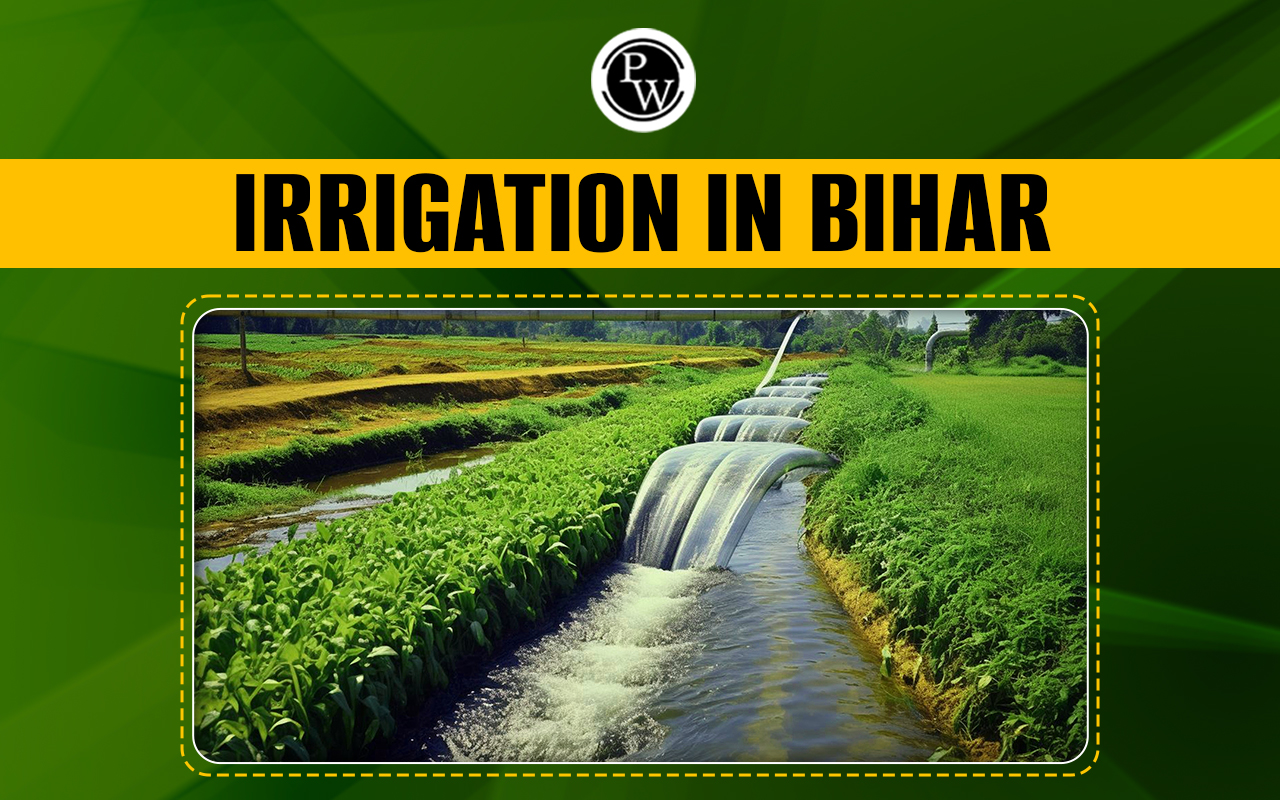
Irrigation in Bihar: Irrigation in Bihar plays a critical role in maintaining the agricultural economy of the state. Bihar, situated in the eastern part of India, has a diverse landscape, and its fertile plains are fed by considerable rivers such as the Ganges, Gandak, and Kosi. These rivers provide a great amount of water supply, but effective management and distribution through irrigation systems are essential for the state's agricultural prosperity. In this comprehensive guide, we will explore the various aspects of Irrigation in Bihar, including what is irrigation, the types of irrigation in Bihar, the importance of irrigation projects, and the challenges in irrigation that the state faces.
What is Irrigation in Bihar?
Irrigation is the artificial method of providing water to the land or soil to assist the growth of crops. It is a required practice in areas where rainfall is insufficient to meet the water needs of plants. By providing adequate water supply through irrigation facilities, farmers can now cultivate crops in dry seasons, improve the soil fertility of the dry lands, and increase agricultural productivity. In Bihar, where agriculture is a primary occupation, through the technique of irrigation farmers can ensure that crops receive adequate water supply throughout the year.
Types of Irrigation in Bihar
Irrigation in Bihar is done through many methods to provide water to crops. These methods vary depending on the topography, soil type, and water availability. Here are the primary types of irrigation in Bihar:
Canal Irrigation
Canal irrigation is the general and most used method of irrigation in Bihar. It involves diverting water from rivers and distributing it to agricultural fields through a network of canals. The Gandak, Kosi, and Sone canal systems are significant in Bihar, covering a wide range of agricultural lands. These canals supply water directly to the fields, ensuring a consistent and reliable water supply.
Tubewell Irrigation
Tubewell irrigation is widely used in areas of Bihar, where there is plenty of groundwater. Tubewells were established near the lands to access underground water, which is then pumped to the surface for agricultural use. This method is particularly beneficial in regions where surface water sources are less in quantity. Tubewell irrigation has become increasingly popular in Bihar due to advancements in technology and the availability of affordable pumping equipment.
Lift Irrigation
Lift irrigation involves using mechanical machines the water is lifted from a lower elevation to a higher one. This method is suitable for hilly or wave-like terrains where gravity-based irrigation is not possible. In Bihar, lift irrigation projects are implemented in areas with varied topography, ensuring that water reaches all parts of the field.
Sprinkler Irrigation
Sprinkler irrigation is the process of spraying water over crops using a system of pipes and sprinklers. This method is created to mimic the natural rainfall and is effective on larger fields. Sprinkler irrigation is used in Bihar for crops like wheat, maize, and pulses, where uniform water distribution is essential.
Major Irrigation Projects in Bihar
Bihar has implemented many irrigation projects to improve the water availability for agriculture. Some of the major projects include:
Kosi Project
The Kosi project is one of the largest irrigation initiatives in Bihar. It involves constructing a barrage across the Kosi River to divert water into canals for agricultural use. This project has transformed the agricultural landscape of northern Bihar, providing water to millions of hectares of farmland.
Gandak Project
The Gandak project is another important and influential irrigation scheme that utilizes the Gandak River's water for agricultural purposes. The project includes a network of canals that supply water to the fertile plains of Bihar, ensuring sustainable agriculture in the region.
Sone Canal System
The Sone Canal System is an extensive irrigation network that fetches the water from the Sone River. This project is created to provide water supply in the central and southern parts of Bihar, providing water for irrigation, drinking, and industrial purposes.
North Koel Project
The North Koel project aims to utilize the water of the North Koel River for irrigation in the Palamu district. The project involves constructing a dam and a network of canals to distribute water to agricultural fields.
Punpun Irrigation Project
The Punpun Irrigation Project generally focuses on irrigation through the Punpun River's water in central Bihar. The project includes the construction of a barrage and a network of canals to facilitate water distribution to farmlands.
Challenges in Irrigation in Bihar
Despite various significant progress and advancements in irrigation development, Bihar faces several challenges that hinder the effective implementation of irrigation projects. Some of these challenges include:
Water Management Issues
Efficient water management is necessary for equal water distribution and minimizing water spillage and wastage. However, Bihar faces challenges in maintaining canals, regulating water flow, and preventing waterlogging in certain areas.
Infrastructure Constraints
Irrigation infrastructure in Bihar often suffers inadequate maintenance which results in poor conditions or malfunctioning of the canals. Many canals and water distribution systems require repairs and upgrades to function optimally. This has led to decreased water efficiency and increased water wastage, affecting the productivity of agricultural lands.
Dependence on Monsoon
While irrigation aims to reduce dependency on monsoons, Bihar's agriculture still heavily relies on rainfall. Delayed or inadequate monsoon rains can disrupt the water supply, impacting agricultural output.
Waterlogging and Flooding
Bihar's geographical location makes it prone to flooding during the monsoon season. Waterlogging conditions can damage crops and cause land unsuitable for cultivation. Proper drainage systems are needed to address this issue effectively.
Financial Constraints
Implementing and maintaining irrigation projects requires substantial financial resources. Limited funding and budget constraints create challenges to the timely execution of projects and hinder the expansion of irrigation facilities to cover more areas.
Future Prospects of Irrigation in Bihar
The future of irrigation in Bihar looks promising with plans for modernizing infrastructure, promoting micro-irrigation techniques, and adopting integrated water management practices. Such efforts, along with government support and public-private partnerships, will surely enhance water efficiency and ensure sustainable agricultural growth while facing various pertaining challenges. With continued investment and innovation, irrigation in Bihar is set to play a key role in boosting agricultural productivity and securing the state's agrarian economy.
Irrigation in Bihar FAQs
Q.1 1. What is Irrigation in Bihar and why is it important?
Q.2 2. What are the main types of irrigation in Bihar?
Q.3 3. What challenges does irrigation in Bihar face?
Q.4 4. How do irrigation projects benefit Bihar?
Q.5 5. What is the future outlook for irrigation in Bihar?











 Live & recorded classes available at easeDashboard for progress trackingMillions of practice questions at your fingertips

