Irrigation in Maharashtra, Types, Projects and Challenges
 Bhavya Upadhyay5 Aug, 2024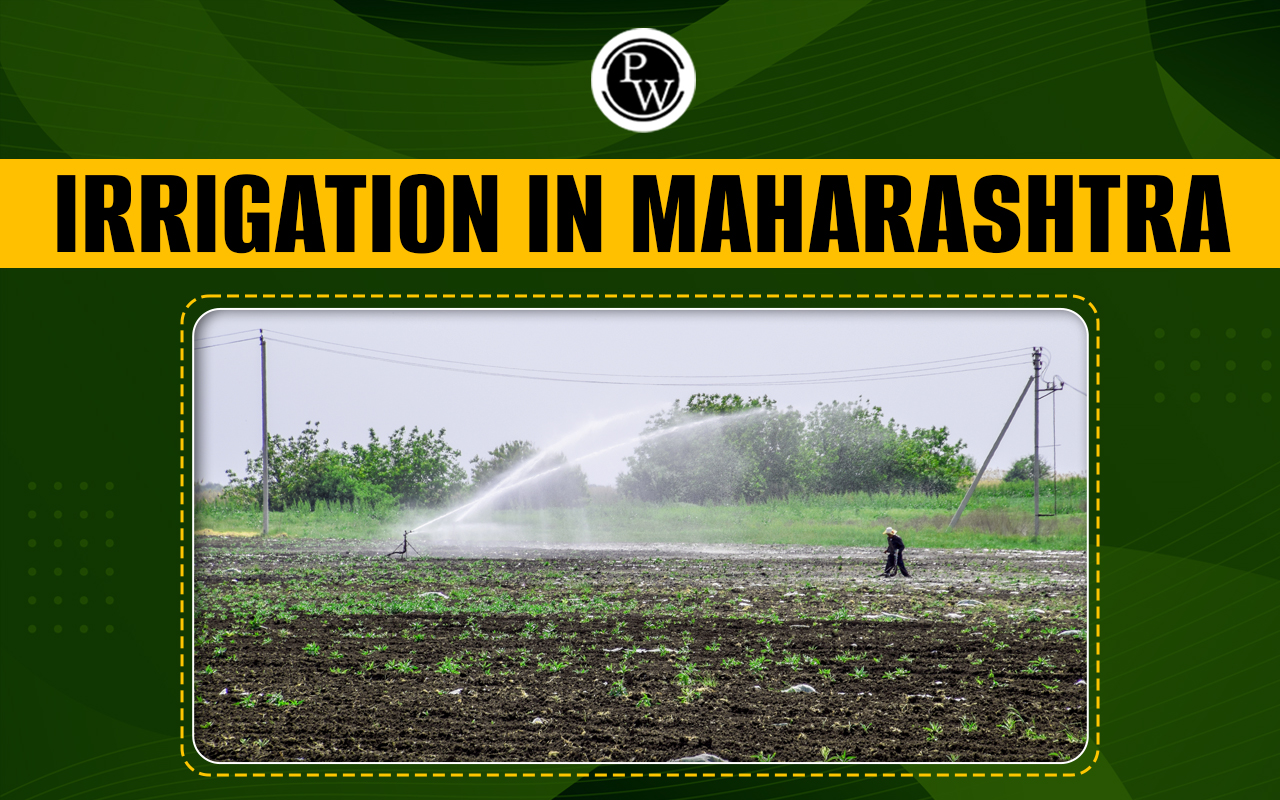
Irrigation in Maharashtra: Irrigation in Maharashtra plays an important role in the agricultural landscape of Maharashtra, it is a state that consists of diverse agro-climatic conditions and a large agricultural stretch. The agriculture sector is the backbone of Maharashtra's economy, effective agricultural practices require efficient water management to sustain crop production, especially when Maharashtra has a semi-arid climate and irregular rainfall patterns.
| Irrigation in Maharashtra Overview | |
|---|---|
| Aspect | Details |
| Geographical Diversity |
|
| Types of Irrigation |
|
| Climatic Conditions |
|
| Government Initiatives |
|
| Major Crops |
|
Geographical and Climatic Background of Maharashtra
Maharashtra is located in the western peninsular region of India and consists of different topography ranging from coastal plains to mountainous regions. The climate of Maharashtra differs from tropical monsoon in the western coastal areas to semi-arid in the Deccan plateau. These climatic variations create many challenges and opportunities for irrigation in Maharashtra.
-
Monsoon-Dependent Agriculture: Most of the rainfall occurs between June and September, agriculture sector mostly depends on the monsoon. However, erratic rainfall patterns and frequent droughts produce the need for irrigation projects in Maharashtra to ensure crop productivity.
-
Diverse Agro-Climatic Zones: Maharashtra is divided into several agro-climatic zones, including the Western Ghats, Deccan plateau, and Konkan region, each requiring unique irrigation strategies to optimize water usage.
What is Irrigation in Maharashtra
Irrigation in Maharashtra is the artificial method of providing water to the land to assist in the growth of crops. The importance of irrigation projects cannot be neglected, as these projects are essential key factors for enhancing agricultural productivity and ensuring food security in Maharashtra. Maharashtra's agricultural output is dominated by crops like sugarcane, cotton, soybeans, and cereals, which require more water input. Efficient irrigation in Maharashtra not only boosts crop yields but also helps the farmers by stabilising their income and reducing their dependency on rainfall.
-
Increase in Crop Yields: Irrigation in Maharashtra is one of the key enablers in increasing the productivity of crops. It ensures a consistent water supply, allowing farmers to adopt growing high-yield crops and improve their intensity.
-
Diversification of Crops: Access to irrigation facilities encourages farmers to diversify their cropping patterns, leading to a shift from traditional crops to more advanced options like horticulture and floriculture.
Types of Irrigation in Maharashtra
Types of irrigation in Maharashtra consist of various techniques to fulfil their diverse agricultural needs. These systems range from traditional methods to modern technological solutions, each method is implemented according to the specific geographical and climatic conditions.
Canal Irrigation
Canal irrigation is one of the oldest and most widespread methods used in Maharashtra. It involves diverting water from rivers through a network of canals to agricultural fields.
- Major Canal Systems: The Godavari and Krishna river basins have extensive canal networks supporting agriculture in regions like Marathwada and Vidarbha.
- Advantages: Canal irrigation allows large-scale water distribution and supports multiple cropping cycles.
- Challenges: Maintenance issues, waterlogging, and inefficiencies in water distribution often lead to suboptimal water usage.
Drip Irrigation
Drip irrigation is an accurate watering method that delivers water directly to the plant root zone through a network of pipes and emitters. This method is highly effective in arid regions and for horticultural crops.- Benefits: Drip irrigation reduces water wastage by minimizing evaporation. It also lowers labour costs and enhances water use efficiency.
- Adoption: Maharashtra has seen significant adoption of drip irrigation, particularly in areas growing grapes, pomegranates, and sugarcane.
Sprinkler Irrigation
Sprinkler Irrigation is a method that mimics natural rainfall by spraying water over crops through rotating nozzles. This method is suitable for a diversity of crops and terrains.- Advantages: Sprinkler irrigation provides uniform water distribution specially used for uneven land. It is ideal for crops like wheat and groundnuts.
- Limitations: Initial setup costs can be high, and wind interference may affect water distribution.
Tube Well and Borewell Irrigation
Groundwater extraction through tube wells and borewells is common in regions where surface water is scarce. This method supports irrigation in water-stressed areas.- Usage: Mostly used in Vidarbha and Marathwada, tube wells provide a reliable water source during dry spells.
- Concerns: Over-extraction of groundwater has led to declining water tables and necessitates sustainable management practices.
Lift Irrigation
Lift irrigation involves lifting water from lower levels to higher terrains using pumps. This method is particularly beneficial in hilly and wave-like regions.- Applications: Used extensively in the hilly regions of Western Maharashtra, lift irrigation enables water access to areas.
- Energy Requirements: The method is energy-intensive, requiring reliable electricity or alternative power sources for pumps.
Government Initiatives and Policies for Irrigation in Maharashtra
The Maharashtra government has undertaken many initiatives to enhance irrigation projects and water management practices, ensuring sustainable agricultural development.-
Maharashtra Irrigation Act
This act is passed to regulate the use of water resources, the Maharashtra Irrigation Act provides a legal framework for the development and management of irrigation projects. -
Jalyukt Shivar Abhiyan
This is a flagship program that aims to make Maharashtra drought-free by creating decentralized water bodies to enhance groundwater recharge and increase irrigation potential.- Components: The program includes constructing dams and diffusion tanks while practising the technique of contour bunding to harvest rainwater and reduce runoff.
- Impact: Jalyukt Shivar Abhiyan has significantly increased water availability, leading to improved agricultural output and farmer resilience.
-
Micro-Irrigation Schemes
The state promotes micro-irrigation systems like drip and sprinkler irrigation through subsidies and technical support, encouraging farmers to adopt water-efficient practices.- Subsidies and Support: Financial assistance is provided to farmers for installing micro-irrigation systems, making these technologies more accessible.
- Training and Capacity Building: Many initiatives are implemented to train farmers in modern irrigation techniques to ensure optimal utilization of resources and technology adoption.
-
National Mission for Sustainable Agriculture (NMSA)
Under the NMSA, Maharashtra focuses on sustainable irrigation practices, promoting efficient water use, and building resilience against climate change impacts.
- Technology Integration: The mission focuses on integrating advanced technologies like remote sensing and GIS for efficient water management.
- Water Harvesting: Implementing rainwater harvesting techniques to improve water availability during non-monsoon months.
Future Prospects and Solutions for Irrigation in Maharashtra
To ensure sustainable irrigation in Maharashtra, the state must address existing challenges and explore innovative solutions.-
Integrated Water Resource Management (IWRM)
Implementing IWRM principles can enhance water resource management by integrating farmers, optimizing water use, and promoting sustainable practices across sectors. -
Adoption of Smart Irrigation Technologies
Leveraging smart irrigation technologies like automated systems and sensors can enhance water use efficiency and reduce wastage, providing measured data for informed effective decision-making. -
Community Participation and Awareness
Encouraging community participation in water management and conducting awareness programs can empower farmers to adopt efficient irrigation practices and contribute to sustainable water management. -
Policy Reforms and Investment
Strengthening policy frameworks and increasing investment in irrigation infrastructure can drive modernization efforts and ensure the availability of water resources for agriculture. -
Focus on Rainwater Harvesting
Promoting rainwater harvesting techniques can improve water availability during non-monsoon months, ensuring a consistent water supply for irrigation needs.
Irrigation in Maharashtra FAQs
Q.1 What is irrigation?
Q.2 What are the types of irrigation in Maharashtra?
Q.3 What is the importance of irrigation projects in Maharashtra?
Q.4 What are the challenges in irrigation in Maharashtra?
Q.5 How does irrigation in Maharashtra impact agriculture?


 Live & recorded classes available at easeDashboard for progress trackingMillions of practice questions at your fingertips