






Irrigation in West Bengal, Types, Sources and Projects
 Bhavya Upadhyay1 Aug, 2024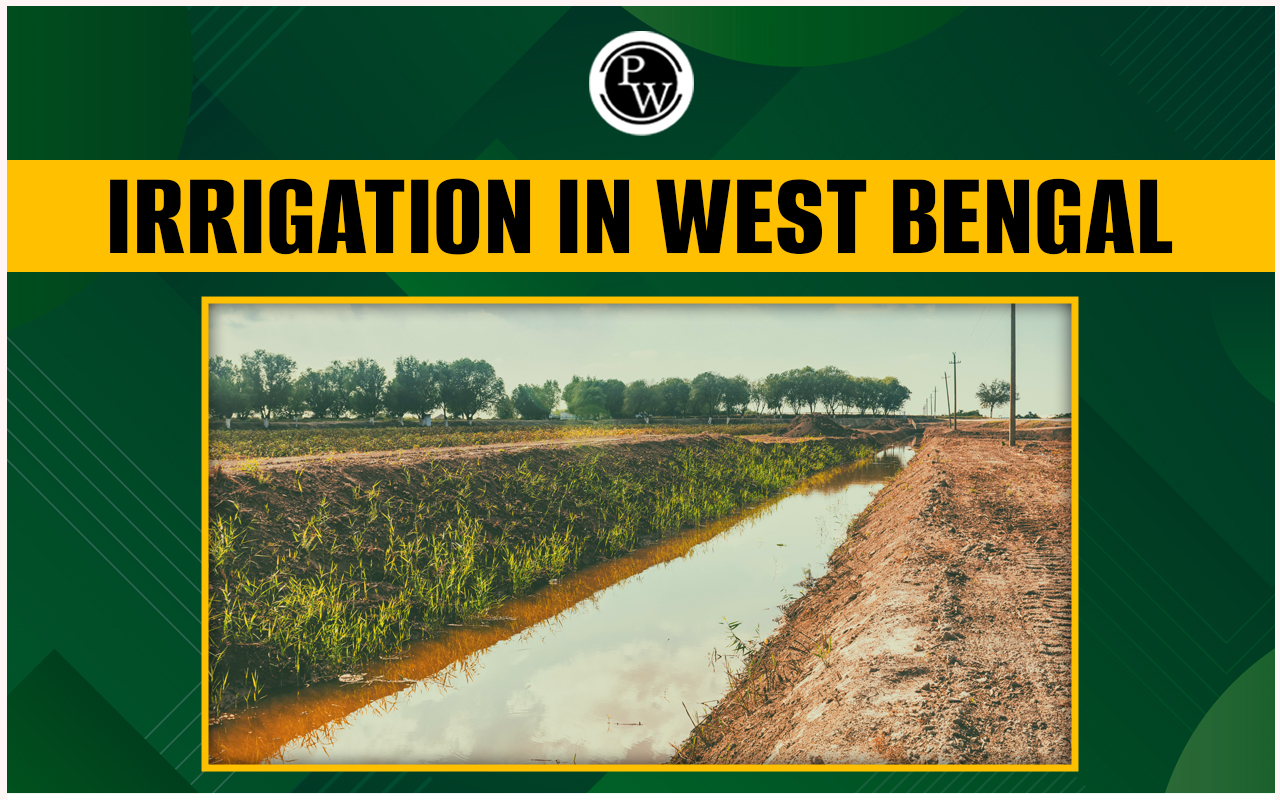
Irrigation in West Bengal: Irrigation plays a critical role in agriculture in West Bengal, providing the necessary water supply for crops, especially in regions where rainfall is inadequate or unevenly distributed. In West Bengal , irrigation has been a key factor in supporting the agricultural economy and ensuring food security. We have created this specific blog to explore Irrigation in West Bengal , discussing its types, importance, and challenges.
What is Irrigation in West Bengal?
Irrigation is the artificial technique of providing water to the soil to assist in the growth of crops. This type of practice is done in West Bengal to compensate for the lack of rainfall and ensure that crops receive the right amount of water at the right time. It is essential for maintaining soil moisture levels, enhancing crop yields, and supporting sustainable agriculture. Irrigation in West Bengal plays an important role in boosting the state's agricultural productivity.
Types of Irrigation in West Bengal
West Bengal engages through various irrigation methods to satisfy its diverse agricultural needs. Here are some of the main types of irrigation in West Bengal :
Canal Irrigation
Canal irrigation is the most prevailing type of irrigation in West Bengal. West Bengal has an extensive network of canals that provide water to agricultural lands, ensuring a steady water supply. The Damodar Valley Corporation (DVC) and the Teesta Barrage Project are significant examples of canal irrigation systems that benefit the state's farmers.
Tube Well Irrigation
Tube well irrigation is another important technique used in West Bengal. It involves extracting groundwater through tube wells, which are then used for irrigation. The surplus of groundwater in certain regions of West Bengal makes tube well irrigation a viable option.
Tank Irrigation
Tank irrigation is a traditional method that stores rainwater in tanks or ponds. These water bodies act as a source of irrigation during dry periods. In West Bengal, tank irrigation is practised in areas with wave-like terrain, where water can be easily stored in natural or man-made depressions.
River Lift Irrigation
River lift irrigation involves pumping water directly from rivers to agricultural fields. This method is used in areas where rivers flow near the fields. It is a suitable option for regions where canal irrigation is not possible. The Haldia Irrigation Project is an example of river lift irrigation in the state.
Importance of Irrigation in West Bengal
Irrigation projects in West Bengal are required for the state's agricultural and economic development. They offer many benefits, including:
- Enhancing Agricultural Productivity Proper Irrigation ensures a consistent water supply to crops, which leads to increased agricultural productivity. It helps farmers cultivate multiple crops in a year and enhances the yield of crops such as paddy, jute, and vegetables.
-
Supporting Livelihoods
Agriculture is the primary source of livelihood for a significant portion of West Bengal's population. Irrigation projects provide farmers with the necessary resources to sustain their livelihoods. It reduces dependency on monsoons and mitigates the risk of crop failures, ensuring stable incomes for rural communities.
-
Promoting Agricultural Diversification
With reliable irrigation, farmers can diversify their crops and explore new agricultural practices. This diversification reduces the risk associated with monoculture and allows farmers to experiment with high-value crops, horticulture, and floriculture.
- Boosting Economic Growth Irrigation in West Bengal contributes to the state's economic growth by increasing agricultural output and exports. A booming agricultural sector promotes industries such as food processing, transportation, and agrochemicals.
Irrigation in West Bengal Major Projects
Here are some of the major irrigation projects in West Bengal :
Kangsabati Project
The Kangsabati Project is a significant irrigation initiative in West Bengal. It utilizes the waters of the Kangsabati River to provide irrigation facilities to many districts, including Bankura , Purulia , and Paschim Medinipur . This project has transformed previously arid areas into fertile agricultural lands.
Mayurakshi Project
The Mayurakshi Project fetches the water of the Mayurakshi River to supply irrigation to parts of the Birbhum and Murshidabad districts. It has significantly boosted agricultural productivity in these regions and supports the cultivation of crops like rice, wheat, and pulses.
Durgapur Barrage
The Durgapur Barrage on the Damodar River is a vital irrigation project that benefits the districts of Burdwan and Hooghly . It supplies water to agricultural fields through an expansive network of canals, ensuring a reliable water supply for crop cultivation.
Subarnarekha Irrigation Project
The Subarnarekha Irrigation Project utilises the water of the Subarnarekha River to provide irrigation facilities to districts such as Paschim Medinipur and Purba Medinipur . This project plays an essential role in supporting the agricultural activities of the region.
Teesta Barrage Project
The Teesta Barrage Project is a major irrigation initiative in North Bengal . It not only provides irrigation but also supports flood control and hydroelectric power generation.
Government Initiatives and Future Prospects for Irrigation in West Bengal
The government of West Bengal has been actively working to address the challenges in irrigation and promote sustainable agricultural practices. Some of the key initiatives include:
Pradhan Mantri Krishi Sinchayee Yojana (PMKSY)
The PMKSY is a central government scheme that aims to improve irrigation efficiency and expand irrigation coverage. Under this scheme, funds are allocated for the development of irrigation infrastructure, water conservation, and watershed management in West Bengal .
Minor Irrigation Projects
The state government is focusing on minor irrigation projects to cater to small and marginal farmers. These projects aim to provide localized irrigation solutions, such as check dams, lift irrigation, and micro-irrigation systems, to enhance agricultural productivity.
Watershed Management Programs
Watershed management programs are implemented to conserve water resources and improve groundwater recharge. These initiatives aim to enhance soil moisture retention and ensure sustainable water availability for irrigation.
Promotion of Micro-Irrigation
The government is promoting micro-irrigation techniques like drip and sprinkler systems to optimize water usage and increase irrigation efficiency. Subsidies and incentives are provided to encourage farmers to adopt these modern irrigation methods.
Research and Development
Investment in research and development is necessary for developing innovative irrigation solutions and improving crop resilience to climate change. Collaboration with agricultural universities and research institutions is being encouraged to find sustainable irrigation practices.
Irrigation in West Bengal FAQs
Q.1 What is Irrigation in West Bengal?
Q.2 Why is Irrigation important in West Bengal?
Q.3 What are the types of Irrigation in West Bengal?
Q.4 What challenges does Irrigation in West Bengal face?
Q.5 How does the government support Irrigation in West Bengal?










 Live & recorded classes available at easeDashboard for progress trackingMillions of practice questions at your fingertips

