






List of Districts in Madhya Pradesh, Population, Area, Divisions
 Bhavya Upadhyay22 May, 2024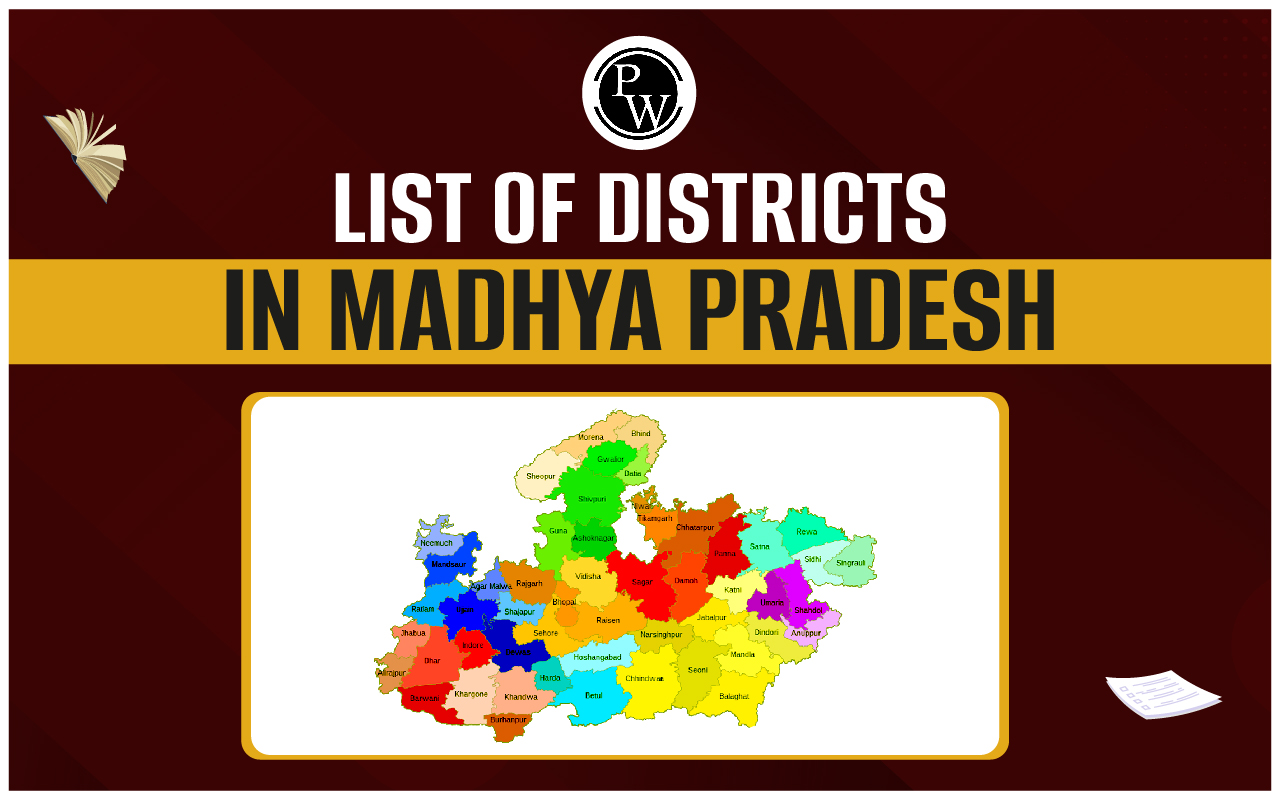
List of Districts in Madhya Pradesh: Madhya Pradesh, aptly nicknamed the "Heart of India," is not only geographically central but also culturally and historically significant. Its administrative structure is divided into districts, each with its unique charm and importance. In this blog, we'll delve into the list of districts in Madhya Pradesh, exploring their diversity, size, population, significance, recent developments, and their geographical, economic, and cultural importance.
List of Districts in Madhya Pradesh
The districts of Madhya Pradesh form the bedrock of the state's socio-economic landscape, each playing a vital role in its development journey. From the sprawling plains of Malwa to the tribal heartlands of Bastar, the diversity of Madhya Pradesh's districts is its greatest strength. By understanding their size, population, significance, recent developments, and importance, we gain valuable insights into the multifaceted character of this vibrant state.
How Many Districts in Madhya Pradesh
Madhya Pradesh, nestled in the heart of India, is not only geographically central but also a melting pot of cultural diversity. With its vast expanse spanning over 308,000 square kilometers, Madhya Pradesh is home to 55 districts, each with its own unique charm and significance. In this article, we embark on a journey to explore the cultural richness and administrative intricacies of these districts, which form the backbone of the state's identity and progress.
Administrative Divisions of Madhya Pradesh
The administrative divisions of Madhya Pradesh are delineated into districts, which serve as the basic units of governance. From bustling urban centers to serene rural landscapes, each district caters to the diverse needs of its inhabitants while contributing to the state's progress.| Administrative Divisions of Madhya Pradesh | ||
| Divisions | Headquarters | Districts |
|
Bhopal Division |
Bhopal |
|
|---|---|---|
|
Chambal Division |
Morena |
|
|
Gwalior Division |
Gwalior |
|
|
Indore Division |
Indore |
|
|
Jabalpur Division |
Jabalpur |
|
|
Narmadapuram Division |
Narmadapuram |
|
|
Rewa Division |
Rewa |
|
|
Sagar Division |
Sagar |
|
|
Shahdol Division |
Shahdol |
|
|
Ujjain Division |
Ujjain |
|
List of Districts in Madhya Pradesh
Madhya Pradesh boasts a varied landscape, ranging from sprawling plains to rugged terrains. As such, the size and population of its districts vary significantly. Some districts are expansive, accommodating vast swathes of land, while others are densely populated urban hubs. Understanding this diversity is crucial for effective governance and resource allocation.
| List of Districts in Madhya Pradesh | ||
| District | Area (km square) | Population (2011) |
|
Bhopal |
2,772 | 2,371,061 |
|---|---|---|
|
Raisen |
8,446 | 1,331,597 |
|
Rajgarh |
6,154 | 1,545,814 |
|
Sehore |
6,578 | 1,311,332 |
|
Vidisha |
7,371 | 1,458,875 |
|
Morena |
4,991 | 1,965,970 |
|
Sheopur |
6,585 | 687,861 |
|
Bhind |
4,459 | 1,703,005 |
|
Gwalior |
5,214 | 2,032,036 |
|
Ashoknagar |
4,674 | 845,071 |
|
Shivpuri |
10,278 | 1,726,050 |
|
Datia |
2,038 | 786,754 |
|
Guna |
6,485 | 1,241,519 |
|
Alirajpur |
3,182 | 728,999 |
|
Barwani |
5,432 | 1,385,881 |
|
Burhanpur |
2,473 | 757,847 |
|
Indore |
3,898 | 3,276,697 |
|
Dhar |
8,153 | 2,185,793 |
|
Jhabua |
6,782 | 1,025,048 |
|
Khandwa |
4,927 | 1,310,061 |
|
Khargone |
4,927 | 1,873,046 |
|
Balaghat |
9,229 | 1,701,698 |
|
Chhindwara |
11,815 | 2,090,922 |
|
Jabalpur |
5,210 | 2,463,289 |
|
Katni |
4,927 | 1,292,042 |
|
Mandla |
5,805 | 1,054,905 |
|
Narsinghpur |
5,133 | 1,091,854 |
|
Seoni |
8,758 | 1,379,131 |
|
Dindori |
7,427 | 704,524 |
|
Pandhurna |
1,522 | 374,310 |
|
Betul |
10,043 | 1,575,362 |
|
Harda |
3,339 | 570,465 |
|
Narmadapuram |
6,698 | 1,241,350 |
|
Rewa |
6,434 | 2,365,106 |
|
Satna |
7,502 | 2,228,935 |
|
Sidhi |
4,851 | 1,127,033 |
|
Singrauli |
5,672 | 1,178,273 |
|
Mauganj |
1,866 | 616,645 |
|
Maihar |
1,134 | 40,192 |
|
Chhatarpur |
8,687 | 1,762,375 |
|
Damoh |
7,306 | 1,264,219 |
|
Panna |
7,135 | 1,016,520 |
|
Sagar |
10,252 | 2,378,458 |
|
Tikamgarh |
3,878 | 1,040,359 |
|
Niwari |
1,170 | 404,807 |
|
Anuppur |
3,746 | 749,237 |
|
Shahdol |
6,205 | 1,066,063 |
|
Umaria |
4,026 | 644,758 |
|
Agar Malwa |
2,785 | 571,275 |
|
Dewas |
7,020 | 1,563,715 |
|
Mandsaur |
5,530 | 1,340,411 |
|
Neemuch |
4,267 | 826,067 |
|
Ratlam |
4,861 | 1,455,069 |
|
Shajapur |
3,460 | 941,403 |
|
Ujjain |
6,091 | 1,986,864 |
Largest District of Madhya Pradesh
The largest district in Madhya Pradesh is Chhindwara, covering an area of 11,815 square kilometers. Positioned centrally in the state, Chhindwara boasts diverse landscapes, a rich cultural heritage, and burgeoning commercial activities, making it a pivotal region in Central India. Home to approximately 2,090,922 people, with a nearly equal gender distribution, Chhindwara is also renowned for its historical Devgarh fort, nestled amidst dense reserve forests.
Smallest District of Madhya Pradesh
Conversely, Niwari district holds the distinction of being the smallest in Madhya Pradesh, spanning an area of 1,170 square kilometers. With a population of around 404,807, including significant proportions of Scheduled Castes and Scheduled Tribes, Niwari is celebrated for its opulent palaces, formidable forts, and lively markets. Comprising three tehsils—Prithvipur, Niwari, and Orchha—Niwari exudes historical and cultural charm.
List of Districts in Madhya Pradesh and their Importance
Each district in Madhya Pradesh contributes uniquely to the state's socio-economic fabric. From agricultural heartlands to industrial hubs, from cultural centers to educational hotspots, every district has its own story to tell. Exploring their importance sheds light on the diverse tapestry of Madhya Pradesh's development.| List of Districts in Madhya Pradesh and their Importance | |
| District | Importance |
| Bhopal | Capital city, administrative, economic, and cultural center |
| Indore | Commercial capital, hub for trade, commerce, and industry |
| Jabalpur | Scenic beauty, historical significance |
| Gwalior | Majestic fort, palaces, rich cultural heritage |
| Ujjain | Holiest cities, Mahakaleshwar Temple, Kumbh Mela |
| Sagar | Educational and industrial center |
| Rewa | Natural beauty, Rewa Fort, Govindgarh Palace |
| Satna | Industrial and religious center, Maihar Temple, cement production |
| Ratlam | Commercial and industrial hub, gold and silver jewelry industry |
| Katni | Limestone mines, industrial activities |
| Morena | Archaeological sites, historical monuments |
| Shivpuri | Wildlife sanctuary, historical sites like Madhav National Park, Shivpuri Palace |
| Damoh | Historical temples, natural beauty |
| Chhindwara | Timber production, coal mining |
| Vidisha | Archaeological sites, Buddhist stupa of Sanchi |
| Hoshangabad | Scenic beauty, ghats along the Narmada River |
| Seoni | Rich biodiversity, setting for "The Jungle Book" |
| Dhar | Historical significance, former capital of the Malwa region |
| Dewas | Industrial development, historical monuments |
| Neemuch | Military cantonment, agricultural produce |
Recent Development in Districts of Madhya Pradesh
Madhya Pradesh is undergoing rapid transformation, with concerted efforts being made to enhance infrastructure, promote industrial growth, and improve living standards across its districts. From infrastructure projects to social welfare initiatives, recent developments underscore the state government's commitment to inclusive growth and development.
| Recent Development in Districts of Madhya Pradesh | |
| District | Development |
| Bhopal |
|
| Indore |
|
| Gwalior |
|
| Ujjain |
|
Geographical, Economic, and Cultural Importance of the Districts in Madhya Pradesh
The districts of Madhya Pradesh are not merely administrative units but also repositories of geographical, economic, and cultural significance. Understanding their importance is key to appreciating the rich tapestry of Madhya Pradesh's identity.| Geographical, Economic, and Cultural Importance of the Districts in Madhya Pradesh | |||
| District | Geographical Importance | Economic Importance | Cultural Importance |
| Indore | Located on the Malwa Plateau | Commercial and industrial hub | Rich cultural heritage with festivals like Ahilya Utsav |
| Bhopal | Located near the Vindhya mountain range | Political and administrative center | Notable for historic mosques, temples, and the Bhopal Gas Tragedy |
| Gwalior | Lies in the northern part of the state | Growing industrial sector | Famous for Gwalior Fort and Tansen Music Festival |
| Jabalpur | Situated on the banks of the Narmada River | Defense manufacturing and logistics | Known for marble rocks and Dhuandhar Falls |
| Ujjain | Located on the Malwa Plateau | Agrarian economy with a growing industrial base | Sacred city, hosts Kumbh Mela |
| Khajuraho | Central part of the state | Tourism-driven economy | UNESCO World Heritage Site for its temples |
| Sanchi | North of Bhopal | Agriculture and tourism | UNESCO World Heritage Site for Buddhist stupas |
| Orchha | Situated on the Betwa River | Tourism | Famous for palaces and temples reflecting Bundela architecture |
| Mandu | Situated in the Malwa region | Tourism | Known for Afghan architecture and historical significance |
| Pachmarhi | Located in the Satpura Range | Tourism | The only hill station in Madhya Pradesh |
| Satna | Located in the eastern part | Major producer of limestone and home to many cement factories | Religious sites like Chitrakoot |
| Rewa | Located in the northeastern part | Rich in mineral resources, solar power projects | Birthplace of the white tiger |
| Dewas | Part of the Malwa region | Industrial city with numerous manufacturing units | Known for the Devi Vaishini Shrine |
| Pithampur | Located near Indore | Major automobile manufacturing hub, often called Detroit of India | |
| Chhindwara | Central region of the state | Agriculture | Celebrates various cultural festivals |
| Hoshangabad | Located along the Narmada River | Agriculture and industries | Significant tribal populations and cultural heritage |
| Balaghat | Southeastern part of the state | Manganese and copper mining | |
| Neemuch | Western part of the state | Major center for opium production, military cantonment | |
| Ratlam | Western region of Madhya Pradesh | Known for its railway junction and ratlami sev | |
| Shivpuri | Northern region, part of the Gwalior division | Agriculture and tourism | Home to Madhav National Park |
List of Districts in Madhya Pradesh FAQs
Q.1 What are the 52 districts of Madhya Pradesh?
Q.2 Which is the 53 district of MP?
Q.3 Are there 55 districts in MP?
Q.4 Which is the 51 district of MP?
Q.5 Which is the 50th district of MP?










 Live & recorded classes available at easeDashboard for progress trackingMillions of practice questions at your fingertips

