Neighboring States of Bihar, Map, Bihar Border District List
 Bhavya Upadhyay21 Jun, 2024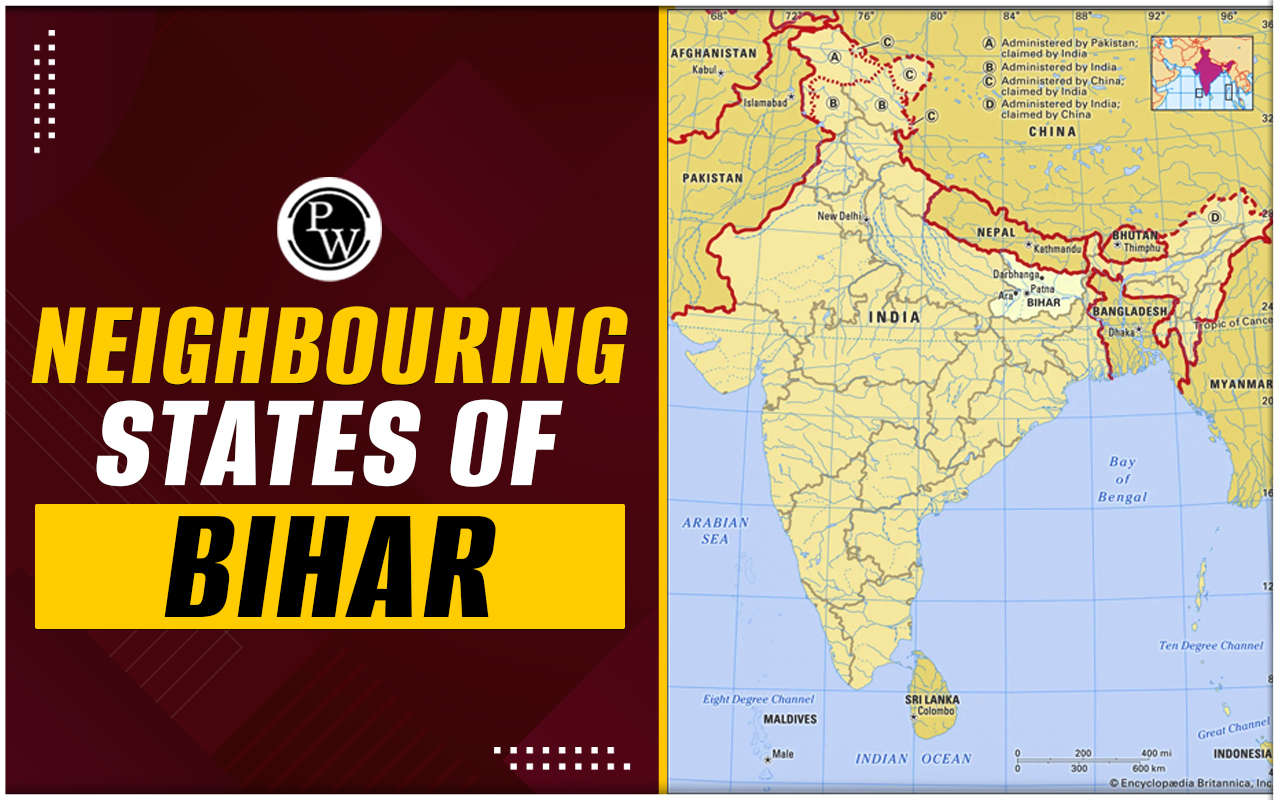
Neighboring States of Bihar: Bihar, a state with a rich cultural and historical legacy, is nestled in the eastern part of India and is surrounded by several vibrant states and a neighboring country, Nepal. Each of these regions contributes to the dynamic cultural and economic landscape of Bihar. This blog delves into the geographical features, cultural significance, and economic interactions between Bihar and Neighboring States of Bihar, providing a comprehensive understanding of their interconnectedness.
Overview of Neighboring States of Bihar
Bihar, located in eastern India, shares borders with several states and an international border with Nepal. These neighboring regions significantly influence Bihar's cultural, economic, and social landscapes. Below is an overview of Neighboring States of Bihar and Nepal, highlighting their geographical features, cultural significance, and economic ties with Bihar.
| Overview of Neighboring States of Bihar | ||||
| State | Direction | Key Features | Cultural Significance | Economic Ties |
| Uttar Pradesh | North-West | Ganges River, humid subtropical climate | Historical sites like Varanasi, Ayodhya | Agricultural trade, industrial relations |
| Jharkhand | South | Chotanagpur Plateau, Damodar River Basin | Tribal culture, festivals like Sarhul | Mining and minerals, labor exchange |
| West Bengal | East | Ganges Delta, hilly regions in Darjeeling | Cultural hub, Durga Puja | Agricultural trade, ports in Kolkata, tourism |
| Sikkim | North-East | Himalayan terrain, diverse climate | Tibetan Buddhism, festivals like Losar | Tourism, organic farming |
| Nepal (Country) | North | Terai region, Himalayan foothills | Shared Mithila culture, Hinduism, Buddhism | Open border trade, remittances |
Exploring the Neighboring States of Bihar
Bihar, located in the eastern part of India, is a state with a rich historical and cultural heritage. It is bordered by several states that contribute to its diverse culture and economic interactions. In this blog, we will take an in-depth look at the neighboring states of Bihar, exploring their geographical features, cultural significance, and economic ties with Bihar.
1. Uttar Pradesh (North-West)
Geography and Climate: Uttar Pradesh (UP) shares its eastern border with Bihar. The Ganges River forms a natural boundary between the two states. The region experiences a humid subtropical climate, with hot summers, a monsoon season, and cool winters.
Cultural Significance: Uttar Pradesh is often referred to as the cultural hub of India. The state is home to several historical and religious sites, including Varanasi, Ayodhya, and Allahabad. The shared cultural practices, languages (Hindi and Bhojpuri), and festivals like Chhath Puja and Diwali strengthen the cultural ties between UP and Bihar.
Economic Ties: Uttar Pradesh and Bihar engage in substantial agricultural trade, with the exchange of crops like wheat, rice, and sugarcane. The two states also share industrial relations, particularly in sectors like textiles, sugar production, and small-scale industries.
2. Jharkhand (South)
Geography and Climate: Jharkhand, carved out of Bihar in 2000, lies to the south of Bihar. The Chotanagpur Plateau and the Damodar River Basin dominate its geography. The state enjoys a more varied climate, with forests, hills, and a combination of tropical wet and dry climate.
Cultural Significance: Jharkhand has a distinct tribal culture, with a significant population of indigenous tribes such as the Santhals, Oraons, and Mundas. Festivals like Sarhul and Karma are integral to Jharkhand's cultural identity. Despite their distinct cultures, Bihar and Jharkhand share common languages (Hindi and regional dialects) and historical ties.
Economic Ties: The economies of Bihar and Jharkhand are intertwined, especially in mining and minerals. Jharkhand is rich in minerals like coal, iron ore, and bauxite, which are crucial for Bihar's industrial sector. Additionally, there is a significant movement of labor between the two states, particularly in construction and agriculture.
3. West Bengal (East)
Geography and Climate: West Bengal borders Bihar to the east. The state features the fertile plains of the Ganges Delta and the hilly regions of Darjeeling. The climate varies from tropical in the southern regions to temperate in the north.
Cultural Significance: West Bengal has a rich cultural heritage, with Kolkata being a major cultural and intellectual center in India. The state celebrates unique festivals like Durga Puja, which also has a significant following in Bihar. Bengali and Maithili are the common languages, reflecting the linguistic diversity of the region.
Economic Ties: Bihar and West Bengal engage in robust trade relations, particularly in agriculture, textiles, and handicrafts. West Bengal's ports in Kolkata and Haldia facilitate international trade for Bihar. Additionally, both states benefit from tourism, with historical sites and natural attractions drawing visitors.
4. Sikkim (North-East)
Geography and Climate: Sikkim is a small state in the northeastern part of India, sharing a border with Bihar through West Bengal. The state is known for its mountainous terrain, including parts of the Himalayas, and a diverse climate ranging from subtropical to alpine.
Cultural Significance: Sikkim has a unique cultural blend influenced by Tibetan Buddhism, Hinduism, and indigenous practices. Festivals like Losar, Saga Dawa, and Diwali are celebrated with fervor. The shared cultural elements with Bihar include religious practices and pilgrimages to Buddhist and Hindu sites.
Economic Ties: The economic relationship between Bihar and Sikkim is less direct but significant in terms of tourism and horticulture. Sikkim's organic farming practices and its status as an ecotourism destination attract visitors and investors from Bihar.
5. Nepal (International Border to the North)
Geography and Climate: Nepal shares a long northern border with Bihar. The Terai region, a lowland strip, lies along this border and is characterized by a humid, subtropical climate. The region also includes parts of the Himalayan foothills.
Cultural Significance: Nepal and Bihar share deep historical and cultural ties. The Mithila region, straddling both Nepal and Bihar, has a shared cultural heritage with traditions like Mithila painting and festivals such as Chhath Puja. Hinduism and Buddhism play significant roles in the cultural fabric of both regions.
Economic Ties: The open border allows for significant movement of people and goods. Trade in agricultural products, textiles, and other goods is common. Additionally, Bihar benefits from the remittances sent by its citizens working in Nepal, and vice versa.
Neighboring States of Bihar<span style=
Q.1 What are the neighboring states of Bihar?
Q.2 Which are the nearest states to Bihar?
Q.3 Which Indian states are on three sides of Bihar?
Q.4 Which state shares maximum border with Bihar?
Q.5 Which state does not touch the Bihar border?


 Live & recorded classes available at easeDashboard for progress trackingMillions of practice questions at your fingertips