






Religion in Maharashtra 2024, Religional Parties, Percentage
 Bhavya Upadhyay30 May, 2024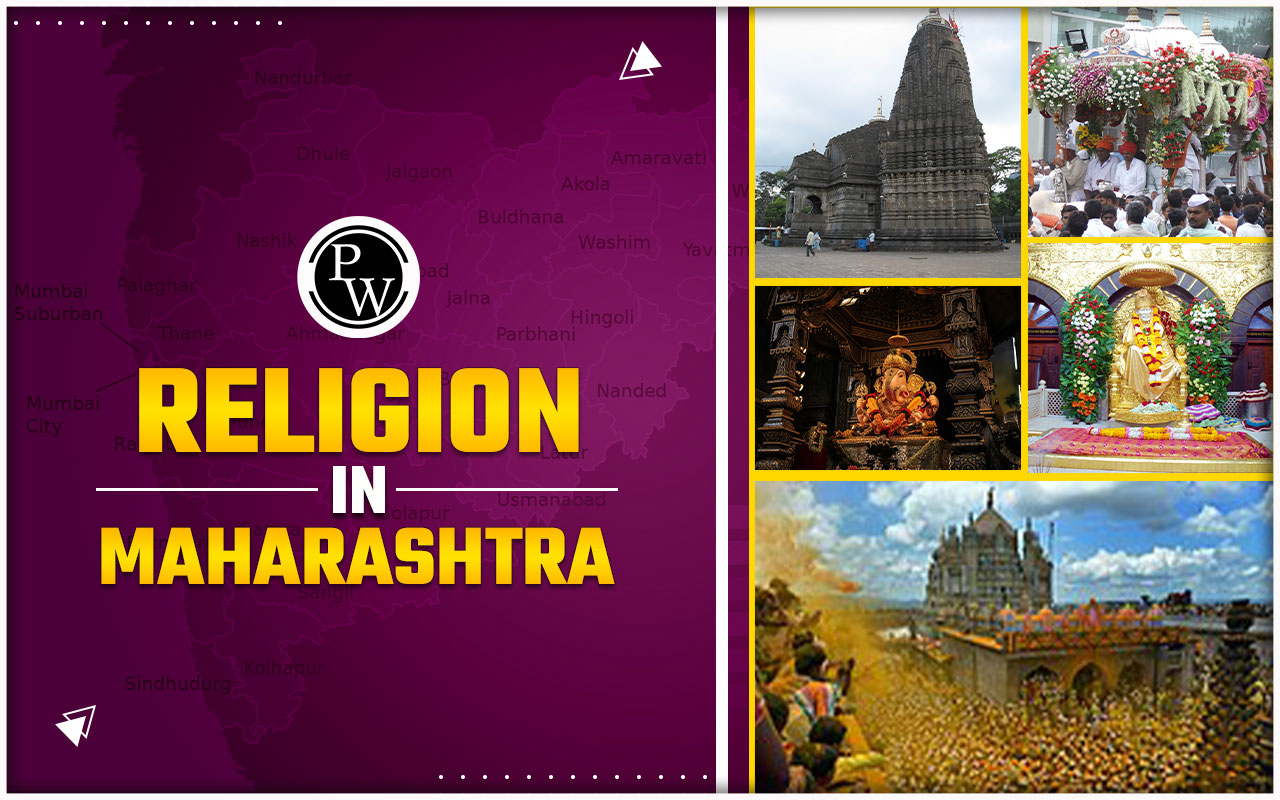
Religion in Maharashtra : Welcome to our insightful exploration of Maharashtra's rich tapestry of religions! Nestled in the heart of western India, Maharashtra beckons with its vibrant culture, dynamic history, and above all, its diverse religious landscape. Join us on a journey through this captivating state as we unravel the intricate threads of Hinduism, Islam, Buddhism, Jainism, Sikhism, Christianity, Zoroastrianism, Judaism, and beyond. From the bustling streets of Mumbai to the serene temples of Aurangabad, Maharashtra offers a kaleidoscope of faiths, each weaving its unique narrative into the fabric of the state's identity.
Let's embark on this fascinating expedition together, delving into the spiritual heritage and religious demographics that define Maharashtra's soul. Welcome to a voyage of discovery through Maharashtra's religious mosaic!
Diverse Demographic of Religion in Maharashtra
Maharashtra, one of India's most diverse states, is a melting pot of cultures, languages, and religions. Situated in the western part of India, Maharashtra boasts a rich tapestry of religious diversity, with adherents of Hinduism, Islam, Buddhism, Jainism, Sikhism, Christianity, Zoroastrianism, Judaism, and various other faiths coexisting harmoniously. Let's delve into the religious demographics of Maharashtra and explore the vibrant religious landscape of the region.
Religion in Maharashtra
Maharashtra is home to a vast and varied population, with different religious communities contributing to its rich cultural fabric. The state's demographics reflect a mosaic of religious beliefs and practices, each adding its unique essence to the social, cultural, and spiritual life of Maharashtra.
Hinduism Religion in Maharashtra
Hinduism holds a predominant position in Maharashtra, with the majority of the population identifying as Hindus. The state is replete with temples dedicated to various Hindu deities, and festivals like Ganesh Chaturthi, Diwali, and Navratri are celebrated with great fervor and enthusiasm across the region.
Islam Religion in Maharashtra
Islam is the second-largest religion in Maharashtra, with a significant Muslim population residing in various parts of the state. Mosques dot the landscape, serving as centers for prayer, community gatherings, and religious discourse. Eid-ul-Fitr and Eid-ul-Adha are widely celebrated by Muslims in Maharashtra.
Buddhism Religion in Maharashtra
Maharashtra holds immense significance in Buddhist history and heritage, with prominent sites like Ajanta and Ellora caves attracting pilgrims and tourists from around the world. The state is home to a substantial Buddhist population, particularly in regions like Aurangabad and Nagpur.
Jainism Religion in Maharashtra
Jainism has a long-standing presence in Maharashtra, with followers of the Jain faith contributing to the state's religious diversity. Temples, known as Jain derasars, can be found in various parts of Maharashtra, serving as focal points for Jain religious activities and rituals.
Sikhism Religion in Maharashtra
While Sikhism constitutes a smaller percentage of Maharashtra's population, the state is home to several gurdwaras, which serve as places of worship and community service for the Sikh community. Sikh festivals such as Guru Nanak Jayanti are celebrated with enthusiasm by followers in Maharashtra.
Christianity Religion in Maharashtra
Christianity has a significant presence in Maharashtra, particularly in urban centers like Mumbai and Pune. Churches, cathedrals, and Christian institutions play a vital role in the religious and social life of the Christian community in the state.
Zoroastrians Religion in Maharashtra
The Parsi community, followers of Zoroastrianism, has a notable presence in Maharashtra, especially in Mumbai. The city is home to iconic fire temples and institutions that uphold the rich cultural heritage of the Parsi community.
Judaism Religion in Maharashtra
Though a small community, Jews have a historical presence in Maharashtra, particularly in Mumbai. Synagogues and Jewish cultural centers serve as focal points for the Jewish community to preserve their religious and cultural identity.
Religious Percentage in Religion in Maharashtra
Maharashtra's religious demographics showcase a harmonious coexistence of diverse faiths, with each contributing to the state's socio-cultural milieu. Understanding and respecting the religious plurality of Maharashtra is essential for fostering unity, tolerance, and mutual respect among its inhabitants. The state's population is predominantly Hindu, followed by significant minorities of Muslims, Buddhists, Jains, and Christians:
- Hindus: Around 80-85%
- Muslims: Around 10-15%
- Buddhists: Around 4-5%
- Jains: Around 1-2%
- Christians: Around 1-2%
Capital of the Geographic Region
Mumbai, the bustling metropolis and financial capital of India, serves as the capital of Maharashtra. The city's cosmopolitan nature reflects the state's diverse demographics, with people from different religious, cultural, and linguistic backgrounds coexisting and thriving in its vibrant urban landscape.
Religious Parties in Religion in Maharashtra
Maharashtra's political landscape is marked by the presence of religious parties that cater to the interests and aspirations of specific religious communities. These parties play a significant role in shaping electoral outcomes and influencing policy decisions related to religious matters in the state. In terms of politics, parties like the Bharatiya Janata Party (BJP) and Shiv Sena have traditionally had strong Hindu nationalist leanings, although their support base extends beyond religious lines. Other parties like the Indian National Congress (INC) and various regional parties such as the Nationalist Congress Party (NCP) and Maharashtra Navnirman Sena (MNS) have diverse support bases encompassing different religious and social groups.
Religion in Maharashtra FAQs
Q.1 Which religion is increasing in Maharashtra?
Q.2 What is the percentage of Muslims in Maharashtra?
Q.3 Is mahar a Hindu or Buddhist?
Q.4 What is the percentage of Christians in Maharashtra?
Q.5 Which state has the most Muslims?






 Live & recorded classes available at easeDashboard for progress trackingMillions of practice questions at your fingertips

