






Religion in Uttar Pradesh, Population by Religion and Caste
 Bhavya Upadhyay30 May, 2024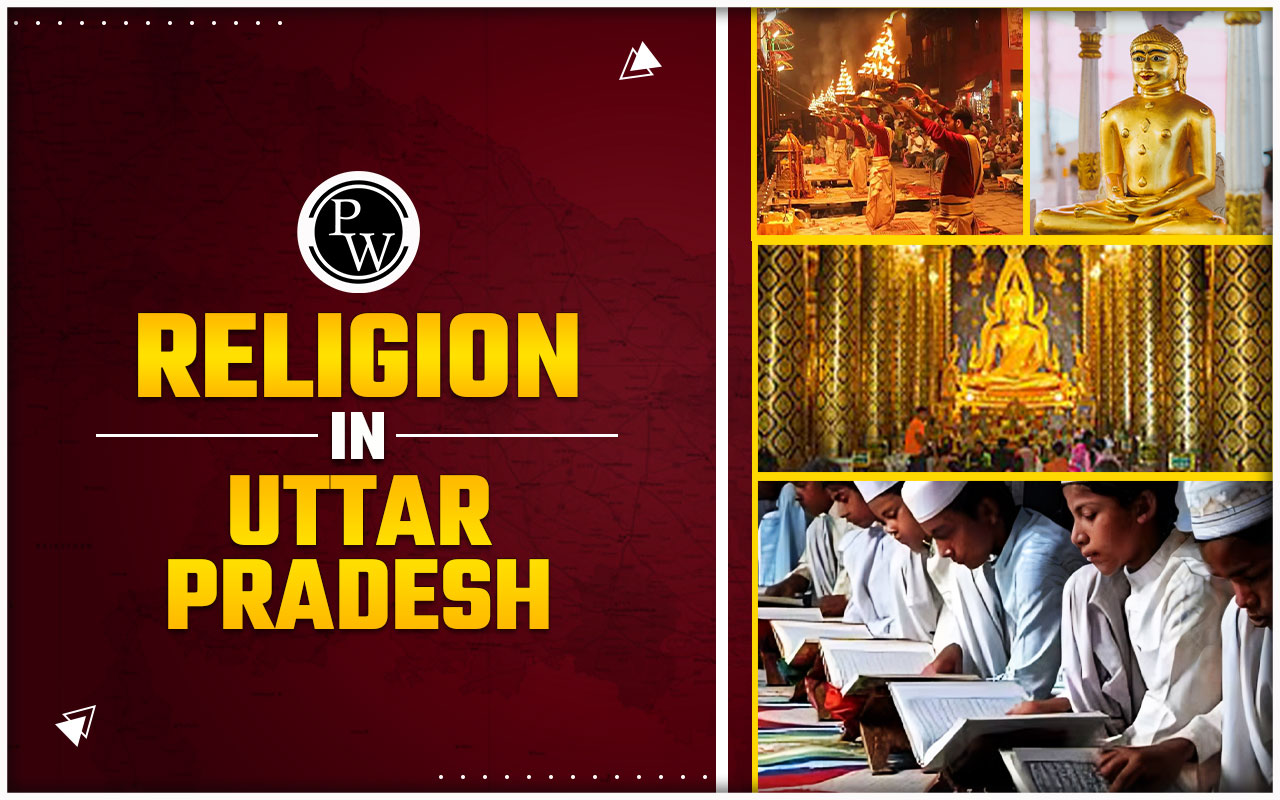
Religion in Uttar Pradesh: Uttar Pradesh, often referred to as the heartland of India, is not only known for its rich historical heritage but also for its diverse religious landscape. From ancient temples to revered mosques, tranquil churches to sacred gurudwaras, the state encapsulates a myriad of faiths, each contributing to its cultural tapestry. Let's embark on a journey through the religious spectrum of Uttar Pradesh.
Religion in Uttar Pradesh
Uttar Pradesh, nestled in the heart of India, is a melting pot of religions, each contributing to its rich cultural heritage. From ancient temples to tranquil mosques, the state resonates with the harmonious coexistence of diverse faiths. In this exploration, we delve into the multifaceted dimensions of religion in Uttar Pradesh, where every shrine narrates a story of devotion and resilience, shaping the socio-cultural landscape of the region. Join us on a captivating journey through the spiritual ethos that defines India's most populous state.
History of Religion in Uttar Pradesh
Ancient Period
The history of religion in Uttar Pradesh is as old as civilization itself. The region, part of the ancient Vedic civilization, was a cradle for Hinduism. The Vedas, the oldest sacred texts of Hinduism, were composed in this area, laying the foundation for Hindu religious and cultural practices.Medieval Period
The medieval period saw the rise of Islamic influence in Uttar Pradesh, particularly during the Delhi Sultanate and Mughal Empire. Cities like Agra and Fatehpur Sikri became prominent centers of Islamic culture and architecture. The Mughal emperors, especially Akbar, promoted a syncretic culture, blending elements of Hinduism and Islam, which is evident in the region's architectural and cultural heritage.Modern Period
The British colonial era introduced Christianity to Uttar Pradesh, with the establishment of churches and missionary schools. The colonial influence also saw the codification of laws that impacted religious and social structures.Post-Independence
Post-independence, Uttar Pradesh continued to be a melting pot of various religions. The secular constitution of India ensured that all religious communities could practice their faith freely. The state witnessed the construction of new temples, mosques, churches, and gurudwaras, reflecting its diverse religious fabric.Contemporary Period
In contemporary times, Uttar Pradesh remains a vibrant mosaic of religious traditions. The construction of the Ram Mandir in Ayodhya has been a significant event, symbolizing the deep-rooted Hindu faith. Meanwhile, the state's Islamic heritage continues to thrive in cities like Lucknow and Agra. Sikhism, Christianity, Jainism, and Buddhism also have their own spaces and followers, contributing to the state's pluralistic identity.Diversification of Religion in Uttar Pradesh
Uttar Pradesh, India's most populous state, is a vibrant mosaic of religious traditions and practices, reflecting the broader diversity of the nation. Here’s an overview of the key religious communities and their significance within the state:
Hinduism Religion in Uttar Pradesh
Hinduism, the predominant religion in Uttar Pradesh, finds its roots deeply embedded in the state's history. Varanasi, the spiritual capital of India, is one of the holiest cities for Hindus. The ghats of river Ganges reverberate with the chants of prayers, and the aroma of incense fills the air as devotees perform rituals and immerse themselves in the sacred waters.
Ayodhya, another revered city in Uttar Pradesh, is believed to be the birthplace of Lord Rama, the seventh avatar of Lord Vishnu. The Ram Janmabhoomi, the disputed site of the Babri Masjid, holds immense religious significance for Hindus. The recent construction of the Ram Mandir stands as a testament to the enduring faith of millions.
Islam Religion in Uttar Pradesh
Uttar Pradesh is home to a significant Muslim population, and its cities are adorned with architectural marvels that reflect the influence of Islamic culture. The city of Lucknow, with its majestic Nawabi architecture, boasts of the Bara Imambara and the Chota Imambara, which are revered by both Muslims and non-Muslims alike.
The city of Agra, renowned for the iconic Taj Mahal, also houses the exquisite Fatehpur Sikri, a UNESCO World Heritage Site built by Emperor Akbar. The Jama Masjid in Fatehpur Sikri stands as a testament to the syncretic culture that flourished during the Mughal era, blending Islamic and Hindu architectural styles seamlessly.
Sikhism Religion in Uttar Pradesh
Uttar Pradesh has a rich Sikh heritage, with several historical gurudwaras dotting its landscape. The city of Amritsar, though not in Uttar Pradesh, holds immense significance for Sikhs due to the Golden Temple, but even within Uttar Pradesh, cities like Meerut and Agra house revered gurudwaras where devotees gather to seek solace and spiritual guidance.
Christianity Religion in Uttar Pradesh
The influence of Christianity in Uttar Pradesh can be traced back to the colonial era when the British established churches across the state. The city of Allahabad, now known as Prayagraj, is home to the historic All Saints Cathedral, a magnificent structure that reflects Gothic architecture. Similarly, churches in Lucknow and Kanpur stand as reminders of the state's colonial past.
Jainism and Buddhism Religion in Uttar Pradesh
Uttar Pradesh also holds significance in Jainism and Buddhism, with cities like Varanasi and Sarnath being key pilgrimage sites. Sarnath, where Lord Buddha preached his first sermon, attracts Buddhist pilgrims from around the world, while Varanasi is dotted with Jain temples, bearing testimony to the rich Jain heritage of the region.
Population by Religion and Caste
The population of Uttar Pradesh is a reflection of its rich and diverse cultural fabric. Here is a breakdown of the population by religion and caste:| Population by Religion | |
| Religion | Percentage of Population |
| Hinduism | 79.73% |
| Islam | 19.26% |
| Christianity | 0.18% |
| Sikhism | 0.32% |
| Buddhism | 0.10% |
| Jainism | 0.11% |
| Others | 0.30% |
| Population by Caste | |
| Caste Group | Percentage of Population |
| Scheduled Castes (SC) | 21.1% |
| Scheduled Tribes (ST) | 0.6% |
| Other Backward Classes (OBC) | 41.1% |
| General Category | 37.2% |
Unity in Diverse Religion in Uttar Pradesh
The religious landscape of Uttar Pradesh is a testament to the unity in diversity that characterizes India. Despite the multitude of faiths and beliefs, there exists a harmonious coexistence among communities, fostering a sense of unity and mutual respect. As we traverse through the sacred sites and holy cities of Uttar Pradesh, we are reminded of the timeless wisdom that transcends religious boundaries and binds us together as one human family.
Religion in Uttar Pradesh FAQs
Q.1 What percent of Uttar Pradesh is Hindu?
Q.2 Which religion is more in Lucknow?
Q.3 What is the main religion in Allahabad?
Q.4 What percent of Muslim religion in Uttar Pradesh ?









 Live & recorded classes available at easeDashboard for progress trackingMillions of practice questions at your fingertips

