






Religion in West Bengal, Majority Religion, Percentage
 Bhavya Upadhyay30 May, 2024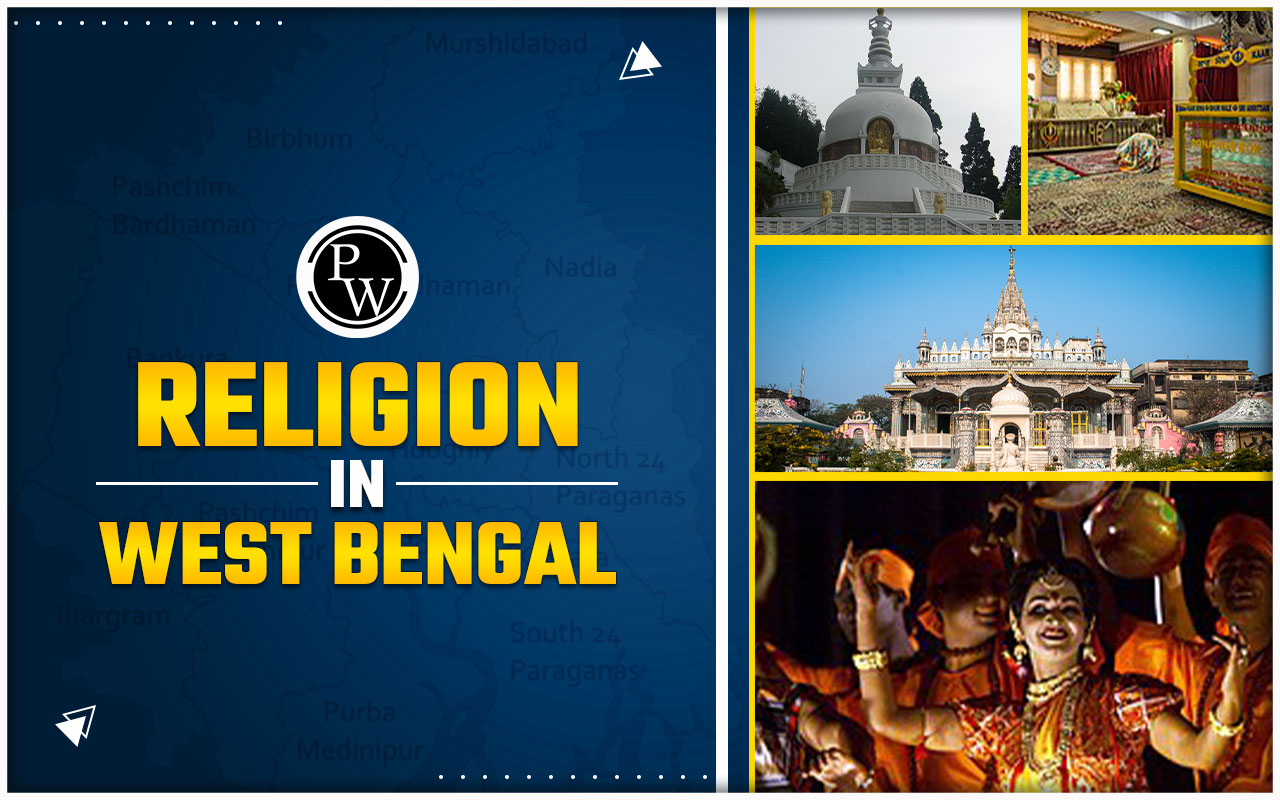
Religion in West Bengal: West Bengal, a state located in the eastern part of India, is a land rich in cultural heritage and diversity. Religion in West Bengal is an integral aspect of its societal fabric, shaping its customs, traditions, and way of life. This blog delves into the religious landscape of West Bengal, exploring the harmony and coexistence that define its spiritual ethos.
Welcome to our journey through the diverse and culturally rich tapestry of West Bengal's religious landscape. Nestled in the eastern part of India, West Bengal is not only renowned for its literary prowess, delectable cuisine, and vibrant festivals but also for its remarkable religious pluralism. In this blog, we delve deep into the intricate web of faiths, beliefs, and practices that shape the spiritual ethos of this enchanting state.
Overview of Religion in West Bengal
Religion in West Bengal is a vibrant mosaic that reflects centuries of historical, cultural, and socio-political evolution. At the heart of this tapestry lies Hinduism, which serves as the bedrock of the state's religious identity, with a majority of the population adhering to its myriad traditions and customs. However, beyond Hinduism, West Bengal is also home to significant Muslim, Buddhist, Christian, and Sikh communities, each contributing to the rich religious tapestry of the region.
The population of West Bengal as per 2011 Census
According to the 2011 Census, West Bengal's population stood at approximately 91.28 million, with males comprising around 46.81 million and females around 38.71 million. This marks a growth rate of 13.84%, slightly lower than the previous decade's 17.84%, and West Bengal's population represents about 7.54% of the entire country's population.
In terms of housing, the census data shows that around 89.28% of houses are owned, while 7.33% are rented. The gender ratio has seen improvement, with about 950 females for every 1000 males, up from 934 in the 2001 census. However, the child sex ratio has slightly declined from 960 to 956. The total population of children (aged 0-6 years) stands at approximately 10.58 million, with 5.41 million male and 5.17 million female children.
The literacy rate in West Bengal is reported at around 76.26%, showcasing an increase in educational attainment. The state also exhibits a notable population density of approximately 1,028 people per square kilometer, reflecting a significant rise from 903 people per square kilometer in 2001.
Diversification of Religion in West Bengal
West Bengal is predominantly Hindu, with a significant Muslim population and smaller communities of Christians, Buddhists, Sikhs, Jains, and others. Each of these religious groups has contributed to the state’s vibrant culture, creating a tapestry of beliefs and practices.Hinduism Religion in West Bengal
- Temples and Festivals : Hinduism is the major religion in West Bengal, with a rich tradition of temples, rituals, and festivals. The state is renowned for its grand Durga Puja celebrations, which attract visitors from across the globe. Other major festivals include Kali Puja, Saraswati Puja, and Rath Yatra.
- Religious Sites : Important Hindu sites include the Dakshineswar Kali Temple, Belur Math, Tarapith, and the Kalighat Temple. These sites are not only places of worship but also centers of cultural and social activities.
Islam Religion in West Bengal
- Cultural Contributions : Muslims form the largest minority in West Bengal. The state’s Islamic heritage is evident in its architecture, cuisine, and arts. Sufi shrines like Furfura Sharif and the Nakhoda Mosque in Kolkata are key religious and cultural centers.
- Festivals : Eid-ul-Fitr, Eid-ul-Adha, and Muharram are major Islamic festivals celebrated with fervor and communal harmony. The cultural blend is visible in the shared participation in festivities.
Christianity Religion in West Bengal
- Churches and Missions : Christianity has a long history in West Bengal, dating back to the arrival of Portuguese missionaries. Notable churches include St. Paul’s Cathedral and the Bandel Church. The influence of Christian missions is also seen in the state’s educational and healthcare institutions.
- Festivities : Christmas and Easter are celebrated with joy, marked by church services, processions, and community gatherings.
Buddhism and Jainism Religion in West Bengal
- Buddhist Heritage : Buddhism has historical roots in Bengal, dating back to the Mauryan and Pala periods. Sites like the Mahabodhi Society and the Tibetan Buddhist Monastery in Kalimpong reflect the continued presence of Buddhism.
- Jain Influence : Jainism, though smaller in number, has a significant influence, especially in business communities. Jain temples like the Parasnath Temple in Kolkata are notable for their architectural beauty and spiritual significance.
Sikhism Religion in West Bengal
- Gurdwaras : The Sikh community, though small, is active and vibrant. Key gurdwaras, such as the Gurdwara Sant Kutiya and Gurdwara Bara Sikh Sangat in Kolkata, serve as important religious and social centers.
The District-Wise Population of West Bengal
Delving into the district-wise population distribution offers intriguing insights into the socio-demographic landscape of West Bengal. Kolkata, the bustling capital city, stands as the most populous district, serving as the nerve center of commerce, culture, and governance.
| The District-Wise Population of West Bengal | |
| District | Population |
| Bankura | 3,596,674 |
| Barddhaman | 7,717,563 |
| Birbhum | 3,502,404 |
| Cooch Behar | 2,819,086 |
| Dakshin Dinapur | 1,676,276 |
| Hooghly | 5,519,145 |
| Howrah | 4,850,029 |
| Jalpaiguri | 3,872,846 |
| Kalimpong (Darjeeling) | 1,846,823 |
| Kolkata | 4,496,694 |
| Maldah | 3,988,845 |
| Murshidabad | 7,103,807 |
| Nadia | 5,167,600 |
| Paschim Medinipur | 5,913,457 |
Harmony and Coexistence of Religion in West Bengal
West Bengal's religious landscape is characterized by its inclusive and syncretic culture. The state has a long history of religious tolerance and communal harmony. This spirit is embodied in its festivals, where people of different faiths participate in each other's celebrations, fostering a sense of unity and brotherhood.Religion in West Bengal FAQs
Q.1 Which religion is increasing in West Bengal?
Q.2 What is the most popular religion in Bengal?
Q.3 What is the famous religion of West Bengal?
Q.4 Is West Bengal a Hindu state?










 Live & recorded classes available at easeDashboard for progress trackingMillions of practice questions at your fingertips

