







B.Des in Textile Design 2027: Eligibility, Fees, Syllabus and Career Scope

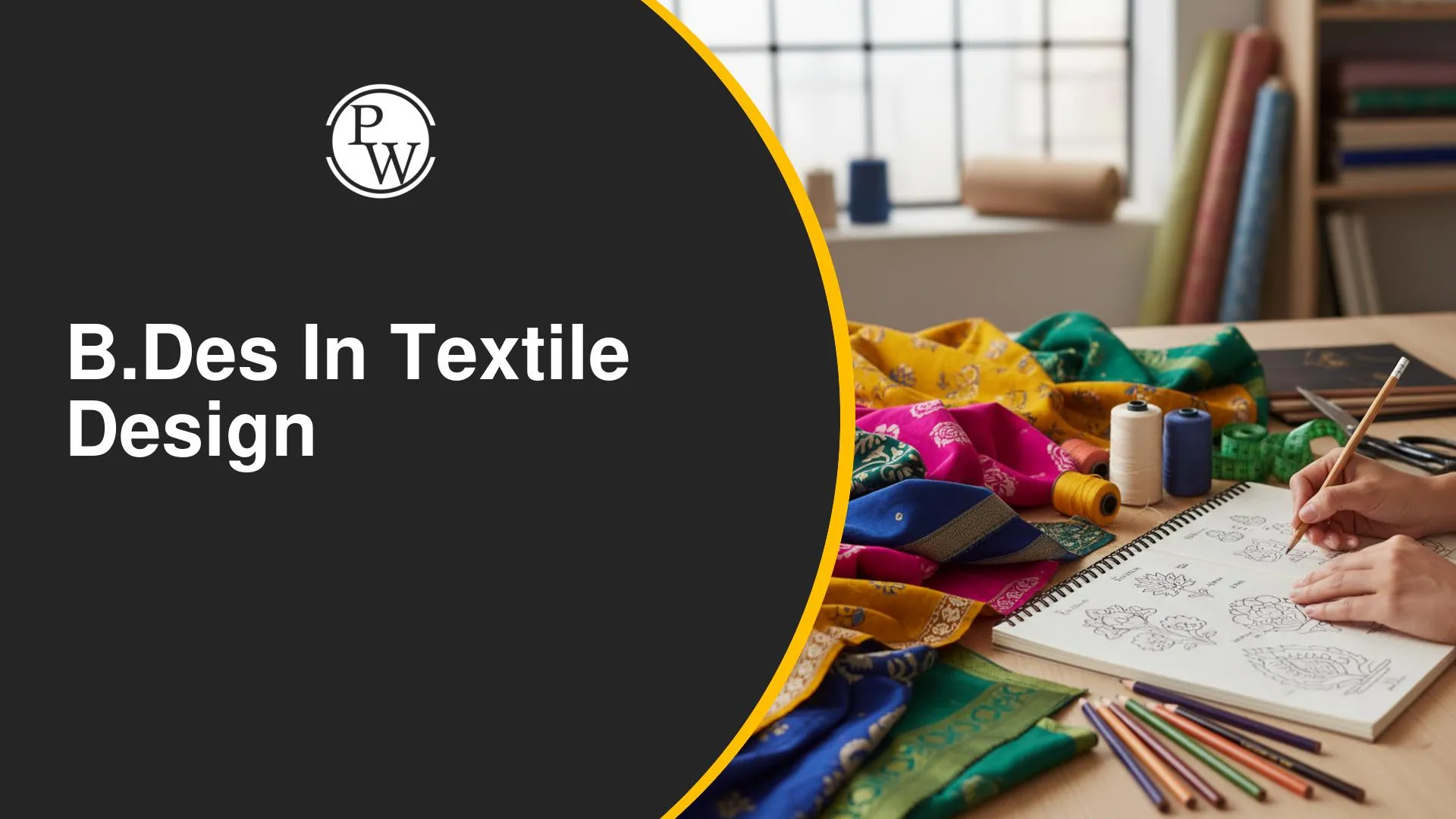
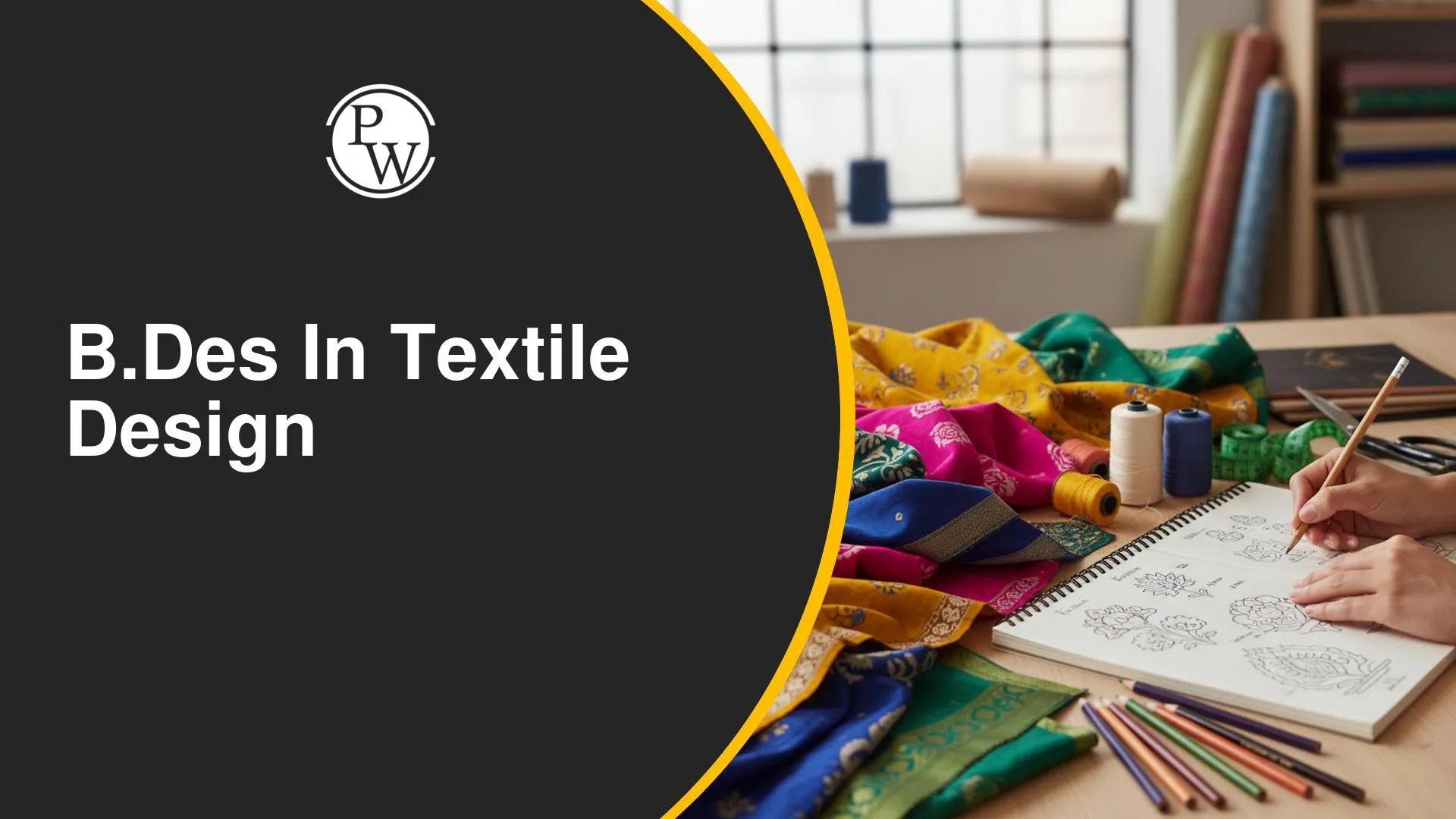
B.Des in Textile Design is an undergraduate programme for students who want to work with fabrics, colours, patterns, materials, and textile processes. The course combines creative design with practical and technical learning. You study how textiles are developed, modified, and used for different products and industries.
Textile design is not limited to clothing. It is also used for home furnishings, interiors, lifestyle products, public spaces, exhibitions, and other applications. The programme can include traditional craft methods as well as digital techniques. These may include weaving, embroidery, knitting, screen printing, laser cutting, digital printing, and computer-aided design.
The duration and admission rules vary by institute. Some design institutes use national-level entrance exams, while others may conduct their own selection process.
B.Des in Textile Design: Course Overview
The programme focuses on the complete design process. You begin with an idea and develop it through research, material selection, experimentation, sampling, and refinement.
A B. Des textile design programme can include both studio-based and theoretical learning. Practical sessions allow you to work directly with different fabrics and techniques. Research-based projects help you understand cultural, environmental, social, and market-related aspects of textile design.
|
Particular |
Details |
|
Course level |
Undergraduate |
|
Degree |
Bachelor of Design |
|
Duration |
Depends on the institute |
|
Study areas |
Textile design, materials, colour, surfaces and structures |
|
Learning approach |
Studio work, practical sessions, research and projects |
|
Admission |
Entrance exam or institute-specific process |
|
Related entrance exams |
NIFT, NID DAT and UCEED |
|
Career areas |
Textile, fashion, home furnishing, retail and design |
The supplied course information describes a three-year programme divided into six semesters. However, course duration differs across institutions. NIFT's current undergraduate Textile Design programme is structured as a four-year course. Therefore, you should refer to the institute's official programme structure before applying.
What Do You Learn in Textile Design?
A textile design course covers the design and production of different textile materials. You learn how fibres, fabrics, colours, structures, and surface treatments work together.
The course may introduce you to:
-
Textile fibres
-
Woven fabrics
-
Surface design
-
Textile structures
-
Printing
-
Dyeing
-
Embroidery
-
Knitting
-
Sewing techniques
-
Digital textile design
-
Fabric development
-
Garment-related applications
-
Design research
-
Prototype development
You also learn how traditional techniques can be combined with modern technology. For example, textile development can involve hand embroidery alongside digital printing or computer-based design.
Project work forms an important part of the learning process. You may create textile samples, test materials, develop prototypes, and refine your designs based on the results.
Textile Design Degree: Areas of Study
A textile design degree can prepare you to work across different areas of the textile industry. The focus is broader than designing prints for clothes.
You may work on textiles for:
-
Apparel
-
Home furnishings
-
Interiors
-
Exhibitions
-
Public spaces
-
Lifestyle products
-
Automobile applications
-
Craft-based products
The course can also introduce you to brand identity and textile applications for furnishing and apparel industries. Field visits and industry training may provide exposure to industrial and craft production methods.
This broad approach allows you to understand how a textile moves from an initial concept to a finished product.
Textile Design Eligibility
The eligibility requirements for textile design programmes vary by institute. In general, you should meet the following conditions:
-
Educational Qualification: You should have completed Class 12 or an equivalent examination from a recognised board.
-
Stream: The required stream may differ across institutes. Some colleges accept students from any stream, while others may specify particular subjects.
-
Minimum Marks: The minimum percentage requirement depends on the institute and programme.
-
Entrance Exam: If admission is through an entrance exam, you must meet the eligibility conditions of that examination.
-
Institute-Specific Rules: Age limits, subject requirements, and other conditions may vary. Always refer to the admission notification of the institute you are applying to.
B.Des in Textile Design Admission Process
The admission process generally begins with registration for the relevant entrance examination or institute.
A typical process includes:
-
Check the eligibility conditions.
-
Choose the institutes and programmes.
-
Register for the required entrance exam.
-
Complete the application form.
-
Appear for the examination.
-
Attend further selection stages, if required.
-
Participate in counselling or institute-level selection.
-
Complete admission formalities.
The selection pattern is not the same for every institute. NIFT, NID, and UCEED follow their own admission systems.
For this reason, you should not assume that qualifying for one design entrance exam will make you eligible for every textile design programme.
Textile Design Syllabus
The textile design syllabus varies across colleges. However, the major subjects usually cover textile materials, construction, surface development, design, and practical applications.
A course may include the following areas:
|
Subject Area |
What You Study |
|
Textile science |
Fibres, yarns and fabric properties |
|
Textile construction |
Weaving, knitting and constructed textiles |
|
Surface design |
Embroidery, ornamentation and surface techniques |
|
Printing |
Different textile printing processes |
|
Dyeing |
Colour application and dyeing methods |
|
Colour |
Colour concepts and combinations |
|
Digital design |
Computer applications in textile development |
|
Fashion applications |
Basic garment and apparel concepts |
|
Design research |
Fieldwork, research and trend studies |
|
Project work |
Concept development, sampling and prototypes |
The supplied curriculum also includes subjects related to traditional textiles, textile chemistry, fashion apparel design, garment production, fabric manufacturing, knitting, and quality control.
The exact subjects and semester structure depend on the university.
B.Des Textile Design Fees
The b.des textile design fees depend on the institute, location, facilities, and programme structure. Government institutions and private design schools may have different fee structures.
The supplied information lists annual fees ranging from around Rs. 15,600 to Rs. 4.13 lakh across the mentioned institutions.
Some indicative figures from the source are:
|
Institute |
City |
Annual Fee |
|
LISAA School of Design |
Bengaluru |
Rs. 1.70 lakh |
|
Sardar Vallabhbhai Patel International School of Textiles and Management |
Coimbatore |
Rs. 99,000 |
|
Singhania University |
Jhunjhunu |
Rs. 60,000 |
|
Tamil Nadu Open University |
Chennai |
Rs. 15,600 |
|
J.D. Birla Institute |
Kolkata |
Rs. 4.13 lakh |
|
MKSSS School of Fashion Technology |
Pune |
Rs. 3.45 lakh |
|
International Institute of Fashion Design |
Gurugram |
Rs. 2.70 lakh |
|
Madras Institute of Fashion Technology |
Chennai |
Rs. 2 lakh |
These figures are indicative and should not be treated as the confirmed fee for 2027. Colleges can revise their fee structures.
Apart from tuition, you may also need to account for studio materials, fabrics, printing supplies, project work, examination charges, accommodation, and other academic expenses.
What Skills Do You Develop?
The course helps you develop skills that combine creative thinking with practical execution.
You may build skills in:
-
Colour development
-
Pattern creation
-
Textile illustration
-
Fabric analysis
-
Surface development
-
Material selection
-
Textile construction
-
Digital design
-
Design research
-
Prototype development
-
Visual presentation
-
Project planning
You also learn to evaluate your own designs. This involves identifying problems in a sample and making changes before producing the final textile.
The programme can also introduce you to social and environmental factors that influence textile use. This helps you understand the wider context of textile production and consumption.
Career Scope After Textile Design
After completing the programme, you can consider careers in textile manufacturing, fashion, home furnishings, retail, interiors, and craft-related organisations.
Possible job roles include:
|
Job Role |
Main Work |
|
Textile Designer |
Develops textile patterns, surfaces and materials |
|
Fabric Designer |
Creates designs for different fabric applications |
|
Print Designer |
Develops textile prints and repeat patterns |
|
Surface Designer |
Works on decorative textile surfaces |
|
Textile Consultant |
Provides design inputs for textile projects |
|
Design Consultant |
Works on design concepts for different applications |
|
Embroidery Designer |
Develops embroidery and embellishment designs |
|
Merchandiser |
Coordinates products, production, and market requirements |
|
Entrepreneur |
Builds an independent textile or design business |
The supplied information also identifies opportunities in garment manufacturing, textile manufacturing, fashion, retail, and government-supported silk, khadi, handloom, jute, and craft development organisations.
You can also work independently after gaining experience. Entrepreneurship is another route if you want to develop your own textile products or design services.
Where Can Textile Designers Work?
Textile designers can work with organisations involved in the development, production, sale, or use of textiles.
Potential work areas include:
-
Textile mills
-
Fashion brands
-
Garment manufacturers
-
Export houses
-
Home furnishing companies
-
Retail companies
-
Interior product brands
-
Design studios
-
Handloom organisations
-
Craft development organisations
-
Independent design businesses
The work can differ based on the organisation. A designer working with a fashion company may focus on apparel fabrics. Someone working with a home furnishing company may develop designs for upholstery, bed linen, rugs, or other products.
Entrance Exams for Textile Design in 2027
Several design entrance exams can be relevant when you plan to pursue undergraduate design education.
-
NIFT Entrance Exam 2027 offers an undergraduate Textile Design programme. Its curriculum connects textile design with materials, processes, technology, craft, and industry applications.
-
NID DAT 2027 is the admission route for undergraduate design education at the National Institute of Design. Its B.Des programme includes Textile and Apparel Design as a discipline.
-
UCEED 2027 is conducted for undergraduate design admissions at participating institutes. However, each participating institute can have its own eligibility conditions and admission rules.
You should select the entrance exam after identifying the colleges and programmes that match your interests. This will help you prepare for the correct admission process.
Is Textile Design Different From Fashion Design?
Textile Design and Fashion Design are connected but have different areas of focus.
|
Textile Design |
Fashion Design |
|
Focuses on fabrics and textile surfaces |
Focuses on garments and apparel |
|
Covers printing, weaving, dyeing and surface work |
Covers clothing construction and fashion collections |
|
Deals with fibres, materials, patterns and structures |
Deals with silhouettes, garments and styling |
|
Can include home and lifestyle textiles |
Primarily focuses on apparel |
|
Includes textile production techniques |
Includes garment production techniques |
A textile designer can create the fabric that a fashion designer later uses in a garment. Both fields can therefore work together during product development.
Who Should Choose Textile Design?
This field can suit you if you enjoy working with fabrics, colours, patterns, materials, and visual concepts.
You should also be willing to work on practical projects. Textile design involves more than drawing. You may need to test materials, create samples, study production methods, and make several changes to a design.
An interest in traditional crafts can also be useful. Modern textile education often brings craft methods together with digital tools and new production techniques.
Related Resources:
B.Des in Textile Design FAQs
What is B.Des in Textile Design?
What is the eligibility for Textile Design?
What subjects are taught in Textile Design?
How much does a B.Des in Textile Design cost?





Get Free Counselling Today
and Clear up all your Doubts
 Live & recorded classes available at easeDashboard for progress trackingLakhs of practice questions

