








Indian Craft, Textiles and Embroidery for NIFT, NID & UCEED 2027

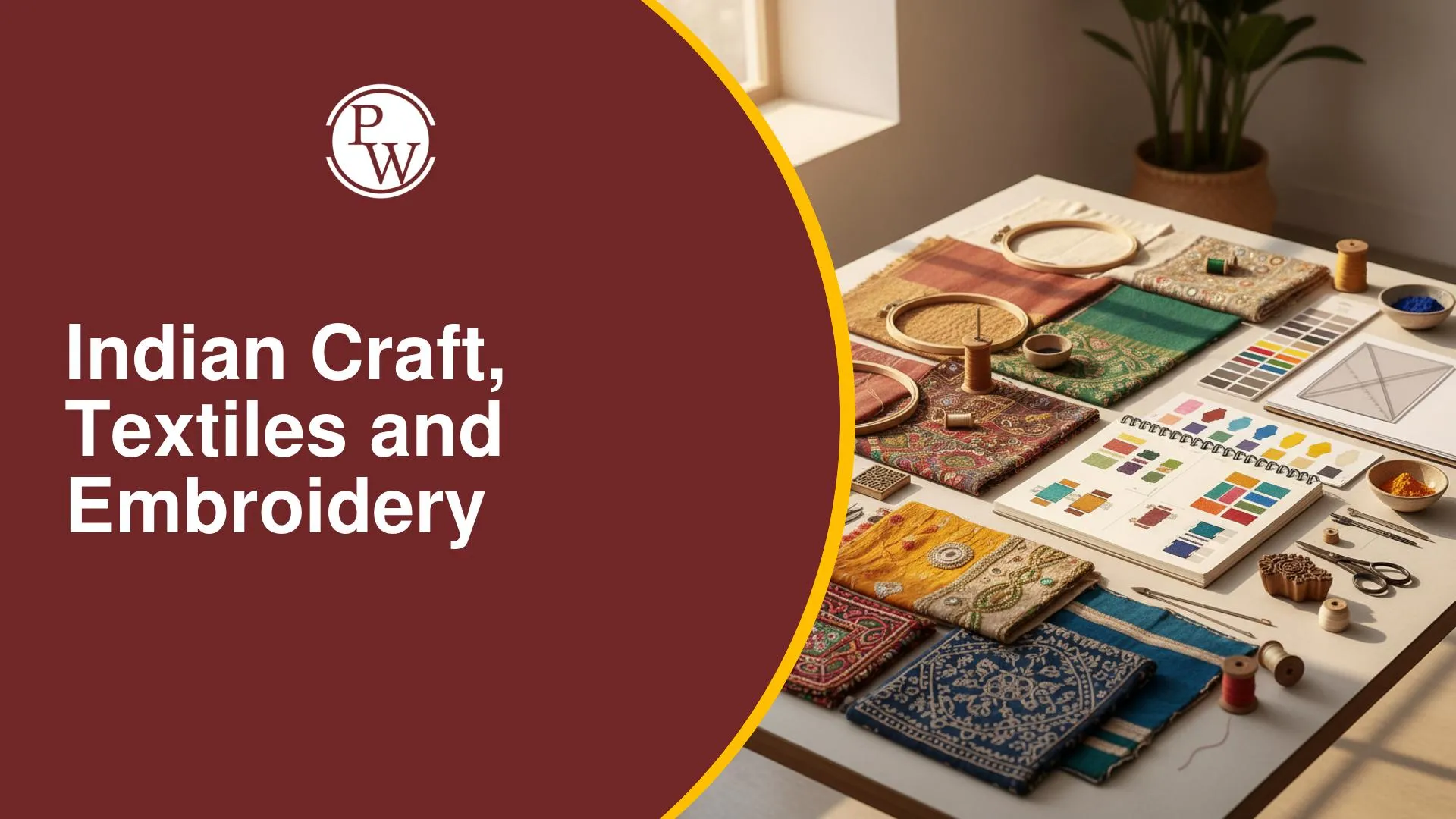
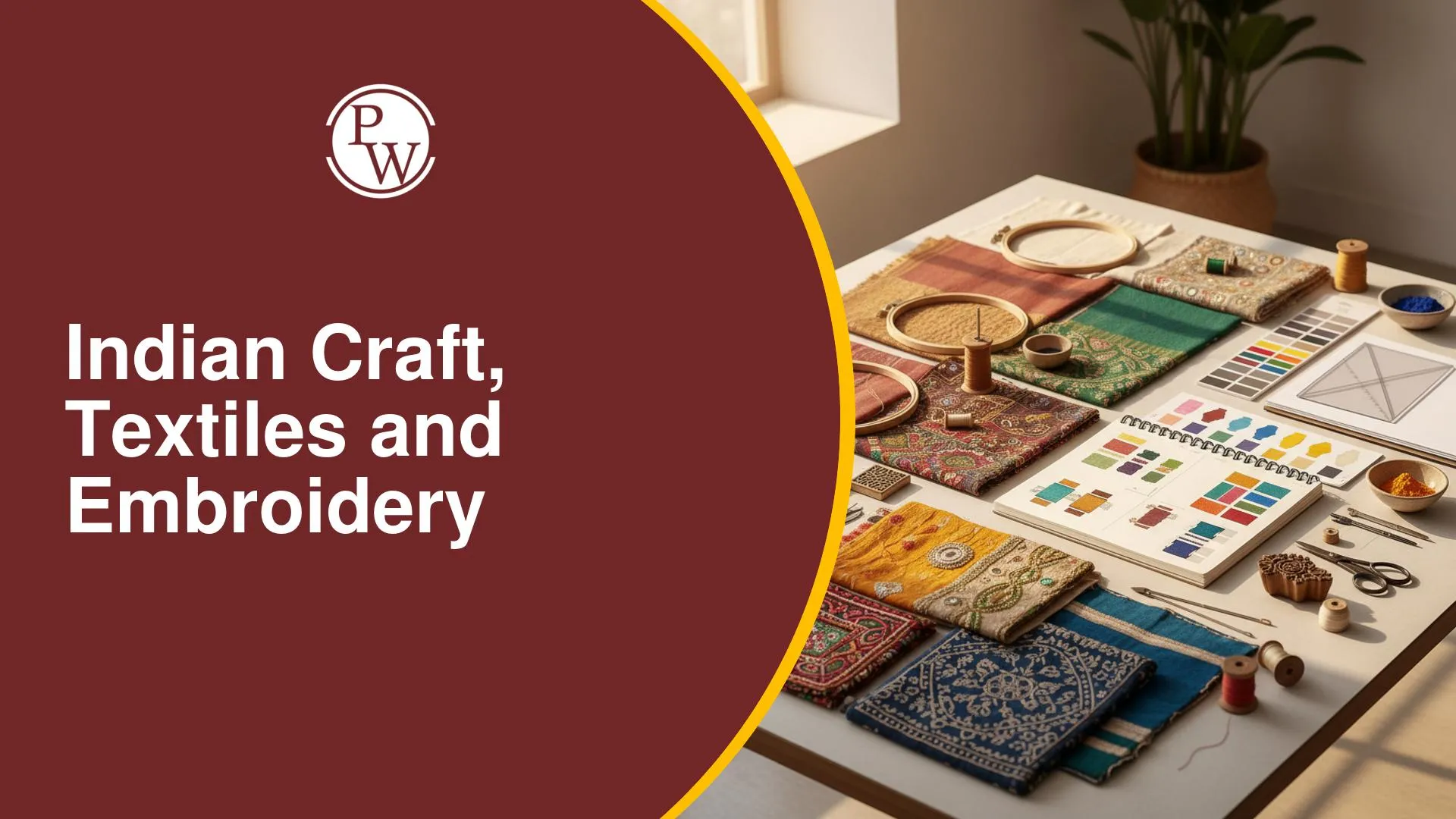
Indian art, textiles, and embroidery reflect the country's cultural traditions and regional craftsmanship. Each region has its own methods, materials, patterns, and designs. These traditions include Kashmiri shawls, Banarasi silk sarees, Madhubani paintings, Chikankari embroidery, and Pochampally Ikat. Understanding these art forms helps you recognise their origins, materials, and distinctive features.
For students preparing for NIFT, NID, and UCEED 2027, Indian Craft, Textiles and Embroidery is an important topic for design-related general knowledge. You should learn the names of different art forms, the regions they belong to, the materials used, and the techniques that make them distinctive. Visual recognition is also useful for identifying traditional patterns and craft styles.
Importance of Indian Crafts and Textiles for Design Entrance Exams
Indian crafts and textiles represent the artistic traditions of different regions. They include paintings, pottery, wood carving, weaving, and embroidery. Each craft has its own characteristics, which can help you distinguish one form from another.
For design entrance examinations, focus on these key aspects:
-
Origin: Learn the state or region associated with each craft.
-
Materials: Identify the fabrics, threads, pigments, and other materials used.
-
Techniques: Understand the processes involved in weaving, painting, carving, and embroidery.
-
Patterns and motifs: Recognise floral designs, geometric patterns, mirror work, and mythological themes.
-
Visual identification: Study images of different crafts to understand their appearance.
Along with learning about traditional art forms, you can practise your drawing skills through the PW Let’s Draw Together 2027 initiative as part of your design entrance exam preparation.
Indian Crafts, Paintings and Pottery
Indian folk art and crafts include traditional paintings, pottery, and wood carving. These art forms use different materials and techniques. Learning their regional origins and visual characteristics can help you identify them during revision.
1. Kashmiri Shawls: Pashmina and Jamawar
Kashmiri shawls are known for their luxurious fabric and intricate designs. Two famous types are Pashmina and Jamawar shawls.
-
Pashmina shawls: These are made from the fine wool of Himalayan goats.
-
Jamawar shawls: These are known for their intricate patterns and embroidery.
Both types belong to the textile traditions of Kashmir. Remember the difference between the materials and decorative features of these shawls.
2. Madhubani Painting
Madhubani painting, also known as Mithila painting, originated in the Mithila region of Bihar. It reflects the cultural traditions of the region.
Its main characteristics include:
-
Natural dyes and pigments.
-
Brushes made using twigs and other traditional materials.
-
Mythological themes, including stories from the Ramayana and Mahabharata.
-
Depictions of plants, nature, and everyday life.
Madhubani painting is recognised for its detailed patterns and traditional themes. Its colours and motifs reflect the artistic traditions of the Mithila region.
3. Banarasi Silk Sarees
Banarasi silk sarees are woven in Varanasi, also known as Banaras or Kashi, in Uttar Pradesh. They are famous for their intricate zari brocade work.
Key features include:
-
Silk fabric.
-
Gold and silver metallic threads.
-
Intricate brocade designs.
-
Floral motifs inspired by Mughal art.
The borders and decorative patterns are important features of Banarasi sarees. Their weaving techniques and metallic threadwork distinguish them from other traditional Indian textiles.
4. Jaipur Blue Pottery
Jaipur Blue Pottery is a traditional ceramic art associated with Jaipur, Rajasthan. It is known for its distinctive blue glaze and decorative patterns.
Its main features include:
-
Blue and white designs.
-
Intricate floral patterns.
-
Hand-painted decoration.
-
Use in decorative objects and tiles.
The pottery is also available in different vibrant colours. Its glazed surface and detailed designs are useful visual features to remember.
5. Pattachitra Painting of Odisha
Pattachitra painting originated in Odisha. The name combines two words, Patta, meaning cloth, and Chitra, meaning painting.
Its main characteristics include:
-
Painting on cloth and palm leaves.
-
Use of natural colours.
-
Mythological stories and folk tales.
-
Motifs representing cultural traditions.
The paintings often depict stories associated with Hindu mythology, including Radha and Krishna. Their traditional techniques and detailed compositions are important identifying features.
6. Saharanpur Wood Carving
Saharanpur, located in Uttar Pradesh, is known for its intricate wood carving. Artisans create decorative objects and furniture using detailed carving techniques.
Common products include:
-
Wooden furniture.
-
Sculptures and idols.
-
Decorative wooden items.
The defining feature of this craft is the intricate detailing carved into the wood. Sheesham wood is also associated with furniture made in this tradition.
7. Terracotta Pottery
Terracotta pottery involves shaping clay into objects and then firing them. The term comes from Italian words associated with earth and baked or cooked material.
Its characteristics include:
-
Use of clay as the primary material.
-
Creation of pots, vessels, figures, and sculptures.
-
Traditional shaping and firing techniques.
-
Bankura terracotta horses from West Bengal.
The Bankura horse is a recognisable example of terracotta craft. Students should remember its association with West Bengal and the use of fired clay.
8. Dhokra Metal Craft
Dhokra is a traditional metal-casting craft associated with tribal communities in India. It is known for its distinctive, rustic appearance and intricate patterns.
Important features include:
-
Use of metal casting to create sculptures and artefacts.
-
A traditional lost-wax casting technique.
-
Decorative patterns and distinctive forms.
-
Association with regions such as West Bengal, Odisha, Jharkhand, and Chhattisgarh.
Dhokra craft is particularly recognisable because of its characteristic appearance and casting process.
Famous Indian Embroidery Styles
Embroidery traditions differ in their stitches, materials, colours, and motifs. Some use white thread on fabric, while others feature mirrors, metallic threads, or colourful geometric patterns.
1. Lucknowi Chikankari
Chikankari originated in Lucknow, Uttar Pradesh. It is known for its delicate embroidery and fine stitches.
Its main characteristics include:
-
Traditional white-on-white embroidery.
-
Floral motifs featuring flowers and leaves.
-
Fine and intricate stitches.
-
Use on fabrics such as cotton and silk.
Chikankari is now seen in different thread colours and on garments such as kurtas, sarees, lehengas, and palazzos. It is also used on home furnishings, including cushions, curtains, and tablecloths.
The word chikan is associated with a Persian term referring to delicate or lattice-like work. White thread on white fabric remains an important traditional feature of this embroidery.
2. Kutch Embroidery
Kutch embroidery, also called Kacchi embroidery, originated in the Kutch region of Gujarat.
Its defining characteristics include:
-
Vibrant colours.
-
Traditional mirror work.
-
Decorative patterns.
-
Geometric designs.
The combination of colourful threadwork and mirrors makes this embroidery visually distinctive. It is an important example of the textile traditions of Gujarat.
3. Zardozi Embroidery
Zardozi is a form of metallic embroidery associated with Mughal-era craftsmanship. It uses metallic threads to create decorative designs on fabric.
Its main features include:
-
Gold and silver metallic threads.
-
Embroidery on silk and velvet.
-
Decorative elements such as pearls and precious stones.
-
Rich and elaborate patterns.
Zardozi is associated with the embroidery traditions that developed under Mughal influence. Its metallic threadwork distinguishes it from embroidery styles that primarily use coloured cotton or woollen threads.
4. Aari Embroidery
Aari embroidery gets its name from the hooked needle used in the technique. The needle helps create chain stitches and decorative loops.
Important characteristics include:
-
Use of a hooked needle.
-
Chain-stitch patterns.
-
Embellishments with beads, pearls, and sequins.
-
Practice in regions such as Rajasthan, Lucknow, and Kashmir.
The hooked needle is the key identifying feature of Aari embroidery.
5. Banjara Embroidery
Banjara embroidery is associated with the Banjara community, whose traditional mobility contributed to the spread of its craft across different regions.
Its main features include:
-
Bright and vibrant colours.
-
Geometric patterns.
-
Cross-stitches.
-
Mirror work.
The combination of colourful threadwork, geometric motifs, and mirrors gives Banjara embroidery its distinctive appearance.
6. Gota Patti Craft of Rajasthan
Gota Patti is a traditional decorative craft associated with Rajasthan. It uses metallic ribbon or wire to create embellishments, especially along the edges and borders of garments.
Its characteristics include:
-
Gold and silver decorative elements.
-
Metallic ribbon appliqué.
-
Border and edging work.
-
Use on fabrics such as georgette and bandhani.
Hemming and backstitching are among the techniques associated with attaching decorative elements. Gota Patti is recognised for its metallic detailing and decorative borders.
7. Kantha Embroidery
Kantha embroidery is practised by rural women in West Bengal, Odisha, and Tripura, and is also associated with Bangladesh.
Its main features include:
-
Running stitches.
-
Floral and animal motifs.
-
Geometric patterns.
-
Designs depicting celestial objects.
-
A textured or slightly wrinkled surface.
Kantha embroidery is used on cushions, blankets, sarees, bedsheets, dupattas, and shirts. Its running stitches create a distinctive surface texture.
8. Phulkari Embroidery of Punjab
Phulkari is a traditional embroidery style associated with Punjab. It is linked to the region's rural embroidery traditions and appears in the folk narrative of Heer-Ranjha.
Its characteristics include:
-
Bright and colourful threadwork.
-
Handspun Khadi as a traditional base fabric.
-
Geometric and floral patterns.
-
Darning stitches arranged in vertical, horizontal, and diagonal directions.
Phulkari is recognised for its colourful embroidery against a comparatively subdued base fabric.
9. Shisha Embroidery
Shisha embroidery is known for its use of small mirrors attached to fabric. It is traditionally associated with regions such as Gujarat, Rajasthan, and Haryana.
Its main features include:
-
Mirrors of different shapes and sizes.
-
Decorative cross-stitches.
-
Use on different types of fabric.
-
Reflective embellishments.
The mirrors are secured through stitching, making them an important decorative feature of the embroidery.
10. Toda Tribal Embroidery
Toda embroidery, also known as Pohor, is associated with the Toda tribe of the Nilgiri Hills in Tamil Nadu.
Its characteristics include:
-
Traditional use of red and black woollen threads.
-
White fabric as the base.
-
Geometric and natural motifs.
-
Depictions of celestial objects.
-
Use of a darning needle and reverse-stitch technique.
The term Pohor means flower in the Toda language. Toda embroidery is traditionally practised by women of the community.
11. Kashmiri Kashida Embroidery
Kashmiri Kashida, also called Kashida embroidery, is associated with Kashmir. It is traditionally seen on woollen fabrics and winter clothing.
Its important features include:
-
Decorative embroidery on woollen textiles.
-
Intricate stitch patterns.
-
Designs inspired by natural forms.
-
Use in traditional Kashmiri garments and shawls.
Kashida is part of Kashmir's textile heritage and is known for its detailed decorative work.
Indian Textiles and Weaving Traditions
Textile traditions include hand-spun fabrics, resist-dyed weaving, and regional designs. Understanding how a fabric is made is as important as remembering its origin.
1. Swadeshi Khadi
Khadi is an indigenous Indian fabric made from hand-spun and handwoven natural fibres. It is also known as Khadar.
Its main characteristics include:
-
Production using hand-spinning and handweaving.
-
Association with the charkha.
-
Use of natural fibres.
-
Suitability for different weather conditions.
The charkha is the spinning wheel associated with the production of Khadi. The fabric is known for its traditional production process and versatility.
2. Kalamkari Painting
Kalamkari is a traditional art form used to decorate cotton textiles. It includes hand-painted designs and block-printed patterns.
Two important styles are:
-
Srikalahasti style: This style uses freehand drawing with a pen. Designs are drawn by hand and then filled with colours.
-
Machilipatnam style: This style uses wooden blocks to print patterns on fabric.
Vegetable dyes are associated with Kalamkari's traditional colouring techniques. The difference between freehand drawing and block printing is an important point to remember.
3. Sambalpuri Bandha of Odisha
Sambalpuri Bandha is a traditional handwoven Ikat textile associated with Odisha.
Its main features include:
-
Ikat weaving.
-
Resist-dyeing techniques.
-
Traditional regional motifs.
-
Shankha and Chakra patterns.
In this technique, threads are dyed before weaving to create patterns in the finished fabric. The conch and wheel motifs are important identifying features of Sambalpuri textiles.
4. Pochampally Ikat of Telangana
Pochampally Ikat is associated with Telangana and is known for its geometric patterns and distinctive colour combinations.
Its characteristics include:
-
Ikat weaving.
-
Resist-dyeing of threads before weaving.
-
Geometric designs.
-
Double Ikat textiles.
In Double Ikat, both the warp and weft threads are dyed to form the intended pattern. Pochampally is recognised for its textile-weaving tradition.
Quick Revision of Indian Craft, Textiles and Embroider
Use the following table to revise the origins and identifying features of the major crafts and textiles.
|
Craft or textile |
Region |
Key identifying feature |
|
Pashmina shawl |
Kashmir |
Fine wool from Himalayan goats |
|
Jamawar shawl |
Kashmir |
Intricate patterns and embroidery |
|
Madhubani painting |
Bihar |
Natural colours and mythological themes |
|
Banarasi silk saree |
Uttar Pradesh |
Silk and gold or silver zari brocade |
|
Jaipur Blue Pottery |
Rajasthan |
Blue glaze and floral designs |
|
Chikankari |
Lucknow, Uttar Pradesh |
Delicate embroidery and floral motifs |
|
Pattachitra |
Odisha |
Cloth or palm-leaf paintings |
|
Saharanpur wood carving |
Uttar Pradesh |
Intricate carved wooden objects |
|
Kutch embroidery |
Gujarat |
Vibrant colours and mirror work |
|
Bankura terracotta |
West Bengal |
Terracotta horses |
|
Dhokra craft |
Eastern and central Indian regions |
Lost-wax metal casting |
|
Zardozi |
Mughal-influenced craft traditions |
Metallic thread embroidery |
|
Aari embroidery |
Rajasthan, Lucknow, and Kashmir |
Hooked needle and chain stitches |
|
Banjara embroidery |
Associated with the Banjara community |
Geometric patterns and mirror work |
|
Gota Patti |
Rajasthan |
Metallic ribbon appliqué |
|
Kantha embroidery |
Bengal, Odisha, Tripura, and Bangladesh |
Running stitches |
|
Phulkari |
Punjab |
Colourful geometric embroidery |
|
Shisha embroidery |
Gujarat, Rajasthan, and Haryana |
Decorative mirrors |
|
Toda embroidery |
Nilgiri Hills, Tamil Nadu |
Red and black woollen threadwork |
|
Kashmiri Kashida |
Kashmir |
Embroidery on traditional woollen fabrics |
|
Khadi |
India |
Hand-spun and handwoven fabric |
|
Kalamkari |
Srikalahasti and Machilipatnam traditions |
Freehand painting or block printing |
|
Sambalpuri Bandha |
Odisha |
Ikat weaving and Shankha-Chakra motifs |
|
Pochampally Ikat |
Telangana |
Geometric patterns and Double Ikat |
Indian Craft, Textiles and Embroider covers a wide range of traditional art forms, fabrics, and decorative techniques. Each craft has distinctive regional associations, materials, and patterns. From Madhubani paintings and Jaipur Blue Pottery to Chikankari, Phulkari, Khadi, and Pochampally Ikat, these traditions represent different aspects of India's artistic heritage.
For NIFT, NID, and UCEED 2027 preparation, revise the origin, material, technique, and identifying features of each craft. Pay attention to images and practise distinguishing similar styles. This approach will help you organise your general knowledge notes and revise the topic systematically.
Indian Craft, Textiles and Embroidery FAQs
What are the important Indian crafts and textiles for NIFT, NID and UCEED 2027?
Which Indian embroidery styles should students study for design entrance exams?
Which Indian state is famous for Madhubani painting?
What is the difference between Kalamkari and Pochampally Ikat?




Have questions about your prep?
Our experts can answer all your questions
 Live & recorded classes available at easeDashboard for progress trackingLakhs of practice questions

