Reasoning Mirror Image & Water Image: NATA & JEE paper 2A 2027
Mirror image and water image questions test how figures change when reflected across vertical or horizontal axes. Learn the basic rules, understand how to identify corresponding points and practise questions with PW Design and Architecture courses, DPPs and sectional tests.

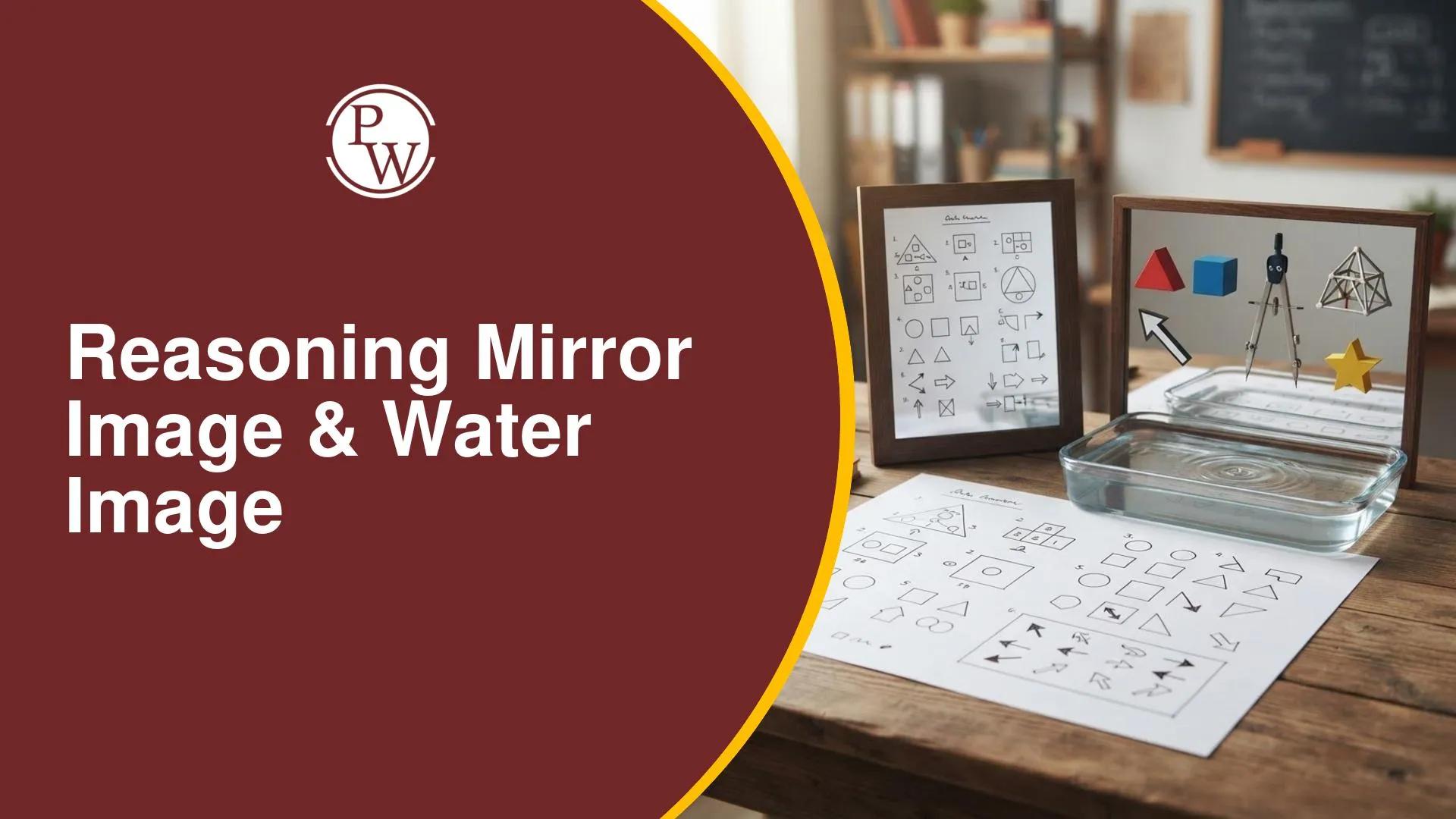
Mirror image and water image are important topics in non-verbal reasoning. These questions test your ability to visualise how a figure changes when reflected across a particular axis. Understanding the difference between vertical and horizontal reflections can help you identify the correct option without spending too much time on each question.
PW Design and Architecture batches support preparation through comprehensive classes, academic planners, Daily Practice Problems (DPPs), chapter-wise tests and sectional assessments. These resources help you understand reasoning concepts and practise different question patterns for design and architecture entrance examinations.
What Is a Mirror Image in Reasoning?
A mirror image is the reflection of an object across a vertical line or axis. In these questions, the figure appears flipped from left to right, while its top and bottom positions remain unchanged.
For example, when the letter 'N' is reflected in a vertical mirror, its orientation changes. The same principle applies to shapes, symbols, numbers and other figures used in reasoning questions.
Rules for Mirror Image Questions
Keep the following rules in mind while solving mirror image questions:
-
Use a vertical axis: Draw an imaginary vertical line to represent the mirror.
-
Reverse left and right: Elements on the left appear on the right side of the reflected image, and vice versa.
-
Keep the distance equal: Each point in the image remains at the same distance from the mirror line as its corresponding point in the original figure.
-
Preserve top and bottom positions: A vertical reflection does not reverse the upper and lower parts of the figure.
-
Observe the orientation: Check the direction of arrows, open ends, curves and other distinct features before selecting an option.
How to Solve Mirror Image Questions
You can follow these steps to solve mirror image questions:
-
Identify the vertical axis along which the figure is reflected.
-
Observe the position of each important element in the original figure.
-
Reverse the left and right positions while maintaining the same distance from the axis.
-
Check the orientation of individual elements.
-
Eliminate options that do not follow these rules and select the matching image.
Practising reasoning alongside drawing can help you prepare for different sections of architecture entrance exams. Explore JEE B.Arch Memory Drawing and Previous Year Question Solutions.
What Is a Water Image in Reasoning?
A water image is the reflection of an object across a horizontal line or axis. It represents the appearance of a figure when viewed as a reflection in water.
Unlike a mirror image, a water image reverses the top and bottom positions of the figure. The left and right positions remain unchanged.
Rules for Water Image Questions
The following rules can help you identify the correct water image:
-
Use a horizontal axis: Draw an imaginary horizontal line to represent the water surface.
-
Reverse top and bottom: The upper part of the figure appears at the bottom, while the lower part appears at the top.
-
Keep the distance equal: Each point maintains the same distance from the horizontal axis in the reflected image.
-
Preserve left and right positions: Elements do not switch sides during a water reflection.
-
Check the orientation: Observe the position of dots, lines, symbols and other features to identify the correct option.
How to Solve Water Image Questions
Follow these steps to solve water image questions:
-
Identify the horizontal axis in the question.
-
Observe the top and bottom positions of the original figure.
-
Reverse these positions while keeping the left and right arrangement unchanged.
-
Maintain the same distance of corresponding points from the axis.
-
Compare the resulting figure with the given options and eliminate incorrect choices.
Difference Between Mirror Image and Water Image
Although both topics involve reflection, the direction of the axis and the resulting changes are different.
|
Basis |
Mirror Image |
Water Image |
|
Axis |
Vertical |
Horizontal |
|
Main change |
Left and right positions reverse |
Top and bottom positions reverse |
|
Distance from axis |
Remains equal |
Remains equal |
|
Other positions |
Top and bottom remain unchanged |
Left and right remain unchanged |
|
Common reference |
Reflection in a vertical mirror |
Reflection on a water surface |
Tips to Practise Mirror Image and Water Image Questions
You can improve your accuracy in these questions by following a consistent practice approach:
-
Draw the axis: Mark the vertical or horizontal line before attempting the reflection.
-
Focus on key points: Observe dots, corners, open ends and unusual shapes to understand how the figure changes.
-
Use option elimination: Remove options that reverse the wrong direction or change the distance of elements from the axis.
-
Practise both question types: Solve mirror image and water image questions separately before attempting mixed exercises.
-
Solve previous-year questions: Practise Previous Years’ JEE B.Arch questions to become familiar with the format and level of questions.
-
Review mistakes: Check which reflection rule you missed whenever you select an incorrect option.
Mirror image and water image questions become easier when you understand the direction of reflection and the position of corresponding points. Remember that mirror images use a vertical axis and reverse left and right, whereas water images use a horizontal axis and reverse top and bottom. Regular practice, option elimination and revision can help improve accuracy in these questions.
To support comprehensive preparation, PW Design and Architecture courses offer an academic planner with approximately 300+ classes, DPPs, sectional worksheets, chapter-wise tests and full-length mock examinations. You should use these resources to practise reasoning topics and assess your preparation for design and architecture entrance examinations.
FAQs
1. What is a mirror image in reasoning?
2. What is a water image in reasoning?
3. What is the main difference between mirror image and water image?
4. How can I solve mirror image and water image questions quickly?
5. How does PW support preparation for reasoning topics?