






Cavity of the Nose, Vestibule, Olfactory Region, and Respiratory Region
The nasal cavity lies above the bone that forms the roof of the mouth and curves down at the back to join the throat. It is divided into two sections called nasal passages. Read the article to know more.
 Dr. Nivedita28 May, 2024
Share
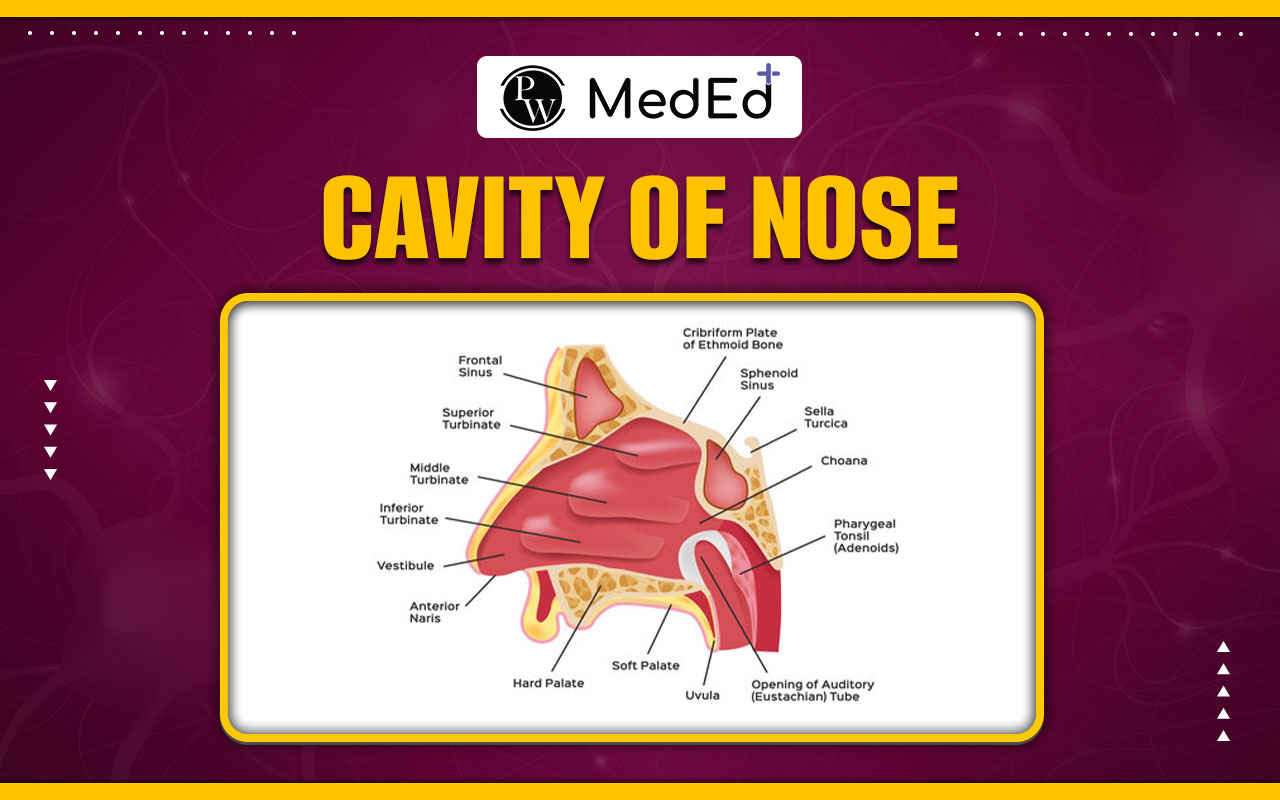
The most cephalic (head end) part of the respiratory system is the nose. The nasal cavity is divided into two parts by a septum. The nasal cavity is lined with columnar epithelium, which helps in clearing air particles trapped in the nasal mucosa.
Respiratory Function
The main function of the nasal cavity is to humidify the air and bring it to the temperature of the human body to facilitate breathing. This region of the nasal cavity contains respiratory epithelium that bears cilia, which help remove air particles trapped in the mucus. The mucus of the nasal cavity forms a protective barrier against inhaled pathogens. The components of the mucus that actively protect the host are immunoglobulin A, lysozymes, and lactoferrin. Additionally, the nasal cavity acts as a filtration system, trapping dust, pollen, and other particulates in the mucus. The cilia then move the mucus towards the throat, where it can be swallowed and destroyed by stomach acids. This cleansing process helps to prevent respiratory infections. The nasal cavity also plays a critical role in speech resonance and in the perception of taste, as the olfactory system is closely linked with the gustatory system.Olfactory Function of the Nasal Cavity
The air entering the nasal cavity contains odor-bearing particles that reach the apex of the nasal cavity where the olfactory epithelium is located. As the odorants become trapped in the nose, they bind to specific proteins and later get solubilized. After this, they can stimulate the receptors, which transmit the information through the olfactory bulb to the brain. This process is essential for the sense of smell, which is a vital sensory function for detecting hazards (such as smoke or spoiled food) and for enjoying flavors in food and beverages. The olfactory system can detect a wide range of chemical compounds, making it highly sensitive to various odors.Vestibular Portion of the Nasal Cavity
The first part encountered when you enter the nasal cavity through the nostrils is called the nasal vestibule. The first half of the nasal vestibule contains keratinized stratified squamous epithelium with coarse hairs called vibrissae. These hairs trap many air particles that pass through them. The second part of the vestibule is formed by respiratory epithelium, which is columnar epithelium. The vestibule’s primary function is to filter large particles from the air before it passes deeper into the respiratory tract. This initial filtration is crucial in preventing debris and pathogens from entering the lungs, thus safeguarding the respiratory system.Nasal Septum
The nasal septum divides the nasal cavity into two equal and separate compartments. It is covered by squamous epithelium, as opposed to the lateral wall of the nasal cavity. It has both cartilage and bony parts. The septum provides structural support to the nose and helps in the efficient flow of air through the nasal passages. Deviations or perforations in the septum can lead to breathing difficulties and chronic nasal congestion. Proper alignment of the septum ensures that air is evenly distributed to both nasal cavities, enhancing the overall function of the nasal passages.The Posterior Nares or Choanae
The choanae, also known as the posterior nares, form the posterior boundary of the nasal cavity and connect to the nasopharynx. These openings play a vital role in the passage of air from the nasal cavity to the pharynx and then to the rest of the respiratory tract.- Anatomical Structure : The choanae are bordered by several bones, including the vomer, the palatine bone, and parts of the sphenoid bone. This bony structure ensures the stability and patency of the airway.
- Physiological Role : The choanae regulate the airflow entering the nasopharynx, ensuring that the air is adequately filtered, humidified, and warmed before it reaches the lower respiratory tract. This regulation is essential for maintaining respiratory efficiency and protecting the lungs from cold or dry air.
Cavity of the Nose FAQs
What is anosmia?
Anosmia, also known as smell blindness, is the loss of the ability to detect one or more smells. Anosmia may be temporary or permanent. It differs from hyposmia, which is a decreased sensitivity to some or all smells.
What is deviated nasal septum?
A deviated septum is a condition in which the nasal septum – the bone and cartilage that divide the nasal cavity of the nose in half – is significantly off center, or crooked, making it hard to breathe.
What are turbinates of the nose?
Turbinates are small structures inside the nose that cleanse and humidify air that passes through the nostrils into the lungs. They are made by a bony structure surrounded by vascular tissue and a mucous membrane
What is rhinosinusitis?
Rhinosinusitis is a simultaneous infection of the nasal mucosa (rhinitis) and an infection of the mucosa of the paranasal sinuses (sinusitis).


Talk to a counsellorHave doubts? Our support team will be happy to assist you!


Check out these Related Articles









Join 15 Million students on the app today!
 Live & recorded classes available at easeDashboard for progress trackingMillions of practice questions at your fingertips


Free Learning Resources
PW Books
Notes (Class 10-12)
PW Study Materials
Notes (Class 6-9)
Ncert Solutions
Govt Exams
Class 6th to 12th Online Courses
Govt Job Exams Courses
UPSC Coaching
Defence Exam Coaching
Gate Exam Coaching
Other Exams
Know about Physics Wallah
Physics Wallah is an Indian edtech platform that provides accessible & comprehensive learning experiences to students from Class 6th to postgraduate level. We also provide extensive NCERT solutions, sample paper, NEET, JEE Mains, BITSAT previous year papers & more such resources to students. Physics Wallah also caters to over 3.5 million registered students and over 78 lakh+ Youtube subscribers with 4.8 rating on its app.
We Stand Out because
We provide students with intensive courses with India’s qualified & experienced faculties & mentors. PW strives to make the learning experience comprehensive and accessible for students of all sections of society. We believe in empowering every single student who couldn't dream of a good career in engineering and medical field earlier.
Our Key Focus Areas
Physics Wallah's main focus is to make the learning experience as economical as possible for all students. With our affordable courses like Lakshya, Udaan and Arjuna and many others, we have been able to provide a platform for lakhs of aspirants. From providing Chemistry, Maths, Physics formula to giving e-books of eminent authors like RD Sharma, RS Aggarwal and Lakhmir Singh, PW focuses on every single student's need for preparation.
What Makes Us Different
Physics Wallah strives to develop a comprehensive pedagogical structure for students, where they get a state-of-the-art learning experience with study material and resources. Apart from catering students preparing for JEE Mains and NEET, PW also provides study material for each state board like Uttar Pradesh, Bihar, and others
Copyright © 2025 Physicswallah Limited All rights reserved.
Get App