






Brundtland Commission: Definition, Report, and Sustainable Development
Brundtland Commission, officially known as the World Commission on Environment and Development (1987), introduced the concept of sustainable development. It emphasized meeting present needs without compromising the future and shaped global environmental policies.
 Deeksha Dixit22 Nov, 2025
Share
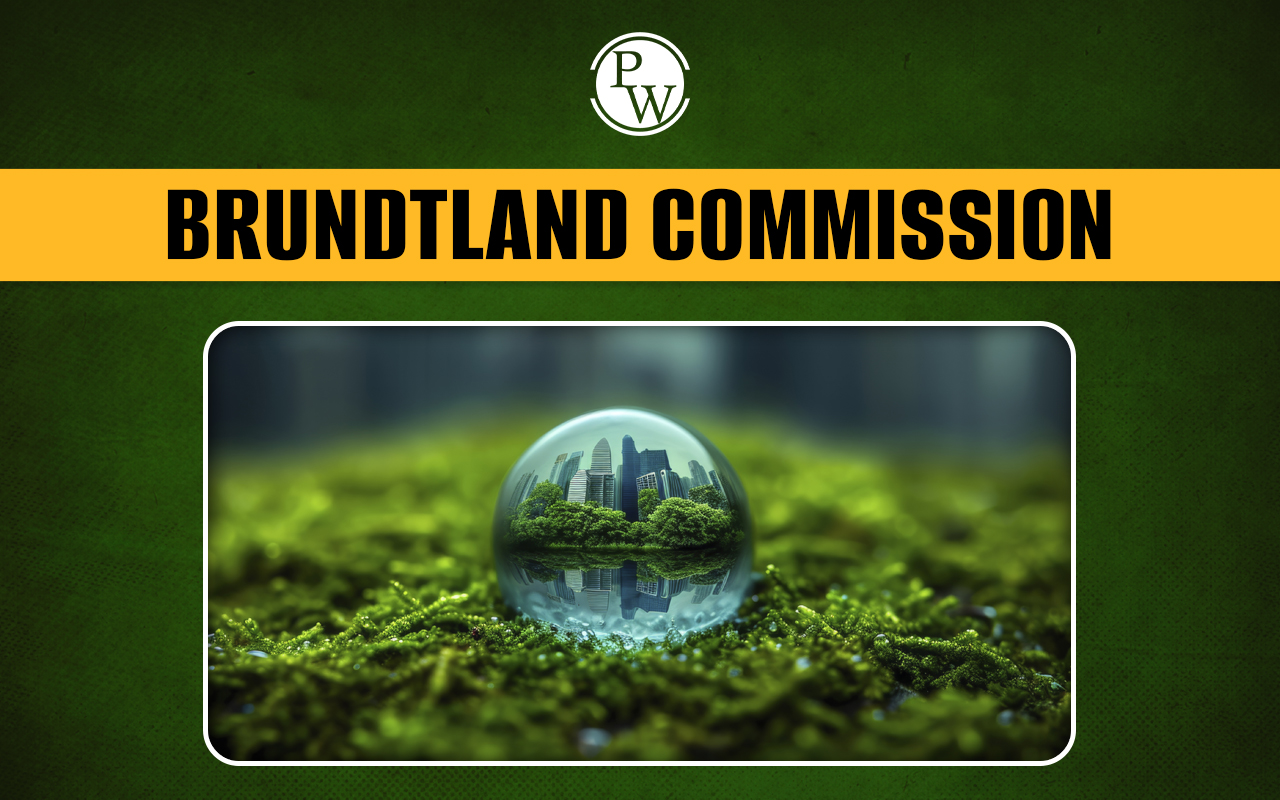
Brundtland Commission, officially known as the World Commission on Environment and Development (WCED), played a pivotal role in redefining global progress. Established by the United Nations (UN) in 1983 and chaired by Dr. Gro Harlem Brundtland, this commission introduced a foundational concept that reshaped international policy: Sustainable Development.
The work of the Brundtland Commission laid the intellectual groundwork for critical global initiatives, including the 1992 Earth Summit and the subsequent framework for the Sustainable Development Goals (SDGs).
What is the Brundtland Commission?
The Brundtland Commission was created in response to growing global anxiety regarding environmental deterioration and its complex link to international development. Its core mission was to promote the idea that environmental health, economic growth, and social equity are deeply interconnected and must work in harmony to achieve a sustainable future.
The central tenet of the Commission is enshrined in its most significant publication, the 1987 report “Our Common Future.”
|
Brundtland Commission |
|
|
Aspect |
Details |
|
Official Name |
World Commission on Environment and Development (WCED) |
|
Established |
1983 |
|
Established by |
United Nations (UN) |
|
Chairperson |
Dr. Gro Harlem Brundtland |
|
Major Publication |
“Our Common Future” (1987) |
|
Key Concept |
Sustainable Development |
|
Core Definition |
Development that meets the needs of the present without compromising the ability of future generations to meet their own needs. |
|
Primary Focus Areas |
Environmental conservation, economic development, and social equity |
Objectives of the Brundtland Commission
The WCED was mandated with a clear set of objectives, aimed at aligning global efforts toward sustainable development by addressing interlinked global environmental, economic, and social challenges:
-
Promote Sustainable Development: To identify practical and achievable strategies to integrate economic growth with long-term environmental sustainability.
-
Bridge Developmental Gaps: To explore solutions that would reduce economic and social inequalities existing between developed and developing nations.
-
Establish Global Environmental Strategies: To formulate and recommend international guidelines for managing critical global environmental issues, such as transboundary pollution and climate change.
-
Raise Public Awareness: To increase global understanding of the crucial interdependence between the environment and human progress.
-
Develop Policy Recommendations: To create actionable policies that could ensure a just and sustainable future for all nations.
Establishment of the Brundtland Commission
The formation of the Brundtland Commission was a direct response to a set of persistent global challenges that became undeniable by the early 1980s. These challenges underscored the need for a unified international approach:
-
Environmental Degradation: Rapid industrialisation, driven by unchecked economic activity, led to widespread deforestation, a critical loss of biodiversity, and rising levels of pollution.
-
Economic Inequalities: Many developing nations struggled to achieve equitable economic growth while simultaneously facing resource exploitation and entrenched poverty.
-
Global Crises: Emerging issues such as climate change, ozone layer depletion, and resource scarcity demanded a coordinated, global response that traditional national policies could not provide.
Brundtland Commission Report (Our Common Future)
Published in 1987, the Brundtland Commission Report, titled 'Our Common Future', remains a landmark document in global sustainability policy. It is celebrated for formally introducing and defining the concept of sustainable development and providing comprehensive recommendations for tackling environmental degradation and global inequality.
Core Principles of the Report
The report's enduring influence stems from its powerful core principles:
-
Definition of Sustainable Development: The globally accepted definition provided by the report is: "Development that meets the needs of the present without compromising the ability of future generations to meet their own needs."
-
Interconnectedness: It emphasised the inseparable links between economic policies, environmental systems, and societal structures.
-
Global Responsibility: The report issued a call for collective, cooperative action from all nations, highlighting the necessity of partnership between developed and developing countries.
-
Poverty Eradication: It identified poverty not just as a consequence, but as a significant cause of environmental problems, advocating for concentrated global efforts to eliminate it.
Importance of the Brundtland Commission Report
The 1987 Report remains a highly influential document in international policy-making due to its multifaceted impact:
-
Agenda-Setting: It created the political and philosophical groundwork for major international conferences, most notably the 1992 Earth Summit held in Rio de Janeiro.
-
Policy Integration: The report strongly encouraged nations worldwide to integrate core environmental concerns directly into their national economic and social policies.
-
Sustainability Goals: It provided the foundational inspiration for subsequent global sustainability frameworks, including the Millennium Development Goals (MDGs) and, later, the Sustainable Development Goals (SDGs).
-
Public Awareness: The Commission successfully mainstreamed and popularized the term "sustainable development" within both public discourse and high-level policy discussions.
Today, the Brundtland Commission Report is consistently referenced in modern debates concerning climate action, the conservation of global biodiversity, and the pursuit of economic equity.
Criticisms of the Brundtland Commission
Despite its widespread acclaim and foundational role, the Brundtland Commission has faced several key criticisms from various stakeholders:
-
Vagueness: Critics argued that while the concept of sustainable development was transformative, its broad nature made it difficult to interpret, measure, and implement universally across diverse nations and economic systems.
-
Economic Focus: Some suggested that the report's emphasis on continued economic growth, even if sustainable, could potentially overshadow urgent environmental preservation priorities.
-
Global Inequality: There was a feeling among some that the report did not adequately address or assign historical responsibilities for environmental degradation, particularly to the developed nations that spearheaded the industrial revolution.
Legacy of the Brundtland Commission
The Brundtland Commission has secured a permanent and indelible mark on the global agenda for environmental governance and development.
-
Popularising Sustainable Development: Its widely adopted definition of sustainable development remains the universal standard.
-
Policy Influence: It directly influenced the content of major international agreements, notably the Rio Declaration and the subsequent creation of comprehensive global frameworks like the SDGs.
-
Institutional Impact: The Commission's findings strengthened global environmental governance and contributed significantly to the work and profile of institutions like the United Nations Environment Programme (UNEP).
-
Precautionary Principles: It championed core environmental governance principles, such as the polluter-pays principle and the concept of common but differentiated responsibilities, which are still integral to international environmental law.
Sustainable Development Goals (SDGs) and the Brundtland Commission
The Sustainable Development Goals (SDGs), formally adopted by the UN in 2015, are deeply rooted in the principles defined by the Brundtland Commission. The Commission’s focus on integrating environmental, economic, and social dimensions was the crucial inspiration for the comprehensive nature of the SDGs, which aim to address global challenges and ensure a balanced and inclusive future for all.
The 17 SDGs serve as a global action plan, directly reflecting the holistic vision presented in 'Our Common Future.'
|
Sustainable Development Goals (SDGs) and the Brundtland Commission |
||
|
Goal Number |
Goal |
Objective (Excerpt) |
|
1 |
No Poverty |
End poverty in all its forms everywhere. |
|
7 |
Affordable and Clean Energy |
Ensure access to affordable, reliable, sustainable, and modern energy for all. |
|
8 |
Decent Work and Economic Growth |
Promote sustained, inclusive, and sustainable economic growth. |
|
12 |
Responsible Consumption and Production |
Ensure sustainable consumption and production patterns. |
|
13 |
Climate Action |
Take urgent action to combat climate change and its impacts. |
|
14 |
Life Below Water |
Conserve and sustainably use the oceans, seas, and marine resources. |
|
17 |
Partnerships for the Goals |
Strengthen the means of implementation and revitalize the global partnership for sustainable development. |
Brundtland Commission FAQs
What is the main contribution of the Brundtland Commission?
What is the Brundtland Commission Report called?
Who was the Chairperson of the Brundtland Commission?
When was the Brundtland Commission established and by whom?
How did the Brundtland Commission influence the SDGs?









 Live & recorded classes available at easeDashboard for progress trackingMillions of practice questions at your fingertips

