







UPSC ESE Preparation Strategy: Online vs Offline - Which is Better
 Aarti .19 May, 2026
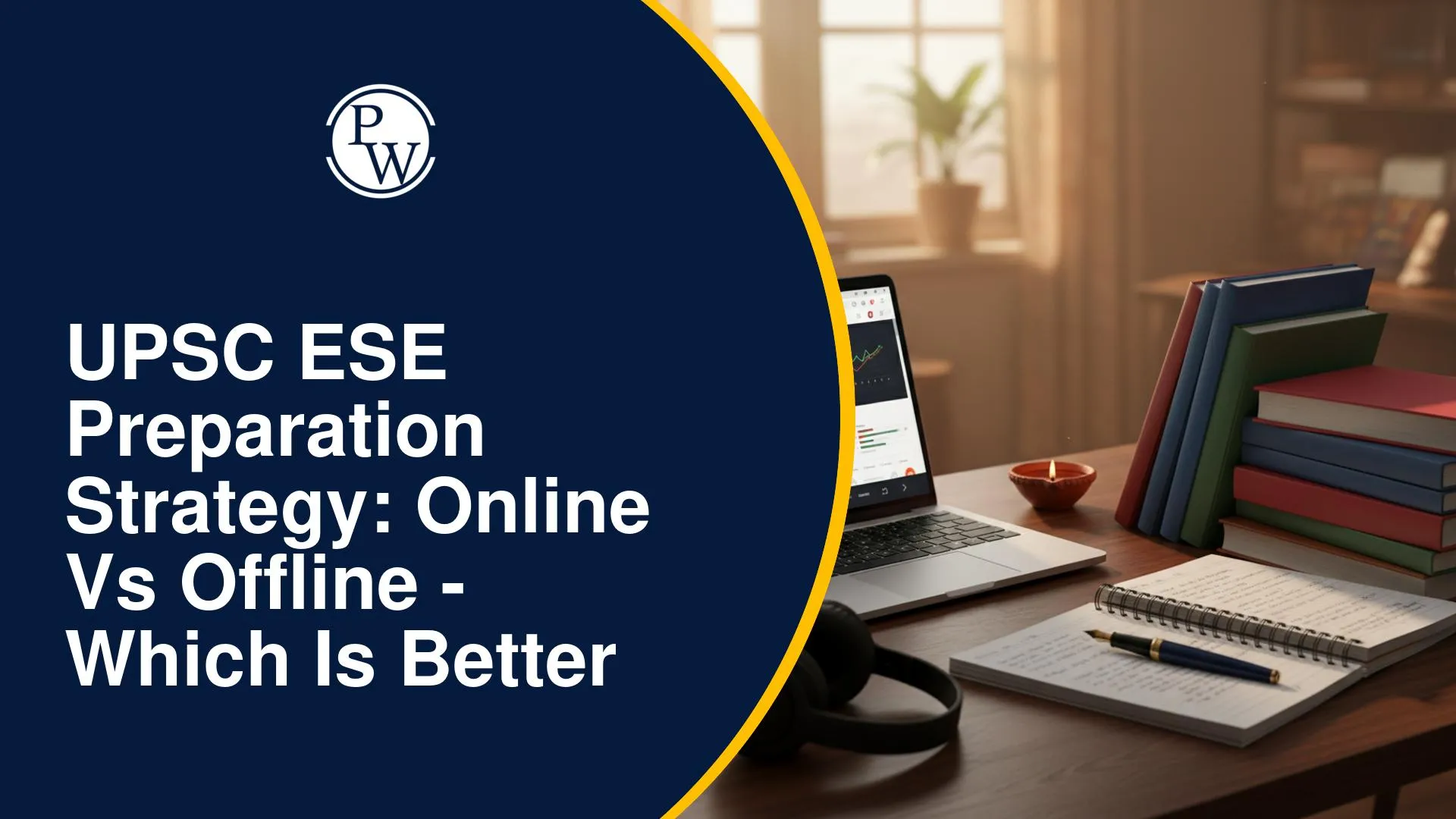
Preparing for the UPSC Engineering Services Examination (ESE) is a serious task. The exam is known for its wide syllabus, multiple stages, and strong competition. Many students begin their preparation with motivation, but they face different challenges during the process.
Some struggle with managing time between subjects. Others find it difficult to stay consistent. Along with these challenges, choosing the right mode of coaching becomes an important decision. Students often try to understand whether online coaching or offline coaching will suit their preparation better. This choice can affect their routine, learning approach, and overall progress.
There is no single answer to this question. Both modes have their own advantages and challenges. The right choice depends on your study habits, daily routine, and learning preferences. Here, we’ll explain both options in a clear way so you can decide what suits you.
Why Smart Preparation is Important for UPSC ESE
UPSC ESE is not just about hard work. It also requires smart planning. The exam includes multiple stages. These include objective papers, conventional papers, and an interview. Each stage needs a different approach.
Smart preparation means:
-
Studying with a clear plan
-
Managing time properly
-
Avoiding unnecessary stress
-
Revising regularly
-
Practicing answer writing
If you study without planning, you may feel tired and confused. If you study in a balanced way, you will feel more confident. This helps in improving your performance in the exam.
Why Choosing the Right UPSC ESE Coaching Mode Matters
Before choosing any mode, you should understand what each option offers. Both online and offline coaching help in covering the syllabus.
Online coaching allows you to study from anywhere. Offline coaching requires physical presence in a classroom. Each mode affects your routine, discipline, and overall preparation.
Online vs Offline Coaching for UPSC ESE: Key Differences Explained
Below is a simple comparison to help you understand both modes better:
|
Difference Between Online vs Offline Coaching |
||
|
Aspect |
Online Coaching |
Offline Coaching |
|
Flexibility |
Study anytime with recorded lectures |
Fixed class schedule |
|
Discipline |
Self-discipline required |
Routine helps maintain discipline |
|
Cost |
Lower overall cost |
Higher due to travel and stay |
|
Interaction |
Limited direct interaction |
Face-to-face communication |
|
Convenience |
No travel needed |
Daily travel required |
|
Doubt Solving |
May take time |
Instant doubt solving |
|
Competition |
Students from all over India |
Mostly local students |
|
Distractions |
Higher due to devices |
Lower in a classroom setting |
Advantages of Online Coaching for UPSC ESE
Online coaching has become popular in recent years. Many students prefer it because of its flexibility and convenience.
1. Flexible Study Schedule
You can study at any time. If you miss a class, you can watch the recorded lecture later. This helps students who are managing college or a job.
2. Access to Multiple Educators
Online platforms provide access to teachers from different parts of India. You can learn from experienced faculty without changing your location.
3. Easy Revision
You can replay lectures and revise difficult topics. This helps in better understanding and retention.
4. Lower Cost
Online coaching usually costs less. You also save money on travel, accommodation, and food.
5. Time Saving
No travel is needed. This saves several hours every week. You can use this time for revision and practice.
Challenges of Online Coaching in UPSC ESE Preparation
Online coaching also has some limitations. You need to manage them carefully.
1. Lack of Discipline
You must control your routine. There is no fixed schedule unless you create one.
2. Distractions
Mobile phones and laptops can distract you. Social media and notifications can break your focus.
3. Delayed Doubt Solving
You may not get instant answers to your doubts. Some platforms provide doubt support, but it may take time.
4. Limited Physical Interaction
You do not meet teachers or classmates in person. This may reduce motivation for some students.
Advantages of Offline Coaching for UPSC ESE
Offline coaching provides a classroom environment. Many students find this helpful for maintaining consistency.
1. Fixed Routine
Classes happen at a fixed time. This helps in building a daily study habit.
2. Face-to-Face Interaction
You can talk to teachers directly. Doubts are solved instantly. This improves clarity.
3. Classroom Environment
Being around serious students creates a study-focused environment. It can motivate you to stay consistent.
4. Better Focus
There are fewer distractions compared to online study. You are more focused during classes.
Advantages of Offline Coaching for UPSC ESE Preparation
Offline coaching also has some difficulties that you should consider.
1. Higher Cost
Apart from coaching fees, you may spend around ₹15,000 to ₹20,000 per month on rent, food, and travel.
2. Travel Time
Daily travel can take a lot of time. This reduces your study hours.
3. Rigid Schedule
If you miss a class, it is difficult to cover the same lecture again.
4. Limited Access to Teachers
You are limited to the teachers available in that institute. You may not get exposure to different teaching styles.
Discipline and Consistency Matter More Than Mode
Many students think that offline coaching automatically builds discipline. This is not always true. Even in a classroom, a student can lose focus.
Similarly, online coaching is not always distracting. If you follow a proper routine, you can stay focused at home.
The key point is simple. Discipline does not come from the mode. It comes from your mindset.
If you are serious about your goal, you can succeed in both modes.
Hybrid Coaching Model for UPSC ESE: Best of Both Worlds
The hybrid mode is becoming popular among many aspirants. It combines both online and offline learning.
In this approach:
-
You attend lectures online
-
You give tests in offline centers or libraries
This method provides flexibility and structure at the same time. You can study at your own pace and still experience real exam conditions. Many students prefer this method because it balances comfort and discipline.
How to Choose the Right Mode for UPSC ESE
Your decision should depend on your personal situation. Here are some simple guidelines.
Choose Online Coaching If:
-
You need flexible timing
-
You are studying in college or working
-
You want to reduce expenses
-
You can maintain self-discipline
-
You prefer revising lectures multiple times
Choose Offline Coaching If:
-
You need a fixed routine
-
You find it hard to study alone
-
You prefer face-to-face interaction
-
You want instant doubt solving
-
You feel motivated in a classroom setting
Choose Hybrid Mode If:
-
You want flexibility and discipline together
-
You can study online, but want offline test practice
-
You want to simulate real exam conditions
Important Tips for UPSC ESE Preparation
No matter which mode you choose, follow these simple strategies:
-
Make a daily study plan
-
Focus on concepts, not just notes
-
Practice previous year questions
-
Revise regularly
-
Take mock tests seriously
-
Analyze your mistakes
Also, do not wait for a “perfect time” to study. Study whenever you can focus properly. Consistency matters more than timing.
Hence, there is no fixed answer to whether online or offline coaching is better for UPSC ESE preparation. Both have their own benefits and limitations.
Your success depends on your discipline, planning, and consistency. Coaching is only a support system. It cannot replace your effort. If you choose wisely and stay focused, you can prepare effectively in any mode. The goal should always be a clear understanding and regular practice.
Remember, In the end your dedication decides your result, not the mode of coaching.
UPSC ESE Preparation Strategy: Online vs Offline FAQs
Which is better for UPSC ESE: online or offline coaching?
Is online coaching enough for UPSC ESE preparation?
Why do some students prefer offline coaching for ESE?
What is hybrid mode in UPSC ESE preparation?






Get Free Counselling Today
and Clear up all your Doubts
 Live & recorded classes available at easeDashboard for progress trackingLakhs of practice questions

