







Why Every Engineer Should Give UPSC ESE Exam: Benefits, Career Growth & Strategy
 Aarti .8 May, 2026
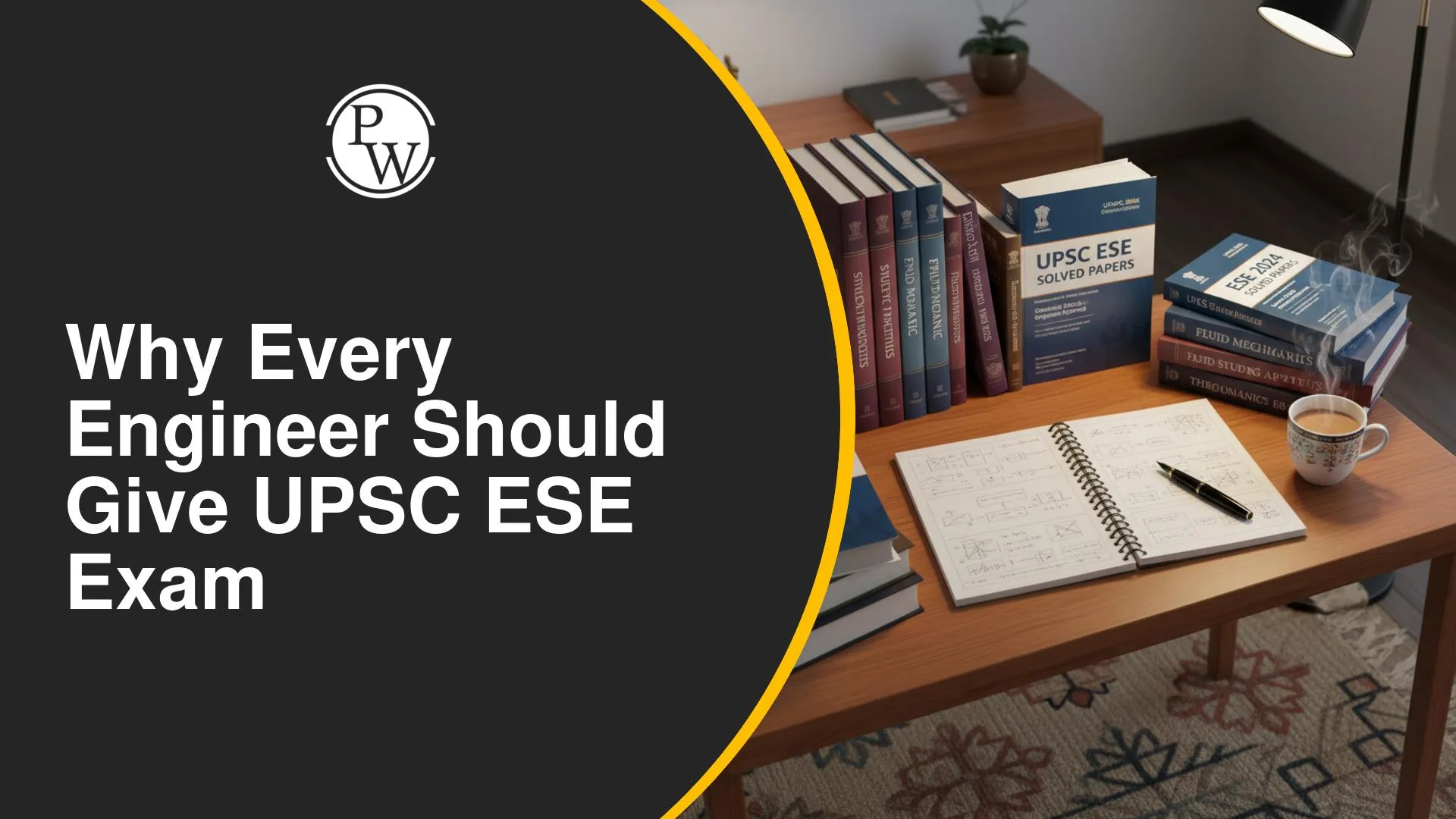
Why Every Engineer Should Give UPSC ESE Exam: Engineering students often face confusion about career choices after graduation—private jobs, higher studies, or government exams. Among these options, the UPSC Engineering Services Examination (ESE) stands out as one of the most prestigious and rewarding career paths.
It not only offers a stable government job but also allows engineers to work on large-scale national projects and hold positions of authority. Understanding why ESE is worth attempting can help engineers make a more informed career decision.
Read on to know why every engineer should give the UPSC ESE Exam and the preparation strategy.
What is UPSC ESE?
The Engineering Services Examination (ESE) is conducted by the Union Public Service Commission to recruit engineers into various technical and administrative roles in the Government of India. It includes three stages—Prelims, Mains, and Interview—and is considered one of the toughest engineering exams in the country.
Selected candidates are appointed to Group A services in sectors like railways, defence, power, telecom, and infrastructure, where they play a direct role in nation-building.
Why Every Engineer Should Give UPSC ESE Exam?
The UPSC Engineering Services Examination (ESE) is not just a government exam for engineers-it is a career path that offers responsibility, growth, stability, and the opportunity to contribute to national development.
From prestigious positions and financial benefits to technical excellence and leadership opportunities, ESE provides several advantages that make it one of the most rewarding career options for engineering graduates. Understanding these benefits helps engineers realise why ESE is considered a valuable and future-secure career choice.
1. Opportunity to Serve the Nation
Engineers become integral to national building, making substantial contributions to the country through honest and hardworking efforts. ESE officers function as decision-makers, directly influencing policy and the operations of various government departments. As an engineer in the ESE, you play a crucial role in shaping the nation's future.
-
ESE officers work on public infrastructure such as roads, bridges, railways, and energy systems.
-
This gives engineers a strong sense of purpose, as their work directly impacts millions of people across the country.
2. High Respect and Authority
ESE officers are Group A gazetted officers, which means they hold positions of authority within government departments. These roles come with decision-making power, leadership responsibilities, and high social respect.
For many engineers, this combination of technical work and administrative authority makes ESE a unique and prestigious career option.
3. Job Security and Stability
ESE provides unmatched job security within the central government, specifically in Group A or Group B cadres, which exceeds the security offered even by Public Sector Undertakings (PSUs).
Private sector jobs can be uncertain due to
-
Layoffs
-
Market fluctuations
-
Company performance.
In contrast, ESE offers long-term job security, fixed career progression, and stable income.
This stability allows engineers to focus on their work without the constant pressure of job insecurity.
4. Diverse Career Opportunities
Through ESE, engineers can work in multiple sectors such as:
-
Railways
-
Defence services
-
Power and energy
-
Telecommunications
-
Infrastructure development
This variety ensures that engineers are not limited to a single domain and can explore different technical fields throughout their careers.
5. Strong Career Growth
ESE provides a structured promotion system. Engineers start from junior-level positions and gradually move to senior administrative roles. Over time, they can reach top positions where they manage large projects, teams, and policies, making it a long-term growth-oriented career.
They experience fast-track promotions to higher cadres, progressing from
-
Assistant Executive Engineer to Chief Engineer and beyond.
They often enter service at a cadre level where Diploma holders typically retire, highlighting the accelerated career path.
6. Financial Benefits and Perks
Beyond a competitive salary, ESE officers receive numerous perks, including large official residences, domestic staff, and social respect.
ESE officers receive several benefits, such as:
-
Allowances (HRA, DA, travel)
-
Government accommodation
-
Medical facilities
-
Pension benefits
These perks make the overall compensation package highly attractive compared to many entry-level private jobs.
7. Enhances Technical and Analytical Skills
Preparing for ESE requires strong conceptual clarity in engineering subjects along with general studies and problem-solving skills. The ESE exam and subsequent service encourage holistic growth, developing both technical expertise and managerial/leadership skills, a rare and highly valuable combination.
This preparation itself improves:
-
Core technical knowledge
-
Analytical thinking
-
Time management
-
Discipline
Even if someone does not clear the exam, the preparation helps in cracking other exams like GATE or PSU recruitments.
Limited Attempts but Lifetime Value of UPSC ESE
ESE is highly competitive, with a very low selection rate, making it challenging but prestigious.
However, even a single serious attempt can transform your preparation level and open multiple career opportunities.
UPSC ESE Preparation Strategy
Cracking the UPSC Engineering Services Examination (ESE) requires more than just technical knowledge. It demands proper planning, consistency, smart preparation, and long-term dedication. Since the exam includes multiple stages and a vast syllabus, candidates must follow a structured strategy from the beginning.
-
Start Early: Begin preparation at least 6-7 months in advance. Students in their third year of engineering are advised to start early.
-
Dual Preparation: Many successful candidates prepare for ESE first, then leverage the technical foundation for the Civil Services Exam. This strategy allows them to become an officer in either the ESE or the Civil Services.
-
Stay Consistent: A disciplined study plan across all three stages (Prelims, Mains, Interview) is crucial for success.
-
Aim Higher: Transform technical expertise into a career that serves the nation.
UPSC ESE is more than just an exam—it is a gateway to a career that combines technical expertise, public service, authority, and stability. For engineers who want meaningful work, long-term growth, and respect in society, ESE is definitely worth attempting. Even if one does not succeed, the preparation journey itself builds a strong foundation for multiple career paths.
Why Every Engineer Should Give UPSC ESE Exam FAQs
Why should an engineer consider taking the ESE exam?
What engineering disciplines are primarily covered in the ESE exam?
What are the stages involved in the ESE selection process?
How does ESE preparation benefit an engineer even if they don't clear the exam?






Get Free Counselling Today
and Clear up all your Doubts
 Live & recorded classes available at easeDashboard for progress trackingLakhs of practice questions

