ICSE Class 10 Maths Selina Solutions Chapter 5 Quadratic Equations
 Ananya Gupta17 Feb, 2026
ICSE Class 10 Maths Selina Solutions Chapter 5 Quadratic Equations Overview
ICSE Class 10 Maths Selina Solutions for Chapter 5, "Quadratic Equations," are designed to help students grasp the concepts effectively and apply the methods correctly. By following these solutions, students can enhance their problem-solving skills and gain confidence in tackling quadratic equations, ensuring they are well-prepared for their exams.ICSE Class 10 Maths Selina Solutions Chapter 5 Quadratic Equations PDF
ICSE Class 10 Maths Selina Solutions for Chapter 5, "Quadratic Equations," are available in a PDF format. You can download the PDF using the link provided below to enhance your learning and prepare effectively for your exams.ICSE Class 10 Maths Selina Solutions Chapter 5 Quadratic Equations PDF
ICSE Class 10 Maths Selina Solutions Chapter 5 Exercise 5(A) Page No: 54
1. Find which of the following equations are quadratic:
(i) (3x – 1) 2 = 5(x + 8)
(ii) 5x 2 – 8x = -3(7 – 2x)
(iii) (x -4) (3x + 1) = (3x – 1) (x + 2)
(iv) x 2 + 5x – 5 = (x – 3) 2
(v) 7x 3 – 2x 2 + 10 = (2x – 5) 2
(vi) (x – 1) 2 + (x + 2) 2 + 3(x + 1) = 0
Solution:
(i) (3x – 1) 2 = 5(x + 8) ⇒ (9x 2 – 6x + 1) = 5x + 40 ⇒ 9x 2 – 11x – 39 = 0; which is of the general form ax 2 + bx + c = 0. Thus, the given equation is a quadratic equation.2. (i) Is x = 5 a solution of the quadratic equation x 2 – 2x – 15 = 0?
Solution:
Given quadratic equation, x 2 – 2x – 15 = 0 We know that, for x = 5 to be a solution of the given quadratic equation it should satisfy the equation. Now, on substituting x = 5 in the given equation, we have L.H.S = (5) 2 – 2(5) – 15 = 25 – 10 – 15 = 0 = R.H.S Therefore, x = 5 is a solution of the given quadratic equation x 2 – 2x – 15 = 0(ii) Is x = -3 a solution of the quadratic equation 2x 2 – 7x + 9 = 0?
Solution:
Given quadratic equation, 2x 2 – 7x + 9 = 0 We know that, for x = -3 to be solution of the given quadratic equation it should satisfy the equation. Now, on substituting x = 5 in the given equation, we have L.H.S = 2(-3) 2 – 7(-3) + 9 = 18 + 21 + 9 = 48 ≠ R.H.S Therefore, x = -3 is not a solution of the given quadratic equation 2x 2 – 7x + 9 = 0.ICSE Class 10 Maths Selina Solutions Chapter 5 Quadratic Equations Exercise 5(B) Page No: 56
1. Without solving, comment upon the nature of roots of each of the following equations:
(i) 7x 2 – 9x +2 = 0 (ii) 6x 2 – 13x +4 = 0
(iii) 25x 2 – 10x + 1= 0 (iv) x 2 + 2√3x – 9 = 0
(v) x 2 – ax – b 2 = 0 (vi) 2x 2 + 8x + 9 = 0
Solution:
(i) Given quadratic equation, 7x 2 – 9x + 2 = 0 Here, a = 7, b = -9 and c = 2 So, the Discriminant (D) = b 2 – 4ac D = (-9) 2 – 4(7)(2) = 81 – 56 = 25 As D > 0, the roots of the equation is real and unequal.2. Find the value of ‘p’, if the following quadratic equations has equal roots:
(i) 4x 2 – (p – 2)x + 1 = 0
(ii) x 2 + (p – 3)x + p = 0
Solution:
(i) 4x 2 – (p – 2)x + 1 = 0 Here, a = 4, b = -(p – 2), c = 1 Given that the roots are equal, So, Discriminant = 0 ⇒ b 2 – 4ac = 0 D = (-(p – 2)) 2 – 4(4)(1) = 0 ⇒ p 2 + 4 – 4p – 16 = 0 ⇒ p 2 – 4p – 12 = 0 ⇒ p 2 – 6p + 2p – 12 = 0 ⇒ p(p – 6) + 2(p – 6) = 0 ⇒ (p + 2)(p – 6) = 0 ⇒ p + 2 = 0 or p – 6 = 0 Hence, p = -2 or p = 6ICSE Class 10 Maths Selina Solutions Chapter 5 Exercise 5(C) Page No: 59
Solve equations, number 1 to 20, given below, using factorization method:
1. x 2 – 10x – 24 = 0
Solution:
Given equation, x 2 – 10x – 24 = 0 x 2 – 12x + 2x – 24 = 0 x(x – 12) + 2(x – 12) = 0 (x + 2)(x – 12) = 0 So, x + 2 = 0 or x – 12 = 0 Hence, x = -2 or x = 122. x 2 – 16 = 0
Solution:
Given equation, x 2 – 16 = 0 x 2 + 4x – 4x + 16 = 0 x(x + 4) -4(x + 4) = 0 (x – 4) (x + 4) = 0 So, (x – 4) = 0 or (x + 4) = 0 Hence, x = 4 or x = -43. 2x 2 – ½ x = 0
Solution:
Given equation, 2x 2 – ½ x = 0 4x 2 – x = 0 x(4x – 1) = 0 So, either x = 0 or 4x – 1 = 0 Hence, x = 0 or x = ¼4. x(x – 5) = 24
Solution:
Given equation, x(x – 5) = 24 x 2 – 5x = 24 x 2 – 5x – 24 = 0 x 2 – 8x + 3x – 24 = 0 x(x – 8) + 3(x – 8) = 0 (x + 3)(x – 8) = 0 So, x + 3 = 0 or x – 8 = 0 Hence, x = -3 or x = 85. 9/2 x = 5 + x 2
Solution:
Given equation, 9/2 x = 5 + x 2 On multiplying by 2 both sides, we have 9x = 2(5 + x 2 ) 9x = 10 + 2x 2 2x 2 – 9x + 10 = 0 2x 2 – 4x – 5x + 10 = 0 2x(x – 2) – 5(x – 2) = 0 (2x – 5)(x -2) = 0 So, 2x – 5 = 0 or x – 2 = 0 Hence, x = 5/2 or x = 26. 6/x = 1 + x
Solution:
Given equation, 6/x = 1 + x On multiplying by x both sides, we have 6 = x(1 + x) 6 = x + x 2 x 2 + x – 6 = 0 x 2 + 3x – 2x – 6 = 0 x(x + 3) – 2(x + 3) = 0 (x – 2) (x + 3) = 0 So, x – 2 = 0 or x + 3 = 0 Hence, x = 2 or x = -37. x = (3x + 1)/ 4x
Solution:
Given equation, x = (3x + 1)/ 4x On multiplying by 4x both sides, we have 4x(x) = 3x + 1 4x 2 = 3x + 1 4x 2 – 3x – 1 = 0 4x 2 – 4x + x – 1 = 0 4x(x – 1) + 1(x – 1) = 0 (4x + 1) (x – 1) = 0 So, 4x + 1 = 0 or x – 1 = 0 Hence, x = -1/4 or x = 18. x + 1/x = 2.5
Solution:
Given equation, x + 1/x = 2.5 x + 1/x = 5/2 Taking LCM on L.H.S, we have (x 2 + 1)/ x = 5/2 2(x 2 + 1) = 5x 2x 2 + 2 = 5x 2x 2 – 5x + 2 = 0 2x 2 – 4x – x + 2 = 0 2x(x – 2) -1(x – 2) = 0 (2x – 1)(x – 2) = 0 So, 2x – 1 = 0 or x – 2 = 0 Hence, x = ½ or x = 29. (2x – 3) 2 = 49
Solution:
Given equation, (2x – 3) 2 = 49 Expanding the L.H.S, we have 4x 2 – 12x + 9 = 49 4x 2 – 12x – 40 = 0 Dividing by 4 on both side x 2 – 3x – 10 = 0 x 2 – 5x + 2x – 10 = 0 x(x – 5) + 2(x – 5) = 0 (x + 2) (x – 5) = 0 So, x + 2 = 0 or x – 5 = 0 Hence, x = -2 or 510. 2(x 2 – 6) = 3(x – 4)
Solution:
Given equation, 2(x 2 – 6) = 3(x – 4) 2x 2 – 12 = 3x – 12 2x 2 = 3x x(2x – 3) = 0 So, x = 0 or (2x – 3) = 0 Hence, x = 0 or x = 3/211. (x + 1) (2x + 8) = (x + 7) (x + 3)
Solution:
Given equation, (x + 1) (2x + 8) = (x + 7) (x + 3) 2x 2 + 2x + 8x + 8 = x 2 + 7x + 3x + 21 2x 2 + 10x + 8 = x 2 + 10x + 21 x 2 = 21 – 8 x 2 – 13 = 0 (x – √13) (x + √13) = 0 So, x – √13 = 0 or x + √13 = 0 Hence, x = – √13 or x = √1312. x 2 – (a + b)x + ab = 0
Solution:
Given equation, x 2 – (a + b)x + ab = 0 x 2 – ax – bx + ab = 0 x(x – a) – b(x – a) = 0 (x – b) (x – a) = 0 So, x – b = 0 or x – a = 0 Hence, x = b or x = a13. (x + 3) 2 – 4(x + 3) – 5 = 0
Solution:
Given equation, (x + 3) 2 – 4(x + 3) – 5 = 0 (x 2 + 9 + 6x) – 4x – 12 – 5 = 0 x 2 + 2x – 8 = 0 x 2 + 4x – 2x – 8 = 0 x(x + 4) – 2(x – 4) = 0 (x – 2)(x + 4) = 0 So, x – 2 = 0 or x + 4 = 0 Hence, x = 2 or x = -414. 4(2x – 3) 2 – (2x – 3) – 14 = 0
Solution:
Given equation, 4(2x – 3) 2 – (2x – 3) – 14 = 0 Let substitute 2x – 3 = y Then the equation becomes, 4y 2 – y – 14 = 0 4y 2 – 8y + 7y – 14 = 0 4y(y – 2) + 7(y – 2) = 0 (4y + 7)(y – 2) = 0 So, 4y + 7 = 0 or y – 2 = 0 Hence, y = -7/4 or y = 2 But we have taken y = 2x – 3 Thus, 2x – 3 = -7/4 or 2x – 3 = 2 2x = 5/ 4 or 2x = 5 x = 5/8 or x = 5/215. 3x – 2/ 2x- 3 = 3x – 8/ x + 4
Solution:
Given equation, 3x – 2/ 2x- 3 = 3x – 8/ x + 4 On cross-multiplying we have, (3x – 2)(x + 4) = (3x – 8)(2x – 3) 3x 2 – 2x + 12x – 8 = 6x 2 – 16x – 9x + 24 3x 2 + 10x – 8 = 6x 2 – 25x + 24 3x 2 – 35x + 32 = 0 3x 2 – 3x – 32x + 32 = 0 3x(x – 1) – 32(x – 1) = 0 (3x – 32)(x – 1) = 0 So, 3x – 32 = 0 or x – 1 = 0 Hence, x = 32/3 or x = 116. 2x 2 – 9x + 10 = 0, when:
(i) x ∈ N (ii) x ∈ Q
Solution:
Given equation, 2x 2 – 9x + 10 = 0 2x 2 – 4x – 5x + 10 = 0 2x(x – 2) – 5(x – 2) = 0 (2x – 5)(x – 2) = 0 So, 2x – 5 = 0 or x – 2 = 0 Hence, x = 5/2 or x = 2 (i) When x ∈ N x = 2 is the solution. (ii) When x ∈ Q x = 2, 5/2 are the solutions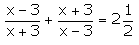
ICSE Class 10 Maths Selina Solutions Chapter 5 Quadratic Equations Exercise 5(D) Page No: 59
1. Solve, each of the following equations, using the formula:
(i) x 2 – 6x = 27
Solution:
Given equation, x 2 – 6x = 27 x 2 – 6x – 27 = 0 Here, a = 1 , b = -6 and c = -27 By quadratic formula, we have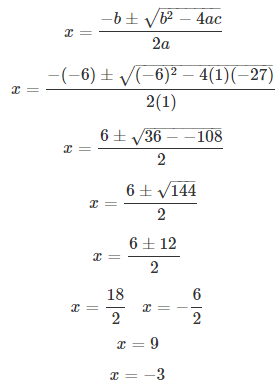 Therefore, x = 9 or -3
(ii) x 2 – 10x + 21 = 0
Solution:
Given equation, x 2 – 10x + 21 = 0 Here, a = 1, b = -10 and c = 21 By quadratic formula, we have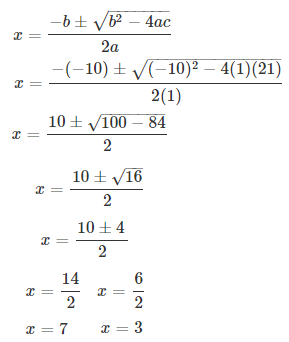 Therefore, x = 7 or x = 3
(iii) x 2 + 6x – 10 = 0
Solution:
Given equation, x 2 + 6x – 10 = 0 Here, a = 1, b = 6 and c = -10 By quadratic formula, we have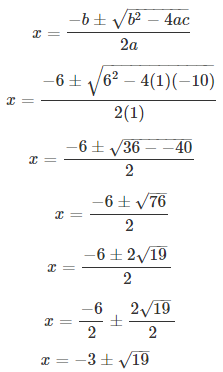 Therefore, x = -3 + √19 or x = -3 – √19
(iv) x 2 + 2x – 6 = 0
Solution:
Given equation, x 2 + 2x – 6 = 0 Here, a = 1, b = 2 and c = -6 By quadratic formula, we have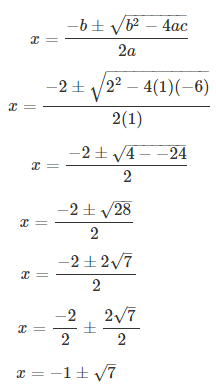 Therefore, x = -1 + √7 or x = -1 – √7
(v) 3x 2 + 2x – 1 = 0
Solution:
Given equation, 3x 2 + 2x – 1 = 0 Here, a = 3, b = 2 and c = -1 By quadratic formula, we have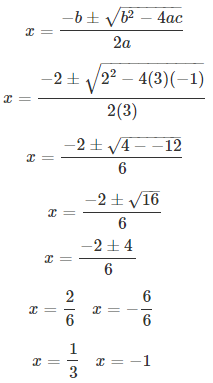 Therefore, x = 1/3 or x = -1
(vi) 2x 2 + 7x + 5 = 0
Solution:
Given equation, 2x 2 + 7x + 5 = 0 Here, a = 2, b = 7 and c = 5 By quadratic formula, we have 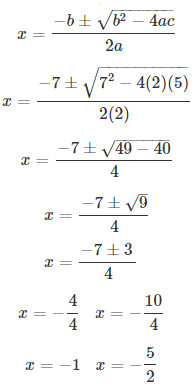
(vii) 2/3 x = -1/6 x 2 – 1/3
Solution:
Given equation, 2/3 x = -1/6 x 2 – 1/3 1/6 x 2 + 2/3 x + 1/3 = 0 Multiplying by 6 on both sides x 2 + 4x + 2 = 0 Here, a = 1, b = 4 and c = 2 By quadratic formula, we have Therefore, x = -2 + √2 or x = -2 – √2
(viii) 1/15 x 2 + 5/3 = 2/3 x
Solution:
Given equation, 1/15 x 2 + 5/3 = 2/3 x 1/15 x 2 – 2/3 x + 5/3 = 0 Multiplying by 15 on both sides x 2 – 10x + 25 = 0 Here, a = 1, b = -10 and c = 25 By quadratic formula, we have 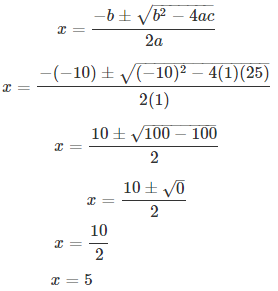
(ix) x 2 – 6 = 2 √2 x
Solution:
Given equation, x 2 – 6 = 2 √2 x x 2 – 2√2 x – 6 = 0 Here, a = 1, b = -2√2 and c = -6 By quadratic formula, we have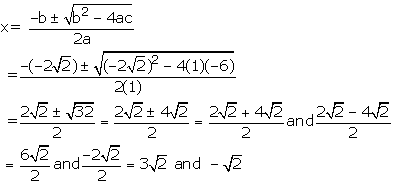 Therefore, x = 3√2 or x = -√2
(x) 4/x – 3 = 5/ (2x + 3)
Solution:
Given equation, 4/x – 3 = 5/ (2x + 3) (4 – 3x)/ x = 5/ (2x + 3) On cross multiplying, we have (4 – 3x)(2x + 3) = 5x 8x – 6x 2 + 12 – 9x = 5x 6x 2 + 6x – 12 = 0 Dividing by 6, we get x 2 + x – 2 = 0 Here, a = 1, b = 1 and c = -2 By quadratic formula, we have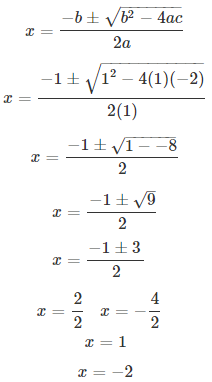 Therefore, x = 1 or x = -2
(xi) 2x + 3/ x + 3 = x + 4/ x + 2
Solution:
Given equation, 2x + 3/ x + 3 = x + 4/ x + 2 On cross-multiplying, we have (2x + 3) (x + 2) = (x + 4) (x + 3) 2x 2 + 4x + 3x + 6 = x 2 + 3x + 4x + 12 2x 2 + 7x + 6 = x 2 + 7x + 12 x 2 + 0x – 6 = 0 Here, a = 1, b = 0 and c = -6 By quadratic formula, we have Therefore, x = √6 or x = -√6(xii) √6x 2 – 4x – 2√6 = 0
Solution:
Given equation, √6x 2 – 4x – 2√6 = 0 Here, a = √6, b = -4 and c = -2√6 By quadratic formula, we have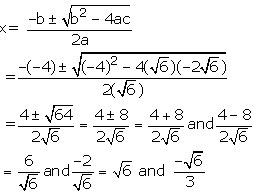 Therefore, x = √6 or -√6/3
(xiii) 2x/ x – 4 + (2x – 5)/(x – 3) = 
Solution:
Given equation, 2x/ x – 4 + (2x – 5)/(x – 3) =
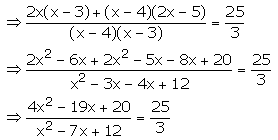 25x 2 – 175x + 300 = 12x 2 – 57x + 60 13x 2 – 118x + 240 = 0 Here, a = 13, b = -118 and c = 240 By quadratic formula, we have
 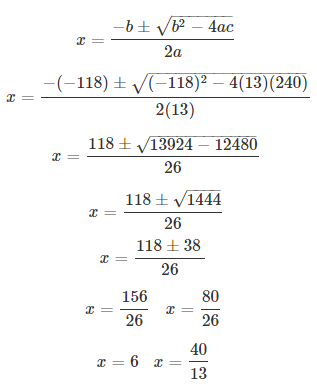 Therefore, x = 6 or x = 40/13
(xiv) 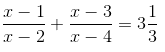
Solution:
From the given equation,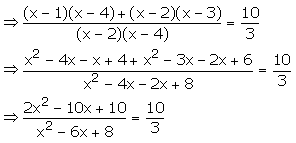 10x 2 – 60x + 80 = 6x 2 – 30x + 30 4x 2 – 30x + 50 = 0 2x 2 – 15x + 25 = 0 Here, a = 2, b = -15 and c = 25
 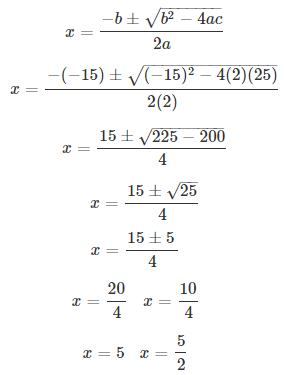 Therefore, x = 5 or x = 5/2
2. Solve each of the following equations for x and give, in each case, your answer correct to one decimal place:
(i) x 2 – 8x +5 = 0
(ii) 5x 2 + 10x – 3 = 0
Solution:
(i) x 2 – 8x + 5 = 0 Here, a = 1, b = -8 and c = 5 By quadratic formula, we have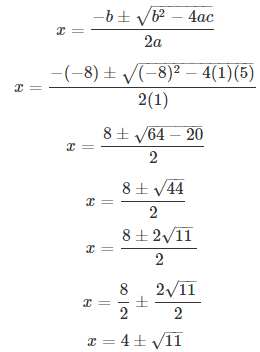 x = 4 ± 3.3 Thus, x = 7.7 or x = 0.7 (ii) 5x 2 + 10x – 3 = 0 Here, a = 5, b = 10 and c = -3 By quadratic formula, we have
 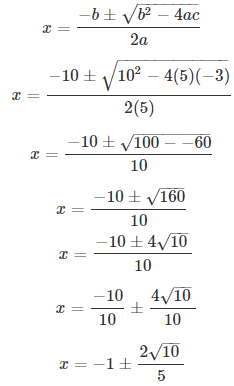 Thus, x = 0.3 or x = -2.3
3. Solve each of the following equations for x and give, in each case, your answer correct to 2 decimal places:
(i) 2x 2 – 10x + 5 = 0
Solution:
Given equation, 2x 2 – 10x + 5 = 0 Here, a = 2, b = -10 and c = 5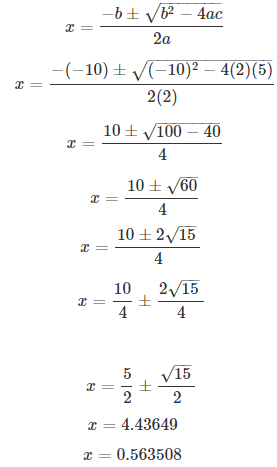 Therefore, x = 4.44 or x = 0.56
(ii) 4x + 6/x + 13 = 0
Solution:
Given equation, 4x + 6/x + 13 = 0 Multiplying by x both sides, we get 4x 2 + 13x + 6 = 0 Here, a = 4, b = 13 and c = 6 Therefore, x = -0.56 or x = -2.70
(iii) 4x 2 – 5x – 3 = 0
Solution:
Given equation, 4x 2 – 5x – 3 = 0 Here, a = 4, b = -5 and c = -3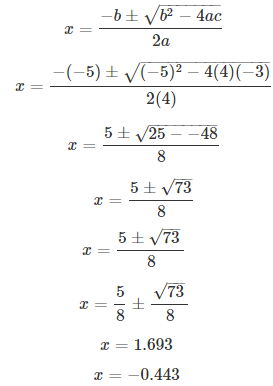 Therefore, x = 1.70 or x = -0.44
(iv) x 2 – 3x – 9 = 0
Solution:
Given equation, x 2 – 3x – 9 = 0 Here, a = 1, b = -3 and c = -9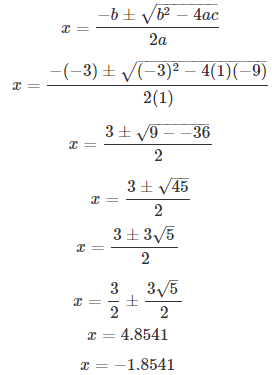 Therefore, x = 4.85 or x = -1.85
(v) x 2 – 5x – 10 = 0
Solution:
Given equation, x 2 – 5x – 10 = 0 Here, a = 1, b = -5 and c = -10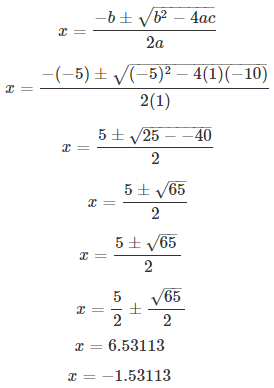 Therefore, x = 6.53 or x = -1.53
4. Solve each of the following equations for x and give, in each case, your answer correct to 3 decimal places:
(i) 3x 2 – 12x – 1 = 0
(ii) x 2 – 16 x +6 = 0
(iii) 2x 2 + 11x + 4 = 0
Solution:
(i) Given equation, 3x 2 – 12x – 1 = 0 Here, a = 3, b = -12 and c = -1 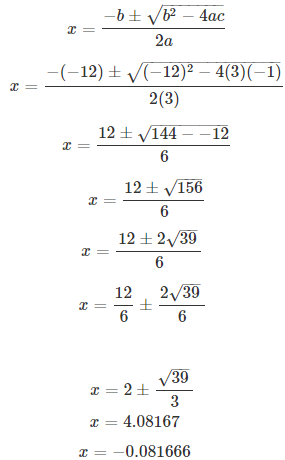
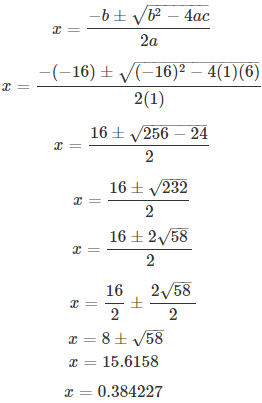 Therefore, x = 15.616 or x = 0.384 (iii) Given equation, 2x 2 + 11x + 4 = 0 Here, a = 2, b = 11 and c = 4
 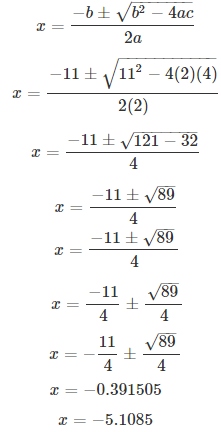 Therefore, x = -0.392 or x = -5.110
5. Solve:
(i) x 4 – 2x 2 – 3 = 0
Solution:
Given equation, x 4 – 2x 2 – 3 = 0 x 4 – 3x 2 + x 2 – 3 = 0 x 2 (x 2 – 3) + 1(x 2 – 3) = 0 (x 2 + 1) (x 2 – 3) = 0 So, x 2 + 1 = 0 (which is not possible) or x 2 – 3 = 0 Hence, x 2 – 3 = 0 x = ± √3(ii) x 4 – 10x 2 + 9 = 0
Solution:
Given equation, x 4 – 10x 2 + 9 = 0 x 4 – x 2 – 9x 2 + 9 = 0 x 2 (x 2 – 1) – 9(x 2 – 1) = 0 (x 2 – 9)(x 2 – 1) = 0 So, we have x 2 – 9 = 0 or x 2 – 1 = 0 Hence, x = ± 3 or x = ± 1ICSE Class 10 Maths Selina Solutions Chapter 5 Quadratic Equations Exercise 5(E) Page No: 66
1. Solve each of the following equations:

Solution:
Given equation,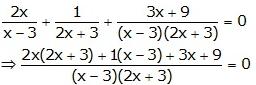 4x 2 + 6x + x – 3 + 3x + 9 = 0 4x 2 + 10x + 6 = 0 4x 2 + 4x + 6x + 6 = 0 4x(x + 1) + 6(x + 1) = 0 (4x + 6) (x + 1) = 0 So, 4x + 6 = 0 or x + 1 = 0 x = -1 or x = -6/4 = -3/2 (rejected as this value is excluded in the domain) Therefore, x = -1 is the only solution
2. (2x + 3) 2 = 81
Solution:
Given, (2x + 3) 2 = 81 Taking square root on both sides we have, 2x + 3 = ± 9 2x = ± 9 – 3 x = (± 9 – 3)/ 2 So, x = (9 – 3)/ 2 or (-9 – 3)/ 2 Therefore, x = 3 or x = -63. a 2 x 2 – b 2 = 0
Solution:
Given equation, a 2 x 2 – b 2 = 0 (ax) 2 – b 2 = 0 (ax + b)(ax – b) = 0 So, ax + b = 0 or ax – b = 0 Therefore, x = -b/a or b/a4. x 2 – 11/4 x + 15/8 = 0
Solution:
Given equation, x 2 – 11/4 x + 15/8 = 0 Taking L.C.M we have, (8x 2 – 22x + 15)/ 8 = 0 8x 2 – 22x + 15 = 0 8x 2 – 12x – 10x + 15 = 0 4x(2x – 3) – 5(2x – 3) = 0 (4x – 5)(2x – 3) = 0 So, 4x – 5 = 0 or 2x – 3 = 0 Therefore, x = 5/4 or x = 3/25. x + 4/x = -4; x ≠ 0
Solution:
Given equation, x + 4/x = -4 (x 2 + 4)/ x = -4 x 2 + 4 = -4x x 2 + 4x + 4 = 0 x 2 + 2x + 2x + 4 = 0 x(x + 2) + 2(x + 2) = 0 (x + 2)(x + 2) = 0 (x + 2) 2 = 0 Taking square – root we have, x + 2 = 0 Therefore, x = -26. 2x 4 – 5x 2 + 3 = 0
Solution:
Given equation, 2x 4 – 5x 2 + 3 = 0 Let’s take x 2 = y Then, the equation becomes 2y 2 – 5y + 3 = 0 2y 2 – 2y – 3y + 3 = 0 2y(y – 1) – 3(y – 1) = 0 (2y – 3) (y – 1) = 0 So, 2y – 3 = 0 or y – 1 = 0 y = 3/2 or y = 1 And, we have taken y = x 2 Thus, x 2 = 3/2 or x 2 = 1 x = ± √(3/2) or x = ±17. x 4 – 2x 2 – 3 = 0
Solution:
Given equation, x 4 – 2x 2 – 3 = 0 Let’s take x 2 = y Then, the equation becomes y 2 – 2y – 3 = 0 y 2 – 3y + y – 3 = 0 y(y – 3) + 1(y – 3) = 0 (y + 1)(y – 3) = 0 So, y + 1 = 0 or y – 3 = 0 y = -1 or y = 3 And, we have taken y = x 2 Thus, x 2 = – 1(impossible, no real solution) x 2 = 3 x = ± √3 8. 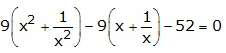
Solution:
Let us take (x + 1/x) = y …. (1) Now, squaring it on both sides (x + 1/x) 2 = y 2 x 2 + 1/x 2 + 2 = y 2 So, x 2 + 1/x 2 = y 2 – 2 ….. (2) Using (1) and (2) in the given equation, we have 9(y 2 – 2) – 9(y) – 52 = 0 9y 2 – 18 – 9y – 52 = 0 9y 2 – 9y – 70 = 0 9y 2 – 30y + 21y – 70 = 0 3y(3y – 10) + 7(3y – 10) = 0 (3y + 7)(3y – 10) = 0 So, 3y + 7 = 0 or 3y – 10 = 0 y = -7/3 or y = 10/3 Now, x + 1/x = -7/3 or x + 1/x = 10/3 (x 2 + 1)/x = -7/3 or (x 2 + 1)/x = 10/3 3x 2 – 10x + 3 = 0 or 3x 2 + 7x + 3 = 0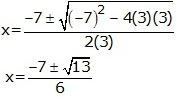 3x 2 – 9x – x + 3 = 0 or 3x(x – 3) – 1(x – 3) = 0 (3x – 1)(x – 3) = 0 So, x = 1/3 or 3
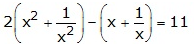
9. 
Solution:
Let us take (x + 1/x) = y …. (1) Now, squaring it on both sides (x + 1/x) 2 = y 2 x 2 + 1/x 2 + 2 = y 2 So, x 2 + 1/x 2 = y 2 – 2 ….. (2) Using (1) and (2) in the given equation, we have 2(y 2 – 2) – (y) = 11 2y 2 – 4 – y = 11 2y 2 – y – 15 = 0 2y 2 – 6y + 5y – 15 = 0 2y(y – 3) + 5(y – 3) = 0 (2y + 5) (y – 3) = 0 So, 2y + 5 = 0 or y – 3 = 0 y = -5/2 or y = 3 Now, x + 1/x = -5/2 or x + 1/x = 3 (x 2 + 1)/x = -5/2 or (x 2 + 1)/x = 3 2(x 2 + 1) = -5x or x 2 + 1 = 3x 2x 2 + 5x + 2 = 0 or x 2 – 3x + 1 = 0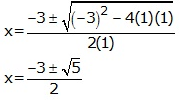 2x 2 + 4x + x + 2 = 0 or 2x(x + 2) + 1(x + 2) = 0 (2x + 1)(x + 2) = 0 Hence, x = -1/2 or -2
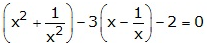
10. 
Solution:
Let us take (x – 1/x) = y …. (1) Now, squaring it on both sides (x – 1/x) 2 = y 2 x 2 + 1/x 2 – 2 = y 2 So, x 2 + 1/x 2 = y 2 + 2 ….. (2) Using (1) and (2) in the given equation, we have (y 2 + 2) – 3(y) – 2 = 0 y 2 -3y = 0 y(y – 3) = 0 So, y = 0 or y – 3 = 0 Now, (x – 1/x) = 0 or (x – 1/x) = 3 x 2 – 1 = 0 or x 2 – 1 = 3x x 2 = 1 or x 2 – 3x – 1 = 0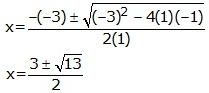 x = ± 1 or
ICSE Class 10 Maths Selina Solutions Chapter 5 Quadratic Equations Exercise 5(F) Page No: 67
1. Solve:
(i) (x + 5) (x – 5) = 24
Solution:
Given equation, (x + 5) (x – 5) = 24 x 2 – 25 = 24 x 2 = 49 Thus, x = ± 7(ii) 3x 2 – 2√6x + 2 = 0
Solution:
Given equation, 3x 2 – 2√6x + 2 = 0 3x 2 – √6x – √6x + 2 = 0 √3x(√3x – √2) – √2(√3x – √2) = 0 (√3x – √2) (√3x – √2) = 0 So, √3x – √2 = 0 or √3x – √2 = 0 Therefore, x = √(2/3), √(2/3) (equal roots)(iii) 3√2x 2 – 5x – √2 = 0
Solution:
Given equation, 3√2x 2 – 5x – √2 = 0 3√2x 2 – 6x + x – √2 = 0 3√2x(x – √2) + 1(x – √2) = 0 (3√2x + 1) (x – √2) = 0 So, 3√2x + 1 = 0 or x – √2 = 0 Therefore, x = -1/ 3√2 or x = √2(iv) 2x – 3 = √(2x 2 – 2x + 21)
Solution:
Given equation, 2x – 3 = √(2x 2 – 2x + 21) On squaring on both sides, we have (2x – 3) 2 = 2x 2 – 2x + 21 4x 2 + 9 – 12x = 2x 2 – 2x + 21 2x 2 – 10x – 12 = 0 Dividing by 2, we get x 2 – 5x – 6 = 0 x 2 – 6x + x – 6 = 0 x(x – 6) + 1(x – 6) = 0 (x + 1) (x – 6) = 0 So, x + 1 = 0 or x – 6 = 0 Thus, we get x = -1 or x = 6 But, putting x = -1 the L.H.S become negative. And we know that the square root function always gives a positive value. Therefore, x = 6 is the only solution.2. One root of the quadratic equation 8x 2 + mx + 15 = 0 is ¾. Find the value of m. Also, find the other root of the equation.
Solution:
Given equation, 8x 2 + mx + 15 = 0 One of the roots is ¾, and hence it satisfies the given equation So, 8(3/4) 2 + m(3/4) + 15 = 0 8(9/16) + m(3/4) + 15 = 0 18/4 + 3m/4 + 15 = 0 Taking L.C.M, we have (18 + 3m + 60)/4 = 0 18 + 3m + 60 = 0 3m = – 78 m = -26 Now, putting the value of m in the given equation, we get 8x 2 + (-26)x + 15 = 0 8x 2 – 26x + 15 = 0 8x 2 – 20x – 6x + 15 = 0 4x(2x – 5) – 3(2x – 5) = 0 (4x – 3) (2x – 5) = 0 So, 4x – 3 = 0 or 2x – 5 = 0 Therefore. x = ¾ or x = 5/23. Show that one root of the quadratic equation x 2 + (3 – 2a)x – 6a = 0 is -3. Hence, find its other root.
Solution:
Given quadratic equation, x 2 + (3 – 2a)x – 6a = 0 Now, putting x = -3 we have (-3) 2 + (3 – 2a)( -3) – 6a = 0 9 – 9 + 6a – 6a = 0 0 = 0 Since, x = -3 satisfies the given equation -3 is one of the root of the quadratic equation. x 2 + (3 – 2a)x – 6a = 0 x 2 + 3x – 2ax – 6a = 0 x(x + 3) – 2a(x + 3) = 0 (x – 2a) (x + 3) = 0 So, x – 2a = 0 or x + 3 =0 x = 2a or x = -3 Hence, the other root is 2a.4. If p – 15 = 0 and 2x 2 + px + 25 = 0: find the values of x.
Solution:
Given equations, p – 15 = 0 and 2x 2 + px + 25 = 0 Thus, p = 15 Now, using p in the quadratic equation, we get 2x 2 + (15)x + 25 = 0 2x 2 + 10x + 5x + 25 = 0 2x(x + 5) + 5(x + 5) = 0 (2x + 5) (x + 5) = 0 So, 2x + 5 = 0 or x + 5 = 0 Hence, x = -5/2 or x = -55. Find the solution of the quadratic equation 2x 2 – mx – 25n = 0; if m + 5 = 0 and n – 1 = 0.
Solution:
Given, m + 5 = 0 and n – 1 = 0 so, m = -5 and n = 1 Now, putting these values in the given quadratic equation 2x 2 – mx – 25n = 0, we get 2x 2 – (-5)x – 25(1) = 0 2x 2 + 5x – 25 = 0 2x 2 + 10x – 5x – 25 = 0 2x(x + 5) -5(x + 5) = 0 (2x – 5) (x + 5) = 0 So, 2x – 5 = 0 or x + 5 = 0 Hence, x = 5/2 or x = -56. If m and n are roots of the equation: 1/x – 1/(x-2) = 3: where x ≠ 0 and x ≠ 2; find m x n.
Solution:
Given equation, 1/x – 1/(x-2) = 3 (x – 2 – x)/ (x(x – 2)) = 3 -2 = 3(x 2 – 2x) 3x 2 – 6x + 2 = 0 Solving by using quadratic formula, we get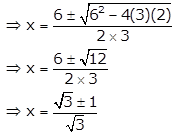 And, since m and n are roots of the equation, we have m = (√3 + 1)/ √3 n = (√3 – 1)/ √3 So, m x n = (√3 + 1)/ √3 x (√3 – 1)/ √3 = [(√3) 2 – 1]/ (√3) 2 Thus, m x n = 2/3
Last Minute Tips for ICSE Class 10 Maths Selina Solutions Chapter 5 Quadratic Equations
With the ICSE Class 10 board exams having started from 17 February 2026, smart and focused revision is the key to scoring well. Quadratic Equations is an important and high-weightage chapter, so clarity in methods and formulas is essential.
-
Revise all three methods – factorisation, completing the square, and quadratic formula.
-
Memorise the quadratic formula correctly and practice substituting values carefully.
-
Check the discriminant (D = b² – 4ac) to identify the nature of roots.
-
Practice 3–4 important sums to improve speed and accuracy.
-
Avoid calculation mistakes by solving step-by-step and rechecking signs.
ICSE Class 10 Maths Selina Solutions Chapter 5 FAQs
What is completing the square?
Can quadratic equations have complex roots?
What should you do if you encounter a quadratic equation with fractional coefficients?
What is a quadratic equation?



 Live & recorded classes available at easeDashboard for progress trackingMillions of practice questions at your fingertips