







Physics Electrostatic Potential and Capacitance Diagrams for JEE Main and Advanced by PW
 Mehjabeen Hussain15 Sept, 2026
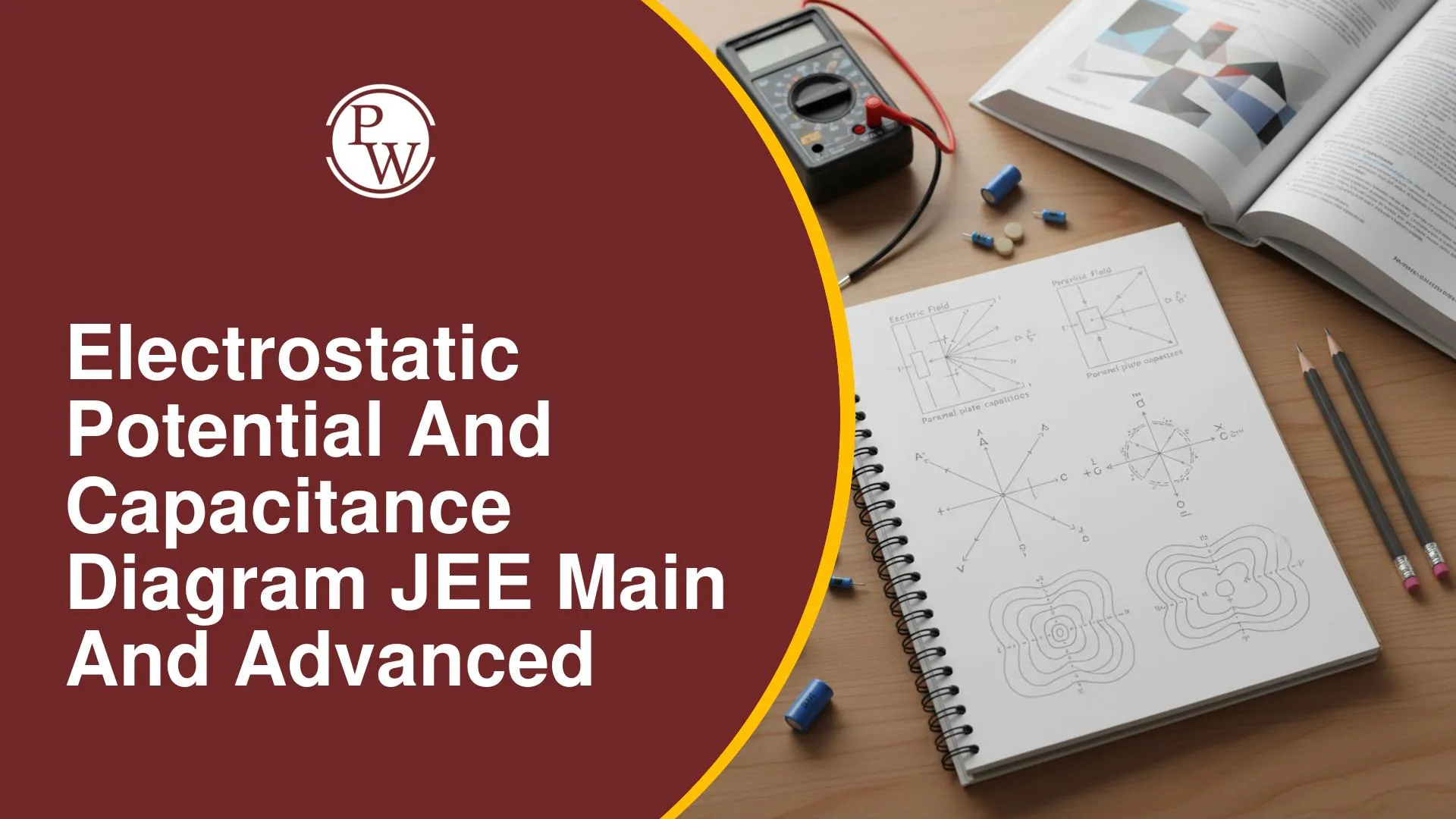
Visualising these concepts can help you interpret how potential and electric field vary in different situations and how the arrangement of capacitors affects their electrical properties. The diagrams provide a quick way to revisit important configurations and relationships while preparing for JEE Main and JEE Advanced.
The Electrostatic Potential and Capacitance Diagrams for JEE Main and Advanced by PW can be used during revision to recall important electrostatic arrangements, equipotential surfaces, parallel-plate capacitors, series and parallel combinations, and other graphical representations covered in the chapter.
Electrostatic Potential and Capacitance Diagram PDF
The Electrostatic Potential and Capacitance Diagram PDF by PW contains important figures and visual representations related to electric potential, equipotential surfaces, conductors, capacitors, dielectric materials, capacitor combinations, and energy stored in a capacitor. These diagrams can support revision of important concepts for JEE Main and JEE Advanced.
Electrostatic Potential and Capacitance Diagram PDF
Why Use the PW Electrostatic Potential and Capacitance Diagrams?
Electrostatic Potential and Capacitance includes concepts where the arrangement of charges, electric fields, equipotential surfaces, and capacitor plates affects the quantities being studied. Referring to diagrams can help you visualise these configurations and identify the relevant conditions before applying the required equations.
1. Visualise Electric Potential
Diagrams can help you see how electric potential varies around charges and understand how the position of a charge affects the potential at different points.
2. Connect Electric Field and Potential
Visual representations can make the relationship between electric field and potential easier to understand, particularly when interpreting changes in potential across different regions.
3. Understand Equipotential Surfaces
Equipotential diagrams can help you identify surfaces having the same potential and understand their relationship with electric field lines.
4. Interpret Potential Energy
Diagrams involving charge configurations can help you visualise the potential energy of individual charges and systems of charges while revising electrostatic concepts.
5. Study Conductors in Electrostatic Equilibrium
Visual representations of conductors can make it easier to recall how charge distribution, electric field, and potential behave when a conductor is in electrostatic equilibrium.
6. Visualise Parallel-Plate Capacitors
Capacitor diagrams can help you identify the arrangement of conducting plates and visualise the electric field between them while revising the basic characteristics of a parallel-plate capacitor.
7. Understand Factors Affecting Capacitance
Diagrams can help you compare changes in plate area, plate separation, and dielectric material and understand their effect on capacitance under different conditions.
8. Differentiate Series and Parallel Capacitors
Visualising capacitor connections can make it easier to distinguish series and parallel arrangements and recall how charge, potential difference, and equivalent capacitance are related.
9. Revise Dielectric Effects
Diagrams involving dielectric materials can help you visualise their placement in a capacitor and revise their effect on electric field, potential difference, and capacitance.
10. Visualise Energy Stored in a Capacitor
Diagrams can provide a quick visual reference for understanding energy associated with a charged capacitor and the electric field in the space between its plates.
These diagrams provide a visual reference for revising electrostatic configurations and capacitor arrangements. They can help you interpret diagrams-based information before applying concepts and equations to JEE Main and JEE Advanced questions.
You May Also Like :
FAQs
What are the important Electrostatic Potential and Capacitance diagrams for JEE?
Why are equipotential surface diagrams important for JEE?
What other JEE Physics resources does PW provide?









Get Free Counselling Today
and Clear up all your Doubts
 Live & recorded classes available at easeDashboard for progress trackingLakhs of practice questions

