CLAT 2027 Public Prosecutor vs Corporate Lawyer: Salary, Work-Life Balance and Career Comparison


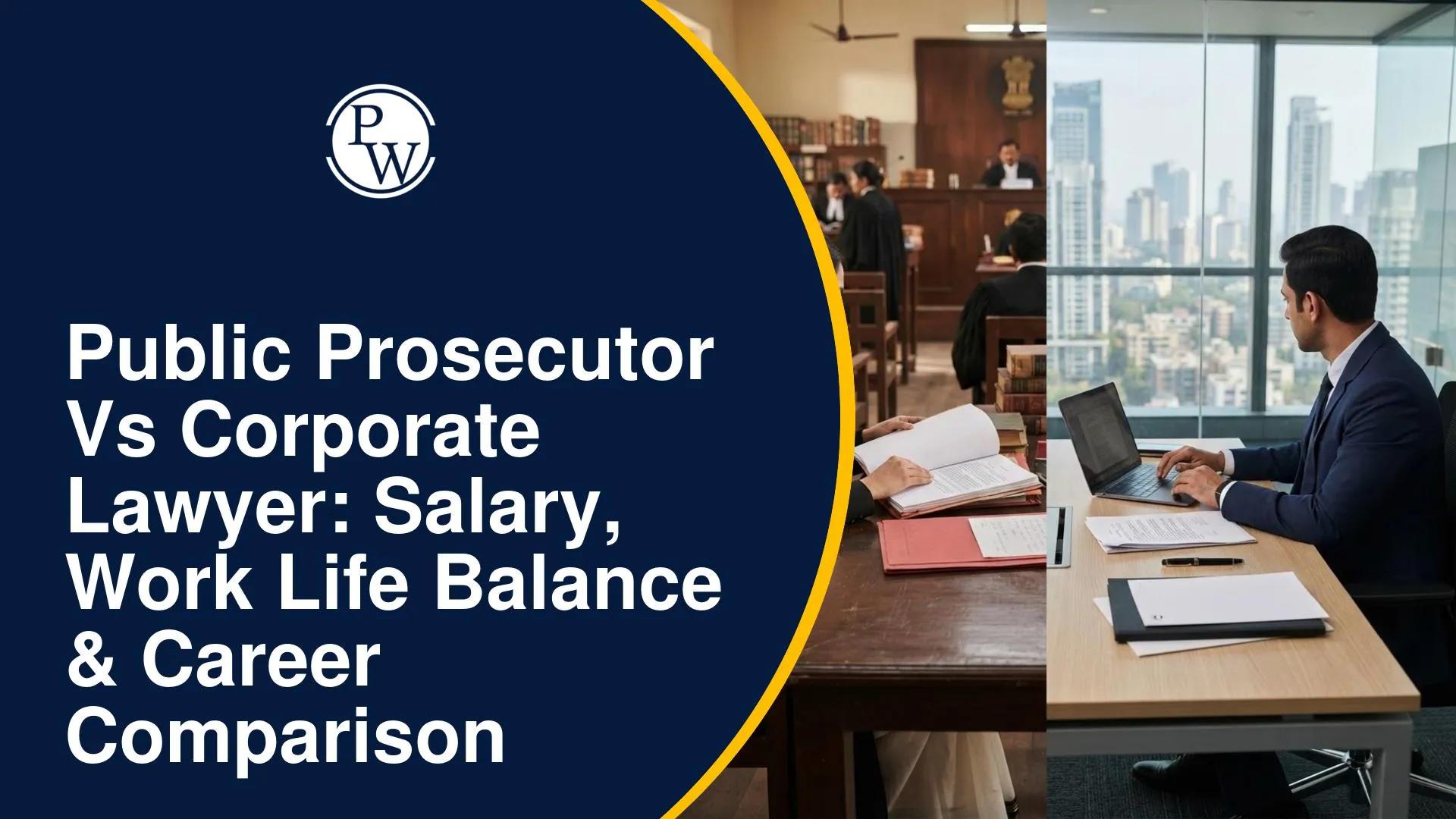
Choosing between public prosecution and corporate law can be challenging when both careers offer different professional opportunities. While public prosecutors work on behalf of the state in criminal proceedings, corporate lawyers advise businesses on contracts, mergers, acquisitions and other commercial matters. The difference extends beyond job responsibilities to salary, working hours, career progression and retirement rules.
Understanding these differences can help you identify which career aligns with your professional goals and preferred lifestyle. For students preparing to enter the legal profession, PW provides CLAT online preparation, including live and recorded classes, mock tests, sectional practice, current affairs resources and doubt-solving sessions.
What Is a Public Prosecutor?
A Public Prosecutor is a legal professional appointed to represent the state in criminal proceedings. The prosecutor presents the prosecution's case against the accused and assists the court in examining the evidence and applying the relevant law.
The main responsibilities of a public prosecutor include:
-
Representing the state in criminal proceedings.
-
Presenting evidence and arguments before the court.
-
Examining and cross-examining witnesses, as permitted by law.
-
Preparing cases and reviewing relevant documents.
-
Assisting the court in reaching a decision based on the evidence and applicable legal provisions.
Public prosecutors work at different levels, including district and higher courts. Their responsibilities involve regular court appearances, legal research, case preparation and coordination with investigating agencies.
What Does a Corporate Lawyer Do?
A Corporate Lawyer advises companies and businesses on legal matters related to their operations, transactions and commercial activities. They may work in law firms, corporate legal departments or independently as legal consultants.
Corporate lawyers commonly handle:
-
Mergers and Acquisitions: Providing legal support when companies combine or one business acquires another.
-
Contract Drafting and Review: Preparing and examining agreements to ensure that contractual terms are legally sound.
-
Breach of Contract: Advising businesses on disputes arising from contractual obligations.
-
Intellectual Property: Handling matters involving copyrights, trademarks and other intellectual property rights.
-
Commercial Transactions: Supporting businesses during negotiations and other business-related legal activities.
Corporate lawyers may also advise companies on regulatory compliance, business risks and legal documentation. Their work primarily involves transactions, contracts and advisory services, although some may also handle litigation.
Public Prosecutor vs Corporate Lawyer: Nature of Work
|
Aspect |
Public Prosecutor |
Corporate Lawyer |
|
Primary Role |
Represents the state in criminal proceedings |
Advises businesses on corporate and commercial legal matters |
|
Court Work |
Regular court appearances are generally part of the role |
Depends on the role; litigation-related work may involve court appearances |
|
Typical Matters |
Criminal cases and prosecution proceedings |
Mergers, acquisitions, contracts and intellectual property |
|
Work Environment |
Courts and government legal departments |
Law firms and corporate legal departments |
Public Prosecutor vs Corporate Lawyer: Salary Comparison
Salary is an important factor when comparing these two career paths. Public prosecutors receive compensation according to their appointment level and applicable government pay rules. Corporate lawyers, on the other hand, may receive different packages depending on their employer, law firm, qualifications and experience.
Public prosecutors may be appointed at different levels, such as:
-
State Level
-
District Level
-
Central Level
The appointment process and compensation structure vary across departments and jurisdictions. The indicative starting compensation figures in the comparison are:
-
Approximately Rs. 50,000* in some states or positions.
-
Approximately Rs. 1 lakh to Rs. 1.5 lakh* for certain positions.
-
Up to approximately Rs. 2 lakh* for some Central Government positions.
A corporate lawyer placed in a leading Tier 1 law firm, particularly after graduating from a reputed National Law University, may receive a starting package of approximately Rs. 15–20 lakh per annum.
|
Career |
Indicative Starting Compensation* |
|
Public Prosecutor |
Approximately Rs. 50,000 to Rs. 2 lakh, depending on the position and department |
|
Corporate Lawyer |
Approximately Rs. 15–20 lakh per annum in a leading Tier 1 law firm |
Corporate law may offer a higher starting package in certain leading law firms. However, compensation should be considered alongside job stability, working conditions and long-term career opportunities.
Public Prosecutor vs Corporate Lawyer: Work-Life Balance
Work-life balance can differ considerably between public prosecution and corporate law. The nature of assignments, court schedules, deadlines and workplace expectations can influence the daily routine in both careers.
A public prosecutor generally divides their time between court appearances, case preparation and office-related responsibilities. Government service may offer a comparatively structured working routine, although court schedules and the number of pending cases can affect working hours.
Corporate lawyers may have more demanding schedules, particularly when working on important transactions or time-sensitive assignments. In some law firms, working hours may extend to 12–14 hours on demanding days. The workload can increase during mergers, acquisitions, negotiations and major contract deadlines.
Work-Life Balance Comparison
|
Aspect |
Public Prosecutor |
Corporate Lawyer |
|
Working Pattern |
Generally follows court and government office schedules |
May involve extended and deadline-driven working hours |
|
Typical Schedule |
Court appearances and office work |
Varies according to clients, transactions and assignments |
|
Job Security |
Government service may offer greater employment stability |
Depends on the employer and professional progression |
|
Main Advantage |
Comparatively structured working conditions |
Potential for higher earnings and varied commercial work |
Neither career guarantees a particular work-life balance. The actual experience depends on the department, court, law firm, workload and individual responsibilities.
Career Growth and Stability
Career progression in public prosecution and corporate law follows different paths. Public prosecutors work within government legal systems, where promotions and seniority are generally governed by applicable service rules. Corporate lawyers may progress through professional performance, specialisation and opportunities within their organisations.
Career growth in corporate law may include:
-
Progression to senior associate positions.
-
Specialisation in areas such as mergers and acquisitions, banking, intellectual property or commercial law.
-
Opportunities to become a partner in a law firm.
-
Possibilities of moving into senior in-house legal positions.
Becoming a partner can bring greater professional responsibility and earning potential, but it generally requires considerable experience and sustained performance.
Public prosecution offers a career within government service, with progression depending on the relevant recruitment and promotion structure. It may appeal to individuals who prefer a public-sector legal role and a comparatively structured career path.
Public Prosecutor vs Corporate Lawyer: Retirement Age
Retirement rules are another point of difference between these careers. Public prosecutors appointed to government service are generally subject to the retirement age prescribed by the applicable service rules.
The indicative retirement ages include:
-
58 years in some places.
-
60 years in some places.
The exact retirement age depends on the state, department, cadre and applicable service conditions.
Corporate lawyers working in private law firms or companies generally do not have a single statutory retirement age applicable across the profession. They may continue practising or working in legal roles for as long as they choose and meet the relevant professional and employment requirements.
|
Aspect |
Public Prosecutor |
Corporate Lawyer |
|
Retirement Age |
May be 58 or 60, depending on applicable service rules |
No single fixed retirement age across the profession |
|
Career Duration |
Subject to government service rules |
Depends on individual choice and employment conditions |
|
Early Retirement |
Governed by applicable service rules |
May be an option depending on financial and professional circumstances |
Which Career Path Should You Choose?
Neither public prosecution nor corporate law is universally better. The right choice depends on your interests, professional expectations, financial priorities and preferred working environment.
Public Prosecution May Suit Individuals Who Prefer:
-
A comparatively structured work routine.
-
The stability associated with government service.
-
Representing the state in criminal proceedings.
-
Regular courtroom experience.
-
A career governed by public-sector service rules.
Corporate Law May Suit Individuals Who Prefer:
-
Working with companies and business organisations.
-
Commercial transactions, contracts and legal advisory work.
-
Higher earning potential in certain leading law firms.
-
Opportunities for specialisation and professional advancement.
-
The possibility of progressing to partnership or senior corporate legal roles.
Public prosecution and corporate law offer different opportunities within the legal profession. Public prosecutors represent the state in criminal proceedings and may benefit from the structure associated with government service. Corporate lawyers work on business-related legal matters and may have opportunities for higher starting compensation, specialisation and partnership, particularly in established law firms.
Before choosing either path, consider the nature of work, earning potential, working hours, career progression and long-term goals. If you’re planning to enter the legal profession, building a strong foundation through law entrance preparation is an important first step. PW provides CLAT online coaching with live and recorded classes, mock tests, current affairs resources, practice questions and doubt-solving sessions.
FAQs
1. What is the main difference between a public prosecutor and a corporate lawyer?
2. Who earns more: a public prosecutor or a corporate lawyer?
3. Which career offers better work-life balance?
4. Do corporate lawyers have a fixed retirement age?