UPES Law Students: 15 Practical Skills to Build for Corporate and Litigation Careers



A law degree provides knowledge of legal concepts, statutes and case laws, but corporate and litigation careers also require you to apply this knowledge to practical legal work. Skills such as drafting, legal research, case analysis, professional communication and attention to detail can help you handle practical assignments more effectively.
UPES offers B.A. LL.B., B.B.A. LL.B., LL.B. and LL.M. programmes. The university is ranked 18 nationally by NIRF. Alongside academic learning, internships and moot courts, you can use PW Legal Skills programmes to develop practical abilities in areas such as legal drafting, contract drafting, advocacy, litigation and legal English.
15 Practical Skills UPES Law Students Should Build
You can develop these skills through internships, moot courts, legal assignments, research work and practical legal training.
1. Legal Research
Legal research requires you to move beyond simply locating a law. You should be able to frame the legal issue, identify applicable provisions, locate relevant authorities and assess how they relate to the facts of a matter.
2. Legal Drafting
You should practise preparing different types of legal documents with appropriate terminology, logical organisation and factual accuracy. Drafting practice can be particularly useful for both corporate documentation and litigation work.
3. Legal Communication
Legal professionals need to present information clearly to clients, seniors, colleagues and other stakeholders. You can improve this skill by working on legal writing, presentations, discussions, moots and professional correspondence.
4. Analytical and Critical Thinking
Legal problems may involve several provisions, facts and competing arguments. You should learn to examine each element, identify the relationship between them and develop reasoned legal conclusions.
5. Attention to Detail
Accuracy matters when working with contracts, pleadings, case records and other legal documents. You should carefully review facts, dates, names, provisions, citations and document language before submitting your work.
6. Case and Fact Analysis
You should learn how to identify which facts are legally relevant and how they influence a case. Practising this skill can help you understand the connection between factual circumstances, legal issues and possible arguments.
7. Identifying Legal Issues and Lacunas
A practical legal analysis should identify the issues that arise from the facts as well as possible gaps or lacunas in the legal position. Recognising these areas can help you understand how different sides may approach a matter.
8. Application of Law to Facts
Knowing a legal provision is only one part of legal analysis. You should practise explaining how a particular provision, principle or case law applies to the facts of a specific matter.
9. Case Law Analysis
You should develop the ability to read judgments beyond your final outcomes. You can practise identifying the material facts, issues, arguments, reasoning and principles established by the court.
10. Command Over Bare Acts
Regular reading of Bare Acts helps you become familiar with statutory language and provisions. You should practise locating the relevant sections and understanding them in relation to the legal issue under consideration.
11. Court Procedure Awareness
If you’re interested in litigation, familiarity with court procedures is important. Internships and court exposure can help you understand filing processes, procedural terminology, case progression and courtroom practices.
12. Professional and Legal English
Legal work involves drafting formal documents, preparing written submissions and communicating with clients and colleagues. Developing legal vocabulary, clear writing and professional communication can help you handle these tasks more effectively.
13. Brief Preparation
You should practise condensing lengthy case material into useful briefs. A good brief can organise the facts, issues, applicable law, arguments and relevant authorities in a manner that makes the matter easier to analyse.
14. MS Word and Legal Documentation
You should be comfortable creating, editing and formatting legal documents using MS Word. Basic documentation skills can be useful while preparing contracts, case notes, applications, briefs and other professional material.
15. AI Tools for Legal Work
AI tools can support suitable research, drafting and productivity tasks. You should learn to use them responsibly and verify legal provisions, case references and other outputs independently before relying on them for legal work.
Legal Areas UPES Law Students Should Be Familiar With
If you’re preparing for corporate and litigation careers, you should develop knowledge across core as well as emerging areas of law, including:
-
Constitutional Law
-
Contract Law
-
Criminal Law
-
Civil Law
-
Company Law
-
Cyber Law
-
Data Privacy
-
Intellectual Property Rights (IPR)
-
Insolvency Law
-
Arbitration
-
Competition Law
These areas can give you exposure to different types of legal issues that you may encounter during internships and professional practice.
Internship-Related Skills UPES Law Students Should Develop
Internships can provide an opportunity to apply classroom learning to practical legal assignments. You should focus on developing:
-
Legal English
-
Case Research
-
Brief Preparation
-
Command Over Bare Acts
-
Legal Issue Identification
-
Case Law Analysis
-
Basic Legal Drafting
-
Legal Documentation
-
MS Word and Document Formatting
-
AI Tools for Legal Research and Productivity
-
Professional Communication
-
Time Management
You can also maintain a record of the assignments you handle during internships and use feedback from seniors to identify areas requiring further practice.
PW Legal Skills Batches for Practical Legal Training
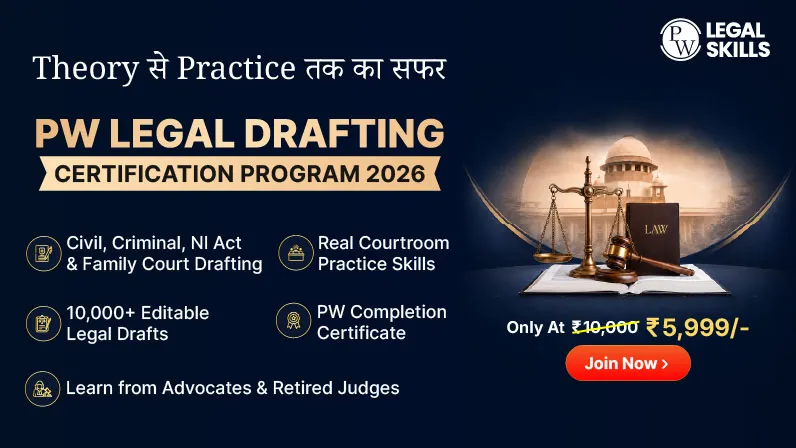
If you’re looking to develop additional practical legal skills, you can consider programmes focused on drafting, advocacy, litigation and legal communication. PW Legal Skills offers batches covering areas relevant to both litigation and professional legal practice, along with access to 10,000+ editable legal drafts.
The available programmes include targeted training in contract drafting, legal drafting, advocacy, civil and criminal litigation, and legal English.
Legal Skills Batches by PW
|
Legal Skills Batches by PW |
||
|
Programme |
Start Date |
End Date |
PW Complete Advocacy Program |
20 Jun 2026 |
31 Dec 2027 |
PW Legal Drafting Certification Program 2026 |
20 Jun 2026 |
30 Jul 2027 |
|
20 Jun 2026 |
31 Dec 2027 |
|
|
PW Advanced Criminal Litigation & Legal Drafting Program 2026 |
20 Jun 2026 |
31 Dec 2027 |
PW Vakil Toolkit |
15 Jun 2026 |
30 Jun 2027 |
These programmes cover practical areas such as contract drafting, legal drafting, civil and criminal litigation, advocacy and legal English. You can consider a programme based on the specific skills you want to develop.
Practical skills can help UPES law students apply their legal knowledge to corporate and litigation work. Along with internships and moot courts, PW Legal Skills programmes provide focused learning in areas such as drafting, advocacy, litigation and legal English.
FAQs
What practical skills should UPES law students develop?
Which legal areas should UPES law students be familiar with?
How can internships help UPES law students develop practical skills?
How can PW Legal Skills programmes help law students?


 Online Classes for LexGlobal (Legal Skills)Learn from PW's Educators through Live Lectures.Live & Recorded Classes are available at ease.Lectures are available in Hinglish (Hindi and English mix).Get access to Study Materials, Notes & Mock Tests.