
What Is Contract Drafting: Why Is It Important for Law Students and Advocates

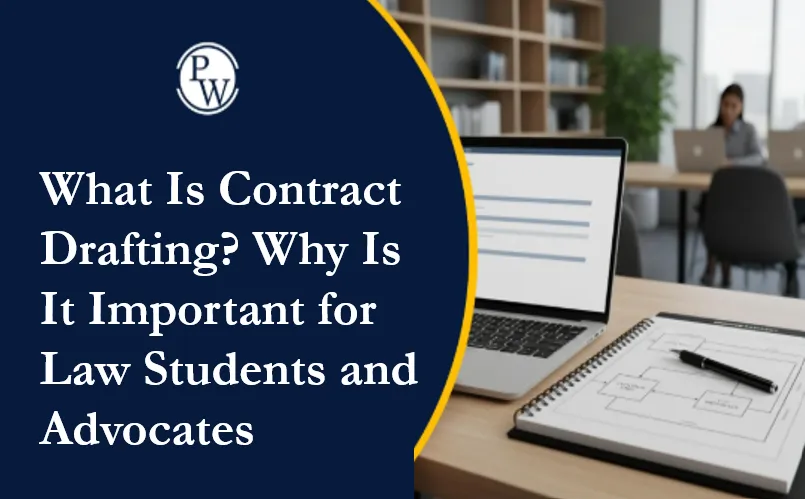
Contract drafting is the process of putting the rights, duties, payments and responsibilities of the parties into clear legal language. A well-drafted contract reduces ambiguity, identifies possible risks and makes it easier for each party to understand what they have agreed to.
For law students and advocates, contract drafting is an important practical skill that connects legal knowledge with real-world work. It requires more than knowing contract law; it also involves identifying gaps, addressing risks and expressing the parties’ intentions precisely. Learning these legal skills can help students become more confident in drafting and reviewing agreements.
Understanding Contract Drafting
Contract drafting is the work of writing an agreement in a clear and proper way. It also includes deciding the legal terms between two or more people. Put simply, it puts a deal on paper so that nothing is left unclear.
A contract tells us many things. It says what each person will do and what each person will get. It also says how much money will change hands and who is responsible if something goes wrong.
Good contract drafting is more than typing words. It also means finding risks early and asking, "What could go wrong here?" This step is called risk identification. Deciding who bears which risk is called risk allocation. The final draft should be clear, exact and legally enforceable.
Do All Contracts Need to Be Written?
No, a contract does not always have to be in writing. We enter simple contracts every day without noticing. Paying an auto-rickshaw driver, buying a coffee, booking a movie ticket and joining a gym are all contracts.
The table below shows the common forms of a contract. Each form is valid, but a written one is easier to prove in court.
|
Form of contract |
Meaning |
Everyday example |
|
Express |
The terms are clearly stated, in words or in writing |
Signing a gym membership form |
|
Implied |
The terms are understood from actions |
Sitting in an auto and paying at the end |
|
Spoken |
The terms are agreed by talking |
Agreeing on a price with a shopkeeper |
|
Written |
The terms are recorded on paper or online |
A formal sale agreement |
Why Is Contract Drafting Important?
Contract drafting is important because only what is written can be enforced.
Think of this example:
I agree to sell you my car for Rs. 3 lakh, and you are happy with the price. Later, I back out. If nothing is in writing, you may never be able to make me go through with the sale.
A properly drafted contract locks in both sides. It binds each party to do their part. It also states what happens if one party fails to do so. This is why the importance of contract drafting is felt in small deals and big ones alike.
Real Cases That Show the Cost of Weak Drafting
Two famous cases show how one missing or unclear term can change a business.
The first case is about McDonald's. As the story is often told, the two brothers who founded it sold their business model and franchise rights to a businessman. They asked for a 1% royalty every year for as long as the chain ran.
Both sides agreed, but the royalty clause never made it into the final written agreement. In India, under the parol evidence rule, the written contract is what counts. What is not written is not accepted. The brothers missed out on a very large sum, and McDonald's is now one of the biggest food chains in the world.
The second case is about Amazon. In 2000, Amazon made an exclusive deal with Toys R Us so that only Toys R Us would sell toys on Amazon. Later, Toys R Us saw other toy sellers on the site and went to court. Amazon defended itself but lost and had to pay about $51 million.
|
Case |
What went wrong |
Result |
|
McDonald's founders |
A verbal 1% royalty was left out of the written contract |
The brothers lost a huge future income |
|
Amazon and Toys R Us |
Amazon allowed other toy sellers despite an exclusive deal |
Amazon paid about $51 million |
The lesson is simple. Write down all the commercial intent, meaning what each side truly wants from the deal.
What Does a Contract Drafter Actually Do?
A contract drafter does more than write. Depending on the job, you may be asked to draft a new agreement or to review one that is already drafted. In both cases, you must know which clauses are important.
Here are the main tasks:
-
Writing the rights and duties of each party in clear words
-
Spotting risks and deciding who is liable if something goes wrong
-
Fixing gaps, vague phrases and loopholes
-
Keeping the deal balanced so both clients are treated fairly
-
Making sure the language is precise and legally enforceable
Why Is Contract Drafting Important for Law Students and Advocates?
Contract drafting for law students is a skill that stays useful for a whole career. Many students learn contract law as theory in class. Drafting shows how that theory works in real life, and it is a big part of what lawyers and advocates do for clients.
This skill helps you in three ways. It makes you a careful reader who can spot risks in any document. It helps you protect your client's interests. And it sets you apart, because not everyone can do it well. It also connects with other subjects you may already study, such as law entrance exam preparation, judiciary exam preparation and CLAT PG preparation, where a solid grip on contracts helps.
Do You Need Difficult English to Draft a Contract?
No, you do not. Many students fear drafting because they think their English is not good enough. But good drafting is not about fancy words or complex phrases. It is about placing the rights of each party on paper clearly.
If you understand the business side, you can draft well. Ask what both parties want, then write it down in simple, exact terms. Sharp and clear language always beats heavy vocabulary.
How PW Legal Skills Can Help with the Contract Drafting Advanced Program
PW Legal Skills offers a four-week program on contract drafting. It is built for students who want to grow their skill set, and it is offered at an affordable price. The course covers how to draft, what to look for in a review and how to think about business intent.
|
Detail |
Information |
|
Program name |
PW Contract Drafting Advanced Program |
|
Duration |
4 weeks |
|
Mode |
Online, with live sessions |
|
Who can join |
Law students, advocates and anyone who wants to build this skill |
|
Where to check dates and price |
The start date, orientation date and fee can change, so please check the course page for the latest details before you join.
Contract drafting is a practical legal skill that helps law students and advocates turn legal knowledge into clear, workable agreements. Understanding rights, duties, risks and important clauses can improve drafting and contract review skills. Regular practice, along with structured learning such as PW Legal Skills’ Contract Drafting Advanced Program, can help build confidence and practical drafting ability.
What Is Contract Drafting FAQs
What is contract drafting in simple words?
Why is contract drafting important for law students?
Can a contract be valid without being written?
Do I need advanced English for contract drafting?


Have questions about your prep?
Our experts can answer all your questions

 Online Classes for LexGlobal (Legal Skills)Learn from PW's Educators through Live Lectures.Live & Recorded Classes are available at ease.Lectures are available in Hinglish (Hindi and English mix).Get access to Study Materials, Notes & Mock Tests.