CAT Normalization Process: Calculation Process, Impact
CAT normalization process adjusts raw marks from different slots to create fair scaled scores. After scaling, percentiles and composite scores are calculated using CAT marks, academics, work experience, and diversity factors. This method ensures equal and fair evaluation for all candidates.



CAT Normalization Process adjusts raw marks from different exam slots to create fair scaled scores.It removes differences in the difficulty level so that all students are assessed on an equal scale. Raw scores are based on correct, wrong, and unattempted answers.
The colleges then calculate percentiles after scaling and prepare a final composite score based on CAT marks, academics, work experience, and diversity factors. This process helps institutes shortlist candidates quite fairly..
What is CAT Normalization Process?
The normalization process for CAT is done to ensure that the scores are fair for all candidates. At CAT, there are different slots, and each slot can be of different difficulty levels. To maintain equity in results for all candidates, the conducting body of the exam adjusts the raw marks to convert them into scaled scores.
The goal of normalization in the CAT is to ensure that a student taking the exam in a difficult slot is not at a disadvantage. This keeps the final results clear, fair, and balanced for all students.
Why Normalization Is Needed in CAT?
Normalization is necessary because CAT happens in three shifts. Every slot may not have the same difficulty. Some sets may contain harder questions. Some may have easier ones. Without a proper CAT score normalization method, marks would not show a real picture of performance.
The normalization formula of CAT helps remove the effect of slot difficulty. When marks are normalized, all students are compared on the same scale, creating a fair score for each candidate. This will also help top institutes judge students correctly.
How CAT Raw Scores Are Calculated?
CAT raw scores are the marks students get before applying the CAT normalization process. These marks depend only on correct and incorrect answers. Here is how raw marks are counted:
-
+3 marks for each correct answer
-
–1 mark for each wrong answer (MCQ)
-
0 marks for unattempted questions
-
No negative marking for TITA questions
Once raw marks are ready, the CAT score normalization method begins. Before scaling is applied, students need to understand how raw marks change the final score. The CAT composite score for each student is calculated by giving points to different factors. These factors include:
-
Scaled CAT score
-
Class 12 marks
-
Class 10 marks
-
Graduation marks
-
Work experience
-
Gender diversity
-
Academic diversity
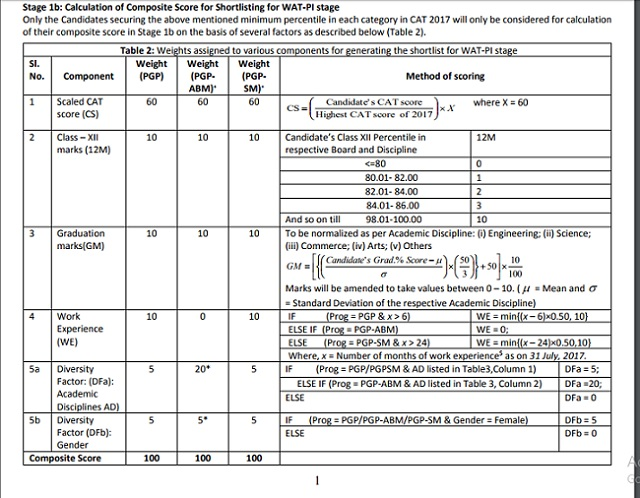
You can review the CAT Composite Score Calculator released by IIM Lucknow to understand how candidates are shortlisted for the WAT-PI round.
Raw Score Structure (Before Normalization)
Below is a simple table showing the raw score pattern. This helps students know how original marks are formed before the CAT normalization process is applied.
|
Raw Score Structure |
|||
|
Question Type |
Correct Answer |
Wrong Answer |
Unattempted |
|
MCQ |
+3 |
−1 |
0 |
|
TITA |
+3 |
0 |
0 |
Raw marks form the base of the CAT normalization formula and scaled scores.
Two-Step Normalization Process
The two-step method changes raw scores into scaled scores. This ensures equal scoring across all slots. This method is scientific and follows statistical rules.
Step 1: Slot Normalization
In this step, scores from each slot are compared to the past exam performance. This helps identify the average difficulty of each shift. Using these values, the exam authority uses the CAT normalization formula to adjust the marks.
The formula usually includes:
-
Mean (average) score of the slot
-
Standard deviation of the slot
-
Average performance of all shifts combined
This creates a fair scaled score using what many refer to as a CAT scaled score calculator method.
Step 2: Final Scaled Score Preparation
After slot-wise scaling, the scores are mapped to a common scale. These become final scaled scores. They are used for percentile calculation and later for the final admission list.
Students can also use a normalised CAT score calculator online to understand how scaled results may look. However, real scaling depends on official calculations.
Section Wise Normalization
After slot-wise normalization, the sections (like VARC, DILR, QA) may also be adjusted. This means each section gets fair scaling before combining. This step ensures that difficulty differences in sections are also handled. It avoids unfair advantage if one slot had an easier section
From Scaled Score to Percentile
Percentile shows the rank of a student among all test takers. It is not the same as marks. Even a small change in marks can lead to a large change in percentile. The process uses scaled scores from the CAT normalization process and arranges them from highest to lowest. Then the percentile is calculated based on the number of students scoring equal or below that value.
Students often compare CAT score vs percentile to predict their chances. Higher scaled marks give higher percentiles. Even two extra marks can change the rank in a large exam like CAT.
|
From Scaled Score to Percentile |
|
|
Scaled Score |
Expected Percentile |
|
110+ |
99+ |
|
90–100 |
95–98 |
|
70–85 |
85–94 |
|
50–70 |
70–84 |
This is only a general example. Actual percentiles depend on the final scaled scores after the CAT normalization process.
Impact of Normalization on Final CAT Score
The CAT normalization process plays a major role in the final result. It decides the scaled scores and percentiles. These are used for:
-
Shortlisting for IIMs
-
Shortlisting for top MBA colleges
-
Forming the composite score
Everything depends on the scaled marks created through the CAT normalization formula. The normalization helps all students compete fairly, even if they get a tough slot.
Colleges also use a CAT composite score calculator to prepare final merit lists. They combine scaled score, academic record, work experience, gender diversity marks, and personal interview marks to calculate the composite score.
Students can check how to calculate composite score in CAT by following college-specific weightage charts. Each institute uses different weightage for academic scores and written exams. This makes the composite score different from percentile
CAT Normalization Process FAQs
What is the CAT normalization process ?
How does CAT score normalization work?
What is the CAT normalization formula used for?
How can I use a CAT scaled score calculator?