
MBA in Artificial Intelligence: Eligibility, Fees, Admission & Colleges

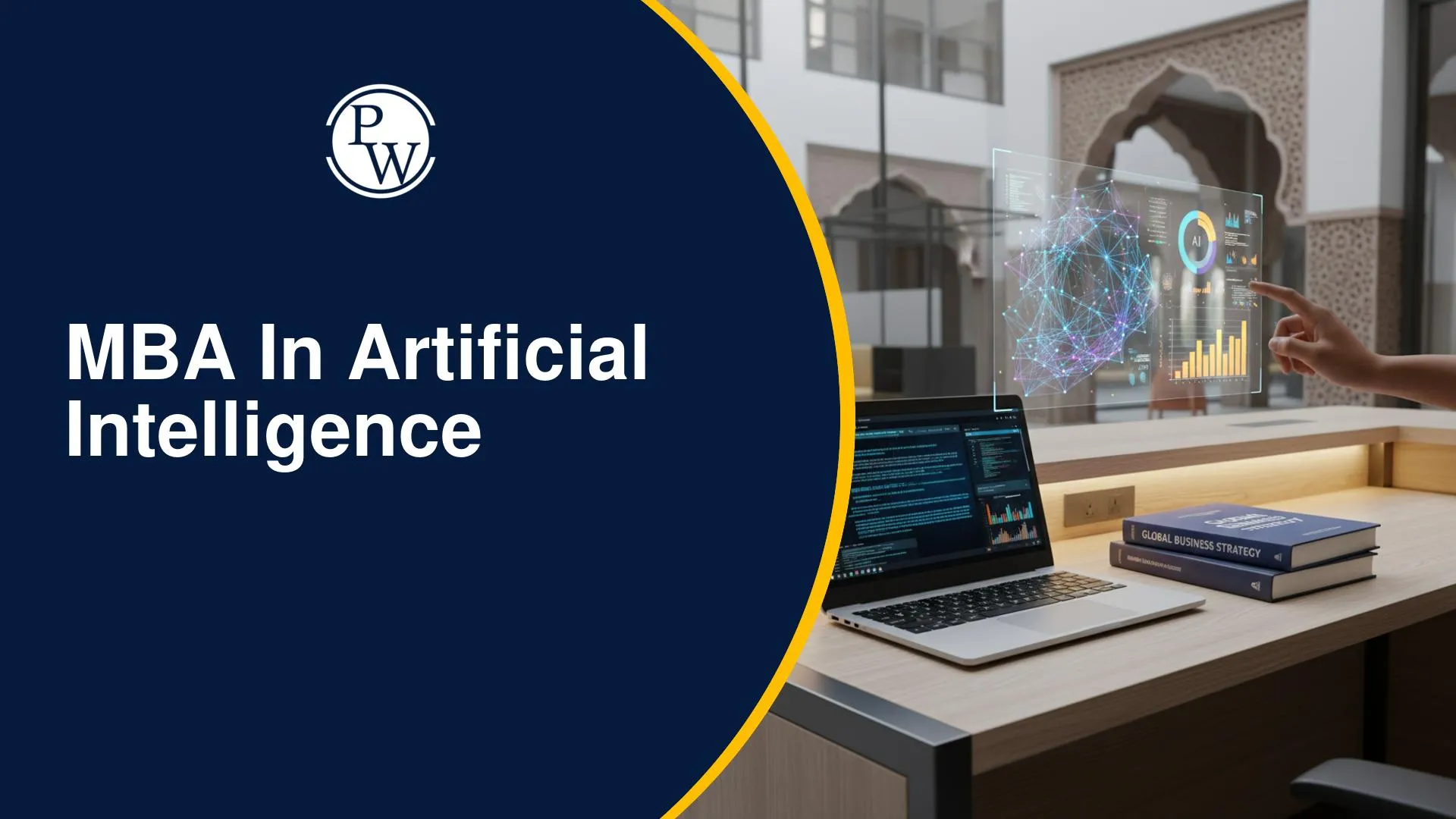
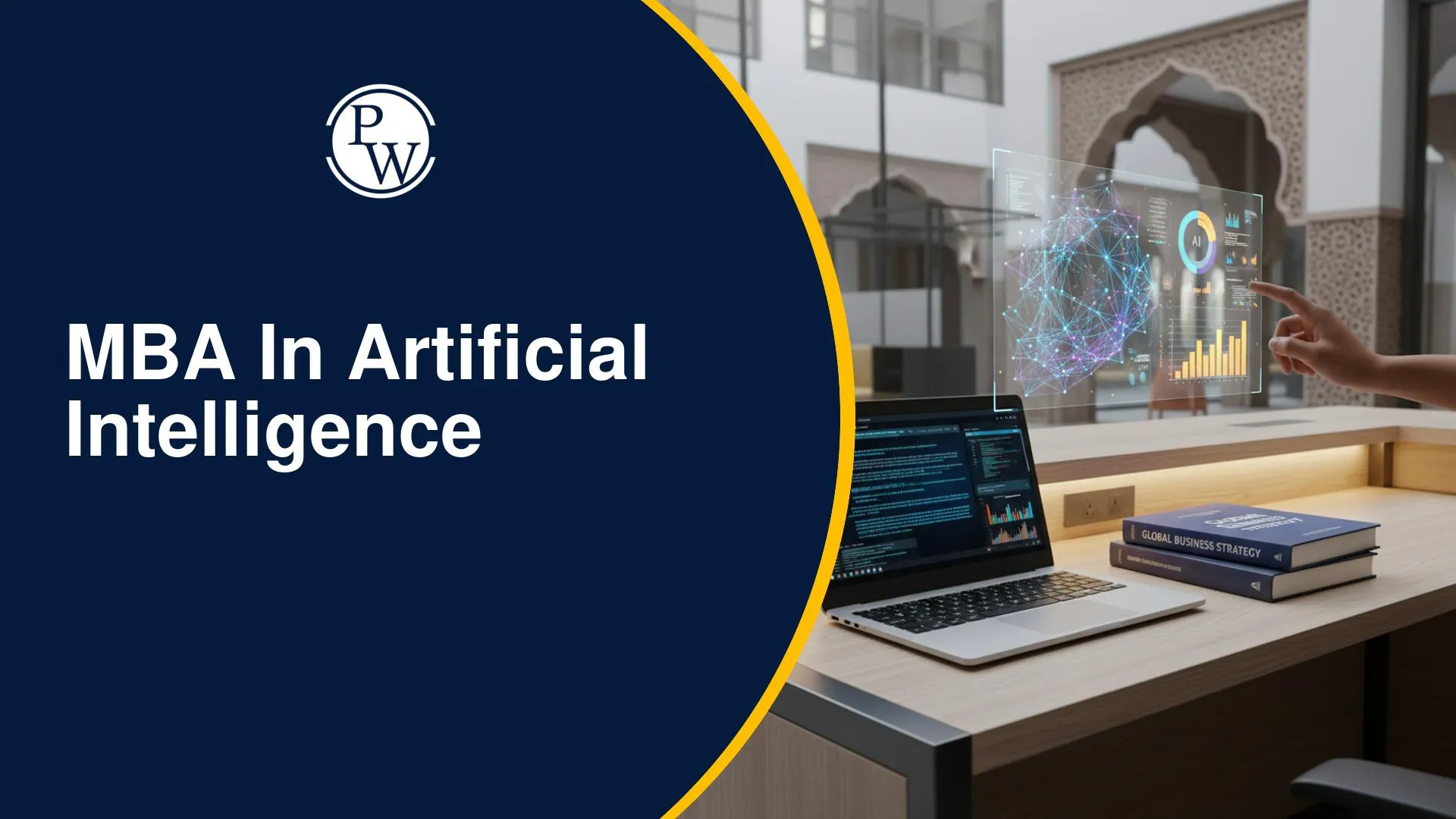
An MBA in Artificial Intelligence is a specialized management program that combines business leadership with AI technologies. Students learn machine learning applications, data analytics, automation, and strategic decision-making to manage AI-driven organizations across industries.
The program typically requires a bachelor’s degree and entrance exam scores such as CAT or GMAT. The syllabus includes core MBA subjects and AI-focused modules. Graduates can pursue roles in AI product management, business analytics, consulting, and digital transformation leadership.
MBA in Artificial Intelligence
The demand for leaders who understand both technology and business strategy is increasing rapidly. The MBA in Artificial Intelligence course is a postgraduate management program designed for students who want to combine business leadership with artificial intelligence technologies.
Unlike a traditional MBA, this program focuses on understanding AI applications in business environments. During an MBA in Artificial Intelligence, students learn how artificial intelligence tools can optimize business processes, predict market trends, and automate complex operations.
Key learning areas in an MBA AI program include:
-
Artificial Intelligence fundamentals
-
Business analytics and data-driven decision making
-
AI-based product management
-
Machine learning applications in business
-
Digital transformation strategies
-
AI ethics and governance
Because organizations increasingly rely on data and automation, an MBA in Artificial Intelligence helps students become strategic leaders who can bridge the gap between technology teams and business decision-makers.
MBA Artificial Intelligence Eligibility
Students interested in pursuing an MBA in Artificial Intelligence must satisfy certain academic requirements. The MBA artificial intelligence eligibility criteria may vary slightly between universities, but most institutions follow similar standards.
|
Criteria |
Details |
|
Educational Qualification |
Bachelor’s degree in any discipline from a recognized university |
|
Minimum Marks |
Usually 50% aggregate (45% for reserved categories in some institutes) |
|
Entrance Exams |
CAT, GMAT, MAT, XAT or institute-specific tests |
|
Work Experience |
Optional but preferred in some colleges |
Although engineering or technology backgrounds can be beneficial, many universities allow students from commerce, business, or humanities backgrounds to pursue an MBA in Artificial Intelligence.
MBA Artificial Intelligence Admission 2026
The MBA Artificial Intelligence Admission 2026 process will generally follow the standard MBA admission structure used by most business schools.
Students planning for MBA in Artificial Intelligence programs in 2026 should begin preparation early, especially for management entrance examinations.
Typical Admission Process
-
Entrance Exam Preparation – Candidates appear for exams such as CAT, GMAT, or other management tests.
-
Application Submission – Apply to universities offering MBA AI programs.
-
Shortlisting – Institutes shortlist candidates based on entrance exam scores and academic performance.
-
Interview / Group Discussion – Many colleges conduct personal interviews or GD rounds.
-
Final Selection – Admission offers are made based on overall performance.
Because the popularity of MBA in Artificial Intelligence programs is growing quickly, competition for admission is expected to increase in the coming years.
MBA Artificial Intelligence Syllabus
The MBA Artificial Intelligence syllabus combines core MBA subjects with AI-focused technology modules. The curriculum is usually divided into four semesters over two years.
Core MBA Subjects
-
Principles of Management
-
Financial Management
-
Marketing Management
-
Business Strategy
-
Organizational Behavior
-
Operations Management
AI & Technology Subjects
-
Introduction to Artificial Intelligence
-
Machine Learning for Business
-
Data Analytics and Visualization
-
AI Product Management
-
Automation and Intelligent Systems
-
AI Ethics and Governance
During an MBA in Artificial Intelligence, students also work on real-world business projects involving AI implementation, predictive analytics, and digital transformation strategies.
Many universities also include internships and industry projects so that students can gain practical exposure before graduation.
MBA Artificial Intelligence Fees
The mba artificial intelligence fees depend on the university, country, and type of institution offering the program.
Below is an approximate fee structure students can expect.
|
Type of Institution |
Average Fees (Total Program) |
|
Indian Private Universities |
₹6,00,000 – ₹18,00,000 |
|
Government Institutes |
₹2,00,000 – ₹6,00,000 |
|
International Universities |
₹20,00,000 – ₹50,00,000 |
Scholarships, financial aid, and education loans are available in many institutions offering an MBA in Artificial Intelligence, which helps reduce the financial burden for students.
MBA Artificial Intelligence Colleges
Several universities around the world now offer specialized MBA programs in AI and data-driven leadership. When choosing mba artificial intelligence colleges, students should consider factors such as faculty expertise, industry partnerships, internship opportunities, and placement records.
Factors to Consider When Selecting Colleges
-
AI-focused curriculum and specialization options
-
Industry collaboration with technology companies
-
Internship and placement opportunities
-
Availability of AI labs and research facilities
-
Alumni network and global reputation
Many leading business schools are introducing MBA in Artificial Intelligence programs as industries rapidly adopt AI technologies. These programs are particularly attractive for students interested in careers such as:
-
AI Product Manager
-
Business Intelligence Manager
-
Data Strategy Consultant
-
Digital Transformation Leader
-
AI Business Analyst
Below are some well-known institutions that provide programs related to MBA in Artificial Intelligence or AI-focused management specializations.
|
College / University |
Country |
Program Focus |
|
Massachusetts Institute of Technology |
USA |
MBA with AI, analytics, and digital innovation focus |
|
Carnegie Mellon University |
USA |
MBA with Artificial Intelligence and business analytics integration |
|
University of Oxford |
UK |
MBA with AI, data analytics, and technology strategy modules |
|
National University of Singapore |
Singapore |
MBA specializing in analytics and AI-driven business decisions |
|
Indian Institute of Management Bangalore |
India |
MBA with analytics, AI applications, and digital business strategy |
|
Indian School of Business |
India |
Management programs focusing on AI, data science, and technology leadership |
Graduates of an MBA in Artificial Intelligence can work across industries including finance, healthcare, e-commerce, consulting, and technology.
Why MBA in Artificial Intelligence is a Future-Proof Career?
Artificial intelligence is transforming industries across the world. Companies increasingly require professionals who understand both AI technology and business strategy.
An MBA in Artificial Intelligence equips students with leadership, analytics, and strategic thinking skills required in modern organizations. As businesses become more data-driven, professionals with expertise in AI management will be in high demand.
For students interested in future-focused careers, pursuing an MBA in Artificial Intelligence can open opportunities in global companies, technology startups, and consulting firms.
MBA in Artificial Intelligence FAQs
What is an MBA in Artificial Intelligence?
Who is eligible for MBA in Artificial Intelligence?
What career opportunities are available after MBA in Artificial Intelligence?