







Intravenous Fluids: Know How Does It Help Addressing Health Issues
Intravenous fluids are liquids delivered directly into a vein to give patients essential hydration, electrolytes, and medications. Know the different types of Intravenous (IV) fluids and how they help address health issues here.
 Nivedita Dar29 Apr, 2024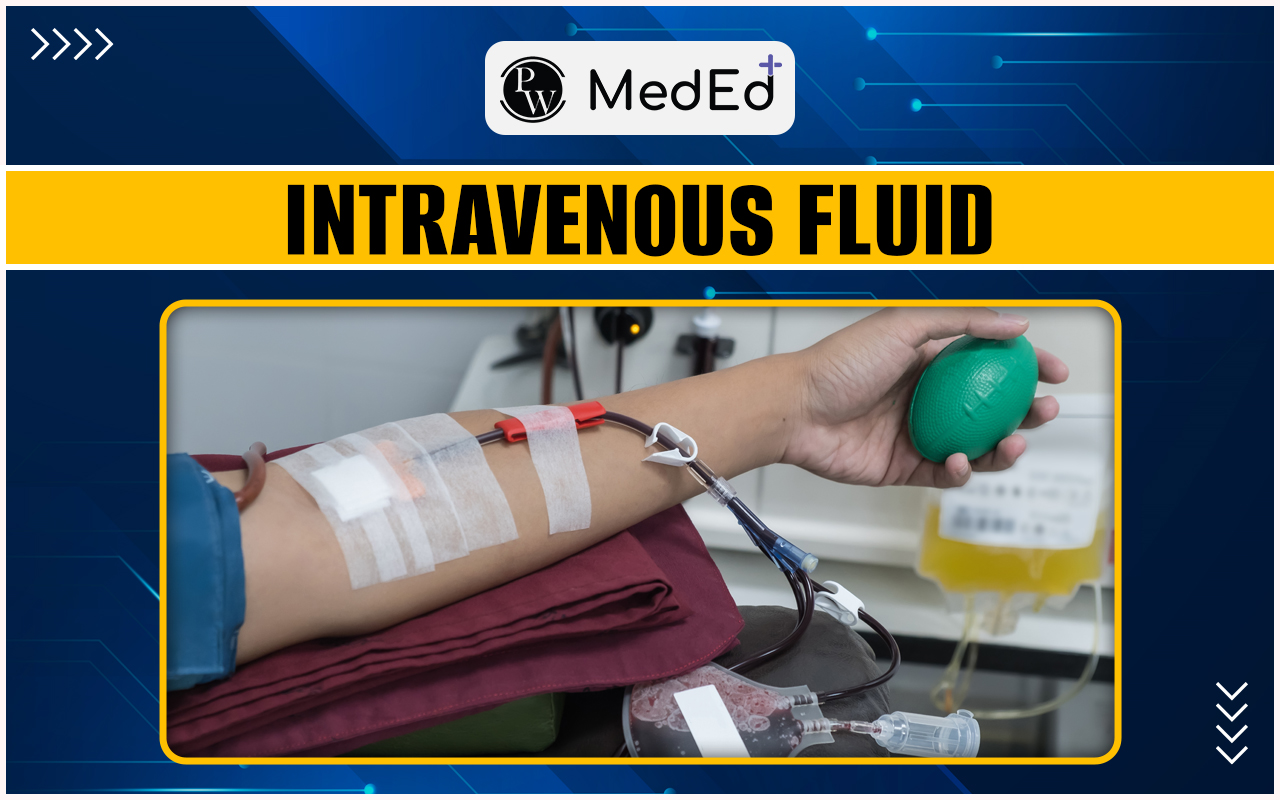
Intravenous (IV) fluids are specially prepared liquids administered by injecting into the vein as a part of treatment to address various symptoms and medical conditions. People of all ages who are ill, injured, dehydrated, or having surgery can receive them.
The risk of problems is minimal with intravenous rehydration, a popular, easy, and safe method. Intravenous fluid therapy is a quick approach to hydrating your body and giving your cells the vital vitamins and minerals required for recovery from illnesses.What are IV Fluids?
Intravenous fluids are injected into the bloodstream through the vein to maximize the absorption of the essential components and quickly restore the body's fluid balance. An IV fluid contains vitamins, minerals, and drugs that aid in the body's ability to fight off symptoms and recover more quickly. The body can benefit from these liquids by hydrating more quickly and regaining any electrolytes lost to dehydration or prolonged illness. Different IV fluids with other functions are administered based on the patient's health conditions.How Do IV Fluids Help Addressing Health Issues?
Intravenous fluids are part of IV therapy to help your body rehydrate and energize the organs to function. Saline solution, vitamins, and electrolytes are delivered straight into your bloodstream by an intravenous drip, avoiding the digestive system. These liquids are entirely absorbed in the body, and the cells receive nutrients instantly, which is far more effective than taking fluids, medicines, or supplements orally.Types of Intravenous Fluids
Healthcare professionals can use different IV liquids depending on their adaptability and efficiency. IV fluids are mainly of two types: colloids and crystalloids. The fluid's particles in a crystalloid solution are so small that they can pass through the semi-permeable cell membranes. The molecules in colloid solutions are larger, so they don’t pass through the membranes and remain in the circulation system instead of entering the cells. The doctors will determine which type is best for an individual based on treatment requirements.Crystalloids Intravenous Fluids
Crystalloid solutions are widely used because they are commonly available, inexpensive, shelf-stable, and allergy-free. They are divided into three types based on their tonicity, or the degree to which they can enter and exit cells by osmosis.- Hypotonic Fluids : These solutions include fewer solutes than plasma. Hypotonic solutions are utilized when intracellular fluids need to be replaced, and cells become dehydrated.
- Hypertonic Fluids : They are more concentrated than plasma and induce fluids to transfer from the cells to the extracellular compartments. Hypertonic treatments are utilized when treating acute sodium deficits in the body.
- Isotonic Fluids: The solute content of these solutions is identical to that of blood plasma. They enlarge the intracellular and extracellular fluid gaps. Isotonic solutions are the most common fluids used in IV treatment.
Colloids Intravenous Fluids
Colloid solutions cause the blood plasma to swell because the particles are too big to fit inside the cells, making them perfect for those unable to tolerate high fluid intakes. Compared to crystalloid IVs, patients do not only require so many of these solutions, which are beneficial, especially for malnourished patients. Colloids are used to treat postoperative albumin loss, pancreatitis, shock, external burns, and peritonitis. The different types of colloidal IV solutions are as follows:- Albumin 2.5%
- Albumin 5%
- Low-molecular-weight dextran
- High-molecular-weight dextran
- Hetastarch
- Hispanic
The Most Commonly Used IV Fluids
IV fluid comes in various forms that can be applied to address specific situations. Some of the standard solutions used by medical attendants in a hospital or a specialty service include the following:- Normal saline is the most common isotonic solution, containing 0.9% NaCl. It's a comprehensive rehydrating material that works effectively for various health issues, including dehydration and sodium loss brought on by diseases.
- Half-normal Saline: It is a hypotonic solution containing 0.5% NaCl, which helps rehydrate patients who cannot take oral liquids because of sickness or other issues.
- Lactated Ringer’s: The main component of this solution is lactate, but it also contains sodium chloride, potassium, and calcium. It is very effective for diseases that result in elevated acid levels in the body and dehydration.
- Dextrose 5% in water : It functions as an isotonic solution when administered and later becomes hypotonic when the dextrose is absorbed. It can be helpful for patients suffering from low blood sugar levels.
The Use of Intravenous Fluids
The use of intravenous fluids is a means of delivering essential elements to the body without passing through the digestive system. IV fluids allow your body to quickly replenish lost fluids and electrolytes, enabling your physiological system to recover and function well. There can be different instances of IV therapy, which are mentioned below.- Treatment of an infection by administering antibiotics following dehydration symptoms resulting from a disease.
- Chemotherapy treatments for cancer employ an IV process to apply particular medications to the body.
- Someone experiencing diarrhea and vomiting can be given IV therapy to replenish liquids.
- It is given in cases of fluid loss due to excessive physical activity or extended sun exposure.
- If someone has burns or a severe wound, an IV process may be required.
- These fluids are administered as an after-surgery treatment, mainly when the patient is not eating or drinking for a long time.
Complications Related to Intravenous Fluids
Intravenous rehydration is a standard, easy, and safe procedure that can save your life and hasten your recovery. However, some complications can happen as an effect of IV therapy, as follows:- Vein collapse : In certain cases, a vein may collapse during needle insertion or prolonged use. Your healthcare professional will attempt to use a different vein if this occurs.
- Fluid overload : It happens if an excessive amount of fluid is administered quickly, causing breathing difficulties, elevated blood pressure, and headaches.
- Air embolism : If too much air gets into the vein during IV therapy, it can cause an air embolism. Although rare, it can have fatal results, among other adverse effects.
- Hematoma: It is the result of blood seeping into the surrounding tissues from a blood vessel. It appears to be a bruise that can typically fade within a few weeks.
- Infection: An infection could develop if the region where the needle is introduced isn't clean. Antibiotics are typically used to treat infections.
- Infiltration: Fluids may seep into the tissues surrounding the vein if the needle moves or becomes displaced.
- Phlebitis is the swelling in the vein, which is one of the most common after-effects. It is typically managed using a warm compress after removing the IV needle.
Intravenous Fluids FAQs
When is it not recommended to use IV fluid therapy?
If the patient has kidney problems, congestive heart failure, or an allergy to any of the constituents of IV solutions, such therapy is not advised.
What is a Myers cocktail?
It is a particular IV solution containing vitamins C, B12, B1, B2, B3, B5, B6, and B6, as well as calcium and magnesium
What are the dehydration signs that require an IV drip?
The signs of dehydration include fatigue, fast breathing, dryness in the mouth and lips, less urination, and dry skin.
How long do IV fluids remain in the body?
Your body retains infused fluids until you are fully hydrated. After that, your body will remove the extra fluid, such as urine.



Talk to a counsellorHave doubts? Our support team will be happy to assist you!


Check out these Related Articles









Join 15 Million students on the app today!
 Live & recorded classes available at easeDashboard for progress trackingMillions of practice questions at your fingertips


Free Learning Resources
PW Books
Notes (Class 10-12)
PW Study Materials
Notes (Class 6-9)
Ncert Solutions
Govt Exams
Our Other Websites
Class 6th to 12th Online Courses
Govt Job Exams Courses
UPSC Coaching
Defence Exam Coaching
Gate Exam Coaching
Other Exams
Know about Physics Wallah
Physics Wallah is an Indian edtech platform that provides accessible & comprehensive learning experiences to students from Class 6th to postgraduate level. We also provide extensive NCERT solutions, sample paper, NEET, JEE Mains, BITSAT previous year papers & more such resources to students. Physics Wallah also caters to over 3.5 million registered students and over 78 lakh+ Youtube subscribers with 4.8 rating on its app.
We Stand Out because
We provide students with intensive courses with India’s qualified & experienced faculties & mentors. PW strives to make the learning experience comprehensive and accessible for students of all sections of society. We believe in empowering every single student who couldn't dream of a good career in engineering and medical field earlier.
Our Key Focus Areas
Physics Wallah's main focus is to make the learning experience as economical as possible for all students. With our affordable courses like Lakshya, Udaan and Arjuna and many others, we have been able to provide a platform for lakhs of aspirants. From providing Chemistry, Maths, Physics formula to giving e-books of eminent authors like RD Sharma, RS Aggarwal and Lakhmir Singh, PW focuses on every single student's need for preparation.
What Makes Us Different
Physics Wallah strives to develop a comprehensive pedagogical structure for students, where they get a state-of-the-art learning experience with study material and resources. Apart from catering students preparing for JEE Mains and NEET, PW also provides study material for each state board like Uttar Pradesh, Bihar, and others
Copyright © 2026 Physicswallah Limited All rights reserved.