






Legionnaires Causes, Symptoms, Prevention, And Treatment
The Legionella bacteria is responsible for the severe respiratory illness known as legionnaires, which typically spreads through inhaling mist from contaminated water systems. Learn more about the causes, symptoms, diagnosis, prevention, and treatment process of Legionnaires’ disease here.
 Nivedita Dar11 Sept, 2024
Share
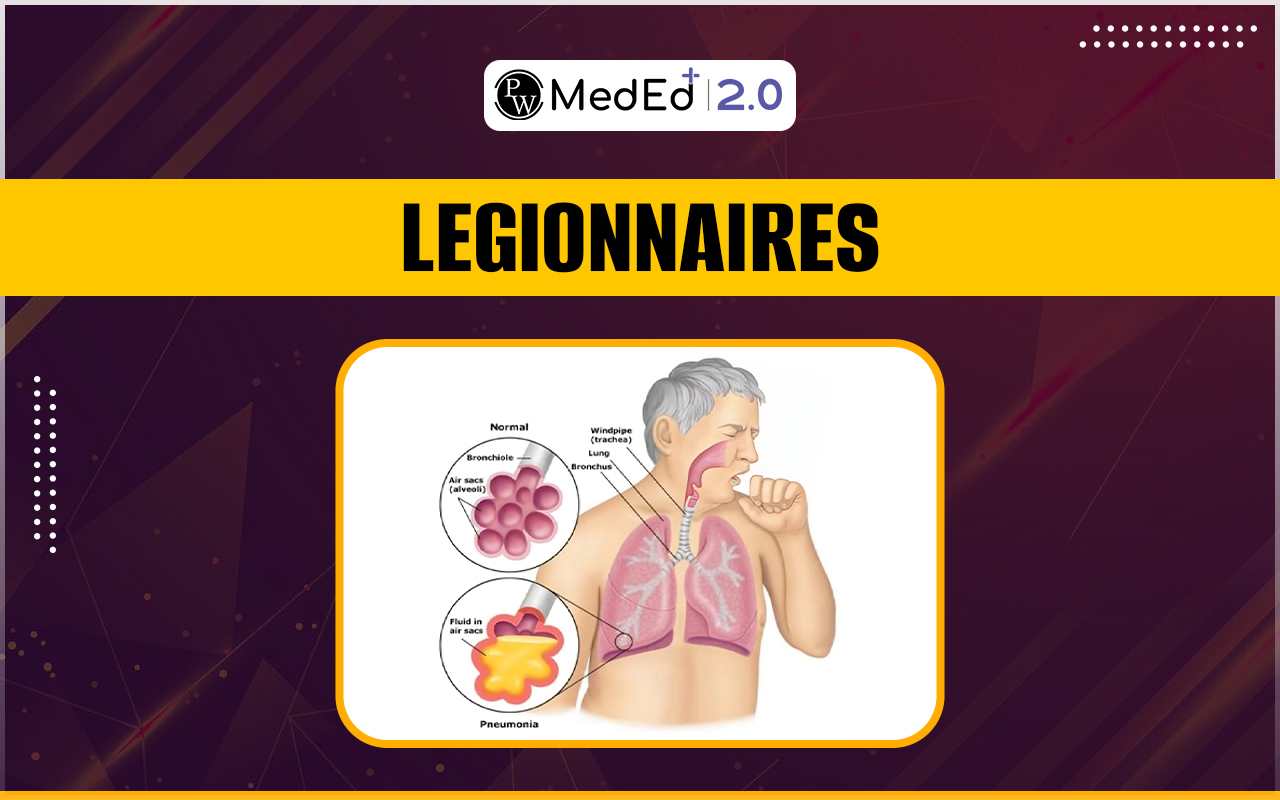
Legionnaires: Legionella bacteria cause Legionnaires' disease, a lung infection. It makes you sick with a high fever, cough, upset stomach, and confusion. One can catch Legionnaires' disease by breathing in tiny water droplets with the bacteria or getting contaminated water into your lungs.
Most people don't usually get Legionnaires' disease, even if infected with legionella bacteria, but some are at higher risk. This includes people over 50, smokers, people with weak immune systems due to conditions like HIV or diabetes, those having respiratory issues like COPD, and those who've had recent surgeries or organ transplants.What is Legionnaires Disease?
Legionnaires' disease, pronounced LEE-yuh-nares, is a form of pneumonia, a lung infection acquired by inhaling Legionella bacteria . Once inside the body, it can impact various organs, including the lungs, brain, and gastrointestinal tract. Additionally, Legionella bacteria can lead to Pontiac fever, a milder illness with flu-like symptoms. However, Legionnaires' disease itself can pose a significant threat to life if left untreated.What is the Difference Between Pneumonia and Legionnaires' Disease?
The table below outlines the main differences between Legionnaires' disease and pneumonia, highlighting their causes, symptoms, organ involvement, severity, and treatment.| Aspects | Legionnaires' Disease | Pneumonia |
| Cause | Legionella bacteria infection | Various pathogens (bacteria, viruses, and fungi) can cause it. |
| Common Symptoms | Fever, cough, diarrhoea, and confusion | Fever, cough, difficulty breathing |
| Other Organ Involvement | It can affect the lungs, brain, and gastrointestinal tract. | It primarily affects the lungs. |
| Severity | It can be life-threatening if left untreated. | Severity varies depending on the cause and individual case. |
| Treatment | A doctor prescribes antibiotics. | Treatment varies based on the underlying cause. |
Symptoms of Legionnaires
Exposure to Legionella causes Legionnaires' disease, which causes pneumonia-like symptoms within 2–14 days, along with possible neurological and gastrointestinal effects. Some of the other symptoms include the following:- Fever (often exceeding 104°F/40°C)
- Dry cough
- Shortness of breath (dyspnea)
- Diarrhea
- Muscle aches
- Headache
- Nausea
- Confusion
- Coughing up blood (hemoptysis)
- Stomach (abdominal) pain
Causes of Legionnaires
Drinking contaminated water or breathing in tiny water droplets carrying the bacteria usually leads to contracting Legionnaires' disease. This often happens in significant buildings like offices, hotels, hospitals, or cruise ships, where water systems aren't well-kept. Mist from various water sources is a common source of exposure.- Cooling towers and evaporative condensers
- Hot water tanks and heaters
- Hot tubs
- Decorative fountains
- Showerheads and sink faucets
- Supermarket produce misters
- Humidifiers
Risk Factors of the Legionnaires
Most people exposed to Legionella bacteria don't get sick; only about 5% develop Legionnaires' disease. The following factors indicate an increased risk of Legionnaires' disease:- Adults aged 50 and older.
- Current or former smokers.
- There are individuals with chronic lung conditions like emphysema or COPD.
- Individuals with weakened immune systems due to conditions such as HIV/AIDS, cancer, diabetes, kidney failure, or those taking immune-suppressing medications like chemotherapy or transplant recipients are at risk.
- Pontiac fever and Legionnaires' disease cannot spread from one person to another.
Diagnosis of Legionnaires
Doctors typically check for legionnaires' disease through urine and sputum tests. They might also take X-rays or CT scans of the chest. Below, we provide a detailed description of the tests:- Urine or sputum tests: The healthcare provider will ask you to provide a urine sample or cough up mucus into a tube. The healthcare provider then tests these samples to detect the presence of Legionella bacteria, thereby confirming the diagnosis of Legionnaires' disease.
- Blood tests: A needle will draw a blood sample from your arm. This blood sample is analyzed for antibodies your immune system produces in response to a Legionella infection. Additionally, blood tests can check how well your organs function and provide information for monitoring your overall health during the illness.
- Imaging (chest X-ray or CT scan): The imaging techniques allow your healthcare provider to visualize the internal structures of your lungs. They will look for abnormalities, such as inflammation or pneumonia, which are typical features of Legionnaires' disease.
- Bronchoscopy: This procedure involves inserting a thin, flexible tube (bronchoscope) with a light and camera through your mouth or nose and into your lungs. This lets your provider directly visualize the airways and collect lung tissue or fluid samples for testing.
- Thoracentesis: If fluid builds up around your lungs (pleural effusion), your provider may perform a thoracentesis. During this procedure, your provider inserts a needle through the chest wall into the pleural space to drain the fluid. The collected fluid is then tested for Legionella bacteria, aiding in diagnosing Legionnaires' disease and guiding treatment decisions.
Treatment of Legionnaires
Antibiotics, administered via a needle in your vein or as a pill you swallow, treat Legionnaires' disease. If you're having difficulty breathing, your doctor may provide treatments to help you breathe better. Your doctor may require you to remain in the hospital during your treatment. The treatment includes the following medicines:- Azithromycin is an antibiotic that stops bacterial growth and helps your body fight off infection.
- Doctors frequently prescribe Levofloxacin, Moxifloxacin, or Ciprofloxacin to fight the infection.
- Tetracycline, Doxycycline, or Minocycline medicines work by interfering with the bacteria's ability to produce proteins necessary for survival.
- Rifampin works by inhibiting bacterial RNA synthesis, ultimately leading to bacterial death.
Complications of Legionnaires
Legionnaires’ disease can lead to severe complications that endanger your organs or muscles. These can include:- Respiratory failure: When your lungs can't get enough oxygen into your blood, you might need a machine to help you breathe (mechanical ventilation).
- Acute kidney injury (AKI): If your kidneys stop working, waste can build up in your blood. Treatment might involve medications or a machine to filter your blood (dialysis).
- Encephalopathy: This can cause confusion, balance problems, and trouble speaking.
- Empyema: It's when pockets of pus form around your lungs. Treatment may involve a chest tube to drain the pus.
- Inflammation of the heart: Bacterial infections can cause inflammation and are sometimes treated with medications.
- Rhabdomyolysis: This condition causes muscle breakdown, and treatment involves flushing toxins out of your body.
Prevention of Legionnaires
To lower your chances of getting Legionnaires’ disease, it's essential to keep water and ventilation systems clean and disinfected, especially in buildings . Maintain the cleanliness of home shower heads, faucets, hot tubs, and humidifiers. Also, avoid using plain water instead of windshield wiper fluid in your car. These simple steps can help reduce the risk of Legionnaires’ disease by preventing the growth and spread of bacteria in water systems. Although treatment is available for legionnaires' disease, it can also be severe and even life-threatening. Early detection and treatment can make a big difference in recovery. Your healthcare provider can check your symptoms and recommend appropriate treatment to help you improve quickly. It's better to seek medical help to ensure the best outcome for your health. Download the PW MedEd app and prepare for your upcoming medical exams such as the NEET PG, FMGE, INI-CET, and MBBS Prof exams from top-notch medical experts.Legionnaires FAQs
What is the best treatment for Legionnaires?
Antibiotics are required for treatment, and in most cases, they result in successful outcomes.
What kind of doctor treats Legionnaires?
A pulmonologist who specializes in lung diseases typically treats legionnaires.
Is Legionnaires disease permanent?
Even after a successful diagnosis and treatment, the patient may experience lifelong symptoms.
What temperature kills the legionella?
At a temperature of 158 degrees Fahrenheit (70 degrees Celsius), Ans. Legionella will die immediately.


Talk to a counsellorHave doubts? Our support team will be happy to assist you!


Check out these Related Articles










Join 15 Million students on the app today!
 Live & recorded classes available at easeDashboard for progress trackingMillions of practice questions at your fingertips


Free Learning Resources
PW Books
Notes (Class 10-12)
PW Study Materials
Notes (Class 6-9)
Ncert Solutions
Govt Exams
Class 6th to 12th Online Courses
Govt Job Exams Courses
UPSC Coaching
Defence Exam Coaching
Gate Exam Coaching
Other Exams
Know about Physics Wallah
Physics Wallah is an Indian edtech platform that provides accessible & comprehensive learning experiences to students from Class 6th to postgraduate level. We also provide extensive NCERT solutions, sample paper, NEET, JEE Mains, BITSAT previous year papers & more such resources to students. Physics Wallah also caters to over 3.5 million registered students and over 78 lakh+ Youtube subscribers with 4.8 rating on its app.
We Stand Out because
We provide students with intensive courses with India’s qualified & experienced faculties & mentors. PW strives to make the learning experience comprehensive and accessible for students of all sections of society. We believe in empowering every single student who couldn't dream of a good career in engineering and medical field earlier.
Our Key Focus Areas
Physics Wallah's main focus is to make the learning experience as economical as possible for all students. With our affordable courses like Lakshya, Udaan and Arjuna and many others, we have been able to provide a platform for lakhs of aspirants. From providing Chemistry, Maths, Physics formula to giving e-books of eminent authors like RD Sharma, RS Aggarwal and Lakhmir Singh, PW focuses on every single student's need for preparation.
What Makes Us Different
Physics Wallah strives to develop a comprehensive pedagogical structure for students, where they get a state-of-the-art learning experience with study material and resources. Apart from catering students preparing for JEE Mains and NEET, PW also provides study material for each state board like Uttar Pradesh, Bihar, and others
Copyright © 2026 Physicswallah Limited All rights reserved.