Types of Scabies: Meaning, Causes, Symptoms, Treatment
Types of Scabies are caused by tiny mites that burrow into the skin, leading to itching, rashes, and burrows. It spreads through close contact, shared clothes, or bedding. Symptoms include night-time itching, red bumps, and skin damage. Clinical Presentations and Other classical lesions help in diagnosis. Treatment includes creams, oral medicine, and hygiene care.

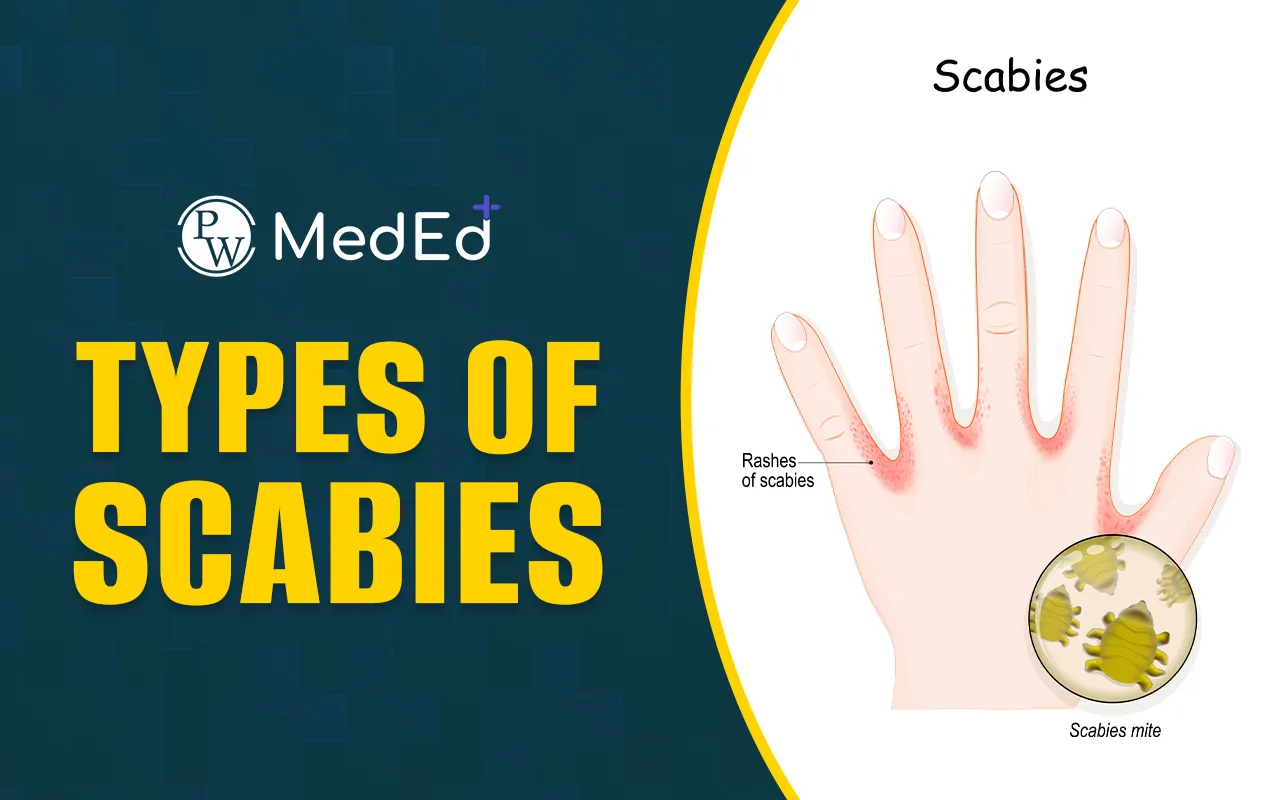
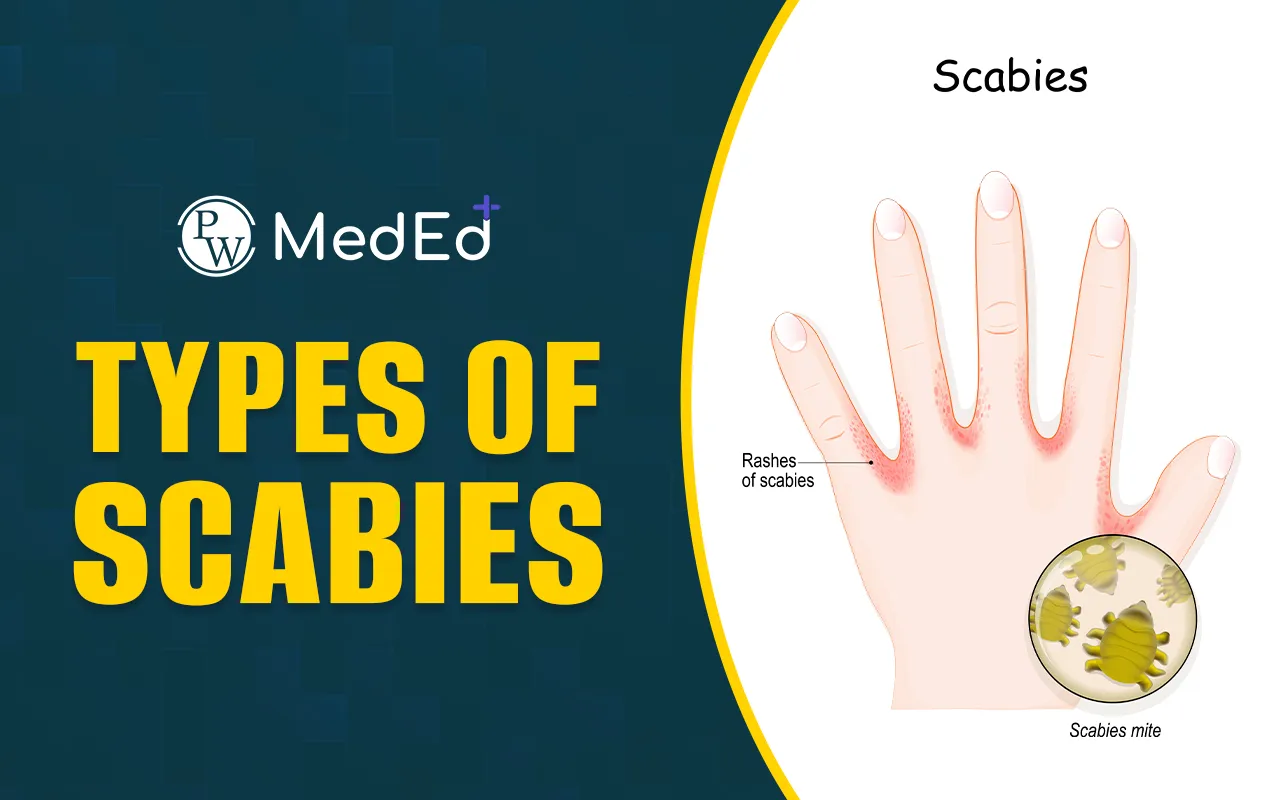
Types of Scabies: Scabies is a skin condition that causes itching and rashes. It happens when tiny mites enter the upper layer of the skin. These mites cannot be seen easily, but they create small tracks under the skin.
The condition spreads through close contact. It is common in families, schools, and areas where people live close together. Many people experience this condition at least once in life. Understanding the condition helps in early care and prevents further spread.
Below, it explains the Types of Scabies, its causes, symptoms, and treatment in simple language. The focus is to give clear and easy information that helps students learn the topic better.
Also Read - Necrotizing Enterocolitis
What is Scabies?
Scabies is caused by a small mite called Sarcoptes scabiei var hominis. These mites enter the top layer of the skin and create small burrows. These burrows look like thin, wavy lines. The mites lay eggs inside the burrows. When the eggs hatch, new mites continue the cycle. This leads to itching and rashes on different parts of the body.
Scabies spreads easily when people share bedding, clothes, or have direct skin contact. It does not enter the blood. It stays only on the upper layers of the skin. Scabies in humans is different from the condition seen in animals, as animal mites cannot live long on human skin.
Types of Scabies
There are several Types of Scabies seen in different people. Each type looks a little different and needs proper care to control the infestation. Below are some types of scabies:
Crusted Scabies
Crusted Scabies is a severe form. It is seen in people who cannot scratch due to certain conditions. Thick crusts form on the skin because many mites gather in one area. This type needs both oral and topical care.
Infantile Scabies
Infantile Scabies affects infants. The face, palms, and soles may show rashes. Infants cannot scratch properly, so tiny fluid-filled bumps may appear.
Nodular Scabies
Nodular Scabies causes small nodules on the skin. These are usually found in the armpit and groin area. These nodules appear due to a delayed skin reaction.
Animal Scabies
Animal Scabies does not show burrows. It occurs after contact with mites that live on animals. These mites do not survive long on humans, but they may cause temporary rashes.
Genital Scabies
Genital Scabies affects the private parts. It needs proper diagnosis because the symptoms may look similar to other conditions found in this region.
Cause of Sacbies
The cause of Scabies is a tiny mite that enters the skin. The female mite makes a small tunnel in the top skin layers and lays eggs inside it. These eggs grow into larvae, then nymphs, and then adult mites. These mites continue to spread on the skin surface.
1. Close contact with infected skin
Scabies spreads when your skin touches the skin of a person who already has the mites. This happens during hugging, holding hands, or staying close for a long time. The mites move from one person’s skin to another and start living there.
2. Sharing bedding or personal items
You can get Scabies if you use the same bedsheets, blankets, towels, or clothes as a person who has the mites. The mites stay on these items for some time, and when someone else uses them, the mites move to their skin.
3. Living in crowded spaces
When many people live or stay in a small area, the chances of skin contact become higher. It becomes easier for mites to pass from one person to another. This is why Scabies spreads quickly in hostels, classrooms, families, or small houses.
4. Weak immune strength
Some people have low body resistance. This may happen due to age, illness, or certain medical conditions. When the immune strength is low, the body cannot control the mite infestation easily, and the mites multiply faster. This can make the infestation more noticeable.
5. Poor hygiene habits
If a person does not keep their skin clean or does not wash clothes and bedding regularly, mites can survive on these surfaces for a longer time. This increases the chance of getting Scabies or spreading it to others.
Symptoms of Scabies
Symptoms appear after some weeks when the skin reacts to the mites. A person may notice itching, rashes, or burrows on the skin. Below are the simple symptoms seen in Scabies:
- Itching that becomes stronger at night
- Small red bumps on the skin
- Burrows that look like thin, wavy lines
- Rashes in finger gaps, wrists, chest, armpits, and around the belly
- Itching in family members or close contacts
- Skin damage due to scratching
The Clinical Presentations include itchy papules and scratch marks. These Clinical Presentations are important because they help identify Scabies early.
Some people may also show Other classical lesions, such as burrows found between the fingers and on the wrists. These Other classical lesions give a clear sign of mite activity under the skin.
Treatment of Scabies
Treatment helps remove the mites from the skin. Even after treatment, itching may stay for some days because the skin takes time to heal. Treatment includes applying creams, taking oral medicines when needed, and caring for clothes and bedding. Repeat application is needed because the medicine kills mites but not eggs.
| Treatment of Scabie | |
| Treatment Method | Description |
| Topical Creams | Creams are applied to the whole body from the neck to the feet. They stay for several hours before washing. |
| Oral Medicine | Given that topical medicine cannot be used, or when the condition is severe. |
| Clothes and Bedding Care | Wash clothes, towels, and bedsheets in warm water and dry them in sunlight. |
| Treat Family Members | All family members should take the treatment at the same time. |
| Itching Relief | Mild medicines may help reduce itching after treatment. |
Types of Scabies FAQs
How do I know if I have Scabies?
Can Scabies spread from one person to another?
How long does Scabies last after treatment?