








Best 5 YouTube Videos on Anatomy of Flowering Plants Botany for NEET by PW
 Mehjabeen Hussain21 Oct, 2026
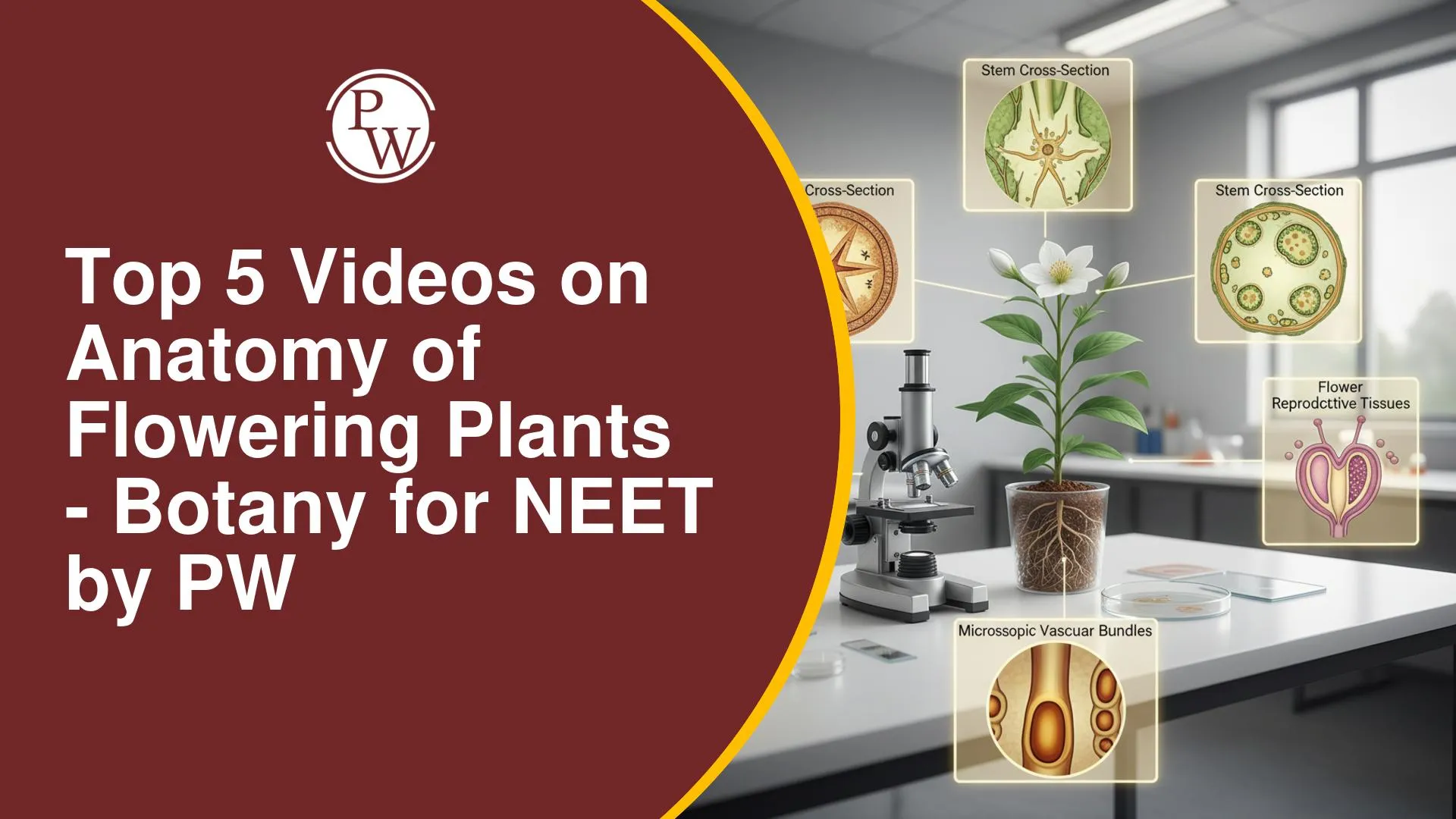
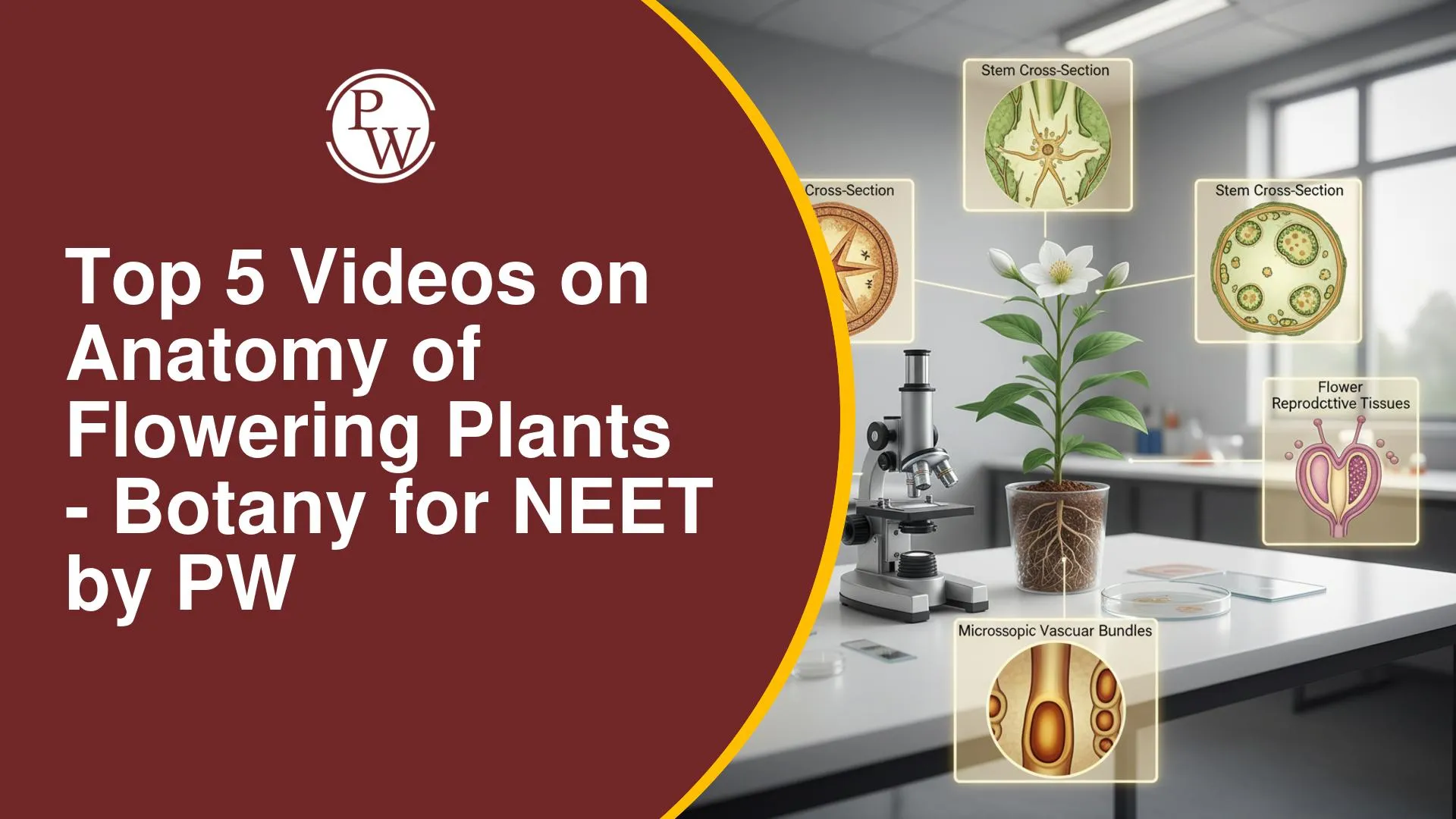
Plant anatomy involves understanding how different tissues form the internal structure of roots, stems, and leaves. You need to recognise tissue features, distinguish their roles in growth and transport, and understand how anatomical structures differ between dicot and monocot plants. Terms such as stele, vascular tissue system, and secondary growth add to the chapter’s demands, particularly when a question asks you to identify a specific feature or compare two structures.
PW’s YouTube videos offer different ways to study Anatomy of Flowering Plants, from detailed NCERT explanations to complete chapter reviews and memory-based revision. You can revisit tissue characteristics, study anatomical comparisons, and use question practice to check your understanding. Whether you are reviewing the chapter after class or preparing for a mock test, these lessons can help you organise key concepts, retain important details, and approach NEET Botany questions with greater accuracy.
Video 1: Cover the Complete Chapter with Concepts and PYQs
Need to revise the entire chapter before attempting Biology questions? This complete lesson covers meristematic tissues, simple and complex permanent tissues, and plant tissue systems. You also study the anatomy of dicot and monocot roots, stems, and leaves, with attention to their structural differences. Previous-year question practice connects the concepts with the types of questions asked in NEET. Use this video for a full chapter recap when you want to review the major topics together and strengthen your understanding before moving on to question practice.
Watch Now:
Video 2: Revise Tissue Types and Dicot–Monocot Anatomy in One Shot
Find it difficult to remember tissue names and distinguish their functions? This one-shot lesson begins with plant anatomy, tissues, and tissue systems before covering simple permanent tissues, xylem, phloem, protoxylem, and metaxylem. It also explains epidermal, ground, and vascular tissue systems and compares dicot and monocot roots, stems, and leaves. A chapter summary supports revision of the main concepts. Watch this lesson after your first round of study to revisit important terms and improve accuracy in questions involving tissue features and plant anatomy.
Watch Now:
Video 3: Assess Your Plant Anatomy Concepts with Memory Tricks and Tissue Comparisons
Assess your understanding of plant anatomy through a one-shot lesson covering key concepts and important tissue features. The video explains the difference between plant morphology and anatomy, plant growth and regeneration in grasses, and the characteristics of meristematic, simple permanent, and complex permanent tissues. You also revisit tissue systems and compare the anatomy of dicot and monocot roots, stems, and leaves. Memory tricks help you recall important facts and distinguish between similar structures. Use this lesson after studying the chapter to check your understanding, revise difficult concepts, and prepare for NEET Botany questions.
Watch Now:
Video 4: Strengthen NCERT Recall with Line-by-Line Anatomy Revision
Do you find it difficult to remember tissue features and distinguish the anatomy of dicot and monocot roots, stems, and leaves when solving NEET questions? This line-by-line lesson takes you through the Anatomy of Flowering Plants chapter, covering meristematic, permanent, simple, and complex permanent tissues, along with xylem, primary xylem, phloem, and tissue systems. You also study the stele and the internal structures of roots, stems, and leaves. The detailed NCERT-based explanations help you understand concepts in context, recall important terms, and prepare for statement-based questions in NEET Botany.
Watch Now:
Video 5: Revise ANATOMY OF FLOWERING PLANTS in 54 Minutes
Short on time but need to revisit the basics of plant anatomy? This 54-minute lesson introduces plant internal organisation, organs, and tissues before explaining meristematic tissues and primary and secondary growth. You learn about apical, intercalary, and lateral meristems, followed by parenchyma, collenchyma, and sclerenchyma. Their structures, cell-wall features, living states, and functions—including storage, support, and secretion—help you understand how plant tissues differ. Use this lesson for a quick recap of tissue types and growth concepts before attempting practice questions.
Watch Now:
Your preparation for Anatomy of Flowering Plants becomes more effective when you understand how tissue structure relates to function and can distinguish the anatomy of different plant organs. PW’s videos offer several ways to work on the chapter, from complete concept explanations and NCERT line-by-line teaching to memory tricks, PYQ practice, and short revision lessons. Choose a full-chapter video if you need to revisit the major concepts, or focus on NCERT details and tissue comparisons when those areas need more attention. Regular revision and question practice can help you retain important facts, improve accuracy, and prepare more confidently for NEET Botany.


Have questions about your prep?
Our experts can answer all your questions





 Live & recorded classes available at easeDashboard for progress trackingLakhs of practice questions


