
Body Fluids and Circulation NEET Mind Maps, Download PDF
Body Fluids and Circulation NEET Mind Maps help students revise blood, lymph, blood groups, heart structure, cardiac cycle, and circulation in a visual format. Physics Wallah mind maps support quick revision, concept retention, diagram practice, and effective NEET preparation when used alongside NCERT and PYQs.

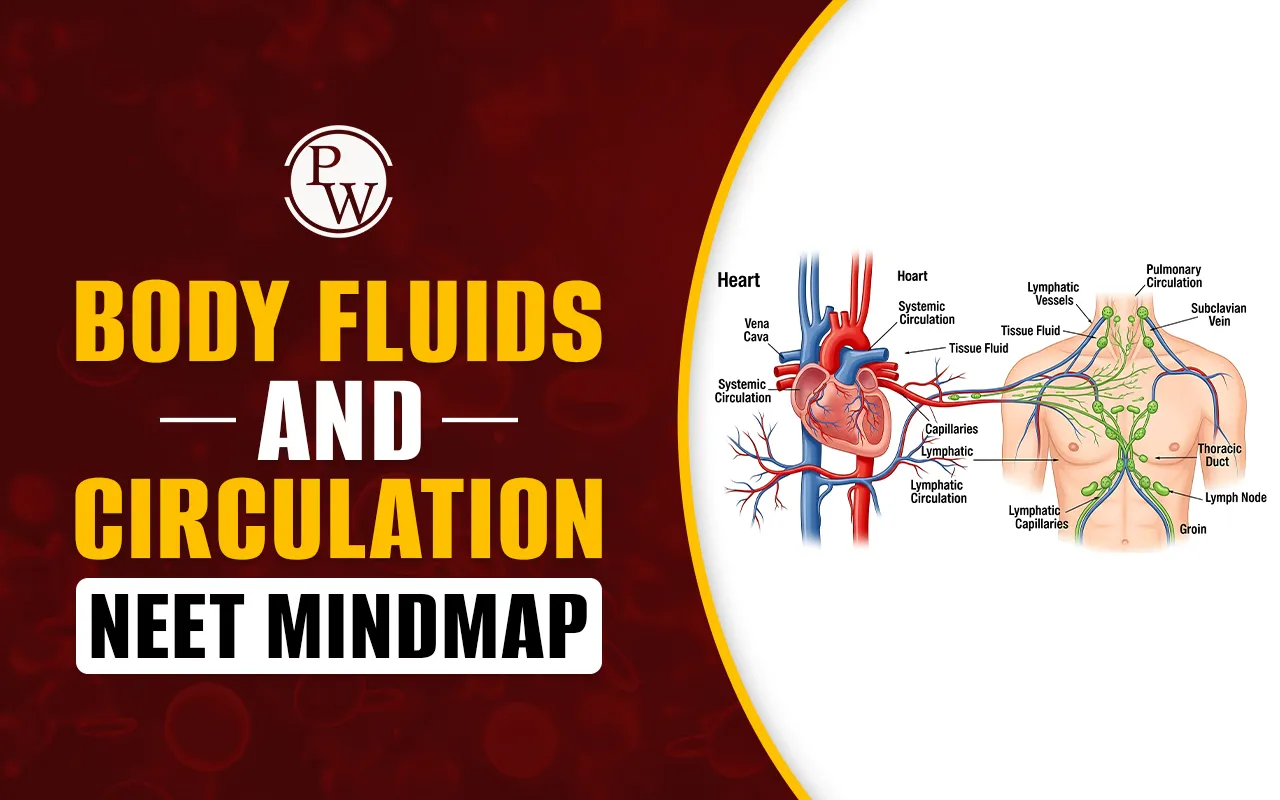
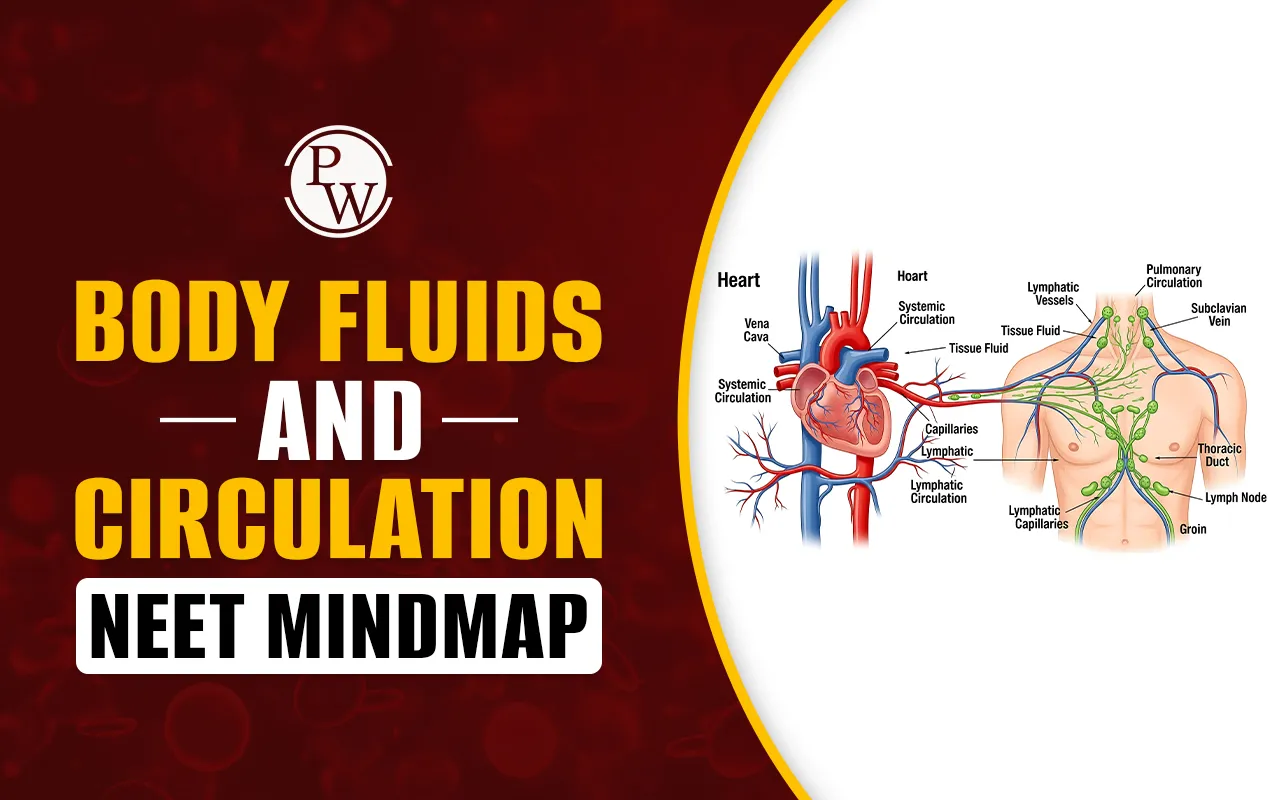
Body Fluids and Circulation is an important chapter in NEET Biology. It explains the composition and functions of blood, lymph, blood groups, heart structure, cardiac cycle, and circulation in the human body. Questions from this chapter frequently appear in the NEET examination.
Body Fluids and Circulation NEET Mind Maps help students revise important concepts, diagrams, and processes in a structured format. These mind maps support quick revision and improve concept retention before examinations.
PW Body Fluids and Circulation NEET Mind Maps PDF
Physics Wallah provides chapter-wise mind maps to help students revise effectively. These mind maps summarize important topics in a visual format and make revision more organized.
| Body Fluids and Circulation NEET Mind Maps | Link |
| Body Fluids and Circulation Mind Maps | Download PDF |
How to Use Physics Wallah Mind Maps for NEET Preparation?
Physics Wallah mind maps are a powerful revision tool. Students should use them in a planned and consistent manner to get the best results.
Start with the NCERT chapter first.
-
Read the full chapter from your NCERT textbook. Build a clear understanding of all the concepts before using the mind map.
Use the mind map for quick revision.
-
After reading the chapter, go through the mind map. It will help you recall all the important points at a glance.
Focus on key terms and diagrams.
-
Pay close attention to labelled diagrams in the mind map. Topics like the structure of the heart and blood composition often appear in NEET.
Revise before the exam.
-
Use the mind map one or two days before your exam. It saves time and keeps all concepts fresh in your memory.
Combine with previous year questions.
-
After revising through the mind map, solve NEET previous year questions from this chapter. This will help you understand how concepts are tested.
Make short notes alongside.
-
While studying the mind map, write down any points you find difficult. Review those notes separately.
Repeat the revision cycle.
-
Go through the mind map at least two to three times across your preparation. Regular revision improves retention.
Prepare for NEET 2026 with PW NEET online batches. These courses provide clear lessons and regular practice tests to help you cover the entire syllabus step-by-step.
Body Fluids and Circulation NEET Mindmap FAQs
What are Body Fluids and Circulation NEET Mind Maps?
Are Body Fluids and Circulation mind maps useful for NEET revision?
Which topics are covered in these mind maps?
When should students use these mind maps?