







Biology Cell Structure and Function Syllabus for NEET 2026

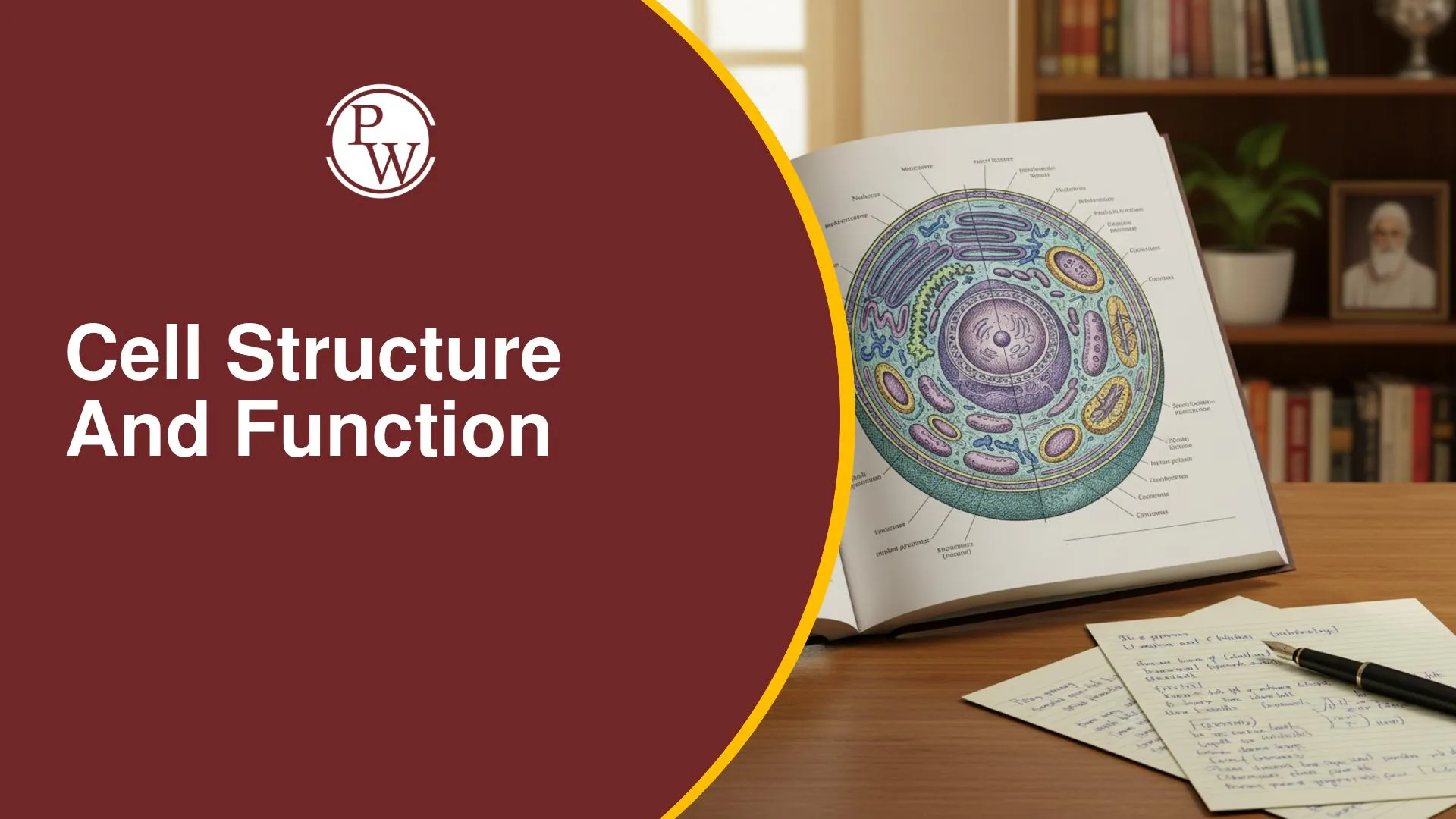
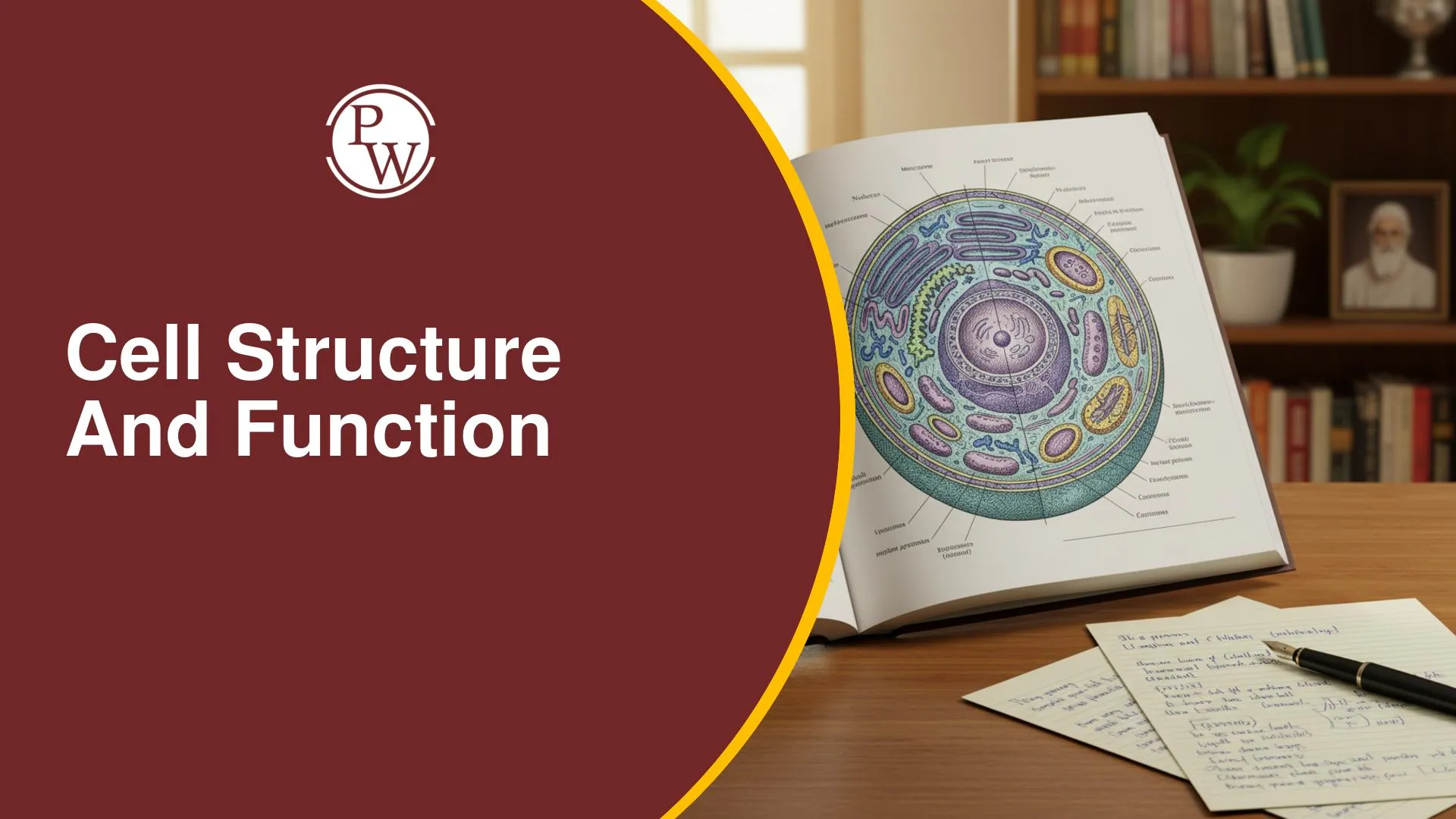
The cell is the basic structural and functional unit of all living organisms. Every living process, such as growth, metabolism, and reproduction, takes place inside cells. Understanding cell structure helps explain how life is organised at the microscopic level.
This unit includes cell theory, types of cells, detailed structure of organelles, biomolecules, enzymes, and cell division. NEET questions are diagram-based and concept-based from NCERT, especially focusing on structure–function relationships and comparisons between different cell components.
Cell Theory and Types of Cells
Cell theory states that all living organisms are made up of cells, and the cell is the basic unit of life. New cells arise from pre-existing cells.
Cells are of two main types:
Prokaryotic and Eukaryotic Cells
Prokaryotic Cells are simple, lack a true nucleus, and have no membrane-bound organelles. Eukaryotic Cells are more complex and contain a true nucleus and membrane-bound organelles.
Plant and Animal Cells
Plant Cells have a rigid cell wall, chloroplasts, and large central vacuole, while Animal Cells lack a cell wall and plastids but contain centrioles.
Cell Organelles and Endomembrane System
Cell Organelles perform specific functions necessary for survival.
Endomembrane System
The endomembrane system includes the endoplasmic reticulum, Golgi apparatus, lysosomes, and vacuoles. It is involved in the synthesis, transport, and storage of materials.
Other Organelles
-
Mitochondria: Site of ATP production
-
Ribosomes: Protein synthesis
-
Plastids: Photosynthesis and storage in plants
-
Microbodies: Metabolic functions
Cytoskeleton and Cell Movement
Cytoskeleton provides shape and support. Cilia and flagella help in movement. Centrioles play a role in cell division in animal cells.
Nucleus
The Nucleus controls all cell activities. It contains nuclear membrane, chromatin, and nucleolus, which is involved in ribosome formation.
Chemical Constituents of Cells (Biomolecules)
Cells are made up of biomolecules such as carbohydrates, proteins, lipids, and nucleic acids.
Major Biomolecules
-
Carbohydrates: Provide energy
-
Proteins: Structural and functional roles
-
Lipids: Energy storage and membrane formation
-
Nucleic acids (DNA/RNA): Genetic material
Enzymes
Enzymes are biological catalysts that speed up biochemical reactions.
They are highly specific, sensitive to temperature and pH, and follow models like lock-and-key mechanism. Enzymes are classified based on their function and type of reaction.
Cell Division
Cell Division is essential for growth, repair, and reproduction.
Cell Cycle, Mitosis and Meiosis
The Cell Cycle includes interphase and M phase. Mitosis produces two identical daughter cells and is important for growth and repair. Meiosis produces four haploid cells and is important for sexual reproduction.
How to Prepare Cell Structure and Function for NEET 2026?
This chapter should be studied from the NCERT with a clear focus on diagrams, definitions, and structure–function relationships. A proper understanding of cell organisation, organelles, biomolecules, enzymes, and cell division is essential for conceptual clarity.
-
Read NCERT line by line
Focus on cell organelles, biomolecules, enzymes, and cell division because NEET questions are directly from NCERT diagrams and statements.
-
Practice Cell Structure NEET PYQs regularly
PYQs help in understanding diagram-based and concept-based questions from cell biology.
-
Solve chapter-wise Cell MCQs
Regular practice with PQ MCQs improves understanding of organelles, biomolecules, and cell division concepts.
-
Use Cell Biology mind maps for revision
PW Mind maps help in revising organelles, cell cycle, mitosis, meiosis, and biomolecules quickly before exams.
-
Revise comparison tables
Compare prokaryotic vs eukaryotic cells, mitosis vs meiosis, and plant vs animal cells for quick revision.
-
Focus on structure–function relationships
Understand how each organelle works and its role inside the cell for conceptual clarity.
Unit 3 Cell Structure and Function Syllabus NEET 2026 FAQ
What is a cell?
What is the difference between prokaryotic and eukaryotic cells?
What are biomolecules?
What is the function of mitochondria?









Get Free Counselling Today
and Clear up all your Doubts
 Live & recorded classes available at easeDashboard for progress trackingLakhs of practice questions

