Laws of Motion and Friction in ONE SHOT for NEET 2026 by Saleem Sir

Physics becomes easier when concepts are clear and connected. Laws of motion and friction form the base of many NEET questions. These topics are not about memorizing formulas. They are about understanding how forces act and how objects respond.
This one-shot revision will help you revise all important concepts in a simple and structured way. The focus is on clarity, application, and problem-solving approach.
Introduction to Laws of Motion
The laws of motion were given by Isaac Newton. These laws explain how objects move when forces act on them. Every problem in mechanics starts with these laws.
Before learning the laws, you must understand force, mass, and motion.
-
Force is a push or pull.
-
Mass tells how much matter an object has.
-
Motion means a change in position with time.

Newton’s First Law (Law of Inertia)
Newton’s first law states that a body remains at rest or in uniform motion unless an external force acts on it.
This law explains inertia.
What is Inertia?
Inertia is the tendency of a body to resist change in its state.
-
A stationary object stays at rest.
-
A moving object continues moving in a straight line.
Types of Inertia
-
Inertia of rest
-
Inertia of motion
-
Inertia of direction
Mass is a measure of inertia. A heavier object has more inertia.
Newton’s Second Law (Most Important for NEET)
This law connects force, mass, and acceleration.
F=ma
This means force equals mass multiplied by acceleration.
Key Points
-
Acceleration is directly proportional to force.
-
Acceleration is inversely proportional to mass.
-
Force and acceleration are in the same direction.
General Form
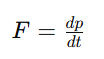
This form is useful when mass is changing.
Momentum
Momentum is given by:
p=mv
It is a vector quantity. It depends on both mass and velocity.
Newton’s Third Law
This law states that every action has an equal and opposite reaction.
Key Features
-
Action and reaction act on different bodies.
-
They are equal in magnitude.
-
They act at the same time.
Example
When you push a wall, the wall pushes you back with equal force.
Important Forces in Mechanics
Understanding forces is important for solving questions.
1. Normal Force
-
Acts perpendicular to the surface
-
Acts towards the object
2. Tension
-
Acts in strings or ropes
-
Always pulls the object
-
Never pushes
3. Gravitational Force
-
Acts downward
-
Equal to mgmgmg
Friction: Concept and Types
Friction is a force that opposes motion between two surfaces in contact.
Types of Friction
-
Static Friction
-
Kinetic Friction
Static Friction
Static friction acts when there is no relative motion.
It adjusts itself according to the applied force.
Maximum static friction is:
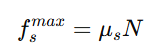
Key Points
-
It prevents motion.
-
It increases until a limit.
-
Beyond this limit, motion starts.
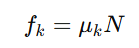
Kinetic Friction
Kinetic friction acts when the object is moving.
Key Points
-
It is constant.
-
It is less than static friction.
-
It always opposes motion.
Laws of Friction
-
Friction is proportional to normal force.
-
It does not depend on the contact area.
-
It depends on the nature of the surfaces.
Angle of Friction
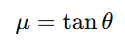
This angle helps in solving inclined plane problems.
Free Body Diagram (FBD)
FBD is a simple diagram showing all forces acting on a body.
Steps to Draw FBD
-
Isolate the object
-
Draw all forces
-
Resolve forces into components
FBD helps in applying Newton’s laws correctly.
Motion on an Inclined Plane
This is a common NEET topic.
For a block on an inclined plane:
-
Weight is resolved into two components
-
One along the plane
-
One perpendicular to the plane
Normal force balances the perpendicular component.
Friction acts along the plane.
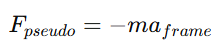
Pseudo Force (Non-Inertial Frames)
Pseudo force is used when the frame is accelerating.
Example
In a lift:
-
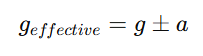
If lift moves upward → weight feels more
-
If lift moves downward → weight feels less
Effective gravity becomes:
Spring Force (Hooke’s Law)
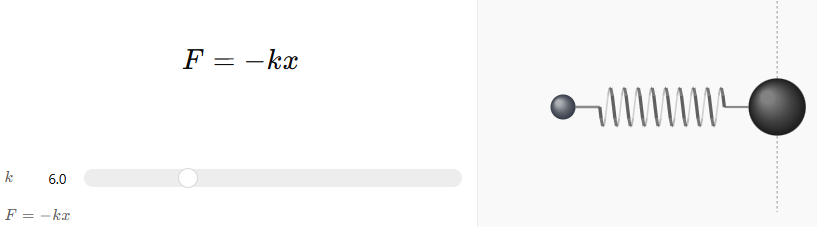
Key Points
-
Force is proportional to displacement
-
It acts in the opposite direction
-
It tries to restore the original position
Pulley Systems
Pulley systems are common in NEET.
Important Points
-
Tension is the same in an ideal rope
-
Pulley is massless and frictionless
-
Acceleration depends on the system
Use FBD for each block.
Rocket Propulsion (Advanced Concept)
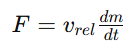
Key Idea
Rocket moves because gases are expelled backward.
This creates thrust.
Problem-Solving Strategy for Laws of Motion and Friction
Follow these steps in every question:
Step 1: Understand the Problem
Identify forces and motion.
Step 2: Draw FBD
This step is very important.
Step 3: Apply Newton’s Law
Use F=ma or momentum form.
Step 4: Add Friction
Check if motion is present or not.
Step 5: Use Constraints
For connected bodies.
Step 6: Solve Equations
Find acceleration, force, or tension.
Quick Revision Points
-
Inertia depends on mass
-
Momentum is a vector
-
F=ma is the most used formula
-
Static friction has a maximum limit
-
Kinetic friction is constant
-
Normal force is perpendicular
-
Tension always pulls
-
Pseudo force is added in accelerating frames
Laws of motion and friction form the base of mechanics. These topics appear in many NEET questions. A clear understanding helps in solving both easy and tricky problems.
Focus on concepts instead of memorizing formulas. Practice different types of questions regularly. Always draw free-body diagrams. With consistent practice, these topics become scoring areas in the exam.
Laws of Motion and Friction in ONE SHOT for NEET 2026 FAQs
What is the most important law for NEET in laws of motion?
What is the difference between static and kinetic friction?
Why is Free Body Diagram important in physics problems?