







Mycorrhiza, Definitions, Types, and Benefits for NEET Exam
 Krati Saraswat4 Jun, 2025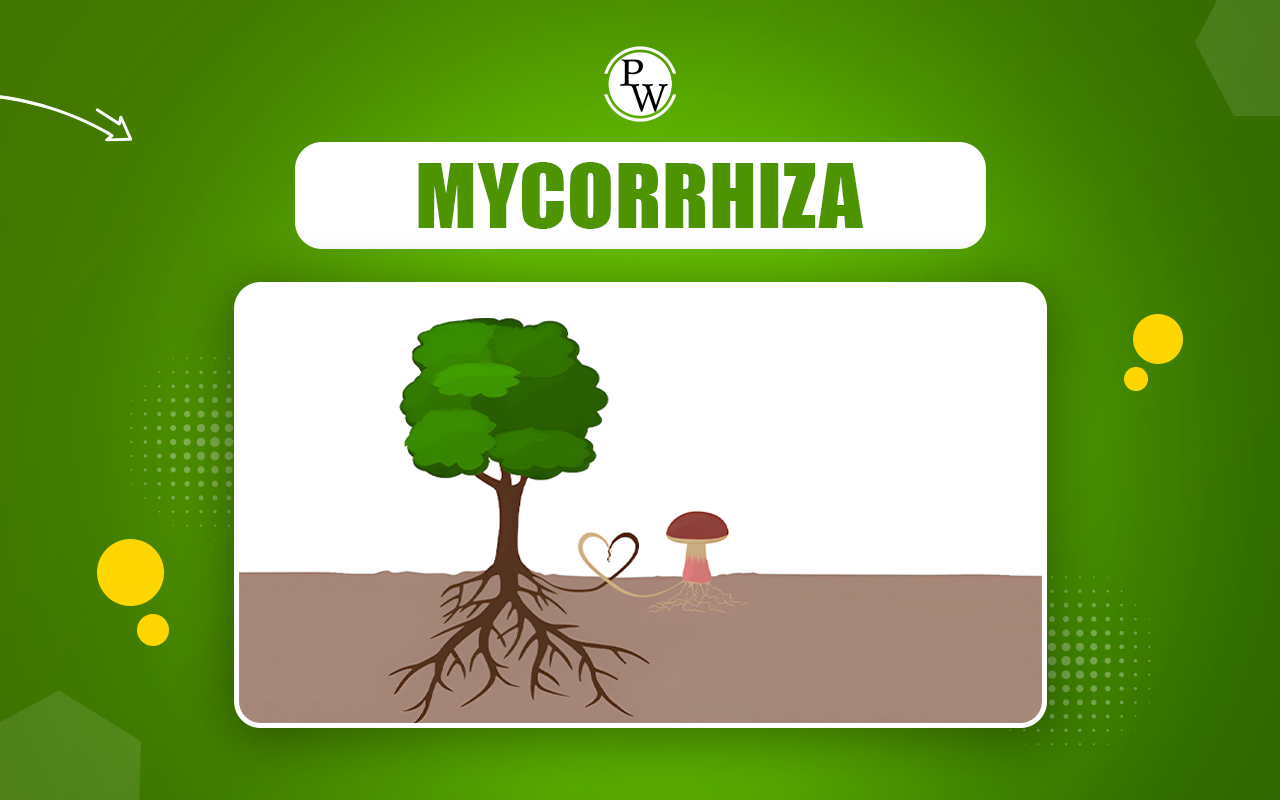
Mycorrhizae are symbiotic relationships between fungi and the roots of higher plants, particularly Gymnosperms and Angiosperms. This mutually beneficial association allows the fungus to obtain nourishment from the plant's root cortical cells, while the plant benefits from the increased surface area provided by the fungal hyphae, enhancing its absorption of water and nutrients. The study of mycorrhizae is an important topic in the NEET Exam and a crucial part of the NEET biology syllabus , as it highlights key ecological interactions vital for plant growth and survival.
Definition of Mycorrhiza
Mycorrhiza refers to a symbiotic relationship between a fungus and a plant's root system. In this association, the fungus extends a network of filaments (called hyphae) around or into the plant’s roots. These fungal filaments increase the surface area of the root, allowing it to absorb water and mineral nutrients from a much larger volume of soil than the plant roots alone. In return, the fungus receives carbohydrates, such as sugars, and nitrogen-containing compounds from the plant.Types of Mycorrhiza
Mycorrhizae are classified into two main types based on where the fungi colonize the plant roots: ectomycorrhizae and endomycorrhizae.Ectomycorrhiza
Ectomycorrhiza, often abbreviated as EcM, forms associations with woody plants such as beech, birch, oak, pine, and spruce. The fungi involved in these associations belong to the phyla Ascomycota, Basidiomycota, and Zygomycota. About 10% of plant species, primarily trees, rely on ectomycorrhizal fungi. In ectomycorrhizal relationships, the fungus forms a dense network known as the Hartig net, which surrounds the plant cells in the root cortex. Additionally, a hyphal sheath, or mantle, envelops the root tip. The term "ectendomycorrhiza" refers to a special form where the fungal hyphae can penetrate plant cells. These fungi can help plants absorb nitrogen from organic sources, as seen in the case of Laccaria bicolor, an ectomycorrhizal fungus that extracts nitrogen from soil organisms like springtails.Endomycorrhiza
Endomycorrhizae, also known as arbuscular mycorrhizae (AM), are much more common, found in over 80% of plant species, including many crops like vegetables, grasses, and fruit trees. In these relationships, the fungi penetrate the root cells and form specialized structures such as vesicles and arbuscules, facilitating the exchange of nutrients between the plant and fungus. There are several subtypes of endomycorrhizae, including:- Arbuscular Mycorrhiza (AMF) : The most widespread type, involving fungi from the division Glomeromycota, where the fungus forms arbuscules inside the root cells for nutrient exchange.
- Ericoid Mycorrhiza : Found in plants of the Ericaceae family, these fungi help their host plants absorb nutrients from decomposing organic matter, giving them access to otherwise inaccessible resources.
- Monotropoid Mycorrhiza : Present in some genera of the Orchidaceae and Monotropoideae subfamily. These plants rely entirely on the fungus for their carbon and are therefore considered heterotrophic or mixotrophic. This relationship is typically parasitic.
- Orchid Mycorrhiza : Orchids rely on mycorrhizal fungi for their nutrient requirements, especially during early seedling development. The fungal hyphae invade the root cells to form pelotons, which aid in nutrient transfer.
Benefits of Mycorrhiza
Mycorrhizae represent a vital symbiotic association between plant roots and fungi, significantly enhancing the plant's ability to absorb water and essential nutrients. These interactions are fundamental to promoting plant resilience, growth, and overall ecological stability.- Mycorrhizae enhance the plant’s ability to absorb water and essential nutrients from the soil.
- Plants with mycorrhizal associations often require less frequent watering.
- Plants with mycorrhiza tend to grow stronger and are more capable of withstanding environmental stress.
- Mycorrhizae improve plant survival, especially in challenging conditions.
- Mycorrhizal plants release natural compounds that repel harmful insects.
MCQs of Mycorrhiza
Q1. Mycorrhizae are mutualistic and have symbiotic association between;
- fungi and vascular plants.
- fungi and non-vascular plants.
- fungi and roots of higher plants.
- fungi and bryophytes.
Q2. Mark the correct statement wrt. role of plant in mycorrhiza;
- help in water uptake.
- help in mineral nutrient uptake.
- help in phosphate solubilization.
- provide food to fungi.
Q3. Association between Mycobiont and phycobiont are found in;
- mycorrhiza.
- root.
- lichens.
- BGA.
Answers of MCQS of Mycorrhiza
Ans1 . Fungi and roots of higher plants.,Physics Wallah (PW) offers the NEET Online Coaching in India, designed to make quality education accessible to all aspiring medical students.
| NEET Exam Important Links | |
|---|---|
| NEET Biology Syllabus | NEET Biology Diagrams |
| NEET Biology MCQ | NEET Biology Chapter wise Weightage |
| NEET Biology Notes | NEET Previous Year Question papers |
Mycorrhiza FAQs
Q. What is mycorrhiza and its function?
Q. What are the 4 types of mycorrhiza?
Q. What is a mycorrhizal fungi?
Q. Is mycorrhiza algae or fungi?
Q. Which plant has mycorrhiza?












 Live & recorded classes available at easeDashboard for progress trackingMillions of practice questions at your fingertips

