







Physics Oscillations and Waves Diagrams for NEET by Physics Wallah
 Gunika Shah1 Aug, 2026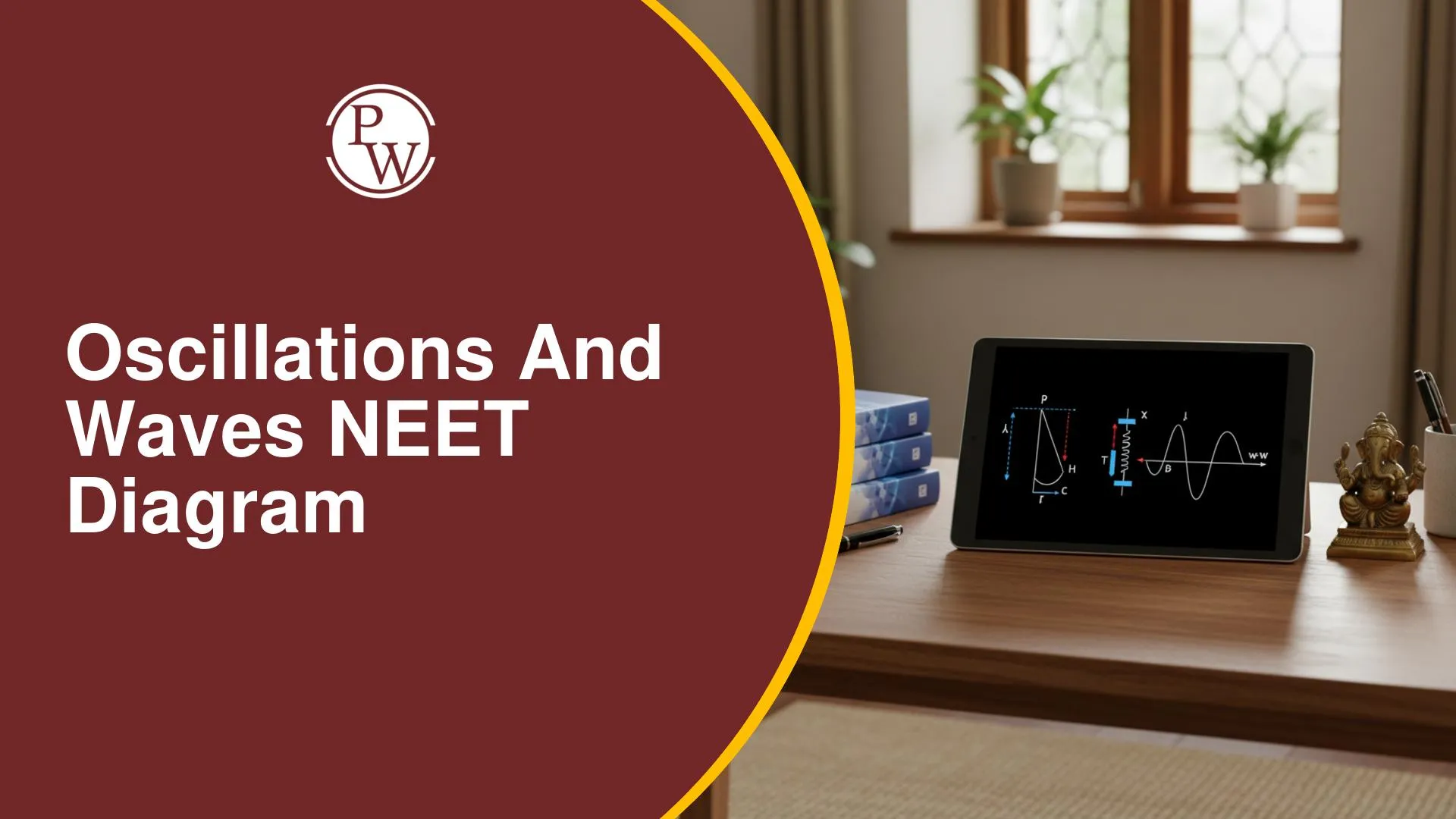
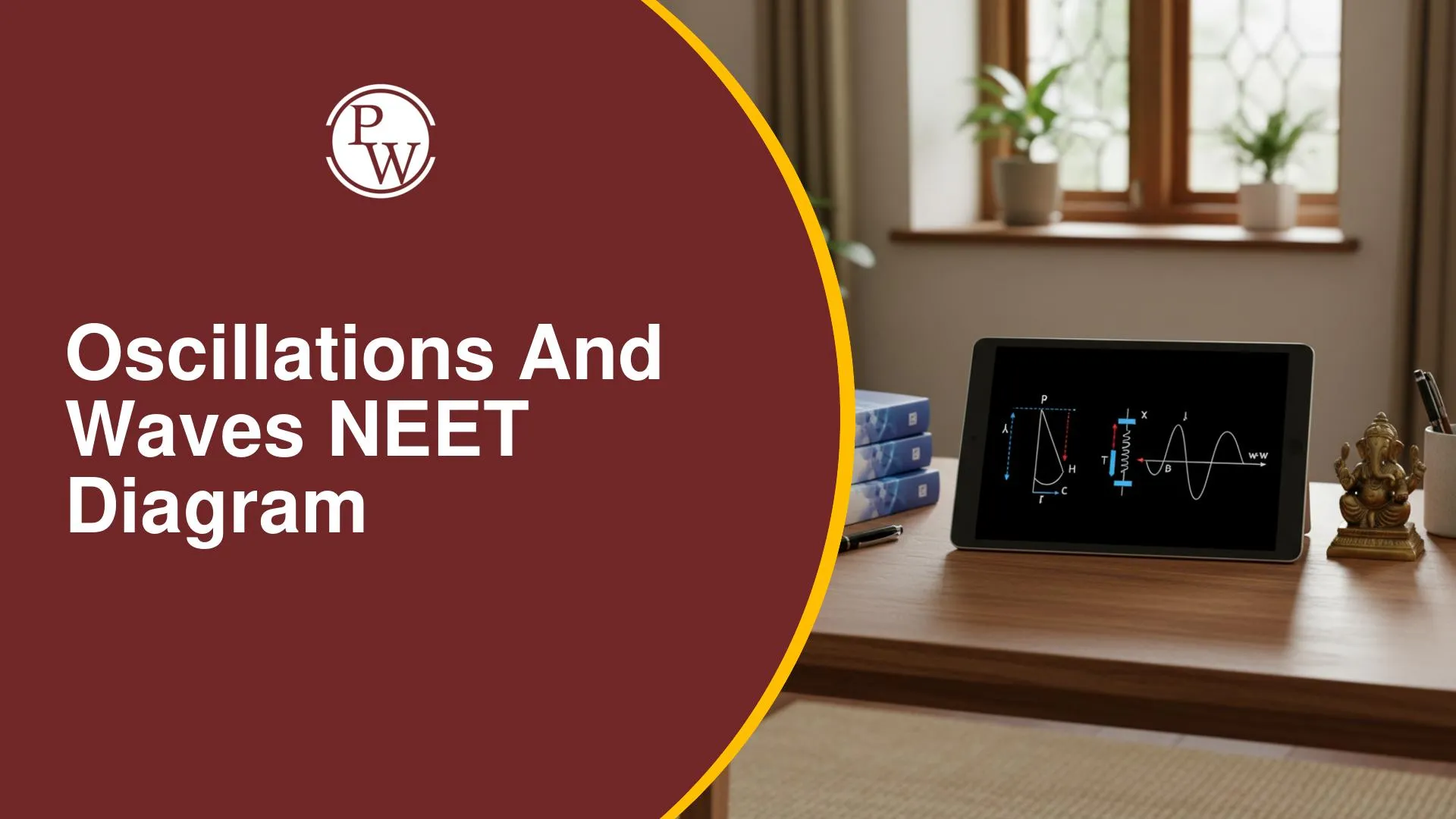
Many questions in Oscillations and Waves become easier once you can picture the motion. Whether it's understanding how displacement changes during simple harmonic motion or how particles behave as a wave travels, diagrams help explain relationships that formulas alone often cannot.
Physics Wallah's Oscillations and Waves NEET Diagrams PDF brings together the chapter's important illustrations in one place, making it easier to compare wave patterns, motion graphs, and key concepts before solving MCQs and PYQs.
Oscillations and Waves NEET Diagrams PDF
Physics Wallah's Oscillations and Waves NEET Diagrams PDF brings together displacement-time graphs, standing waves, and other important visuals, making these relationships much easier to understand. By presenting related diagrams side by side, the chapter becomes easier to follow from one concept to the next.
| Oscillations and Waves Diagrams for NEET | |
| Oscillations and Waves NEET Diagrams | Oscillations and Waves Diagrams PDF |
Key benefits of Physics Wallah's Oscillations and Waves Diagrams for NEET
Physics Wallah's Oscillations and Waves NEET Diagrams PDF presents the chapter's essential visuals in a structured format, making revision more efficient and helping you build a stronger understanding of oscillatory and wave phenomena.
1. Simplifies Oscillatory Motion
Clearly labelled diagrams explain simple harmonic motion, displacement, velocity, acceleration, and phase relationships, making abstract concepts easier to visualise.
2. Strengthens Wave Visualisation
Illustrations simplify concepts such as transverse and longitudinal waves, wavefronts, standing waves, resonance, and wave propagation for better conceptual understanding.
3. Improves Graph Interpretation
Regular revision of graphs and diagrams enhances the ability to interpret displacement-time, velocity-time, and wave profile graphs commonly asked in NEET.
4. Reinforces NCERT Concepts
The diagrams focus on the important visual concepts prescribed in NCERT and the latest NEET syllabus, helping you prioritise exam-relevant topics.
5. Supports Complete Chapter Preparation
The PDF works alongside Physics Wallah's notes, formula sheets, MCQs, and PYQs to provide a comprehensive and exam-oriented revision experience.
Physics Wallah's Oscillations and Waves NEET Diagrams PDF brings together the chapter's most important illustrations, making it easier to understand the relationship between oscillatory motion, wave behaviour, and graphical representations. Used alongside your notes, MCQs, and PYQs, it can make your preparation more complete and focused.
A strong grasp of these diagrams can make it easier to interpret concepts, connect ideas, and approach NEET questions with greater accuracy.
FAQs
Q1. Which wave and oscillation diagrams should I focus on for NEET?
Q2. Why is it important to practise SHM and wave graphs?
Q3. Can this PDF help me revise both Oscillations and Waves together?
Q4. How should I use these diagrams during NEET preparation?
Q5. What makes Physics Wallah's Oscillations and Waves NEET Diagrams PDF useful?

















 Live & recorded classes available at easeDashboard for progress trackingMillions of practice questions at your fingertips

