







Vacuole, Definition, Structure, Functions for NEET Exam
Vacuole, This article provides an overview of the Vacuole including its definition, types, structure, functions, and related MCQs with answers to Vacuole.
 Krati Saraswat3 Jun, 2025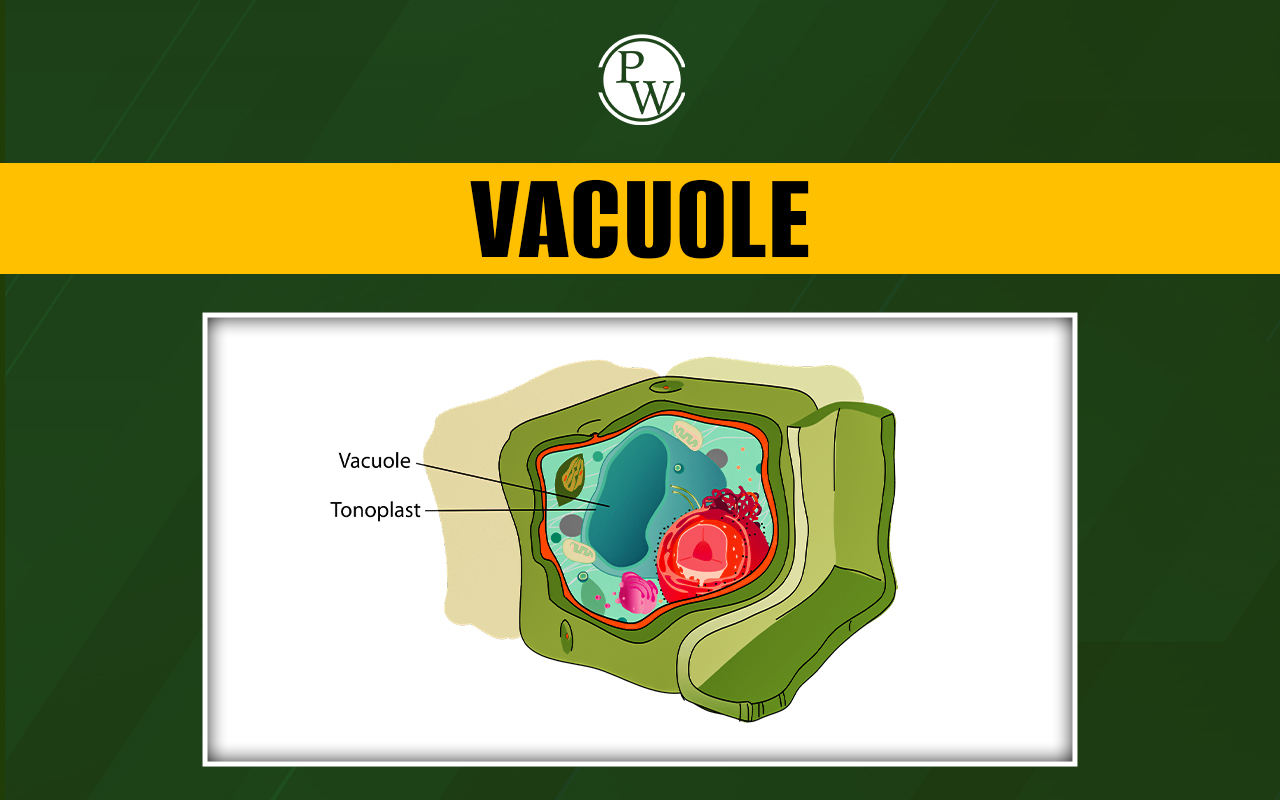
A vacuole is a membrane-bound cell organelle. In animal cells, vacuoles are generally small and help sequester waste products. In plant cells, vacuoles help maintain water balance, which is vital for the cell's structural integrity. Sometimes, a single vacuole can occupy most of the plant cell's interior, playing a significant role in storage and homeostasis.
Understanding the structure and functions of vacuoles is essential for the NEET Exam , as it forms a fundamental part of the cell biology section in the NEET syllabus .Vacuole Definition
Vacuoles are membrane-bound sacs found inside the cytoplasm of cells, performing various important functions. In mature plant cells, vacuoles are usually very large and play a key role in supporting the structure of the cell. They also help with storage, waste disposal, protection, and growth. Many plant cells contain a large central vacuole that can take up more than 80% of the cell's space. In animal cells, however, vacuoles are much smaller and are mainly used to temporarily store materials or transport substances.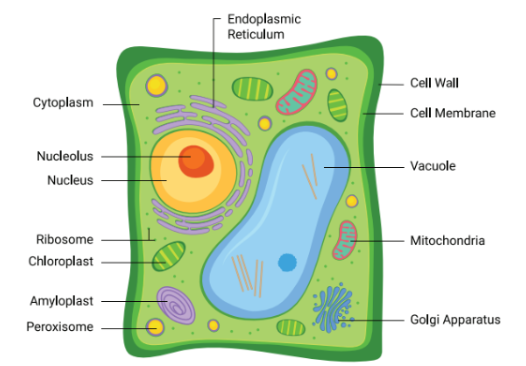
Vacuole Structure
Vacuoles lack a fixed shape or size, varying based on cellular needs. In immature and actively dividing plant cells, they are small and arise from the fusion of vesicles from the Golgi apparatus . Each vacuole is enclosed by a tonoplast , which separates its contents from the cytoplasm and regulates ion movement while isolating harmful substances. Structurally, vacuoles resemble lysosomes in animal cells and can contain various hydrolytic enzymes, sugars, salts, acids, and nitrogenous compounds like alkaloids and anthocyanins. The pH of plant vacuoles can range from 3 to 10, influenced by the presence of organic acids or alkaline substances. The central vacuole in mature plant cells develops through the fusion of smaller vacuoles from the endoplasmic reticulum and Golgi apparatus. Its selective permeability allows for a unique chemical composition in the vacuolar solution, or cell sap , distinct from the surrounding cytoplasm.Types of Vacuoles
Vacuoles come in various types, each serving unique functions within cells. These include sap vacuoles for storage and transport, contractile vacuoles for osmoregulation, food vacuoles for digestion, and air vacuoles that provide buoyancy and protection in prokaryotic cells.- Sap Vacuoles : Sap vacuoles are responsible for transporting various substances. Small sap vacuoles are found in animal and young plant cells. In mature plant cells, these small vacuoles fuse to form a large central vacuole, which can occupy up to 90% of the cell's volume. This large vacuole spreads the cytoplasm into a thin layer, allowing for quick exchange with the environment. The fluid inside sap vacuoles is called sap or vacuolar sap.
- Contractile Vacuoles: These vacuoles are found in some protists and algae, mainly in freshwater environments. A contractile vacuole has a flexible membrane and is connected to feeding canals that collect water and waste from the cytoplasm. It swells as it fills with water (diastole) and then collapses (systole), expelling its contents outside the cell. Contractile vacuoles help with osmoregulation and excretion.
- Food Vacuoles: Food vacuoles are present in protozoans, lower animals, and phagocytes in higher animals. They form when a phagosome fuses with a lysosome and contain digestive enzymes that break down nutrients. The digested materials are then released into the surrounding cytoplasm.
- Air Vacuoles: Air vacuoles are found only in prokaryotes and consist of multiple small vesicles, each surrounded by a protein membrane. They store gases and provide buoyancy, mechanical strength, and protection from harmful radiation.
Function of Vacuole
Vacuoles are essential organelles that perform multiple functions critical to cell health and plant survival. Their primary roles include:- Maintaining Cell Acidity : Vacuoles help regulate the cell's internal pH, creating an acidic environment that supports various cellular processes. In plant cells, vacuoles maintain turgor pressure by storing water, which keeps the plant rigid and prevents wilting.
- Storage and Transport of Substances : Vacuoles act as storage units for essential molecules such as amino acids, sugars, and ions. These substances can be transported through specific channel proteins on the vacuole membrane, known as the tonoplast. They also play a key role in transporting proteins through endocytic and lysosomal-vacuolar pathways.
- Regulation of Water Transport : Vacuoles regulate long-distance water transport in plants via tonoplast aquaporins. These channels allow water to move in and out of the vacuole, helping the plant respond to environmental stresses like drought and flooding.
- Role in Stomatal Function : The morphology of stomata, which control gas exchange in plants, depends on the water content of vacuoles. This regulation is crucial for controlling transpiration and gas exchange rates in plants.
- Storage of Secondary Metabolites : Vacuoles play a key role in secondary metabolism. They store potentially harmful secondary metabolites, isolating them from the cytoplasm to protect the cell. These compounds are often involved in the plant's defense mechanisms, stress responses, and seed development.
- Waste Management and Detoxification : Vacuoles manage waste by sequestering harmful substances, ensuring they are kept away from other cellular components, thus protecting the cell from damage.
MCQs of Vacuole
Q1. The vacuoles are bubble-like sacs bounded by a single unit membrane called:
- tonoplast.
- chloroplast.
- ribosomes.
- All of these.
Q2. Vacuoles are filled with a fluid called:
- central vacuoles.
- tonoplast.
- cell sap.
- all of these.
Q3. The tonoplast in vacuoles is different:
- impermeable.
- permeable.
- semi-permeable.
- All of these.
Answers of MCQs of Vacuole
Ans1 . (1) Tonoplast,| NEET Exam Important Links | |
|---|---|
| NEET Biology Syllabus | NEET Biology Diagrams |
| NEET Biology MCQ | NEET Biology Chapter wise Weightage |
| NEET Biology Notes | NEET Previous Year Question papers |
Vacuole FAQs
Q. What is a vacuole?
Ans. A vacuole is a membrane-bound organelle found in cells, primarily responsible for storage, waste disposal, and maintaining turgor pressure in plant cells.
Q. What is the function of vacuoles?
Ans. Vacuoles serve multiple functions, including storage of nutrients and waste products, maintaining cell turgor pressure, regulating pH, and isolating harmful materials. They also play roles in the digestion and transport of substances.
Q. What is a contractile vacuole?
Ans. A contractile vacuole is a type of vacuole found in certain protists and freshwater algae. It functions in osmoregulation by collecting excess water from the cell and expelling it to maintain the cell's water balance.
Q. What is a food vacuole?
Ans. A food vacuole is formed when a cell engulfs food particles through a process called phagocytosis. It contains digestive enzymes that break down nutrients, allowing the cell to absorb essential substances.
Q. What is the role of vacuoles in plant cells?
Ans. In plant cells, vacuoles are large and primarily responsible for maintaining turgor pressure, which helps keep the plant upright. They also store nutrients, and waste products, and help regulate pH and cellular metabolism.
Q. What is the structure of a vacuole?
Ans. A vacuole is enclosed by a membrane called the tonoplast, which separates its contents from the cytoplasm. The interior contains cell sap, which includes various substances such as sugars, salts, and enzymes.
Q. How many vacuoles are present in an animal cell?
Ans. Animal cells typically contain several small vacuoles, but the number can vary depending on the cell type and its functions. Unlike plant cells, animal cells do not usually have a single large central vacuole.



🔥 Trending Blogs


Talk to a counsellorHave doubts? Our support team will be happy to assist you!


Check out these Related Articles





Join 15 Million students on the app today!
 Live & recorded classes available at easeDashboard for progress trackingMillions of practice questions at your fingertips


Free Learning Resources
PW Books
Notes (Class 10-12)
PW Study Materials
Notes (Class 6-9)
Ncert Solutions
Govt Exams
Our Other Websites
Class 6th to 12th Online Courses
Govt Job Exams Courses
UPSC Coaching
Defence Exam Coaching
Gate Exam Coaching
Other Exams
Know about Physics Wallah
Physics Wallah is an Indian edtech platform that provides accessible & comprehensive learning experiences to students from Class 6th to postgraduate level. We also provide extensive NCERT solutions, sample paper, NEET, JEE Mains, BITSAT previous year papers & more such resources to students. Physics Wallah also caters to over 3.5 million registered students and over 78 lakh+ Youtube subscribers with 4.8 rating on its app.
We Stand Out because
We provide students with intensive courses with India’s qualified & experienced faculties & mentors. PW strives to make the learning experience comprehensive and accessible for students of all sections of society. We believe in empowering every single student who couldn't dream of a good career in engineering and medical field earlier.
Our Key Focus Areas
Physics Wallah's main focus is to make the learning experience as economical as possible for all students. With our affordable courses like Lakshya, Udaan and Arjuna and many others, we have been able to provide a platform for lakhs of aspirants. From providing Chemistry, Maths, Physics formula to giving e-books of eminent authors like RD Sharma, RS Aggarwal and Lakhmir Singh, PW focuses on every single student's need for preparation.
What Makes Us Different
Physics Wallah strives to develop a comprehensive pedagogical structure for students, where they get a state-of-the-art learning experience with study material and resources. Apart from catering students preparing for JEE Mains and NEET, PW also provides study material for each state board like Uttar Pradesh, Bihar, and others
Copyright © 2026 Physicswallah Limited All rights reserved.