SSC Junior Engineer Examination 2026: 1,748 Posts Notified, and the Merit Rule Has Changed
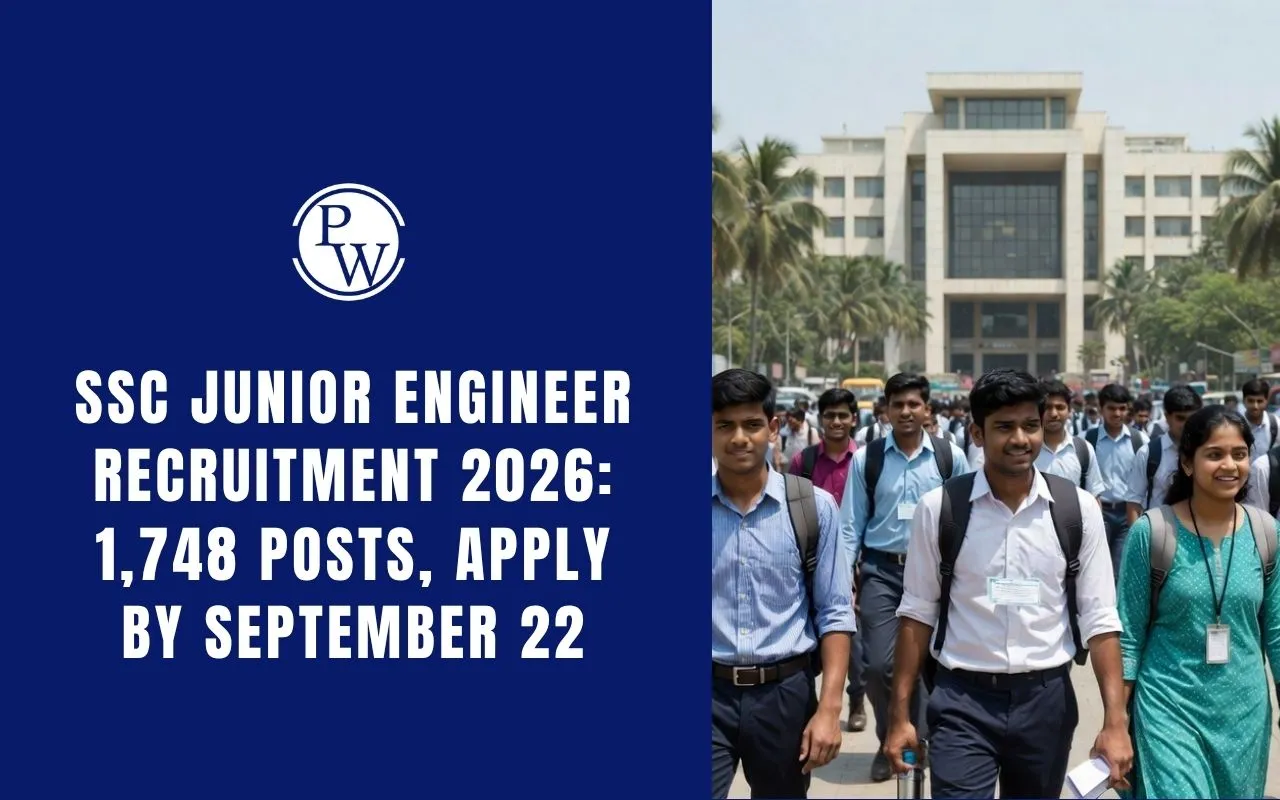
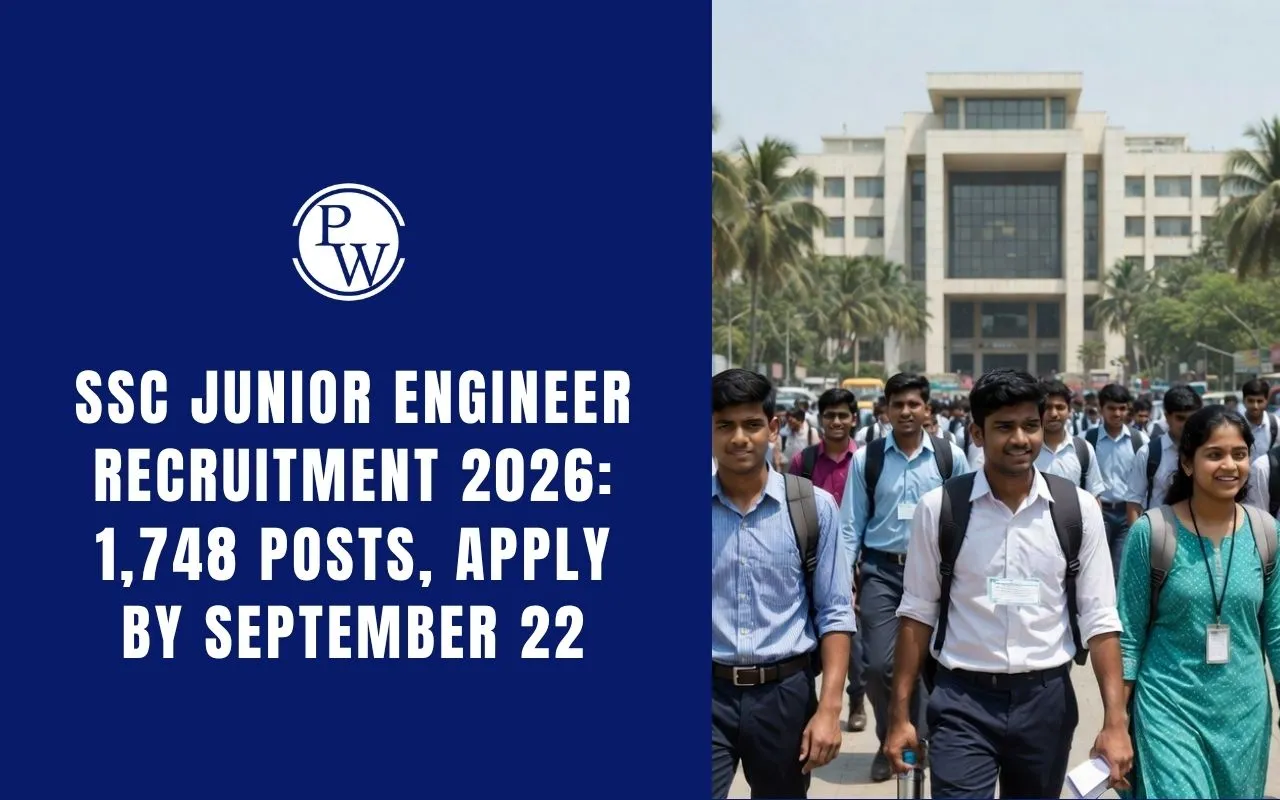
The Staff Selection Commission has released the notification for the Junior Engineer Examination 2026, inviting applications for 1,748 tentative vacancies in Junior Engineer and Scientific Assistant posts across central government organisations. Applications opened on September 2 at ssc.gov.in and close on September 22 at 11:00 PM. Eighteen days remain.
The headline number is 1,748. The more consequential detail is buried further down the notification, and it changes how candidates should plan their preparation.
Paper-1 is now qualifying only
Under this cycle, Paper-1 marks will not count towards the final merit list. Paper-1 functions as a screening stage; the merit list is prepared on Paper-2 performance alone.
For anyone who has been preparing on the assumption that a strong Paper-1 score builds a cushion, that assumption no longer holds. It does not make Paper-1 less important — failing to qualify ends the attempt — but it moves the centre of gravity of preparation decisively to the discipline-specific Paper-2. Candidates with roughly a month before Paper-1 and three before Paper-2 should be planning that split deliberately rather than by default.
New posts and new departments
Two additions widen the field this year.
JE (Telecom), under the Department of Telecommunications, brings telecommunications engineering candidates directly into the SSC JE stream.
Scientific Assistant, in the India Meteorological Department, opens the examination to physics and computer science graduates, who have not traditionally been part of this recruitment. Anyone with those qualifications who has previously skipped SSC JE as an engineering-only exam should read the eligibility clause for this post specifically.
A separate examination pattern has been notified for the newly added posts, so candidates applying to them should not assume the standard JE pattern applies.
The participating organisation list now runs to 13, with four departments added this cycle: DGLL, DoT, IMD and MoFAHD. They join organisations including CPWD, MES, BRO, CWC, CWPRS, NTRO, Border Roads and others.
Important dates
- Notification released: September 2, 2026
- Application window: September 2 to September 22, 2026, 11:00 PM
- Last date for fee payment: September 23, 2026, 11:00 PM
- Correction window: September 28 to September 30, 2026
- Paper-1: October or November 2026, tentative
- Paper-2: December 2026, tentative
Note that the fee payment deadline is a day after the application deadline. That is a buffer, not an extension — the application itself must be submitted by September 22.
Eligibility
Junior Engineer posts require a diploma or degree in the relevant engineering discipline — Civil, Electrical, Mechanical, Electrical and Mechanical, or Telecom — with the specific requirement varying by organisation. Some departments accept a diploma; others specify a degree. Some attach an experience condition.
Scientific Assistant (IMD) has its own qualification route open to science graduates in the prescribed subjects.
Age limits vary by post and department across the notification rather than being uniform. This is the single most common source of wasted applications in SSC JE cycles: candidates check one age band reported in a news summary, apply, and find at document verification that the post they chose carried a different limit.
Read the post-wise eligibility table in the official notification PDF against the specific posts you intend to opt for. Do not rely on a consolidated figure quoted anywhere, including here.
Application fee
Rs 100 for candidates in the unreserved category. Women candidates and those belonging to SC, ST, PwBD and Ex-Servicemen categories are exempt from the fee.
Salary
Selected candidates are appointed to Group B non-gazetted posts at Pay Level 6 of the 7th Central Pay Commission, with a pay band of Rs 35,400 to Rs 1,12,400. Actual in-hand salary varies with the posting city, since House Rent Allowance differs across X, Y and Z class cities. Postings are decided by the user department, not by SSC.
How to apply
-
Complete One Time Registration on the SSC portal if you have not already. OTR is mandatory and separate from the application itself — candidates routinely discover this on the last evening.
-
Log in at ssc.gov.in with the OTR credentials.
-
Open the Junior Engineer Examination 2026 application.
-
Fill in personal, educational and category details, and select your post and organisation preferences carefully.
-
Upload the photograph and signature in the prescribed specifications.
-
Pay the fee where applicable and submit.
-
Save the submitted application PDF and the payment receipt.
Post preference matters more than candidates typically treat it. Selection is against post preferences alongside performance, and a preference order filled carelessly can produce an allocation you did not want.
The correction window, and what it is not
SSC has provided a correction window from September 28 to 30. It exists to fix errors in a submitted application. It is not a second application window, and candidates who miss September 22 cannot use it to apply. SSC has in past cycles charged a correction fee; check the notification for the applicable terms before assuming edits are free.
Selection process
Two computer-based papers, followed by document verification. Paper-1 is qualifying. Paper-2 determines merit. Final vacancy numbers, post-wise and category-wise, will be published separately on the commission's website.
Candidates should rely only on ssc.gov.in for the notification PDF, the application link and any corrigendum. Vacancy figures at this stage are tentative and are commonly revised.
SSC Junior Engineer Examination 2026 FAQs
How many vacancies are there in SSC Junior Engineer Recruitment 2026?
What is the last date to apply for SSC JE 2026?
Is Paper-1 counted in the SSC JE 2026 merit list?
What is new in SSC Junior Engineer Examination 2026?
Can diploma holders apply for SSC JE 2026?


Have questions about your prep?
Our experts can answer all your questions