







How Amaan Qualified for BioLeague Phase 1 While Preparing for NSEB at PW
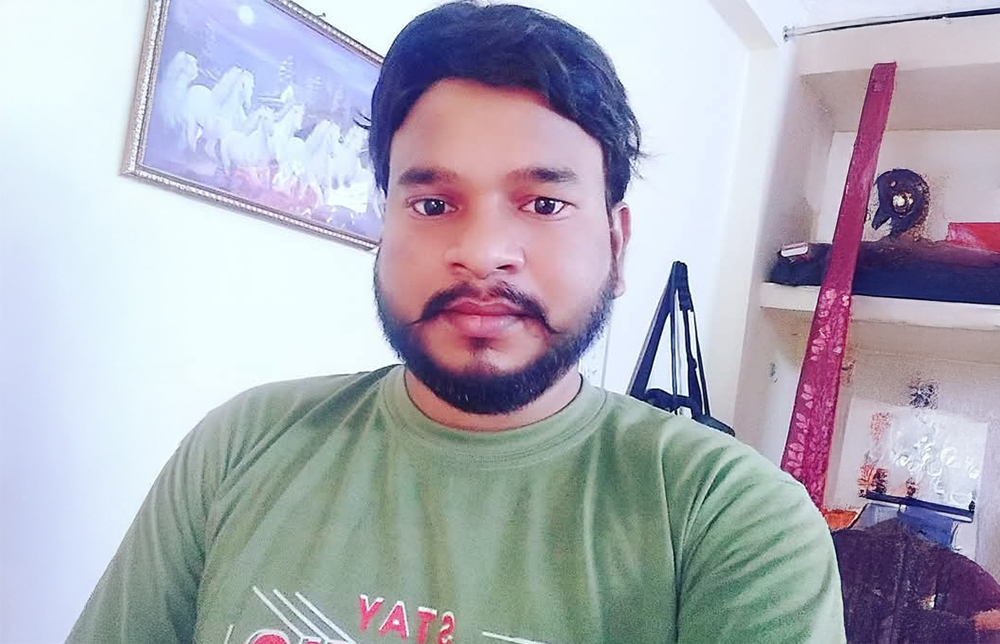
For students preparing for biology olympiads, managing multiple competitions while maintaining strong conceptual preparation can be challenging. Amaan faced a similar situation when he came to know about BioLeague just two days before registration closed.
Instead of backing out because of the limited preparation time, he decided to give the competition a try. His previous NSEB preparation, quick revision, and team strategy helped him qualify for BioLeague Phase 1.
How Amaan Discovered BioLeague at the Last Moment
Amaan had already built a strong foundation through his earlier NSEB preparation. However, BioLeague was not part of his original preparation plan. He came to know about the competition through a friend only two days before registration.
As he had very little time to prepare separately, he decided to rely on what he had already studied and participate with a team of four members.
“Registration ke just do din pehle hi mujhe ek friend ke through pata chala. Matlab bilkul borderline pe tumhe pata chala hai. Jab bas ek friend ke through mujhe pata chala ki ek aisa Olympiad hai, so maine just socha ki ek baar try karke dekh leta hoon.”
This quick decision gave Amaan an opportunity to participate in an international biology olympiad without having planned for it much earlier. His team registered under the name Overland Biology.
Amaan Managed BioLeague With Limited Preparation
After discovering BioLeague at the last moment, Amaan had very little time to prepare separately. Instead of starting from scratch, he relied on the preparation he had already done for NSEB.
His four-member team also divided topics among themselves. Amaan focused more deeply on Genetics, Evolution, and Physiology, while other members concentrated on areas such as Biochemistry.
“Sir, basically kyunki ab mujhe bahut end pe hi pata chala tha. Toh main bahut zyada prepare nahi kar paya tha. Bas last year jo maine NSEB ke time preparation kari thi, toh jo bhi mere notes the and all maine bas last moment pe unko quickly revise kar liya.”
This approach allowed the team to use their existing preparation efficiently instead of trying to cover every topic individually in a very short period.
Amaan Used His PW NSEB Notes for Quick Revision
Amaan's previous preparation material played an important role when he needed to revise BioLeague topics quickly. He specifically relied on the class notes from his previous NSEB batch for revision.
“Sir last year ka jo hamara NSEB wala batch tha sir uske class notes, they are like perfect for revision because usme beech-beech mein Campbell ki bhi images hain, Totora bhi hai. Phir aapke jo handwritten notes hain wo sab bhi hain. Toh wo usme complete revision saari cheezon ka ho jaata hai.”
These notes gave Amaan a consolidated source for revision, allowing him to quickly revisit the concepts covered during his previous NSEB preparation.
How Amaan's Preparation Helped Him Qualify for BioLeague Phase 1
BioLeague Phase 1 consisted of 100 MCQs to be attempted in 100 minutes. Around 80–90 questions were single-correct, while around 10 were multiple-correct.
The paper was broadly divided into four areas:
|
Section |
Topics |
|
Section A |
Genetics and Evolution |
|
Section B |
Anatomy and Physiology |
|
Section C |
Ecology and Ethology |
|
Section D |
Cell Biology and Biochemistry |
Amaan found the Anatomy and Physiology portion challenging because some of the concepts went beyond what is generally studied at the Class 12 level in the Indian school system.
His team had an advantage because one member, Ishan Banerjee, had already studied some anatomy from Gray's Anatomy. This allowed the team to handle several anatomy questions through their combined strengths.
How Amaan Prepared for the Next Stage After BioLeague Phase 1
After qualifying for the first stage, Amaan's preparation shifted towards the second stage, which was scheduled as a buzzer round. More than 1,000 teams participated in the olympiad, with 16 teams selected for the second round, including three teams from India and two teams from PW.
For the next stage, Amaan planned to increase his focus on question practice because the buzzer format would require answering within a time limit.
“Question practice pe of course thoda zyada focus karna padega kyunki ab time limit ke andar time limit ke andar karna hai.”
He practised IABO and NSEB previous-year questions with designed questions. He was also using Campbell as a reference for reading, particularly for Genetics and Evolution.
Amaan's BioLeague Phase 1 qualification was not based on months of separate preparation for the competition. He discovered the olympiad shortly before registration, used his previous NSEB preparation, revised his existing notes, and divided topics strategically with his teammates.
His experience shows how a strong conceptual foundation and effective use of available study material can help students respond to unexpected academic opportunities. For aspirants interested in biology olympiads, his journey also highlights the importance of revision, question practice, and dividing topics according to each team member’s strengths.
PW provides Olympiad exam content, including Olympiad Exams Updates, sample papers, mock tests, guidance sessions, and more. Also, enroll today in the Olympiad Online Batches for preparation.





Get Free Counselling Today
and Clear up all your Doubts
 Live & recorded classes available at easeDashboard for progress trackingLakhs of practice questions

