






How One Smart Decision Helped Mayank Bansal Clear IOQM and Qualify for RMO
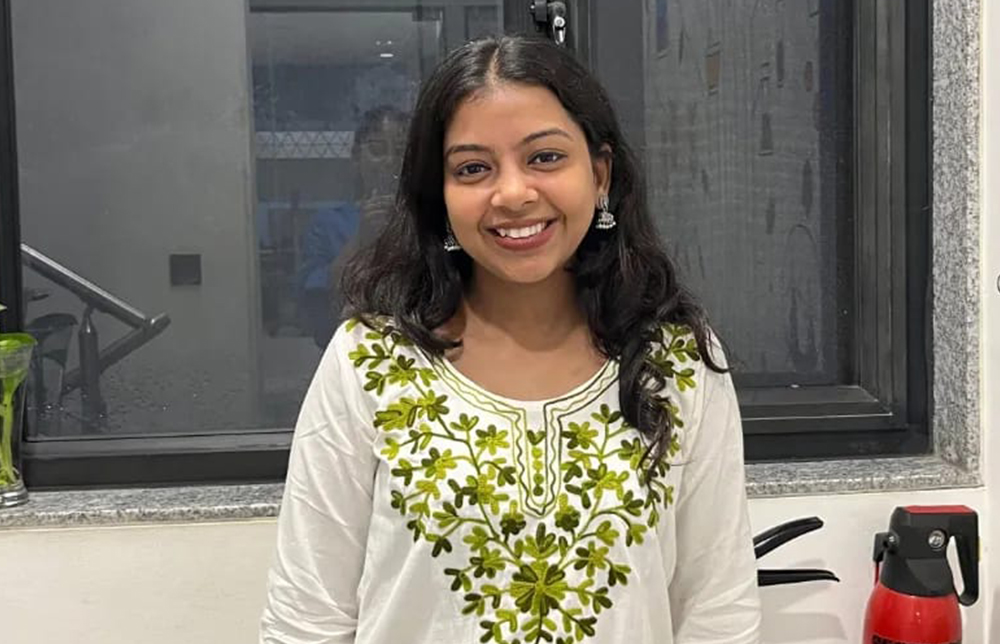
Mayank Bansal’s Olympiad journey began with school-level competitions before he discovered IOQM and started exploring competitive Mathematics more seriously. After watching PW’s lectures, he joined its Olympiad programmes and gradually built his preparation around advanced concepts, problem-solving, and regular testing.
His preparation helped him improve his IOQM score from 35 marks in his previous attempt to 44 marks in IOQM 2025 without normalization, and he qualified for the RMO stage.
How Mayank Bansal Discovered Olympiad Mathematics
Mayank was already participating in school-level competitions when he entered Class 9. As he became more interested in Mathematics and competitive exams, he learned about IOQM and decided to explore the opportunity.
He first came across PW’s lectures before getting access to its Olympiad preparation batch.
“Sir pehle maine thode se lectures YouTube pe dekhe the aapke aur Vivek sir ke, uske baad mujhe batch ka access bhi mila.”
This became the starting point of his more focused Olympiad preparation. His interest in Mathematics encouraged him to take the examination seriously and gradually move beyond the level of his regular school studies.
The Challenge Mayank Bansal Faced in Olympiad Preparation
As Mayank progressed, one of the challenges was dealing with the unpredictable nature of Olympiad examinations. The difficulty of IOQM can vary, making it difficult to prepare by relying only on familiar question patterns.
Mayank explained that this was one reason he preferred preparing at a level higher than the expected examination level.
“Wo to IOQM se kaafi achhe level ki hoti hai kyunki humein pata nahi hai ki MTA kis tarah ka paper set kar sakti hai. Jaise 2023 mein paper bahut zyada mushkil tha to 2024 mein wo bahut aasan ho gaya tha.”
The variation in paper difficulty made conceptual understanding and problem-solving practice important for him. He also had to prepare for RMO within a relatively short period after IOQM, which made prior preparation even more useful.
How PW’s Olympiad Preparation Helped Mayank Bansal
Once Mayank joined PW’s Olympiad programmes, he followed a structured preparation path through IOQM 1.0, RMO TC and PDC One. The preparation exposed him to advanced theory and challenging DPP questions before he encountered them in the examination.
He explained how this helped him prepare for the transition from IOQM to RMO:
“Lekin agar hum pehle hi bahut achhi taiyaari karke jaayein to ek to RMO ke liye bahut kam time milta hai, September se November ke beech mein, to usne bahut help kari ki aapne saari theory aage tak ke level ki pehle karva di thi, jo DPP question hote the wo bhi pehle hi kaafi achhe hote the...”
The preparation also continued through PW’s PDC, where Mayank experienced regular tests, theory sessions and doubt discussions. Instead of discovering gaps only during the final examination, he could identify areas that needed improvement through repeated testing.
“Ji sir mock test ke kaafi fayde hain. Pehle to jaise ye jo real test hote hain, mega test hote hain PW ke, isse humein pata chal jaata hai ki jo kami exam mein reh sakti hai wo humein pehle hi pata hai, to hum usko sudhaar ke hi exam mein jaate hain.”
The PDC environment also gave him experience with exam-like conditions and regular solution writing, helping him become more comfortable with the process of attempting long-form Mathematics problems.
How Mayank Bansal Cleared IOQM and Qualified for RMO
Mayank’s preparation resulted in a clear improvement in his IOQM performance. He scored 35 marks in his previous attempt, while his score increased to 44 marks in IOQM 2025 without normalization. This improvement helped him clear IOQM and qualify for the RMO stage.
Moving to the next stage also meant becoming more careful about how he approached Olympiad problems. Regular practice helped Mayank understand that arriving at an answer was not always enough. The reasoning had to hold for the complete problem rather than work only for a particular case.
Mayank explained this through an example from Geometry, where a student may unconsciously make an assumption based on the way a diagram looks:
“Sir tab to ye bahut achhi trick maani jaati hai, lekin ab iske marks kat jaayenge kyunki humein pata nahi hai ki wo cheez actually har case mein nahi hogi, wo ek case mein aa gayi kyunki wo sides equal hai, symmetry hai, lekin wo cheez fake solution hai.”
This reflects an important shift in his problem-solving approach. Instead of assuming that a condition visible in a particular diagram will always hold, he learned to check whether the reasoning actually follows from the information given in the question.
Mayank’s journey from 35 marks in his previous IOQM attempt to 44 marks in IOQM 2025, followed by qualification for the RMO stage, shows how his approach to Olympiad Mathematics developed. Rather than relying only on more practice, he worked on understanding concepts, testing himself regularly, and examining the logic behind his solutions.
PW provides Olympiad exam content, including Olympiad Exams Updates, sample papers, mock tests, guidance sessions, and more. Also, enroll today in the Olympiad Online Batches for preparation.





Get Free Counselling Today
and Clear up all your Doubts
 Live & recorded classes available at easeDashboard for progress trackingLakhs of practice questions

