







How Sanchit Patel Overcame NSEJS Fear and Qualified with Smart Preparation with PW
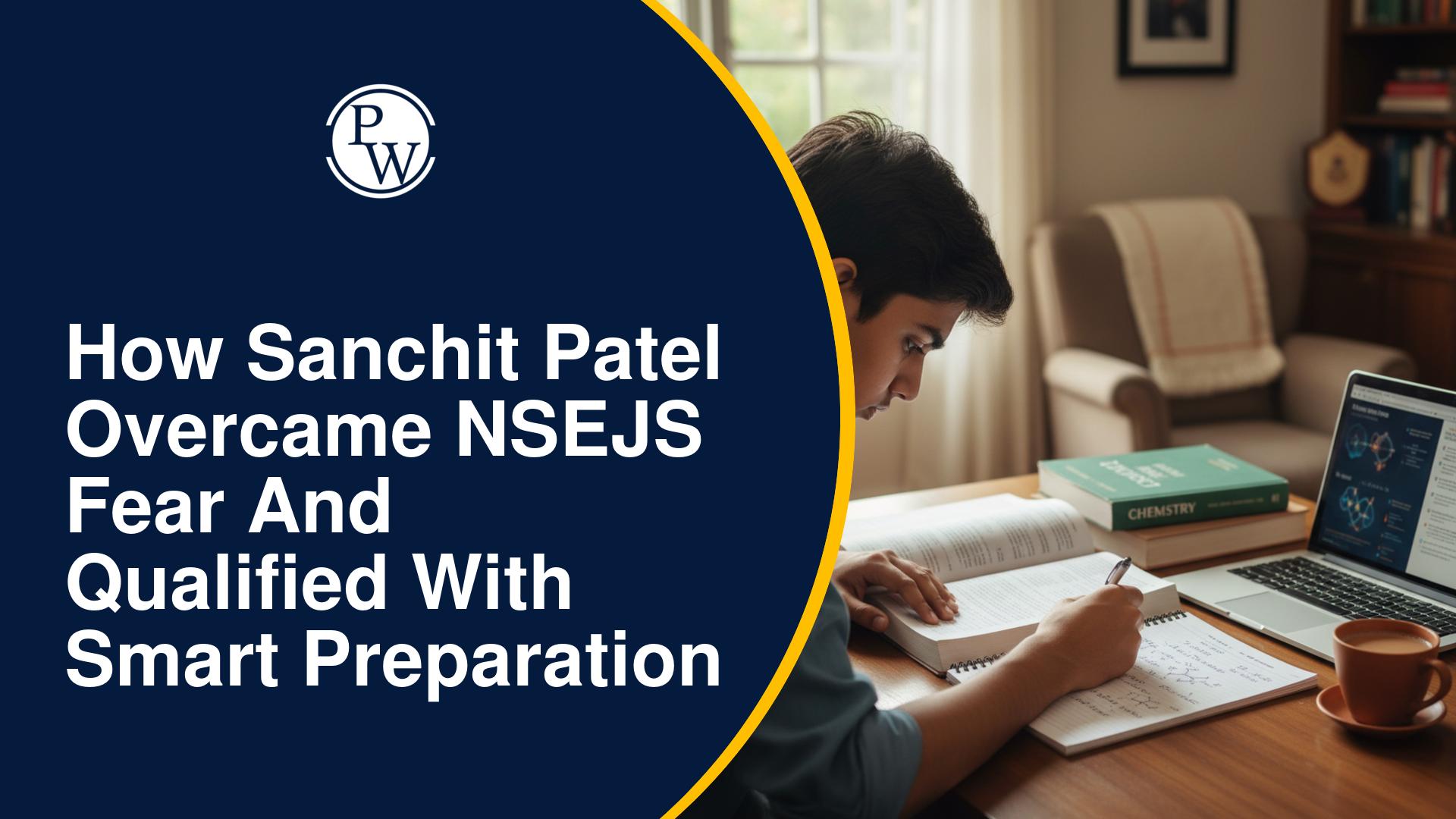
Clearing NSEJS and earning selection for the international stage marked an important milestone in Sanchit Patel’s Olympiad journey. However, his preparation did not begin with a clear idea of where it would lead. He first discovered Olympiads through a senior and gradually became interested in exploring competitive Science beyond regular school-level examinations.
As his interest grew, Sanchit had to balance school studies with Olympiad preparation while adapting to a higher level of problem-solving. His preparation took a more structured direction after he joined PW’s NSEJS batch. Later, the PDC gave him exposure to other serious aspirants, allowing him to exchange ideas, understand different approaches, and recognise his own potential.
His eventual NSEJS qualification and selection for the international stage became a reflection of how that preparation evolved over time.
How Sanchit Patel Discovered the Olympiad Path
Sanchit first came across the idea of preparing for Olympiads through a senior from his school. The senior had participated in competitions and later explained to Sanchit that there were Olympiads that could offer a different level of academic challenge.
“To phir unhone mujhe bataya ki aise-se Olympiads hain — ye jo hai private Olympiads jaise ki SOF dwara jo hote hain, unse zyada achhe hain, aur tumhare paas potential hai ki tum ise crack kar sakte ho — unhone mujhe suggest kiya.”
The suggestion made Sanchit consider Olympiad preparation seriously. He began his journey towards the end of the previous year and started looking for resources that could help him prepare.
How Sanchit Patel Managed School Alongside Olympiad Preparation
One of the challenges Sanchit faced was managing his school studies alongside the higher level of preparation required for the Olympiad. Instead of treating the two as completely separate, he found that his Science and Mathematics preparation for the Olympiad also strengthened his understanding of school-level concepts.
“Puri journey mein sabse bada challenge rehta hai ki school ko kaise manage karein Olympiad ke saath. To iske liye sabse simple tarika ye hai ki aap yahan pe jo hai Science aur Maths bahut hi achhe level pe padh rahe hain. To school ke Science aur Math iske saamne ke liye aapko koi preparation nahi karni padti hai, wo bahut easy ho jaate hain Olympiad ke Science Maths ke muqable.”
According to Sanchit, the depth of Olympiad-level Science and Mathematics made his school-level preparation comparatively easier. For other subjects, he felt that a simple reading could be enough to manage the requirements.
This approach allowed him to continue working towards the Olympiad without treating school and Olympiad preparation as two entirely different academic responsibilities.
How PW’s Olympiad Batch Became Part of Sanchit Patel’s Preparation
After discovering Olympiads, Sanchit first explored the Olympiad Wallah YouTube channel and watched older preparation videos. When the NSEJS 2025 batch was launched on the PW app, he decided to enrol and continue his preparation through the programme.
“Tab Olympiad Wallah ke jo PW app hai us pe NSEJS 2025 ka batch launch ho gaya. To maine wahan usko purchase kiya aur phir wahan se apni preparation shuru ki.”
Joining the batch gave Sanchit a dedicated preparation route for NSEJS. His journey then progressed from online preparation to the PDC, where he experienced a different kind of learning environment.
How PW’s PDC Changed Sanchit Patel’s Approach to Preparation
For Sanchit, one of the biggest differences between online classes and the PDC is the opportunity to interact directly with other students preparing at a similar level.
“To sabse pehli baat to PDC aur online classes mein bahut antar hai. Online mein hum logon ko to theek hi hai, lekin yahan PDC mein aane se pata chalta hai ki hamare jaise aur bhi bachche hain, kuch humse achhe bhi hain.”
Being around students who were performing at a similar or higher level encouraged Sanchit to observe their approaches and learn from them. He also felt that direct interaction helped him understand how other students approached questions.
This peer learning became an important part of his experience at the PDC. Rather than simply knowing that another student had solved a question, he could discuss how that student had arrived at the solution.
How PW Group Study Gave Sanchit Patel an Extra Push
The PDC environment also changed the way Sanchit studied outside regular classes. He began studying late at night and participating in group study sessions with other students.
“Yes sir, thoda sa push zyada mil gaya. Yes sir, group study se ek fayda hai ki hum log samay-samay pe questions jo nahi hote hain wo dusron se pooch sakte hain, uske saath apne jo thoughts hain unko de sakte hain agar unse koi question nahi hua.”
Group study gave him an opportunity to discuss questions, exchange ideas, and seek help when he was stuck. At the same time, he felt that studying together also provided short breaks that helped refresh his mind before returning to the next set of questions.
How Sanchit Patel is Preparing for the Next Olympiad Stage
After NSEJS, Sanchit was already thinking about the next stage and the type of preparation it would require. He particularly noted the importance of subjective questions and understanding how marks could be earned through the steps used in a solution.
“Meaning yahan se to itna to pata chal gaya ki mere potentials aur high hai, mujhe aur mehnat karni chahiye taaki aur zyada excel kar sake hum.”
His experience at the PDC helped him recognise that he could push himself further than he had previously thought. Being surrounded by strong students gave him a clearer idea of the level of competition and his own potential.
For Sanchit, clearing NSEJS and earning selection for the international stage was therefore more than just an examination result. His journey moved from simply discovering Olympiads to preparing seriously, learning through different forms of exposure, and eventually reaching a stage where he could challenge himself at a much higher level.
His story shows how early exposure, structured preparation, peer learning, and the willingness to keep improving can gradually turn an unfamiliar opportunity into a significant Olympiad achievement.
PW provides Olympiad exam content, including Olympiad Exams Updates, sample papers, mock tests, guidance sessions, and more. Also, enroll today in the Olympiad Online Batches for preparation.




 Live & recorded classes available at easeDashboard for progress trackingMillions of practice questions at your fingertips


