NSEJS 2026 Student Registration Begins, Exam Date (22 Nov), Eligibility, Syllabus & Exam Pattern
NSEJS 2026 Student registration has started at iapt.org.in from 21 August to 14 September 2026. Check student enrolment dates, exam date, eligibility, syllabus, exam pattern, and registration process.
NSEJS 2026: NSEJS student enrolment has started from 21 August 2026 and will remain open until 14 September 2026 through the official IAPT website. Eligible students studying in Classes 8, 9, or 10 and meeting the prescribed age criteria can enrol for the National Standard Examination in Junior Science (NSEJS) 2026. The NSEJS 2026 exam will be held on 22 November 2026 from 2:30 PM to 4:30 PM.
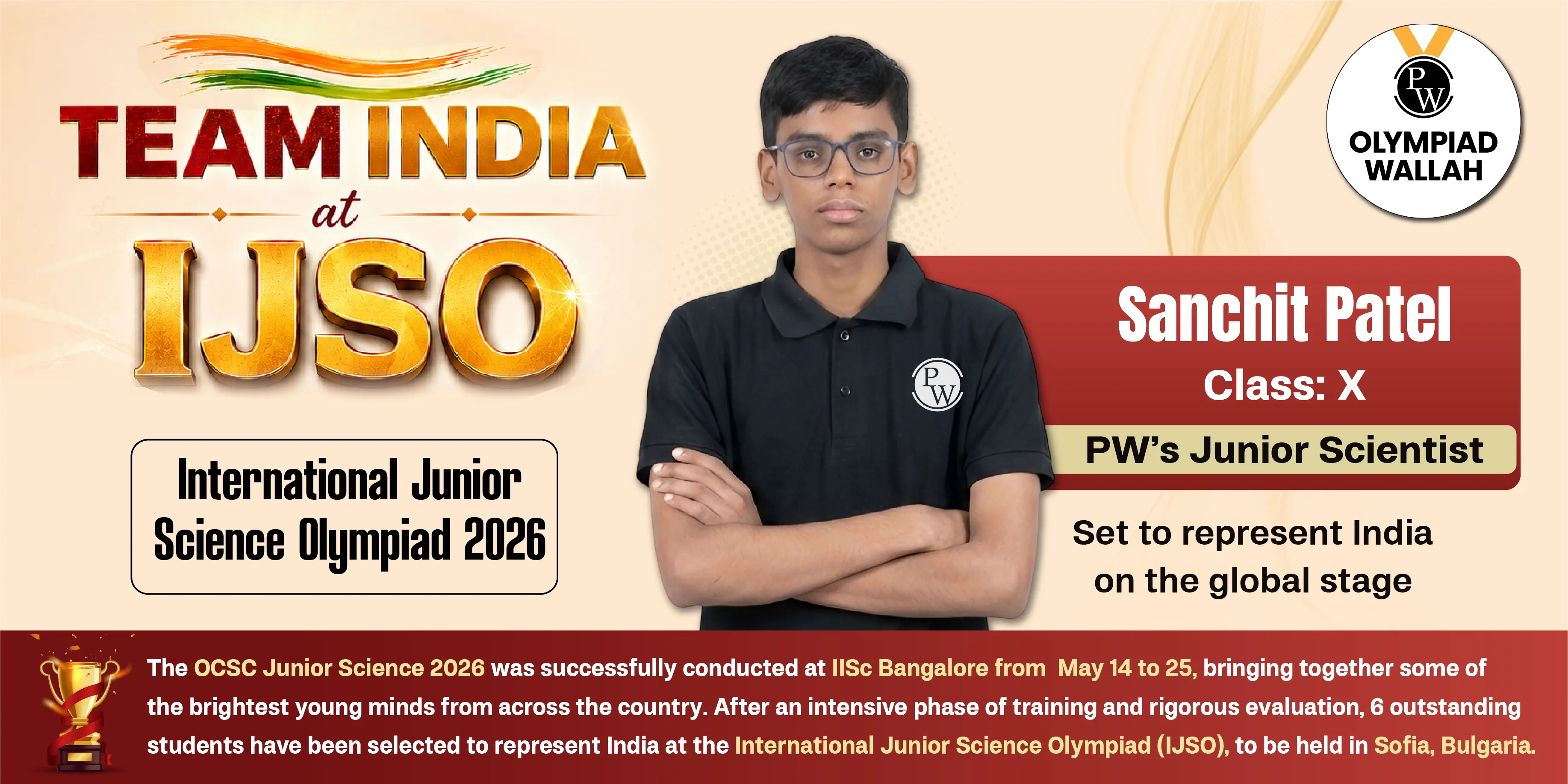
NSEJS is the first stage of the International Junior Science Olympiad (IJSO) selection process in India. The examination is open to eligible students studying in Classes 8, 9, and 10 who meet the prescribed age and eligibility criteria. The question paper broadly covers concepts from Physics, Chemistry, and Biology based on the CBSE Class 10 curriculum.
NSEJS Full Form
NSEJS stands for National Standards Examination in Junior Science. The NSEJS exam is designed to test the scientific skills of students, usually between the ages of 14 and 15. It is the first stage in the selection process for the Indian National Junior Science Olympiad (INJSO), which in turn leads to the International Junior Science Olympiad (IJSO). The subjects included in the NSEJS Examination are Physics, Chemistry and Biology.Check: How to Prepare for NSEJS?
NSEJS 2026 Overview
The National Standard Examination in Junior Science (NSEJS) 2026 is a national-level examination conducted for secondary school students to identify and nurture young scientific talent in India. For a quick overview of the NSEJS 2026 examination, refer to the table below.
| Particular | Details |
|---|---|
| Exam Name | National Standard Examination in Junior Science (NSEJS) |
| Conducting Body | Indian Association of Physics Teachers (IAPT) |
| Olympiad | International Junior Science Olympiad (IJSO) Selection Process |
| Exam Date | 22 November 2026 (Sunday) |
| Exam Timing | 2:30 PM – 4:30 PM |
| Mode | Offline |
| Duration | 2 Hours |
| Subjects | Physics, Chemistry & Biology |
| Question Type | Multiple Choice Questions |
| Official Website | https://www.iapt.org.in |
NSEJS 2026 Important Dates
| Event | Date |
|---|---|
| Centre Registration | 1 August – 20 August 2026 Closed |
| Student Enrolment | 21 August – 14 September 2026 Ongoing |
| NSEJS Exam Date | 22 November 2026 |
| Exam Timing | 2:30 PM – 4:30 PM |
NSEJS 2026 Exam Date
The National Standard Examination in Junior Science (NSEJS) will be conducted on 22 November 2026 at various exam centres across the country by the Indian Association of Physics Teachers (IAPT).
The examination includes multiple-choice questions, and one mark is deducted for every incorrect answer. Students who qualify for the NSEJS exam become eligible to move forward to the next stages of the International Junior Science Olympiad selection process.
NSEJS Eligibility Criteria
A candidate must satisfy all of the following conditions:
- Must be studying in Class 8, Class 9 or Class 10 as on 30 November 2026.
- Date of Birth must be between 1 January 2012 and 31 December 2013 (both dates inclusive).
- Must be eligible to hold an Indian Passport.
- Must have been residing and studying in India.
- Must be studying in an Indian school system.
- Must not have completed or be scheduled to complete Class 10 Board Examination before 30 November 2026.
- Must not appear for NSEA, NSEP, NSEB or NSEC 2026.
NSEJS 2026 Registration Link
The NSEJS 2026 registration process is being conducted through the IAPT official website (iapt.org.in).
The registration takes place in two stages.
- Centre Registration: 1 August to 20 August 2026 (Recognised schools, junior colleges and colleges only)
- Student Enrolment: 21 August to 14 September 2026
Students can register either:
- Through their Centre In-charge, or
- Individually through the online portal.
Official Website: https://www.iapt.org.in
NSEJS 2026 Application Fee
The application fee for NSEJS 2026 is:
₹300 per student (per examination).
Students registering through schools pay the fee to the Centre In-charge, while online applicants can pay through digital payment methods available on the portal.
Note: The registration fee is non-refundable.
Online Coaching for NSEJS Exam 2026
PW Online Coaching for National Standard Examination in Junior Scientific 2026 is about a combination of the right knowledge, commitment and communication skills. This batch has been meticulously crafted to cater for students from 8th to 10th Class, with the primary goal to help candidates in clearing the NSEJS Exam 2026.Stages After NSEJS
There are two stages in the National Standards Examination in Junior Science (NSEJS) Exam and here you can go through the details of each stage-Stage 1 - NSEJS: Every year, over 80,000 people from all over the country take the exam to be shortlisted for the merit list, from which around 300 students are selected based on their performance. If the final position is tied, all students with the same score qualify for the second level test or stage of the exam.
Stage 2 - INJSO: This part of the exam is more difficult and those who qualify will advance to the second stage by achieving 50% of the maximum score or MAS (minimum admissible score). The top 35 candidates from the Indian National Junior Science Olympiad (INJSO) are invited to participate in a two week program. A team of six is then selected to represent India in the International Junior Science Olympiad (IJSO).
Stage 3: Orientation cum Selection Camp (OCSC) is organized by HBCSE. To train and select students for IJSO through theoretical and experimental tests. The top 6 students are selected for IJSO.
Stage 4: Pre-departure Training Camp (PDT) is organized by HBCSE for intensive training before IJSO.
Stage 5: Participation in International Junior Science Olympiad (IJSO) is the final stage
NSEJS Exam Pattern 2026
The NSEJS Exam typically consists of multiple-choice questions. Here is a detailed look at the National Standard Examination In Junior Scientific Exam Pattern 2026:| Particular |
Details |
|---|---|
| Duration | 2 Hours |
| Total Questions | 60 |
| Section A | 48 MCQs (Single Correct) |
| Section B | 12 MCQs (Multiple Correct) |
| Subjects | Physics, Chemistry & Biology |
| Total Marks | 216 |
Section A
- 48 questions
- Single correct answer
- +3 marks for every correct answer
- -1 mark for every incorrect answer
Section B
- 12 questions
- One or more correct options
- 6 marks each
- Marks awarded only if all correct options and no incorrect options are selected.
NSEJS 2026 Language Options
The question paper will be available in:
- English
- Hindi
- Gujarati
- Bangla
- Kannada
- Tamil
- Telugu
Other Indian languages may also be offered if at least 300 students opt for that language during registration.
NSEJS Syllabus 2026
The National Standard Examination in Junior Science (NSEJS) is a competitive exam aimed at high school students, primarily covering topics from the Central Board of Secondary Education (CBSE) curriculum. The syllabus includes Physics, Chemistry, and Biology.| NSEJS Syllabus 2026 | |
| Subject | Subject Topics |
| Physics |
|
| Chemistry |
|
| Biology |
|
NSEJS Previous Year Question Paper
By solving NSEJS previous papers, students will have an idea of important topics. Previous papers from the National Standard Test in Basic Science will help you understand the difficulty level of the paper. It can help you manage time, try to solve as many questions as possible. You will develop a strategy for better test preparation and how to attempt questions on final exams. We have attached here the NSEJS PYQ Link for your easy access.Awards & Certificates
Every candidate will receive a downloadable report card through the IAPT portal.
Students also receive recognition based on their performance:
- Certificates for the Top 10% students at every examination centre.
- Merit Certificates for the Top 1% students in each state.
- Special Merit Certificates and a prize (book) for National Top 1% students in Junior Science.
- Gold Medals are awarded to students attending the Orientation-cum-Selection Camp (OCSC).
PW provides Olympiad exam content, including Olympiad Exams Updates, sample papers, mock tests, guidance sessions, and more. Also, enroll today in the Olympiad Online Batches for preparation.
NSEJS 2026 FAQs
What is NSEJS 2026?
Is there any negative marking in NSEJS Examination?
What is Syllabus and Exam Pattern for NSEJS 2026?
How can I register for NSEJS 2026?