






INMO 2026 Topper: Check Topper’s Preparation Stories and Key Important Factors
INMO 2026 Topper brings together top scorers from the Indian National Mathematical Olympiad (INMO) to share their preparation journeys and guidance. Drawing an analogy from streamline motion in physics, these students illuminate the exact paths they followed. Their experiences, from initial steps to overcoming hurdles, are designed to guide current aspirants towards success in Olympiads.
Also Read: INMO 2026 Result
INMO 2026 Toppers Overview
INMO 2026 Toppers shares stories from top scorers of the Indian National Mathematical Olympiad (INMO). They reveal their exact preparation paths and tips. From starting to beating challenges, their journeys guide current students to Olympiad success. Let’s see what their stories tell us.
Student Experience: Lakshya
Lakshya, a Class 10 student, started his Olympiad preparation during the summer holidays with limited prior knowledge. He began by utilizing Physics Wallah's YouTube content and modules for IOQM. He scored 35 in INMO, achieving a full score on the first two questions.
Preparation Strategy
His success stemmed from consistent practice with specific materials. Key factors included:
-
"Problem-Solving Strategies" (Problem Primer for the RMO), which he completed during RMO preparation.
Future Plans & Faculty Advice
Currently, Lakshya is orienting towards JEE. The faculty advises him not to abandon Olympiad preparation entirely in Class 11. Since he has a strong foundation in Number Theory and Geometry, continuing Olympiad practice alongside JEE studies can help him in both, especially as primary JEE pressure typically mounts in Class 12.
Student Experience: Aharshi Roy(IRC)
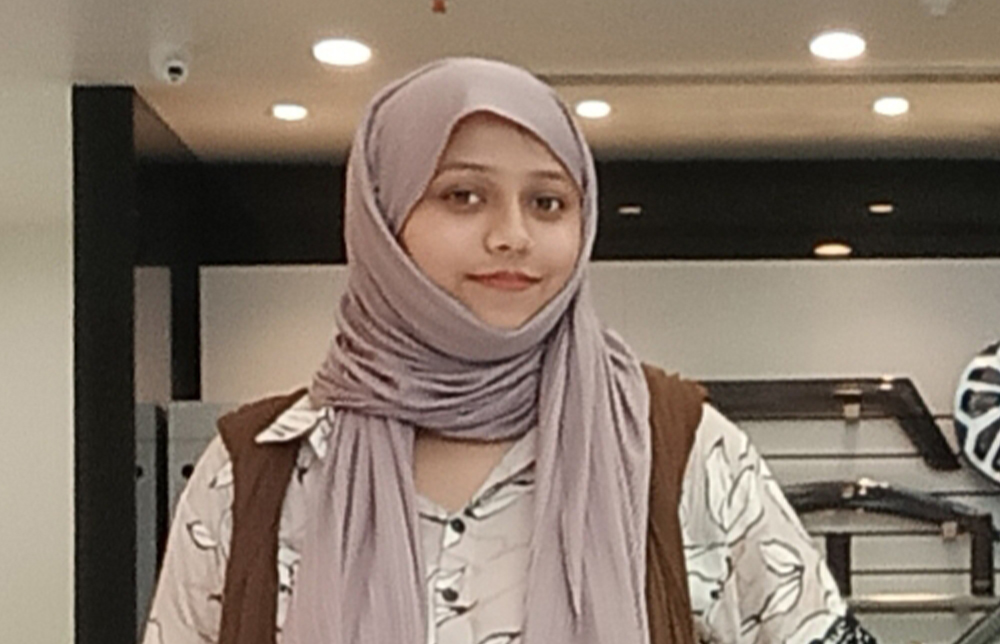
Aharshi, a Class 12 student and long-term Olympiad participant, achieved an INMO score of 54. Her journey began in Grade 6 during the lockdown, sparked by her father introducing her to proving theorems like Fermat's Little Theorem and Wilson's Theorem. Her formal Olympiad journey started in Grade 8 with her first IOQM attempt, which ignited her passion.
For the last two years, Aharshi's preparation has been exclusively focused on Olympiads, not JEE. He cleared INMO last year, participated in the Asian Pacific Mathematics Olympiad (APMO), and secured a Bronze medal.
Student Experience: Pragyan
Pragyan, who initially found the IOQM intimidating, decided to prepare exactly 3 months before the exam. He watched recorded classes from PW's 2023 batch and attended live classes, which significantly built his interest. He dedicated 6-7 hours daily to Olympiad studies.
The 25-Day INMO Strategy
Despite a low RMO score (19 marks), Pragyan committed exactly 25 days to INMO preparation. His strategy focused on his strengths:
-
He recognized his Geometry was very weak and chose to leave Geometry to focus entirely on Combinatorics, Number Theory, and Algebra.
-
During the initial 15 free days, he studied 8-12 hours daily. Even during Class 10 pre-boards, he maintained effort.
-
In total, he filled 600-700 pages of notes/practice in those 25 days, boosting his confidence and leading to an INMO score of 30.
Student Experience: Kushagra
Kushagra started Olympiad preparation in November 2024, initially unsure of his capabilities. After scoring well in initial tests, his confidence grew. He prepared for IOQM using modules and DPPs. His RMO score, initially 16, was re-evaluated to 21, allowing him to qualify by one mark (UP cutoff was 20).
He dedicated one full month to INMO preparation, studying 10-12 hours daily.
Strategy & Learnings
-
RMO Mistake: Wasting too much time on a single problem.
-
INMO Strategy: His plan was to first quickly identify the solvable problems to secure marks, then return to the harder ones.
-
Booklist:
-
For Geometry (his weak area), he used Evan Chen's book.
-
For Combinatorics, he relied on modules and IMO Shortlist (IMOSL) problems.
Student Experience: Ojas
Ojas learned about IOQM in Class 9 but considered it too tough to attempt. His first attempt in Class 10 yielded a score of 45, clearing an exceptionally easy paper. He cleared RMO in his next attempt and scored 34 in INMO and 34 in RMO.
Preparation Strategy
He focused mainly on Combinatorics and Number Theory, giving less priority to Geometry, as his primary focus is now on JEE preparation.
Advantage of Olympiad Prep in JEE
Olympiad background provides a significant advantage for JEE:
-
It offers a different approach to problem-solving.
-
Coordinate Geometry problems can often be solved using pure geometry properties learned in Olympiads.
-
Number Theory questions on remainders are directly solvable using modular arithmetic.
-
Olympiad problem-solving improves overall thinking skills and builds the courage to tackle any challenging problem.
Guidance for Junior Students
This section synthesizes advice from top scorers and faculty for students beginning their Olympiad journey.
When and How to Start
-
Start Early: It is highly recommended to start Olympiad preparation in Class 8, 9, or 10. Earlier starts provide more time to build a strong foundation and develop pattern recognition.
-
Aharshi's Advice for Beginners (Grade 8): Do not solely focus on computational problems for IOQM. Start practicing subjective problems (RMO/INMO level) simultaneously as thinking processes are interconnected. Once IOQM is cleared, the focus should shift entirely to subjective problems.
-
Recommended Resource for Absolute Beginners: Evan Chen's "OTIS Excerpts," a free online resource, is an excellent starting point without formal coaching.
The Role of Theory vs. Practice
In Olympiad mathematics, theory is a small component (e.g., 3% theory), while practice and problem-solving constitute the vast majority (97%). Students must embrace the challenge; the satisfaction of solving a previously intimidating problem is a key motivator. Do not be afraid of problems.
Problem-Solving Approach
-
Thinking Time is Crucial: A common mistake is giving up too quickly and looking at solutions. It is essential to spend significant time thinking about a problem. The goal is to understand how a solution was derived, not just to see it. Aayushi suggests thinking about problems even during free time at school, which is crucial for developing "out of the box" ideas, especially in Combinatorics.
-
Consistency and Long Sittings: Top scorers emphasized consistency and long study hours (8-12 hours per day), especially during dedicated preparation periods like between RMO and INMO. This consistent effort builds confidence and keeps concepts fresh.
PW provides Olympiad exam content, including Olympiad Exams Updates, sample papers, mock tests, guidance sessions, and more. Also, enroll today in the Olympiad Online Batches for preparation.