







NSEJS Biology Digestion and Absorption: Complete Notes & Concepts

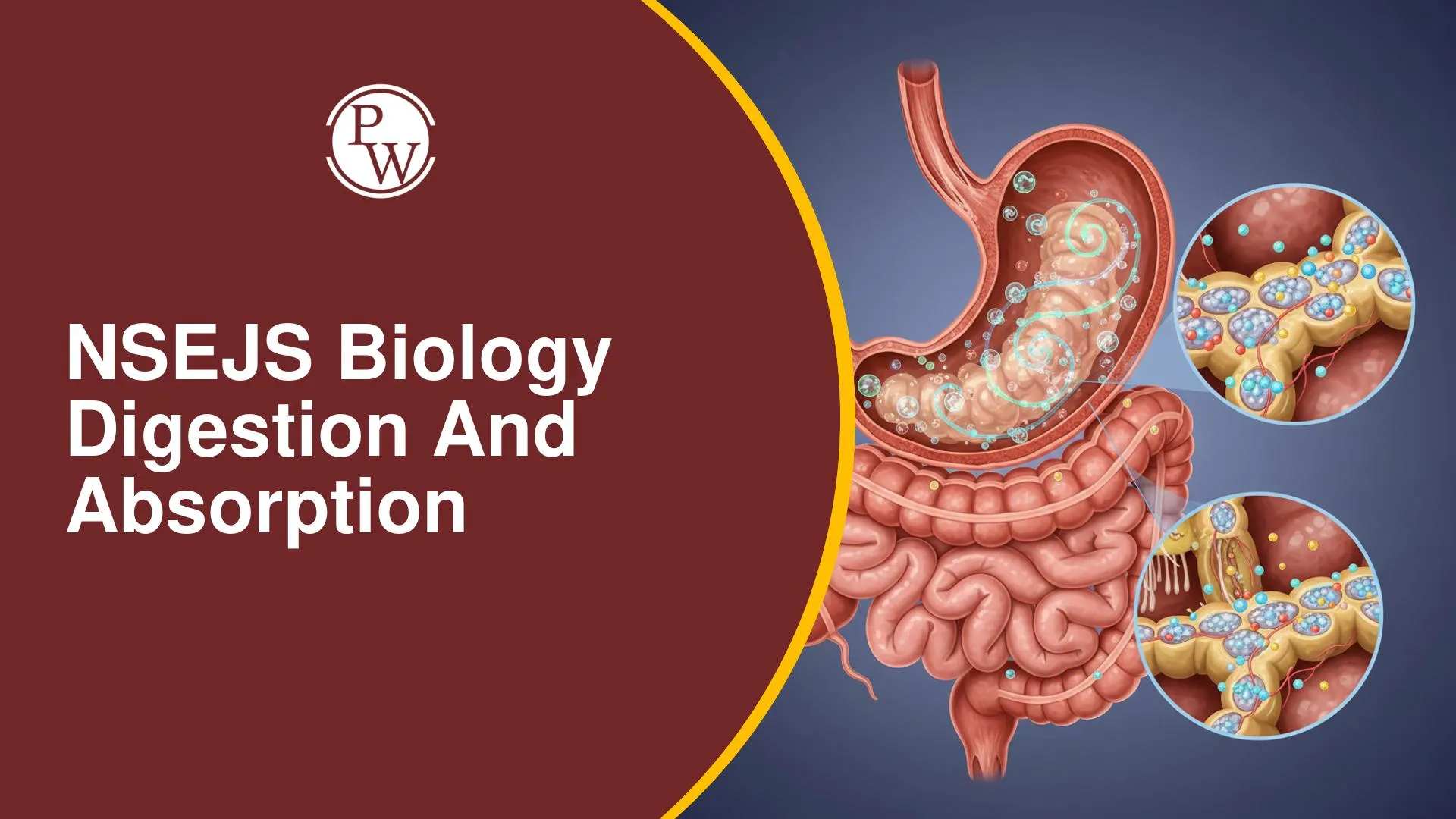
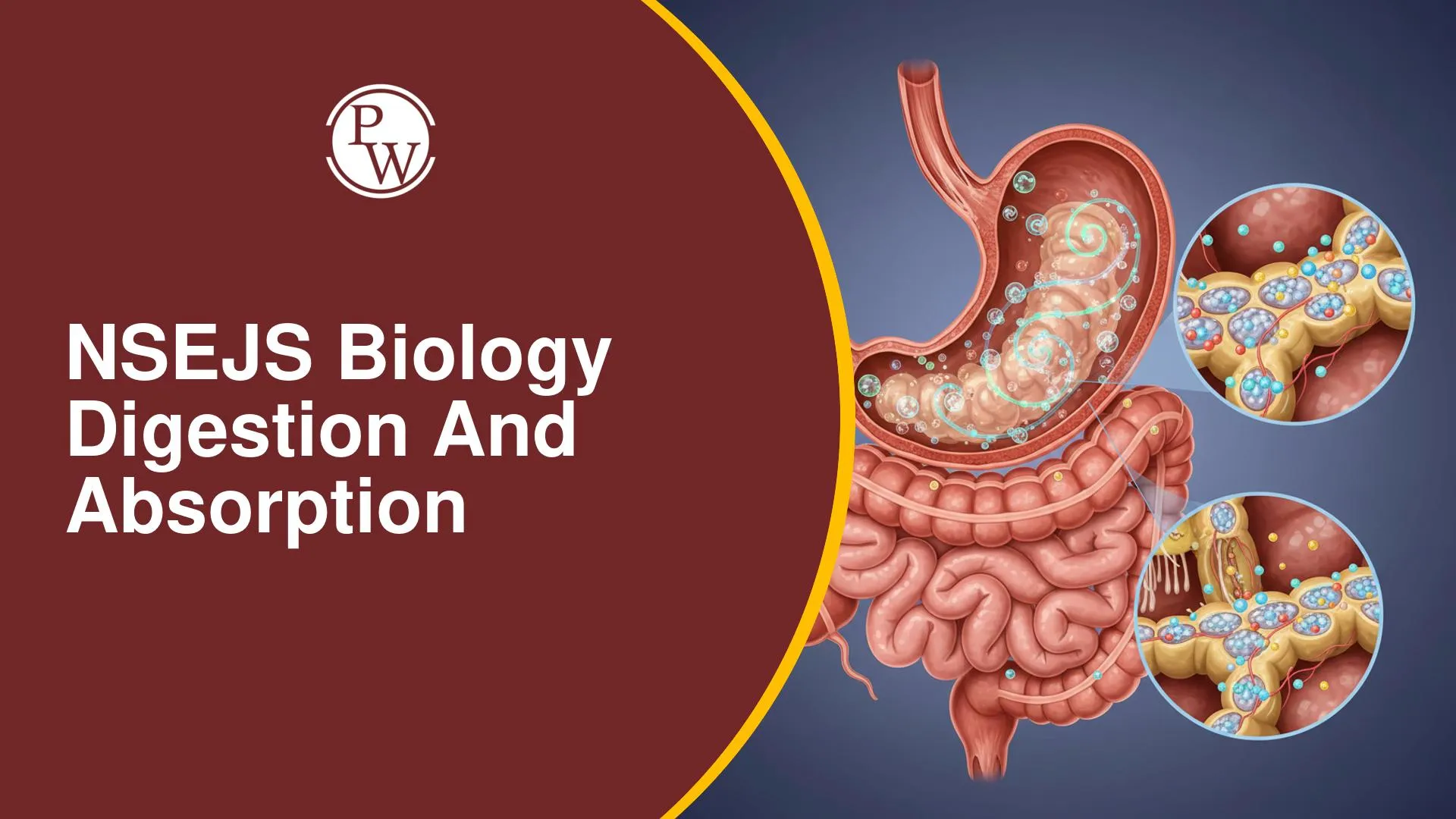
Digestion and Absorption is one of the most important topics in the NSEJS Biology syllabus, covering how the human body breaks down food into simpler substances and absorbs nutrients for growth, energy, and repair. Questions from this chapter often test your understanding of the digestive system, digestive enzymes, nutrient absorption, and the functions of different digestive organs.
To score well in the NSEJS exam, students should focus on the complete NSEJS Biology Digestion and Absorption syllabus, understand key concepts, practise diagrams, and solve previous years' questions. A strong grasp of this topic not only improves Biology preparation but also builds a solid foundation for other competitive exams such as NEET and Olympiads.
Also Read:
Human Physiology: Digestion and Absorption
Human physiology is the study of various processes that help the human body function properly. These processes include digestion, respiration, circulation, excretion, and control and coordination. Among these, digestion and absorption play an important role because they help the body obtain essential nutrients and energy from food.
Nutrition
Nutrition is the process through which living organisms obtain food and use it for energy, growth, repair, and maintaining body functions. The major nutrients present in food include carbohydrates, proteins, and fats.
Types of Organisms Based on Nutrition
Organisms obtain their food in different ways. Based on their mode of nutrition, they are mainly classified into two groups: autotrophs and heterotrophs.
Autotrophs are organisms that can prepare their own food using simple substances like carbon dioxide and water. They use processes such as photosynthesis, where sunlight provides energy for food production, or chemosynthesis, where chemical energy is used. Plants, algae, and some bacteria are examples of autotrophic organisms.
Heterotrophs are organisms that depend on other organisms for their nutritional requirements because they cannot prepare their own food. Animals, humans, and fungi are examples of heterotrophs. Some heterotrophs, such as mushrooms and yeast, obtain nutrients from dead organic matter, while lichens represent a symbiotic relationship between algae and fungi.
Humans are heterotrophic organisms because they depend on other sources for food and nutrients.
Complex and Simple Forms of Food
The food we consume is usually present in a complex form, which cannot be directly absorbed or used by the body. The main purpose of digestion is to break down these complex food molecules into simpler substances that can be easily absorbed and utilised by cells.
This process is mainly carried out with the help of digestive enzymes, which convert large food molecules into smaller molecules.
Processes of Digestion
Digestion occurs through two major processes:
Mechanical Digestion:
Mechanical digestion involves the physical breakdown of food into smaller pieces without changing its chemical composition. Chewing of food by teeth is an example of mechanical digestion. It increases the surface area of food, making it easier for enzymes to act on it.
Biochemical Digestion:
Biochemical digestion involves the chemical breakdown of food molecules with the help of digestive enzymes. These enzymes break complex nutrients like carbohydrates, proteins, and fats into simpler forms that can be absorbed by the body. Most digestive enzymes are proteins and play a key role in the digestion process.
Human Digestive System
The human digestive system comprises the Alimentary Canal and Associated Glands. The Alimentary Canal is a continuous, modified tube extending from the mouth to the anus.
Five Steps of Human Digestion
The human digestive process unfolds in five sequential steps:
-
Ingestion: Taking food into the body.
-
Digestion: Breaking down complex food into simpler forms.
-
Absorption: Nutrients entering the bloodstream.
-
Assimilation: Absorbed nutrients used by cells for energy, growth, and repair.
-
Defecation/Egestion: Removing undigested waste.
-
(Memory Tip: Remember the five steps with the acronym: I D A A D - Ingestion, Digestion, Absorption, Assimilation, Defecation).
Alimentary Canal: Organs and Path of Food
Food travels through:
-
Mouth / Oral Cavity
-
Pharynx (common passage for food and air)
-
Oesophagus (Food Pipe)
-
Stomach (J-shaped)
-
Small Intestine (Duodenum, Jejunum, Ileum)
-
Large Intestine (Cecum, Colon, Rectum)
-
Anus
Sphincters and Valves
Sphincters are muscular rings regulating food movement and preventing backflow. The Gastroesophageal Sphincter prevents stomach contents from re-entering the oesophagus.
Pharynx and Respiratory Tract
The Pharynx is a shared passage for food and air. The Glottis is the windpipe opening, and the Gullet is the food pipe opening. The Epiglottis, a flap-like structure, covers the Glottis during swallowing to prevent food from entering the trachea.
Oral Cavity: Teeth and Tongue
The process of digestion begins in the oral cavity, where food is chewed and mixed with saliva. Teeth help break food into smaller pieces, while the tongue helps in mixing food, swallowing, and identifying different tastes.
Teeth
Humans have 32 permanent teeth that are divided into four different types:
-
Incisors (I): Used for cutting and biting food.
-
Canines (C): Used for tearing food.
-
Premolars (PM): Help in crushing and grinding food.
-
Molars (M): Mainly responsible for grinding and chewing food.
Humans develop two sets of teeth during their lifetime:
-
Milk teeth (Primary teeth): There are 20 milk teeth. They include incisors, canines, and molars, but premolars are absent.
-
Permanent teeth: Adults have 32 permanent teeth, including incisors, canines, premolars, and molars.
The dental formula of an adult human is:
I 2/2, C 1/1, PM 2/2, M 3/3 × 2 = 32
This means that one half of each jaw contains:
-
2 incisors
-
1 canine
-
2 premolars
-
3 molars
Structure of a Tooth
A tooth has different layers that perform specific functions:
-
Enamel: It is the hardest substance in the human body and covers the outer surface of the tooth crown.
-
Dentin: It is a bone-like layer present below the enamel.
-
Pulp Cavity: It contains nerves and blood vessels that provide nutrition and sensation to the tooth.
-
Crown: The visible part of the tooth above the gum.
-
Root: The part embedded inside the jawbone.
Tooth Decay
Tooth decay occurs when bacteria present in the mouth break down food particles and produce acids. These acids gradually damage the enamel and dentin, causing cavities.
Types of Dentition in Humans
Human teeth show different characteristics:
-
Heterodont: Humans have different types of teeth with different functions.
-
Diphyodont: Humans develop two sets of teeth during their lifetime — milk teeth and permanent teeth.
-
Monophyodont: Some teeth appear only once during life.
-
Thecodont: Teeth are fixed inside sockets present in the jaw.
-
Bunodont: Premolars and molars have rounded cusps that help in grinding food.
Tongue
The tongue is a muscular organ that helps in chewing, swallowing, and speaking. It is attached to the floor of the mouth by a small fold of tissue called the frenulum.
The surface of the tongue contains small projections called papillae, some of which contain taste buds. These taste buds help detect different tastes, including:
-
Sweet
-
Sour
-
Salty
-
Bitter
-
Umami
Salivary Glands
Saliva plays an important role in the digestion of food. Humans have three pairs of salivary glands that produce saliva:
-
Parotid Glands: These are the largest salivary glands and are located near the ears.
-
Submandibular Glands: These glands are present below the jaw and produce a major portion of saliva.
-
Sublingual Glands: These are the smallest salivary glands and are located below the tongue.
Composition and Function of Saliva
Saliva has a pH of around 6.8 and contains an important enzyme called salivary amylase (ptyalin).
This enzyme begins carbohydrate digestion by breaking starch into maltose. Around 30% of starch digestion starts in the mouth.
When food mixes with saliva, it forms a soft, moist mass called a bolus, which is easier to swallow.
Stomach
The stomach is a J-shaped muscular organ that stores food for about 4–5 hours and helps in protein digestion.
Regions of the Stomach
The stomach is divided into four main regions:
-
Cardiac Region: The area where the oesophagus opens into the stomach.
-
Fundic Region: The dome-shaped upper part of the stomach.
-
Body: The main central region of the stomach.
-
Pyloric Region: The lower part that opens into the small intestine and is controlled by the pyloric sphincter.
Gastric Glands and Their Secretions
The inner lining of the stomach contains gastric glands that release different substances required for digestion.
Mucous Neck Cells
These cells produce mucus that protects the stomach lining from the harmful effects of acid.
Chief Cells
These cells release pepsinogen, an inactive form of the enzyme pepsin.
Parietal Cells
These cells produce:
-
Hydrochloric acid (HCl)
-
Intrinsic factor
Functions of Gastric Secretions
Gastric secretions released by the stomach play an important role in digestion, especially in the breakdown of proteins and protection of the stomach lining. These secretions include hydrochloric acid (HCl), pepsin, mucus, and intrinsic factor.
Hydrochloric Acid (HCl)
Hydrochloric acid is secreted by the parietal cells of the stomach. It creates a highly acidic environment with a pH of around 1.5–1.8, which helps in digestion.
Its main functions are:
-
Converts inactive pepsinogen into active pepsin.
-
Helps in the digestion of proteins.
-
Kills harmful microorganisms present in food.
-
Provides the acidic environment required for the proper functioning of digestive enzymes.
Pepsin
Pepsin is an active enzyme formed from pepsinogen secreted by chief cells.
Its function is:
-
Breaks down proteins into smaller molecules such as peptones and proteoses.
-
Initiates protein digestion in the stomach.
Mucus
Mucus is secreted by mucous neck cells present in the gastric glands.
Its functions include:
-
Protecting the inner lining of the stomach from the harmful effects of hydrochloric acid.
-
Preventing damage caused by digestive enzymes.
Intrinsic Factor
Intrinsic factor is secreted by parietal cells of the stomach.
Its main function is:
-
Helps in the absorption of Vitamin B12 in the small intestine.
-
Supports the formation and maturation of red blood cells.
When food mixes with hydrochloric acid and gastric juices, it forms a semi-digested acidic substance called chyme, which then moves into the small intestine for further digestion.
Small Intestine
The small intestine is the main site for digestion and absorption. It is a highly coiled tube divided into three parts:
-
Duodenum: The first and C-shaped part.
-
Jejunum: The middle part where further digestion and absorption occur.
-
Ileum: The last and most coiled part.
The duodenum receives:
-
Bile from the liver
-
Pancreatic juice from the pancreas
-
Intestinal juices
Large Intestine
The large intestine mainly helps in absorbing water and storing waste material.
It consists of:
-
Cecum: A pouch-like structure connected with the appendix.
-
Colon: Divided into ascending, transverse, descending, and sigmoid parts.
-
Rectum: Stores feces temporarily.
-
Anus: The opening through which waste is removed from the body.
Layers of the Alimentary Canal
The wall of the alimentary canal has four layers:
-
Serosa: The outer protective covering.
-
Muscularis: Contains smooth muscles that help move food through the digestive tract.
-
Submucosa: Contains blood vessels, lymph vessels, and nerves.
-
Mucosa: The inner lining that forms folds called rugae in the stomach and villi in the small intestine.
Villi increase the surface area and help in efficient absorption of nutrients.
Liver
The liver is the largest gland in the human body and weighs around 1.2–1.5 kg. It is located on the right side of the abdominal cavity.
The liver produces bile, which helps in fat digestion.
The gallbladder stores and concentrates bile but does not produce it.
Functions of the Liver
Apart from digestion, the liver performs several important functions:
-
Stores fat-soluble vitamins (A, D, E, and K).
-
Helps in detoxification.
-
Produces bile.
-
Synthesises important substances required by the body.
Bile Composition and Function
Bile contains:
-
Bile pigments (bilirubin and biliverdin)
-
Bile salts
-
Cholesterol
-
Phospholipids
The main function of bile is to emulsify fats, meaning it breaks large fat droplets into smaller droplets so enzymes can digest them easily.
Pancreas
The pancreas is a long, flattened gland located behind the stomach. It produces pancreatic juice containing enzymes required for digestion.
Pancreatic juice helps digest:
-
Carbohydrates
-
Proteins
-
Fats
Important pancreatic enzymes include:
-
Trypsin
-
Chymotrypsin
-
Carboxypeptidase
-
Pancreatic amylase
-
Lipase
Pancreatic enzymes are often released in inactive forms and become active inside the small intestine.
Digestion of Macronutrients
Macronutrients are the major nutrients required by the body in large amounts for energy, growth, and repair. The three main macronutrients are carbohydrates, proteins, and fats. Digestion breaks these complex molecules into simpler forms that can be easily absorbed and used by the body.
Carbohydrate Digestion
Carbohydrate digestion begins in the mouth and is completed in the small intestine.
-
In the mouth, salivary amylase (ptyalin) starts breaking down starch into maltose.
-
In the small intestine, pancreatic amylase continues the digestion of remaining starch into smaller sugars.
-
Intestinal enzymes such as maltase, sucrase, and lactase convert disaccharides into simple sugars.
The final products of carbohydrate digestion are:
-
Glucose
-
Fructose
-
Galactose
These simple sugars are absorbed into the bloodstream and used for energy.
Protein Digestion
Protein digestion begins in the stomach and continues in the small intestine.
-
In the stomach, pepsin breaks proteins into smaller molecules called peptones and proteoses in the presence of hydrochloric acid (HCl).
-
In the small intestine, pancreatic enzymes such as trypsin, chymotrypsin, and carboxypeptidases further break down proteins into smaller peptides.
-
Dipeptidases present in intestinal juice convert dipeptides into amino acids.
The final products of protein digestion are:
-
Amino acids
Amino acids are absorbed into the blood and used for growth, repair, and other body functions.
Fat Digestion
Fat digestion mainly occurs in the small intestine.
-
Bile released by the liver helps in the emulsification of fats, breaking large fat droplets into smaller ones.
-
This increases the surface area for digestive enzymes to act.
-
Pancreatic lipase breaks emulsified fats into smaller molecules.
The final products of fat digestion are:
-
Fatty acids
-
Glycerol
These products are absorbed through the lymphatic system and later enter the bloodstream.
Nucleic Acid Digestion
Nucleic acids such as DNA and RNA are also digested in the small intestine.
-
Nucleases break nucleic acids into nucleotides.
-
Nucleotidases convert nucleotides into nucleosides.
-
Nucleosidases further break nucleosides into sugars and nitrogenous bases.
The final products of nucleic acid digestion are:
-
Sugars
-
Nitrogenous bases
Thus, digestion converts complex carbohydrates, proteins, fats, and nucleic acids into simpler molecules that can be absorbed and utilised by the body.
Absorption
Absorption is the process through which digested nutrients enter the blood or lymphatic system.
The small intestine is the main site of absorption because it contains villi and microvilli that increase surface area.
Types of Nutrient Transport
Nutrients are absorbed through:
-
Passive Transport: Movement without energy.
-
Facilitated Transport: Movement using carrier proteins.
-
Active Transport: Movement requiring energy.
Absorption of Fats
Fat absorption occurs through the lymphatic system.
Steps involved:
-
Fatty acids combine with bile salts to form micelles.
-
Micelles enter intestinal cells.
-
Fat molecules are converted into chylomicrons.
-
Chylomicrons enter lacteals.
-
They finally reach the bloodstream.
Digestion and absorption are essential process that helps the human body obtain energy and nutrients from food. The digestive system works through a series of coordinated steps involving the alimentary canal and digestive glands. Enzymes break down complex nutrients like carbohydrates, proteins, fats, and nucleic acids into simpler forms that can be easily absorbed and used by body cells.
Understanding the functions of different digestive organs, enzymes, and absorption mechanisms is important for NSEJS Biology preparation. A strong knowledge of this chapter helps students answer conceptual questions and builds a foundation for advanced topics in biology and other competitive exams like NEET and Olympiads. Regular revision of key concepts, diagrams, and processes can help students perform better in the examination.
PW provides Olympiad exam content, including Olympiad Exams Updates, sample papers, mock tests, guidance sessions, and more. Also, enroll today in the Olympiad Online Batches for preparation.
NSEJS Biology Digestion and Absorption FAQs
Why is pancreatic juice considered a "complete digestive juice"?
What are the key differences between Kwashiorkor and Marasmus?
Why does salivary amylase stop functioning in the stomach?
What is the significance of the Intrinsic Factor secreted by the stomach?




 Live & recorded classes available at easeDashboard for progress trackingMillions of practice questions at your fingertips

