India’s Employability Rises to 56.35% in 2026: 8 Skills That Can Improve Job Readiness
 Avisha Das9 Nov, 2026

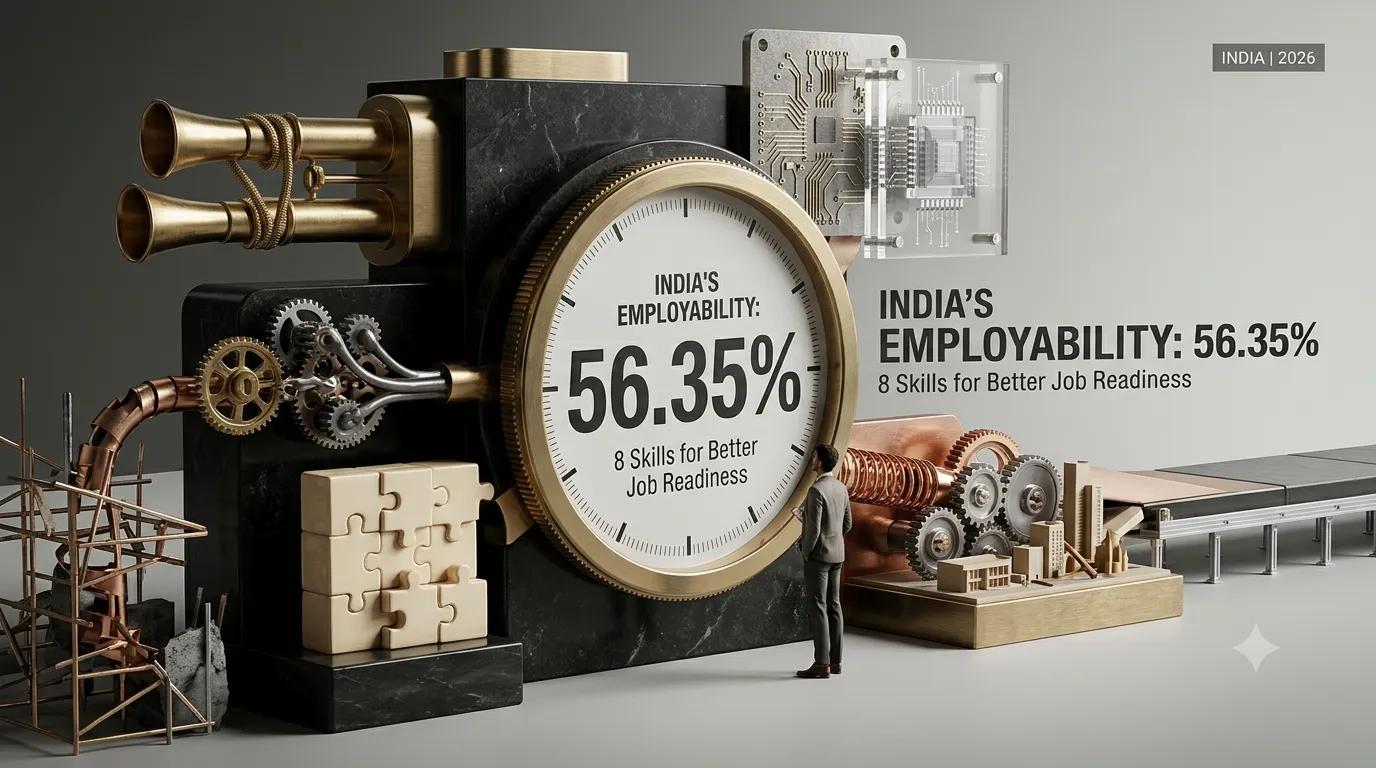
India’s employability score has improved for the seventh consecutive year, rising from 46.21% in 2020 to 56.35% in 2026. While this reflects progress in workforce readiness, it also points to a changing job market where academic qualifications alone may not be enough. Employers increasingly need professionals who can apply technical knowledge, work with digital tools and adapt to evolving roles.
The India Skills Report 2026 highlights how artificial intelligence, digital transformation, flexible work arrangements and sectoral growth are reshaping employment. Its findings point to a growing need for specialised technical capabilities alongside communication, critical thinking and adaptability.
THE BIG TAKEAWAY: India’s employability score is rising, but job readiness increasingly depends on combining technical expertise with the ability to learn, adapt and collaborate. Eight skill areas highlighted in the report offer a useful view of the capabilities gaining importance across emerging sectors.
How Has India’s Employability Changed in 2026?
India’s employability score has continued its upward movement, indicating gradual improvement in workforce readiness.
The India Skills Report records the following year-wise employability figures:
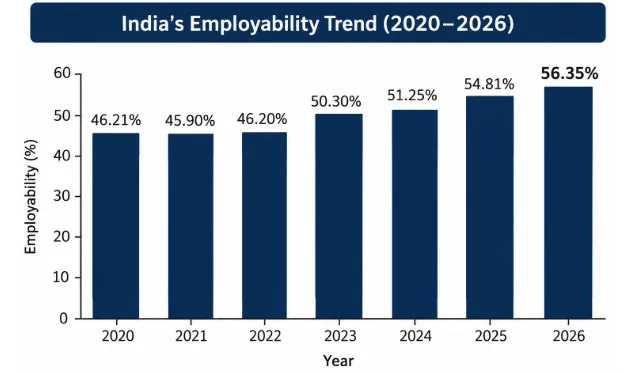
The 2026 score represents an increase of 1.54 percentage points over 2025. The report also highlights differences in employability across educational disciplines. Among engineering graduates, the reported employability figures are:
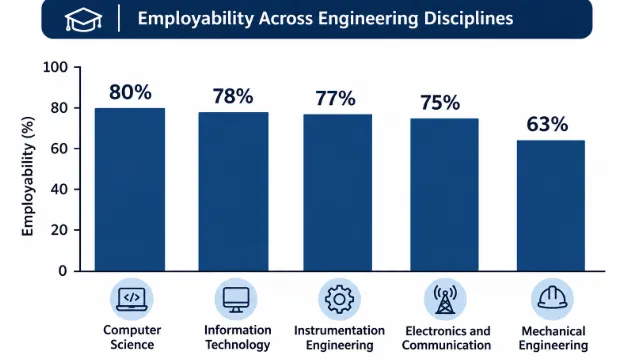
These figures show variations across disciplines and underline the importance of developing capabilities that match changing industry requirements.
Key Takeaway: India’s employability score reached 56.35% in 2026. However, the figures across engineering disciplines show that job readiness can vary considerably by area of study.
The 8 Technical Skills Driving Workplace Demand in 2026
The report highlights several skill areas gaining importance as industries adopt new technologies and expand into emerging sectors.
The following eight areas appear in the report’s regional snapshot of in-demand skills and sectoral growth. They offer insight into capabilities sought across technology, finance, healthcare and sustainability-related work.
1. Artificial Intelligence and Machine Learning
AI and machine learning are influencing how organisations analyse information, automate tasks and develop digital products. The report identifies Natural Language Processing (NLP), MLOps and predictive analytics among the relevant skill areas.
India’s AI talent base is projected to reach approximately 1.25 million by 2027, with AI-related roles recording annual double-digit growth, as highlighted in the report’s coverage.
Want to move beyond simply using AI tools and learn how to build intelligent applications? Explore the Gen AI Engineering Course by PW Skills to gain practical exposure to LLM application development, RAG and agentic AI.
2. Cybersecurity
As organisations expand their digital operations, protecting systems, networks and information remains important. The report identifies the following areas within cybersecurity:
-
Internet of Things (IoT) security
-
Blockchain security
-
Compliance
These capabilities are relevant to organisations working with connected devices, digital platforms and technology-led services.
3. Cloud Computing
Cloud platforms support the storage, management and delivery of digital services. The report highlights multi-cloud architecture and experience with major platforms such as AWS, Azure and Google Cloud.
Understanding cloud infrastructure and deployment practices can be useful for professionals working in software development and technology operations.
Interested in building the skills to manage modern cloud infrastructure and automate software delivery? Enrol in the DevOps and Cloud Computing Course to learn key technologies such as Linux, AWS, Docker, Kubernetes and automation.
4. Software Development
Software development remains relevant as businesses build and maintain websites, applications and digital platforms. The report highlights these technologies and areas:
-
React.js
-
Python
-
Mobile development
These skills relate to different stages of application development, from building user-facing interfaces to developing application logic and mobile solutions.
Ready to build smarter, AI-powered web applications? Explore PW Skills’ Full Stack Development with AI programme to develop these skills.
5. Data Analytics
Data analytics helps organisations interpret information and use it to support business decisions. The report identifies Power BI, Tableau and SQL as relevant tools in this skill area.
Professionals working with data may use these tools to organise information, examine patterns and present findings through reports and dashboards.
Want to turn raw data into meaningful insights? Check the PW Skills’ Data Analytics with AI Course to build practical data analytics skills.
6. Fintech and Blockchain
Financial technology is changing how people and businesses access and use financial services. The report highlights digital payments and smart contracts as important areas within fintech and blockchain.
These technologies are relevant to digital financial transactions and automated processes. Their growing use also connects this skill area with cybersecurity and data-related capabilities.
7. Sustainability and ESG
Sustainability and Environmental, Social and Governance (ESG) considerations are gaining importance across industries. The report identifies the following areas:
-
Renewable energy
-
Climate risk
-
Green building
These capabilities connect environmental considerations with business operations, infrastructure and energy-related projects.
8. Healthcare IT
Healthcare IT combines technology with healthcare services and operations. The report highlights telemedicine platforms and diagnostic AI as relevant areas.
Digital healthcare services can support remote consultations and technology-assisted diagnostic processes. This makes familiarity with healthcare platforms and digital tools relevant to the changing healthcare sector.
Why Are Human Skills Still Important Alongside Technical Skills?
Technical knowledge is only one part of job readiness. The ability to communicate, think critically and work with others also matters.
The India Skills Report 2026 emphasises the importance of combining human capabilities with digital proficiency. Its assessment framework considers several cognitive and non-technical skills, including:
-
Communication: Sharing information and ideas clearly.
-
Critical thinking: Examining information and evaluating different perspectives.
-
Adaptability: Responding to changes in roles, tools and work requirements.
-
Teamwork: Working effectively with others.
-
Emotional intelligence: Understanding and responding to interpersonal situations.
-
Digital proficiency: Using digital tools and technology effectively.
The report also identifies creativity, design thinking, problem-solving, collaboration and resilience as important capabilities in a workplace increasingly influenced by AI and automation.
This highlights why professionals need to develop both technical and interpersonal capabilities. Knowing how to use a tool is useful, but applying that knowledge, communicating findings and responding to new situations are also important parts of workplace readiness.
Key Takeaway: A combination of technical knowledge, digital proficiency and human skills can help individuals prepare for changing workplace expectations.
How Is AI Changing Recruitment and the Future of Work?
AI is influencing both the skills employers seek and the way organisations approach workforce planning.
The report discusses the growing role of AI and automation across industries. It also highlights the shift towards flexible and skill-based work models, including permanent, contractual, gig and apprenticeship arrangements.
AI adoption is also becoming relevant to recruitment. The report's coverage notes that AI tools are used in recruitment by 70% of IT companies and 50% of BFSI firms.
At the same time, AI is changing the nature of work rather than simply introducing new technical roles. Professionals may need to work alongside digital systems, interpret information and apply human judgement to tasks supported by technology.
The report also points towards the importance of continuous learning. As tools and job requirements change, professionals may need to update their capabilities through reskilling and upskilling.
Key Takeaways
-
Employability reached 56.35% in 2026, compared with 54.81% in 2025.
-
Computer Science recorded 80% employability among the engineering disciplines listed in the report.
-
AI, cybersecurity, cloud computing and data analytics feature among the highlighted skill areas.
-
Fintech, sustainability and healthcare IT also represent areas of emerging skill demand.
-
Communication, critical thinking, adaptability, teamwork and emotional intelligence remain important alongside technical capabilities.
-
AI adoption and flexible work arrangements are influencing recruitment and workforce requirements.
India's employability score of 56.35% in 2026 reflects continued improvement in workforce readiness. However, the changing nature of work means that students and professionals need to look beyond academic qualifications and develop relevant technical and human capabilities.
The eight skill areas highlighted in the India Skills Report 2026 offer a starting point for understanding emerging requirements across industries. Building digital proficiency, strengthening problem-solving abilities and continuing to learn can help individuals prepare for evolving workplace expectations.