








RRB NTPC Mock Test: CBT 1 & CBT 2 Online Tests, PYQs
 Parul Rishi13 Oct, 2026
RRB NTPC mock tests help candidates practise in an online exam environment and understand how they perform under time limits. For CBT 1 and CBT 2, candidates can attempt full-length mocks and previous years' paper tests for every area such as Maths, Reasoning and General Awareness.
Regular RRB NTPC mock-test practice can help improve speed, accuracy and time management while highlighting topics that need more revision. Candidates can choose tests based on their Undergraduate or Graduate level, analyse their performance after each attempt and use the results to plan their next round of practice.
RRB NTPC Mock Tests 2026
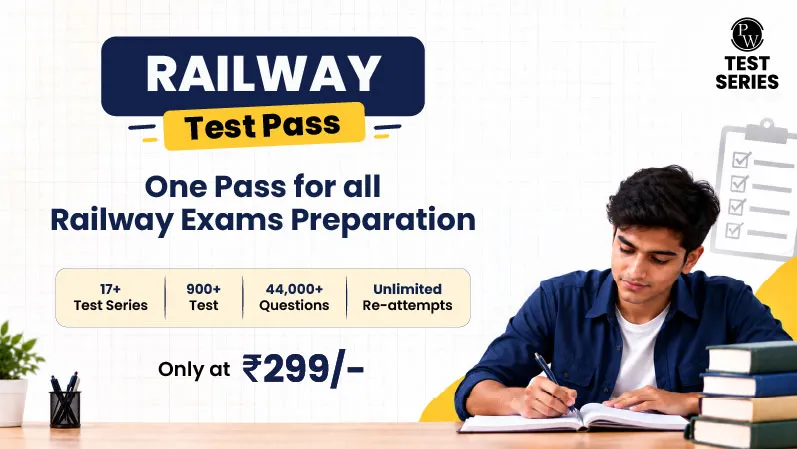
You can use online mock tests to practise for both RRB NTPC CBT 1 and CBT 2. The test series has full-length mocks and tests based on previous year papers. Separate practice options are also given for Undergraduate and Graduate levels, and mock tests provide full RRB NTPC syllabus coverage.
The table below gives a quick view of the test types, levels and the number of tests in each.
|
Test Type |
Level |
Tests |
|
Full Mock Tests |
Undergraduate CBT 1 |
20 |
|
Full Mock Tests |
Graduate CBT 1 |
20 |
|
Previous Year Papers |
CBT 2 |
16 |
|
Full Mock Tests |
Graduate CBT 2 |
20 |
|
Full Mock Tests |
Undergraduate CBT 2 |
20 |
|
Previous Year Papers |
CBT 1 |
50 |
RRB NTPC Mock Test for CBT 1 and CBT 2
Practice tests are available for both stages of the exam. There are four kinds of tests: CBT 1 full mocks, CBT 2 full mocks, CBT 1 previous year papers and CBT 2 previous year papers. Pick the test that matches your level and your stage of preparation. Each category links to its own test page.
RRB NTPC CBT 1 Mock Test
For CBT 1, you can choose from these options:
-
Graduate-level CBT 1 mocks: 20 tests
-
Undergraduate-level CBT 1 mocks: 20 tests
-
CBT 1 previous year papers: 50 tests
RRB NTPC CBT 2 Mock Test
For CBT 2, you can choose from these options:
-
Graduate-level CBT 2 mocks: 20 tests
-
Undergraduate-level CBT 2 mocks: 20 tests
-
CBT 2 previous year papers: 16 tests
Also Read:
RRB NTPC Subject-Wise Mock Test
Before you take full-length tests, it helps to practise one subject at a time. Subject-wise tests let you find weak areas early and fix them step by step. Here are the subjects you can practise.
RRB NTPC Maths Mock Test
This test covers numerical ability and arithmetic questions. It is useful for improving your calculation speed and accuracy.
RRB NTPC English Mock Test
This test gives practice in grammar, vocabulary and comprehension. Take it if English practice fits your preparation. Please check the latest official exam pattern to see how English is used in the exam.
RRB NTPC Reasoning Mock Test
This test has logical and analytical reasoning questions. Focus on solving each question quickly and correctly.
RRB NTPC GK GS Mock Test
This test covers general awareness and general science. It includes current affairs and static topics where they are relevant. Use the individual subject tests below to go deeper into each area.
RRB NTPC Computer Mock Test
This test checks your computer awareness. It covers basic computer concepts and commonly asked topics.
RRB NTPC Geography Mock Test
This test covers Indian and world geography topics for general awareness preparation. You can practise physical, Indian and economic geography.
RRB NTPC Science Mock Test
This test covers general science. You can practise Physics, Chemistry and Biology at the level needed for the exam.
RRB NTPC Polity Mock Test
This test covers these topics:
-
Indian Constitution
-
Fundamental Rights and Duties
-
Parliament
-
President and Prime Minister
-
Constitutional bodies and governance
RRB NTPC Economics Mock Test
This test covers basic Indian economy concepts. Topics include banking, inflation, national income and the budget.
RRB NTPC History Mock Test
This test covers Ancient, Medieval and Modern Indian History. You can practise major events, movements, personalities and important dates.
RRB NTPC Mock Test Series: Number of Tests Available
The table below shows the test series offered by PW. Note that the CBT 2 full mock series is labelled 2025, while the CBT 1 series is labelled 2026.
|
Test Series |
Level/Stage |
Total Tests |
|
Full Mock Tests |
Undergraduate CBT 1, 2026 |
20 |
|
Full Mock Tests |
Graduate CBT 1, 2026 |
20 |
|
Previous Year Papers |
CBT 2 |
16 |
|
Full Mock Tests |
Graduate CBT 2, 2025 |
20 |
|
Full Mock Tests |
Undergraduate CBT 2, 2025 |
20 |
|
Previous Year Papers |
CBT 1 |
50 |
How to Attempt RRB NTPC Mock Test Online
Taking a mock test online is simple. Follow these steps:
-
Select the RRB NTPC mock test.
-
Choose the CBT stage, level or subject.
-
Start the test.
-
Attempt the questions within the given time.
-
Submit the test.
-
Check your score and performance.
-
Note your weak topics and practise also.
How RRB NTPC Mock Tests Help in Preparation
Mock tests make you comfortable with the online exam setting. They do not promise selection, but they build good exam habits. Here is how they help:
-
They make you familiar with the online test environment.
-
They help you practise time management.
-
They improve how you choose which questions to attempt.
-
They show your weak subjects and topics.
-
They let you track your accuracy and speed.
-
Previous year papers show you the real question trends.
RRB NTPC Mock Test vs Previous Year Papers
Both are useful, but they serve different needs. The table below shows the main differences so you can use each one the right way.
|
RRB NTPC Mock Tests |
RRB NTPC Previous Year Papers |
|
Simulated practice tests |
Questions from earlier exams |
|
Useful for timed practice |
Useful for understanding real question trends |
|
Can cover chosen subjects or topics |
Reflect questions asked in previous exams |
|
Useful for repeated practice |
Useful for exam-oriented practice |
RRB NTPC Mock Test Preparation Strategy
A clear plan makes your practice more useful. Use the four steps below in order.
-
Start With Subject-Wise Tests
Begin with Maths, Reasoning, GK GS and the other subject tests. This shows you which areas need more work.
-
Move to Full-Length Mock Tests
Once your basic topics are ready, attempt full CBT-level mocks. Always keep the timer on, as in the real exam.
-
Practise Previous Year Papers
Use the 50 CBT 1 and 16 CBT 2 previous-year paper tests. They help you understand the kind of questions asked earlier.
-
Analyse Every Mock
After each test, review the following:
-
Incorrect questions
-
Unattempted questions
-
Time spent
-
Accuracy
-
Weak topics that keep repeating
A good way to prepare is to attempt a few subject-wise tests first and then move to full-length papers. The RRB NTPC test series on PW has both, along with CBT 1 and CBT 2 previous year papers, so you can practise at your own pace.
PW provides Railway exam content, including Railway Exam Blogs, sample papers, mock tests, guidance sessions, and more. Also, enroll today on Railway Online Coaching for preparation.
RRB NTPC Mock Test Series FAQs
Where can I attempt the RRB NTPC mock test online?
How many RRB NTPC mock tests are available?
Are subject-wise RRB NTPC mock tests available?
Should I take the RRB NTPC Maths Mock Test or the Reasoning Mock Test first?


Have questions about your prep?
Our experts can answer all your questions




 Live & recorded classes available at easeDashboard for progress trackingMillions of practice questions at your fingertips

