







Blood: Introduction, Facts, Functions, Components, Treatment
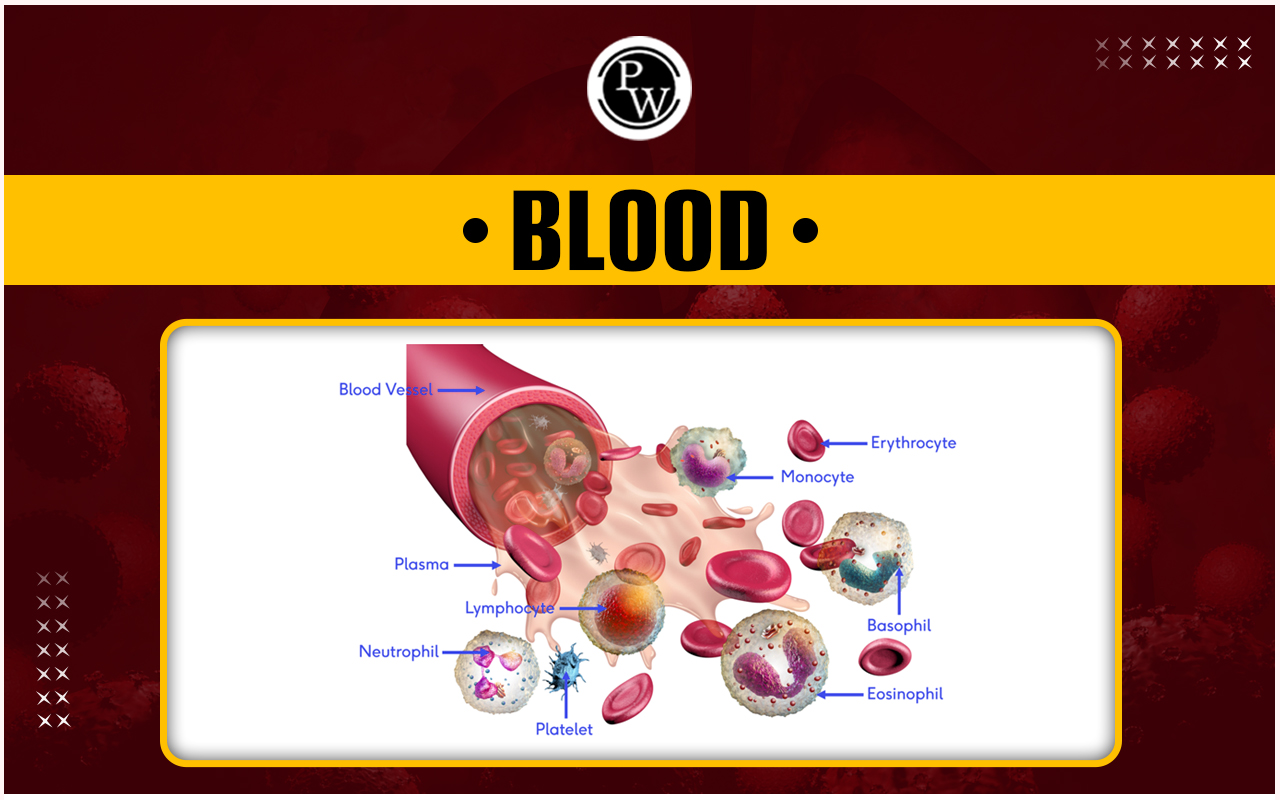
Blood is a unique kind of bodily fluid. Red blood cells, white blood cells, platelets, and plasma make up its four primary constituent parts. Check this article to know more about Blood.
 Jasdeep Bhatia13 May, 2024
Share
If you are looking Blood , you have come to the right place!
The topic “Facts About Blood” will be covered in this article. The blood transports nutrients, oxygen, and waste out of the body. It is a fluid that is constantly moving. Blood is "thicker" than pure water because it is mainly liquid and contains many suspended cells and proteins. The typical human has a blood volume of more than a gallon. The plasma liquid makes up the majority of the blood. Proteins in plasma move substances through the blood, support blood coagulation and perform other functions. Blood plasma also contains other dissolved elements, including glucose. This article will discuss the facts, functions, components and treatments of blood.Introduction
Blood is a biological fluid found in the circulatory systems of humans and other animals that transports essential nutrients and oxygen to the cells as well as metabolic waste products away from them. The term "blood" in the context of the circulatory system refers to peripheral blood and the blood cells that make up peripheral blood. The blood cells that comprise blood float in blood plasma. Plasma, which makes up 55% of blood fluid and is 92% water by volume, contains proteins, carbohydrates, mineral ions, hormones, carbon dioxide (plasma is the primary medium for excretory product movement), and blood cells. The main protein in plasma, albumin, regulates the colloidal osmotic pressure in the blood.Facts About Blood
The vital substance that provides oxygen to the body's cells is blood. The red blood cells, platelets, and white blood cells that comprise this specific connective tissue are suspended in a liquid plasma matrix. These are the fundamentals, but there are also many other fascinating details. For instance, your blood makes up around 8% of your body weight and contains small amounts of gold.Not All Blood Is Red
Other creatures have blood of various colours. However, humans have red blood. Blue blood is seen in various arthropods, spiders, squid, octopuses, and crustaceans. Leeches and several varieties of worms have green blood. Some marine worm species have violet blood. Beetles and butterflies are among the insects that have colourless or pale yellowish blood.The Body Contains About a Gallon of Blood
Around 1.325 litres of blood comprise an adult's body. About 7–8% of a person's total body weight is made up of blood.Blood Consists Mostly of Plasma
About 55% of the blood that circulates in your body is plasma, followed by 40% red blood cells, 4% platelets, and 1% white blood cells. Neutrophils are the most prevalent type of white blood cell in blood circulation.White Blood Cells Are Necessary for Pregnancy
White blood cells are crucial for a functioning immune system, as is common knowledge. Less well-recognised is that certain macrophages, which are white blood cells, are required for conception. The tissues of the reproductive system contain a lot of macrophages. Macrophages aid in the ovary's formation of blood channel networks, which is necessary for the hormone progesterone production.Environmental Issues and Solutions
There's Gold in Your Blood
Metal atoms in human blood include those iron, chromium, manganese, zinc, lead, and copper. You might be astonished to learn that blood has trace amounts of gold. The majority of the 0.2 milligrammes of gold in the human body is found in the blood.Blood Cells Originate From Stem Cells
In humans, hematopoietic stem cells are the source of all blood cells. The bone marrow produces about 95% of the blood cells in the body. The majority of the bone marrow in an adult is located in the pelvis, spine, and breastbone. Several different organs regulate the development of blood cells.Blood Cells Have Different Life Spans
There are various life cycles for mature human blood cells. White blood cells circulate in the body for several hours to several days, platelets for around nine days, and red blood cells for roughly four months.Functions of Blood
Blood is used by the body for several essential functions, such as the following:- Oxygen supply to tissues (bound to haemoglobin, which is carried in red cells).
- Availability of nutrients, including glucose, amino acids, and fatty acids (in the blood or bound to plasma proteins, like blood lipids).
- Removing waste such as urea, lactic acid, and carbon dioxide.
- Two examples of immunological processes are the movement of white blood cells and identifying foreign substances using antibodies.
- Coagulation, the procedure used to control bleeding after a blood vessel ruptures, changes blood from a liquid to a semisolid gel.
- Messenger processes, including hormone delivery and tissue damage signalling
Components of Blood
Blood is a freely flowing, opaque crimson fluid that is denser and more viscous than human water. Haemoglobin, a special iron-containing protein, provides a distinctive colour. When saturated with oxygen (oxyhemoglobin), haemoglobin turns a brighter shade; when oxygen is withdrawn, it turns a darker shade (deoxyhemoglobin). Because of this, oxygenated blood from an artery is lighter in colour than partially deoxygenated blood from a vein.Plasma
More than 90% of the blood's liquid component, called plasma, comprises a complicated solution. The water in the plasma is available to keep all tissues in their normal state of hydration. It can freely interchange with the water in body cells and other extracellular fluids. Every live cell needs water to function, making it the body's biggest component.Red Blood Cells (Erythrocytes)
The principal role of the red blood cells, which is to carry oxygen from the lungs to every tissue in the body, requires high levels of specialisation and excellent adaptation. The thin membrane surrounding the red blood cell comprises lipids, proteins, and carbohydrates with a highly structured, chemically complicated structure.White Blood Cells (Leucocytes)
Unlike red blood cells, white blood cells (leukocytes) have nuclei and can move independently. They are highly differentiated for their specialised roles and do not divide into new cells in the bloodstream (mitosis), though some still can do so. They participate in the body's defence and healing processes collectively.Platelets (Thrombocytes)
With an average diameter of between 2 and 4 m, blood platelets are the tiniest blood cells. Despite being significantly more numerous than white cells, red blood cells only make up a small portion of the blood volume due to their comparatively small size. They lack a nucleus and cannot undergo cell division (mitosis), just like red blood cells, but they have a more intricate internal structure and metabolism.Blood Treatments
- Chemotherapy : Drugs that eradicate cancer cells. Chemotherapy is commonly used to treat leukaemias and lymphomas.
- Blood transfusion: Red blood cells and plasma from blood donors are separated, and the latter is placed in a tiny bag. Blood loss is replaced by transfusing the concentrated red blood cells into the recipient.
- Platelet transfusion: The platelets from a donor's blood are collected into a plastic bag after being separated from the rest of the blood. It is usually necessary to transfuse platelets when platelet counts reach deficient levels.
- Fresh frozen plasma: Plasma (liquid blood) from a blood donor is isolated from the blood cells and preserved for later use. Blood clotting can be improved by plasma transfusion, which can also stop or reduce bleeding caused by clotting issues.
- Cryoprecipitate: Blood is processed to separate specific proteins, which are then frozen in a small amount of liquid. Specific blood clotting proteins can be replaced by cryoprecipitate transfusion when levels are low, as they are in haemophiliacs.
Related Links -
Blood <span style=
Q1. What is the fundamental unit of blood?
Ans: Human blood from a typical blood donation is known as whole blood (WB). It is applied in managing severe bleeding, exchange transfusion, and self-blood donation. Haemoglobin levels increase by roughly ten g/L for each unit of whole blood (517 ml).
Q2. Who is not able to donate blood?
Ans: At the time of donation, your health must be in good standing. If you have a cold, the flu, a sore throat, a cold sore, a stomach illness, or any other ailment, you cannot donate. If you recently had a tattoo or body piercing, you are not eligible to donate for six months after the date of the surgery.
Q3. Which blood artery is the smallest?
Ans: The body's tiniest blood vessels are called capillaries. What size are they? Only one blood cell can fit through most of them at once, and around 10 of them are about as thick as human hair. Describe how smoking damages your blood vessels, including microscopic capillaries, as well as your blood cells.
Q4. What volume of blood is created each minute?
Ans: An average human heart beats 75 times in a minute, pumping 4-5 litres of blood through vessels with thicknesses varying from the diameter of a hair to the size of a forefinger.
Q5. Which type of blood cell is most crucial?
Ans: Erythrocytes are the red blood cells that deliver oxygen to your tissues from your lungs. Additionally, they return carbon dioxide to your lungs. Your blood is almost 50% red blood cells. About 120 days is the average life span of a red blood cell.



Talk to a counsellorHave doubts? Our support team will be happy to assist you!


Check out these Related Articles









Join 15 Million students on the app today!
 Live & recorded classes available at easeDashboard for progress trackingMillions of practice questions at your fingertips


Free Learning Resources
PW Books
Notes (Class 10-12)
PW Study Materials
Notes (Class 6-9)
Ncert Solutions
Govt Exams
Our Other Websites
Class 6th to 12th Online Courses
Govt Job Exams Courses
UPSC Coaching
Defence Exam Coaching
Gate Exam Coaching
Other Exams
Know about Physics Wallah
Physics Wallah is an Indian edtech platform that provides accessible & comprehensive learning experiences to students from Class 6th to postgraduate level. We also provide extensive NCERT solutions, sample paper, NEET, JEE Mains, BITSAT previous year papers & more such resources to students. Physics Wallah also caters to over 3.5 million registered students and over 78 lakh+ Youtube subscribers with 4.8 rating on its app.
We Stand Out because
We provide students with intensive courses with India’s qualified & experienced faculties & mentors. PW strives to make the learning experience comprehensive and accessible for students of all sections of society. We believe in empowering every single student who couldn't dream of a good career in engineering and medical field earlier.
Our Key Focus Areas
Physics Wallah's main focus is to make the learning experience as economical as possible for all students. With our affordable courses like Lakshya, Udaan and Arjuna and many others, we have been able to provide a platform for lakhs of aspirants. From providing Chemistry, Maths, Physics formula to giving e-books of eminent authors like RD Sharma, RS Aggarwal and Lakhmir Singh, PW focuses on every single student's need for preparation.
What Makes Us Different
Physics Wallah strives to develop a comprehensive pedagogical structure for students, where they get a state-of-the-art learning experience with study material and resources. Apart from catering students preparing for JEE Mains and NEET, PW also provides study material for each state board like Uttar Pradesh, Bihar, and others
Copyright © 2026 Physicswallah Limited All rights reserved.