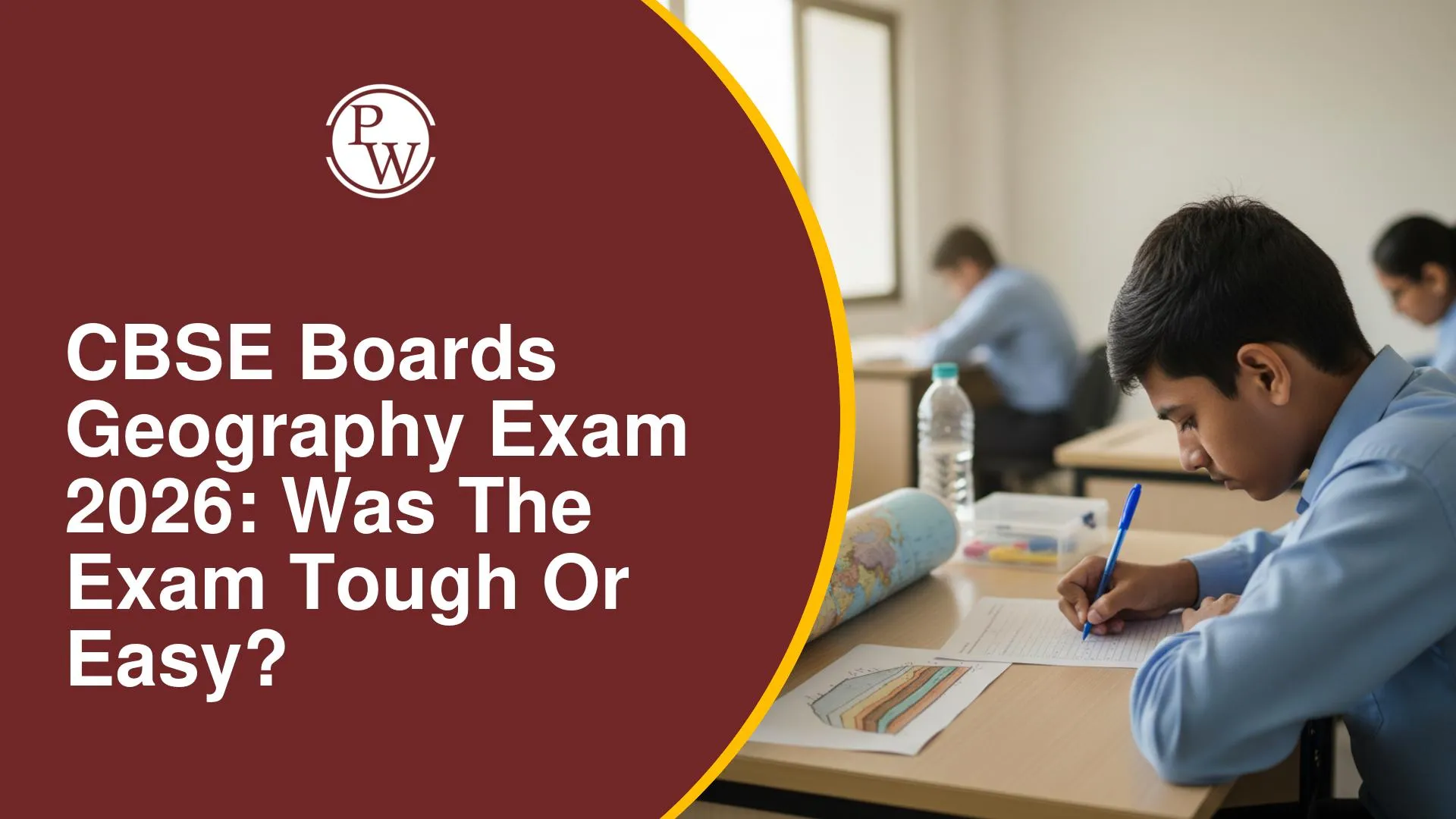
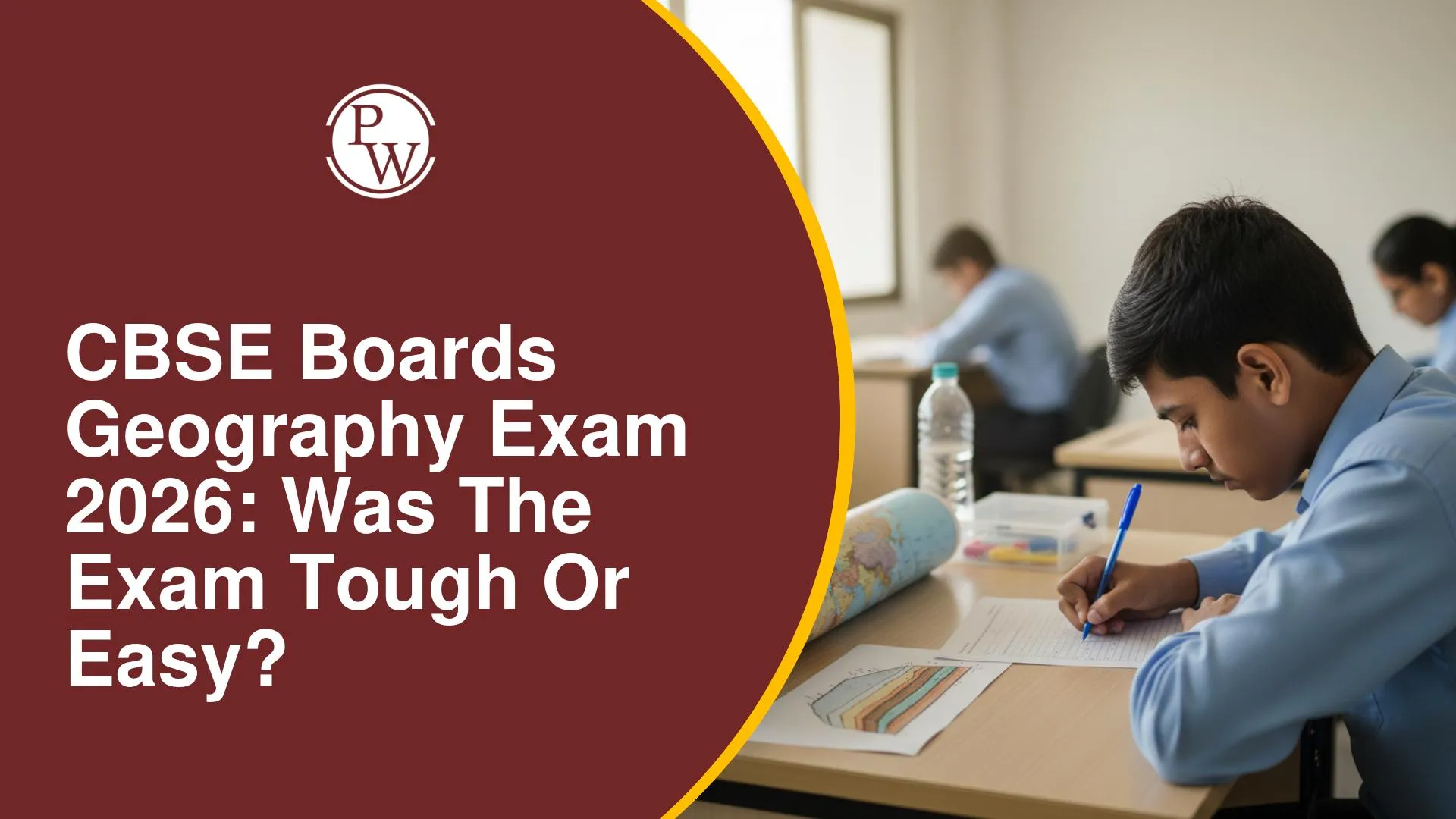
CBSE Boards Geography Exam 2026, conducted on 26 February 2026, has now concluded, and students across the country are sharing their reactions. As part of the Class 12 board examinations, the paper raised the big question: was it tough or easy?
Based on initial feedback from various examination centers, the overall difficulty level appears balanced. While a few sections required careful analysis and strong conceptual understanding, most of the paper was considered manageable and largely based on the NCERT syllabus.
CBSE Boards Geography Exam 2026: Was the Exam Tough or Easy?
CBSE Class 12 Geography Board Exam 2026 has successfully concluded, and students across various examination centers have shared mixed but largely positive reactions. The most common feedback suggests that the paper was positioned between easy and moderate in terms of difficulty level. While a few sections were slightly tricky, the overall structure of the question paper was considered balanced and manageable.
Overall Difficulty Level
According to the general review gathered from multiple exam centers, the Geography paper was neither too difficult nor overly simple. Most students described it as “easy to moderate.” The questions were largely based on the NCERT textbooks, which once again proved to be the most reliable source for preparation. Students who had thoroughly revised their syllabus and practiced previous years’ question papers found the exam comfortable to attempt.
Some students did mention that a few multiple-choice questions (MCQs) required careful reading. These questions were designed to test conceptual clarity rather than rote memorization. However, they were not out of the syllabus. Instead, they demanded attention to detail and a clear understanding of the topics.
Section-wise Analysis
Below is the section-wise analysis of the CBSE Class 12 Geography Exam 2026, highlighting the difficulty level and overall student response for each part of the question paper.
MCQ Section
The MCQ section drew mixed reactions. While many students found it manageable, a few considered it slightly tricky. Certain questions were framed in a way that required analytical thinking. Instead of direct factual recall, students had to interpret data from tables, case studies, or small information boxes in the textbook.
Despite being tricky, the MCQs were not extremely difficult. Students who had paid attention to small details, diagrams, and data tables during preparation were able to attempt them confidently. Overall, this section tested understanding rather than surface-level learning.
Short Answer Questions
The short answer section was largely straightforward. Questions were clear and directly related to important topics from the syllabus. Students reported that these questions were predictable and aligned well with sample papers and previous year trends.
Those who had prepared notes and revised key concepts were able to answer efficiently. The marks distribution also seemed fair, allowing students to present concise and structured responses.
Long Answer Questions
The long answer section was considered to be scored by many students. Questions allowed students to elaborate on topics with proper explanations, examples, and diagrams where required. Most questions were from frequently discussed chapters and important themes.
Some students mentioned that the paper felt slightly lengthy, but with proper time management, it was possible to complete it within the allotted duration. In fact, many students reported finishing the paper 15 to 30 minutes early, giving them time for revision.
Time Management and Paper Length
Time management was not a major issue for most students. Although a small group felt the paper was somewhat lengthy, the majority managed to complete it comfortably. Students who practiced writing answers within time limits during preparation benefited significantly.
The additional time allowed students to review their answers, underline important points, and correct minor mistakes. This suggests that the overall design of the paper was balanced in terms of time allocation.
Coverage of Syllabus
The exam paper covered a wide range of topics from both books prescribed in the Class 12 Geography syllabus. Questions were distributed fairly across different chapters. Important and frequently repeated topics were included, but there were also a few questions that required deeper conceptual understanding.
The emphasis remained on NCERT-based content. Students who relied heavily on the textbook and carefully studied tables, maps, and highlighted boxes found themselves at an advantage. The paper reinforced the idea that a thorough reading of NCERT is essential for scoring well in board exams.
Student Reactions and Overall Mood
The overall mood outside examination centers was positive. Many students appeared satisfied and relieved after completing the paper. While there were discussions about a few tricky questions, especially in the MCQ section, most students agreed that the paper was fair.
There was no major complaint regarding out-of-syllabus questions. The structure followed the standard CBSE pattern, and internal choices provided flexibility. Students who maintained regular study habits and practiced map work reported feeling confident about their performance.
Comparison with Previous Years
Compared to previous years, the 2026 Geography paper maintained a similar difficulty standard. It did not introduce any drastic changes in format or structure. The level of difficulty remained consistent with the CBSE board’s recent approach of testing conceptual clarity rather than memorization.
The inclusion of application-based questions reflects the board’s focus on analytical skills. However, the paper did not feel overwhelming. Instead, it rewarded students who understood the subject deeply.
CBSE Boards Geography Exam 2026: Was the Exam Tough or Easy? FAQs
What was the overall difficulty level of the exam?
Were the MCQs difficult in the Geography exam 2026?
Was the Geography paper lengthy?
Were the questions from the NCERT syllabus?